Acrocanthosaure
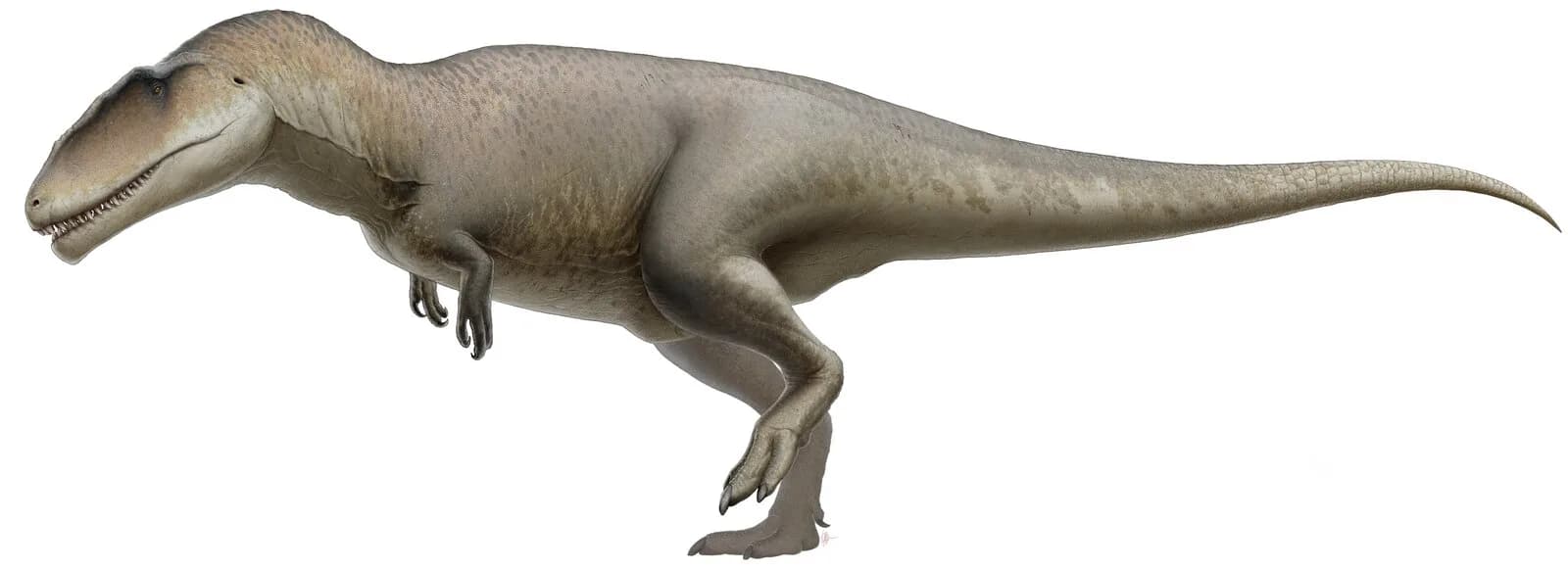
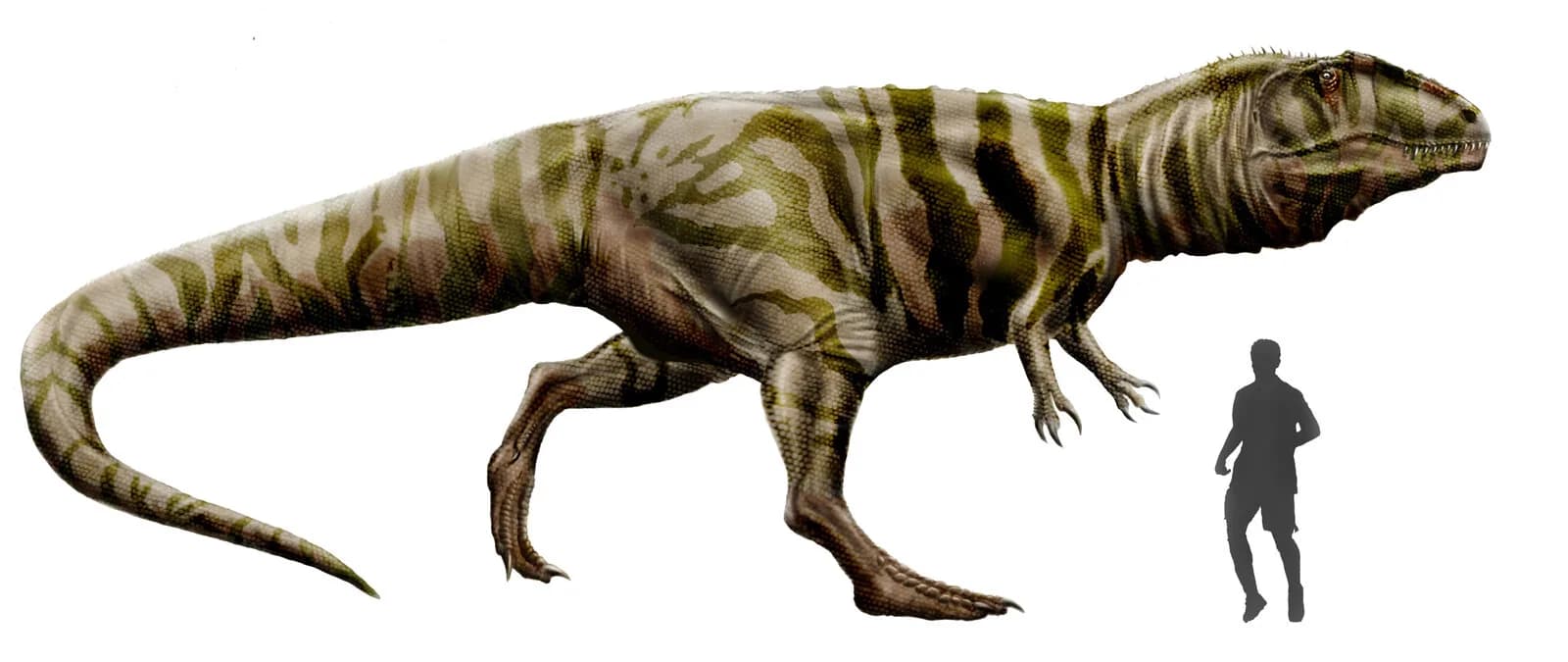
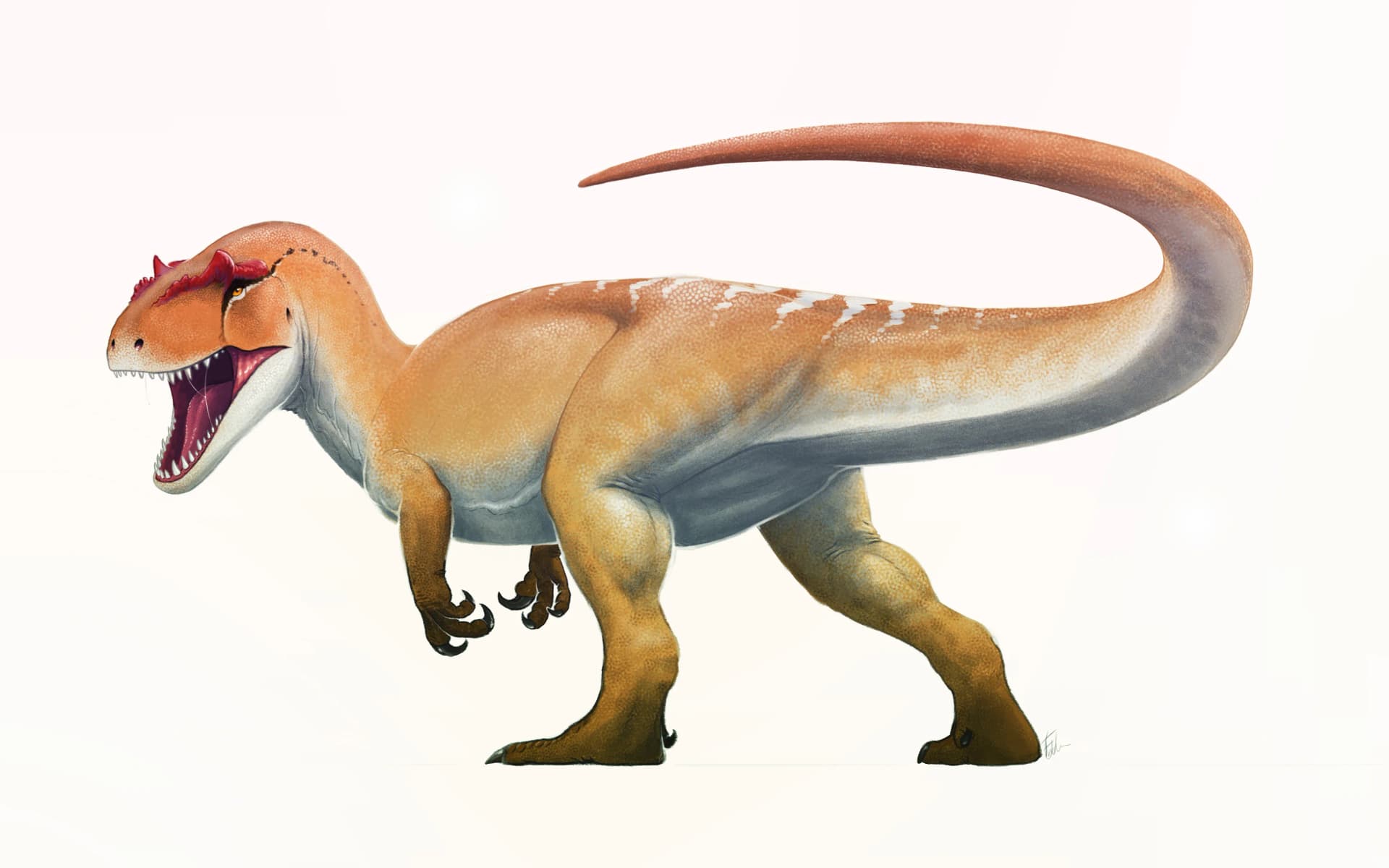
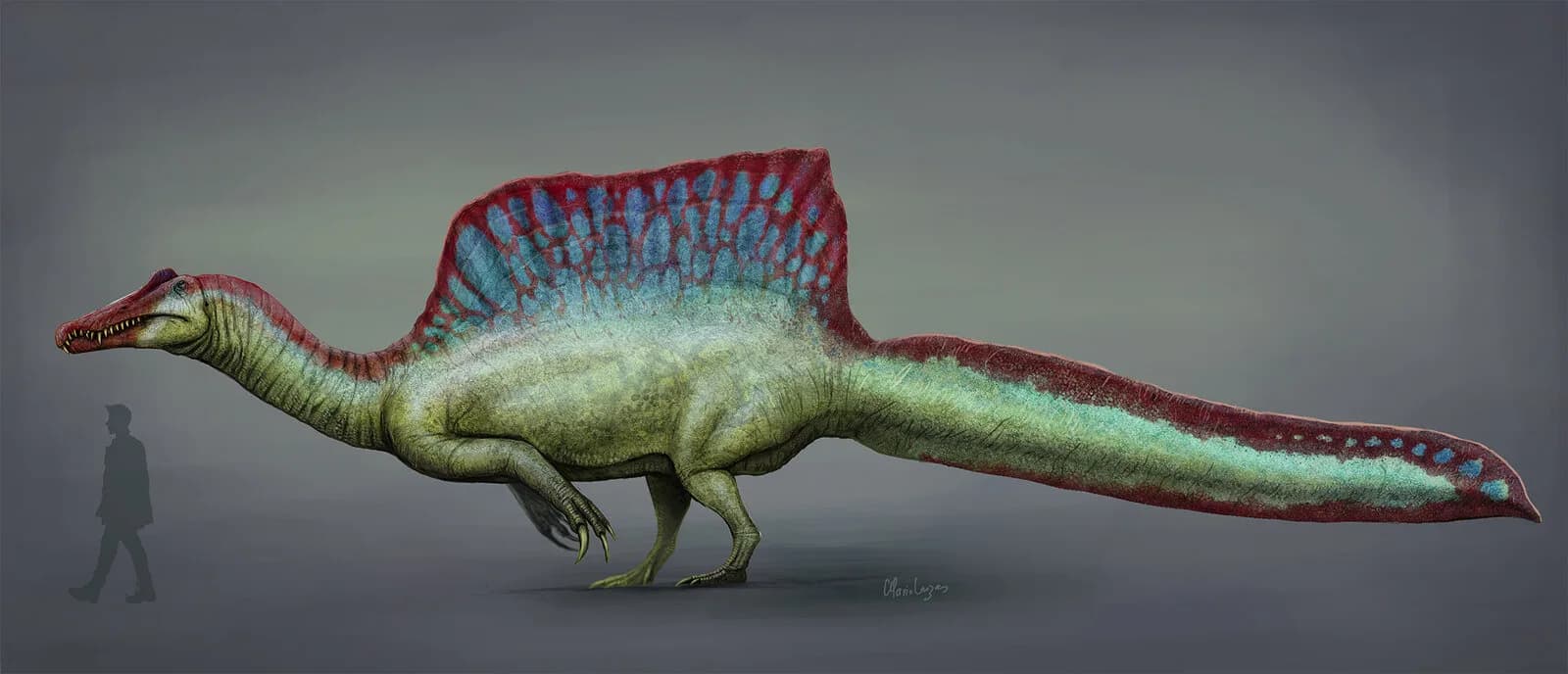
Acrocanthosaurus atokensis was a carnivorous theropod from North America, described in 1950 and dated to 113 to 110 million years ago. At 11 to 12 metres and 4 to 7.2 tonnes, it was the largest North American predator of the Early Cretaceous, long before T. rex. Its elongated neural spines formed a low ridge, not a sail like Spinosaurus.
Acrocanthosaurus lived during the Early Cretaceous period, approximately 113 to 110 million years ago, during the Aptian to Albian stages, in what is now the southern United States. It inhabited formations across Oklahoma, Texas, and possibly Maryland, making it one of the most widespread large theropods of its time in North America. This period predates the rise of tyrannosaurs as apex predators in North America by roughly 40 million years. Acrocanthosaurus was the dominant predator of its ecosystem, filling the top carnivore niche in a world where giant sauropods like Sauroposeidon still roamed the coastal plains and river valleys.
Acrocanthosaurus was a very large theropod measuring between 11 and 12 meters long with an estimated weight of 5 to 7 tonnes. Its massive skull reached 1.3 meters long, one of the largest among theropods. Its most distinctive feature was the crest of tall neural spines along its neck, back, and tail — these spines, reaching up to 50 centimeters, gave its back a distinctive raised profile, hence its name meaning 'high-spined lizard.' These spines probably supported a muscular hump rather than a skin sail.
Acrocanthosaurus was the apex predator of its Early Cretaceous ecosystem, preying on large ornithopods like Tenontosaurus and the massive sauropods that inhabited the same formations. Fossilized trackways from Texas show large theropod footprints alongside sauropod tracks, possibly representing Acrocanthosaurus stalking or pursuing its prey. Its teeth were large, blade-like, and serrated, typical of carcharodontosaurid predators adapted for slicing rather than crushing. The powerful skull and neck muscles, anchored to the enlarged neural spines, suggest it could deliver devastating biting attacks with substantial force. Acrocanthosaurus likely employed a slash-and-bleed hunting strategy against the largest prey, while smaller animals could be dispatched more quickly.
Acrocanthosaurus inhabited the coastal plains and river valleys of the southern United States during the Early Cretaceous, an area that bordered the ancient Gulf of Mexico. The environment featured lush, subtropical forests of conifers and ferns, intersected by broad river systems and seasonal floodplains that supported diverse dinosaur communities. The warm, humid climate promoted dense vegetation growth, creating productive ecosystems that supported large herbivores and consequently the large predators that hunted them. The Twin Mountains and Antlers formations preserve evidence of this rich ecosystem, with trackway sites like the famous Glen Rose tracks providing behavioral evidence. This region served as a corridor connecting eastern and western North American dinosaur populations.
The most notable anatomical feature of Acrocanthosaurus is its crest of elongated neural spines extending from neck to tail. These spines were tallest at mid-back level, where they could measure 2.5 times the height of the corresponding vertebral body. Rather than a skin sail like Spinosaurus, these spines probably supported a muscular and adipose 'hump,' similar to a bison's hump. Its skull was wide and robust, with relatively small orbits and prominent bony crests. Its arms, though short, were longer than those of tyrannosaurs and bore three-fingered hands armed with sharp claws.
Acrocanthosaurus was likely a solitary apex predator that used ambush and pursuit strategies to take down large prey. The famous Glen Rose trackway site in Texas preserves what appears to be an Acrocanthosaurus tracking a large sauropod, providing rare direct evidence of predatory behavior in the fossil record. The tall neural spines along its back may have supported a muscular ridge or hump that served as an energy storage organ, similar to modern bison, or functioned as a display structure visible from a distance. Territorial behavior is likely given the metabolic demands of such a large predator, requiring substantial hunting ranges to sustain itself. The lack of bone bed evidence suggests a predominantly solitary lifestyle.
Acrocanthosaurus was first described in 1950 by J. Willis Stovall and Wann Langston Jr. from two partial skeletons discovered in the Antlers Formation in Oklahoma. The name Acrocanthosaurus atokensis references its high spines ('acro' = high, 'acantha' = spine) and Atoka County where the fossils were found. The most complete specimen, nicknamed 'Fran' (NCSM 14345), was discovered in 1990 in Texas and acquired by the North Carolina Museum of Natural Sciences. This skeleton is approximately 70% complete, including the skull, and is one of the best-preserved large theropod skeletons in North America.
| Period | Crétacé inférieur / Early Cretaceous (Aptien–Albien) |
| Era | Mésozoïque / Mesozoic |
| Age | 113–110 Ma |
| Location | Amérique du Nord / North America (Oklahoma, Texas, Wyoming) |
| Length | 11–12 m |
| Height | ~3.5 m |
| Weight | 4 000–7 200 kg |
| Diet | Carnivore |
| Discovery | 1950 |
The neural spines of Acrocanthosaurus atokensis, reaching up to 50 centimeters, likely formed a muscular and fatty hump rather than a skin sail. Similar to a bison's hump, this structure served energy storage, thermoregulation, or visual signaling. The most complete specimen, nicknamed 'Fran' (NCSM 14345), clearly displays these elevated vertebrae.
Yes: famous trackways in Texas's Paluxy River valley (Glen Rose) show a large theropod — likely Acrocanthosaurus atokensis — walking parallel to a sauropod herd, suggesting stalking behavior. This 11-12 meter, 4-7 tonne theropod was the dominant apex predator of the Aptian-Albian of North America, before tyrannosaurs rose to dominance.
Acrocanthosaurus atokensis was described in 1950 by Stovall and Langston Jr. from two partial skeletons from the Antlers Formation in Oklahoma. The most complete specimen ('Fran', ~70% complete) was discovered in Texas in 1990 and is housed at the North Carolina Museum of Natural Sciences. Its name references its high spines ('acro' + 'acantha') and Atoka County, Oklahoma.
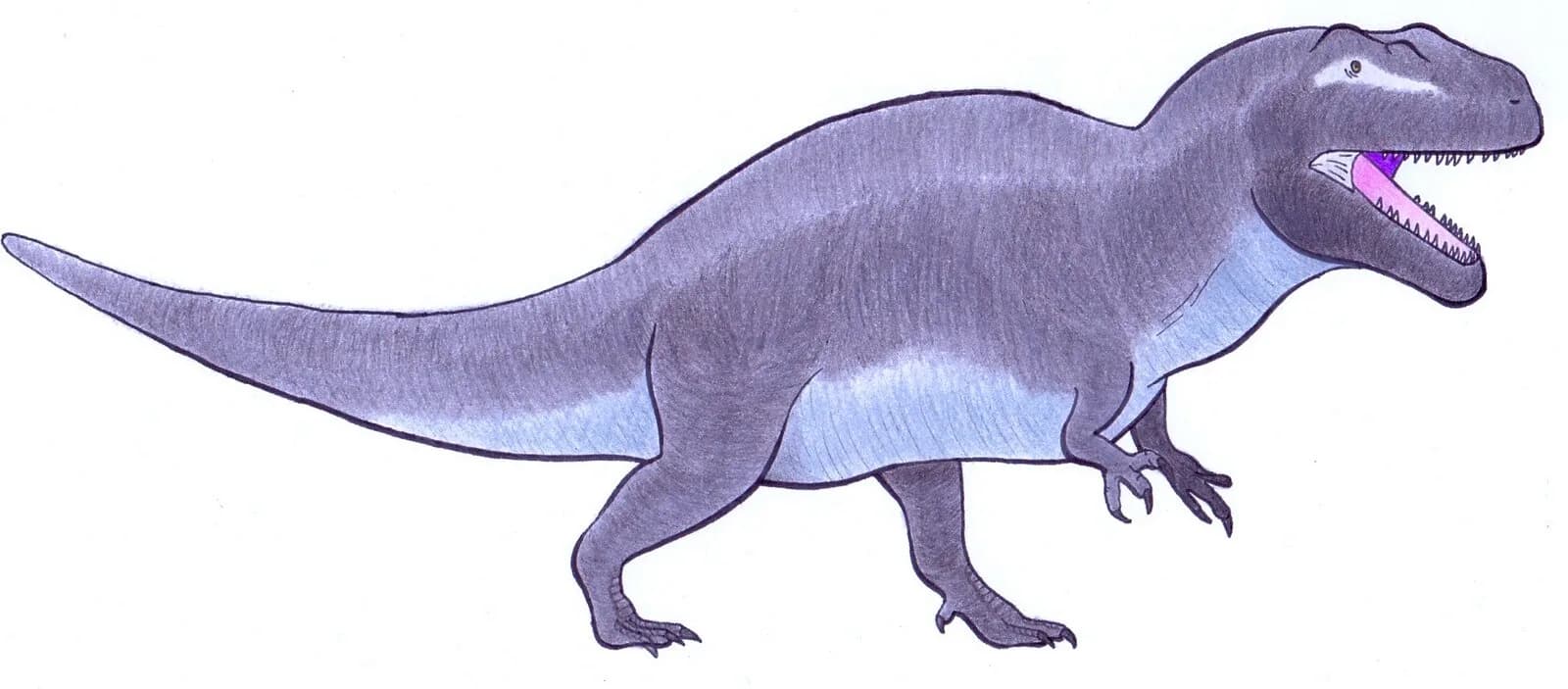
Life reconstruction of Acrocanthosaurus atokensis
Mariomassone, CC BY-SA 4.0, via Wikimedia Commons
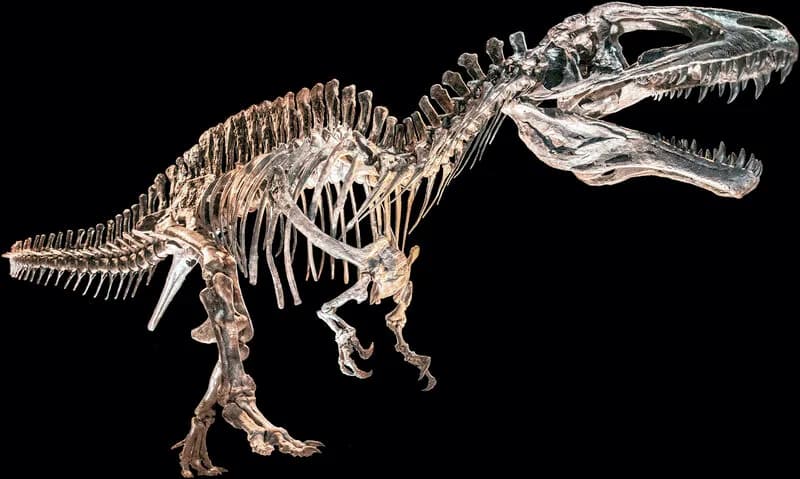
Acrocanthosaurus atokensis skeleton cast
Evolutionnumber9, CC BY-SA 4.0