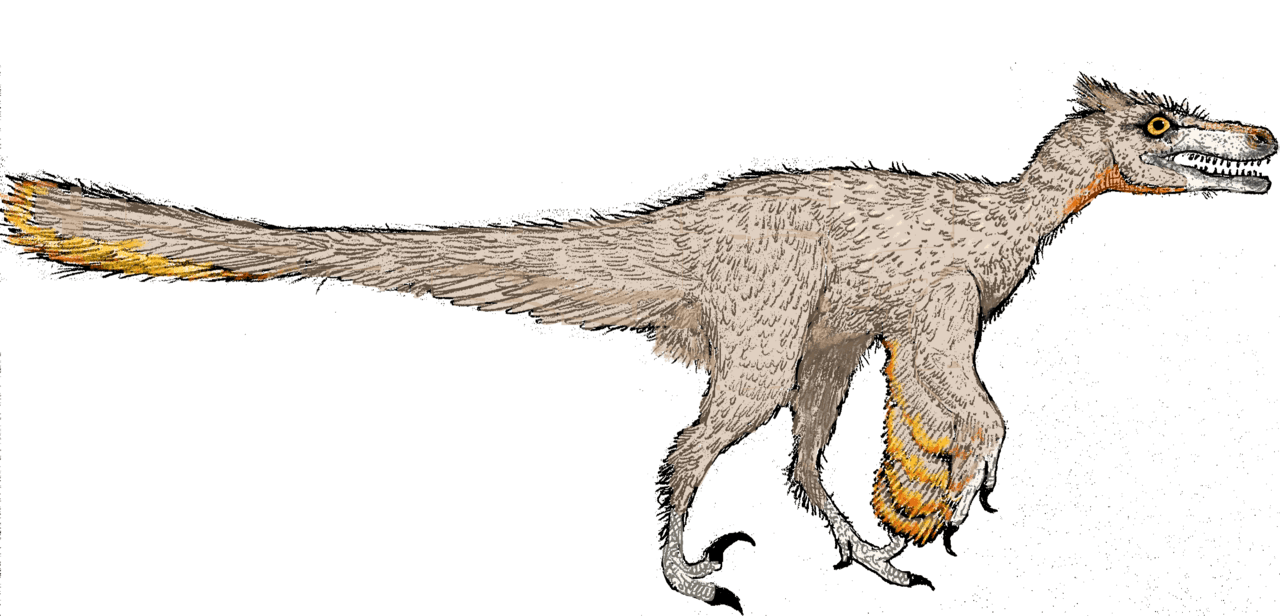
Pyroraptor
Pyroraptor olympius means « fire thief »: its fossils were exposed after a fierce forest fire in Provence in 1992. This dromaeosaurid, 2.5 metres and around 50 kilograms, lived in southern France 70 million years ago. Wider audiences met it in Jurassic World Dominion, in 2022, where it appears swimming underwater.
Pyroraptor olympius lived during the Late Cretaceous period, approximately 70 million years ago, in what was then a European archipelago surrounded by the Tethys Sea. At that time, Europe was not a unified continent but rather a collection of tropical islands separated by shallow seaways. The climate was warm and subtropical, supporting lush vegetation of ferns, conifers, and early flowering plants. Pyroraptor shared this insular environment with other European dinosaurs of reduced size, a phenomenon known as insular dwarfism. This period preceded by several million years the catastrophic Cretaceous-Paleogene extinction event that would wipe out all non-avian dinosaurs from the face of the Earth.
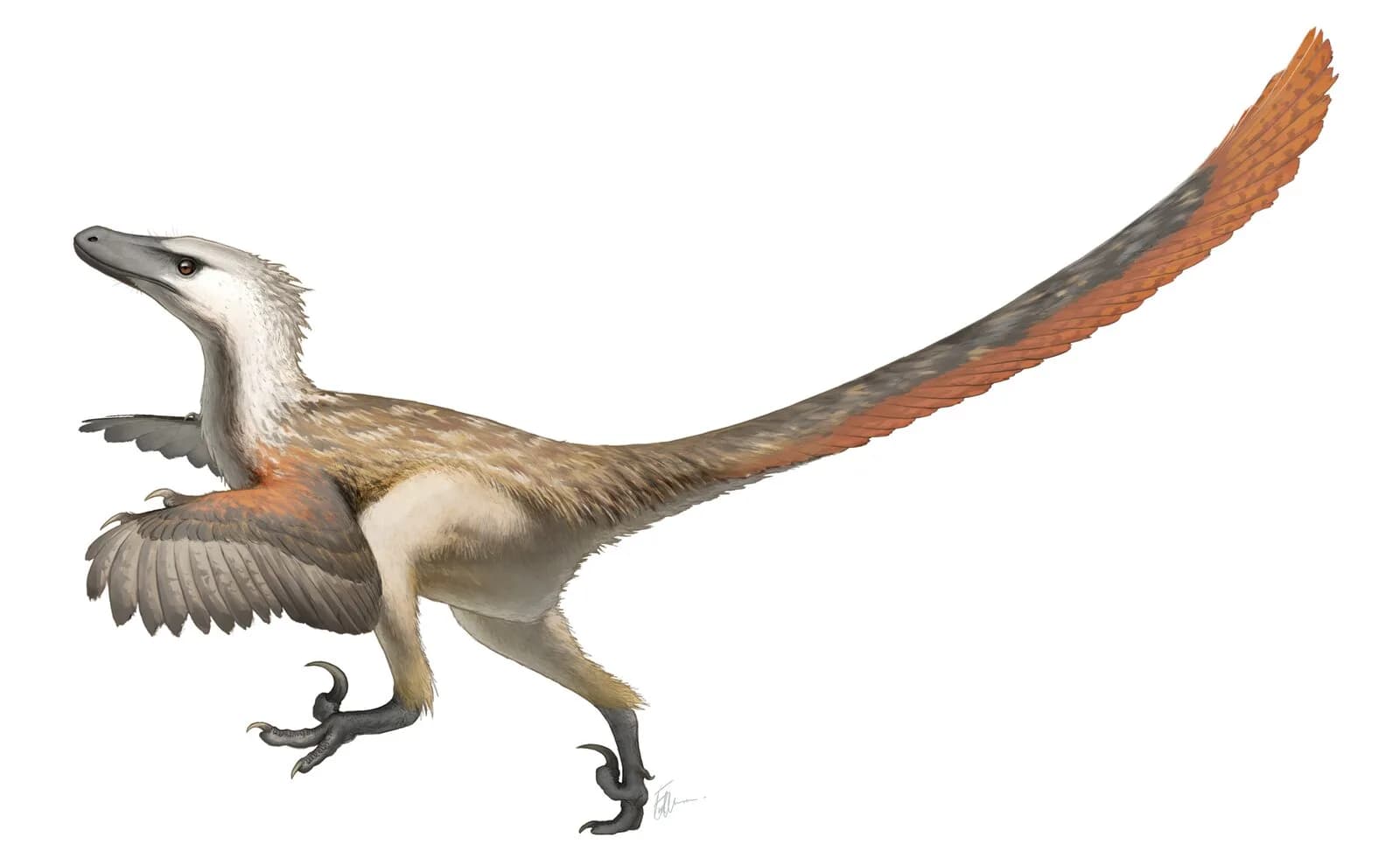
Pyroraptor was a small raptor measuring approximately 2.5 meters in length and weighing an estimated 50 kilograms, making it a modestly sized predator compared to the great theropods of its era. Its size was comparable to that of the famous Velociraptor, although the two species evolved on different continents entirely. Like all dromaeosaurids, Pyroraptor most likely possessed dense plumage covering most of its body, giving it an appearance more reminiscent of a giant bird of prey than a scaly reptile. Its light and slender build testifies to an adaptation for fast running and agility, essential qualities for an active predator hunting on the European islands of the Late Cretaceous period.
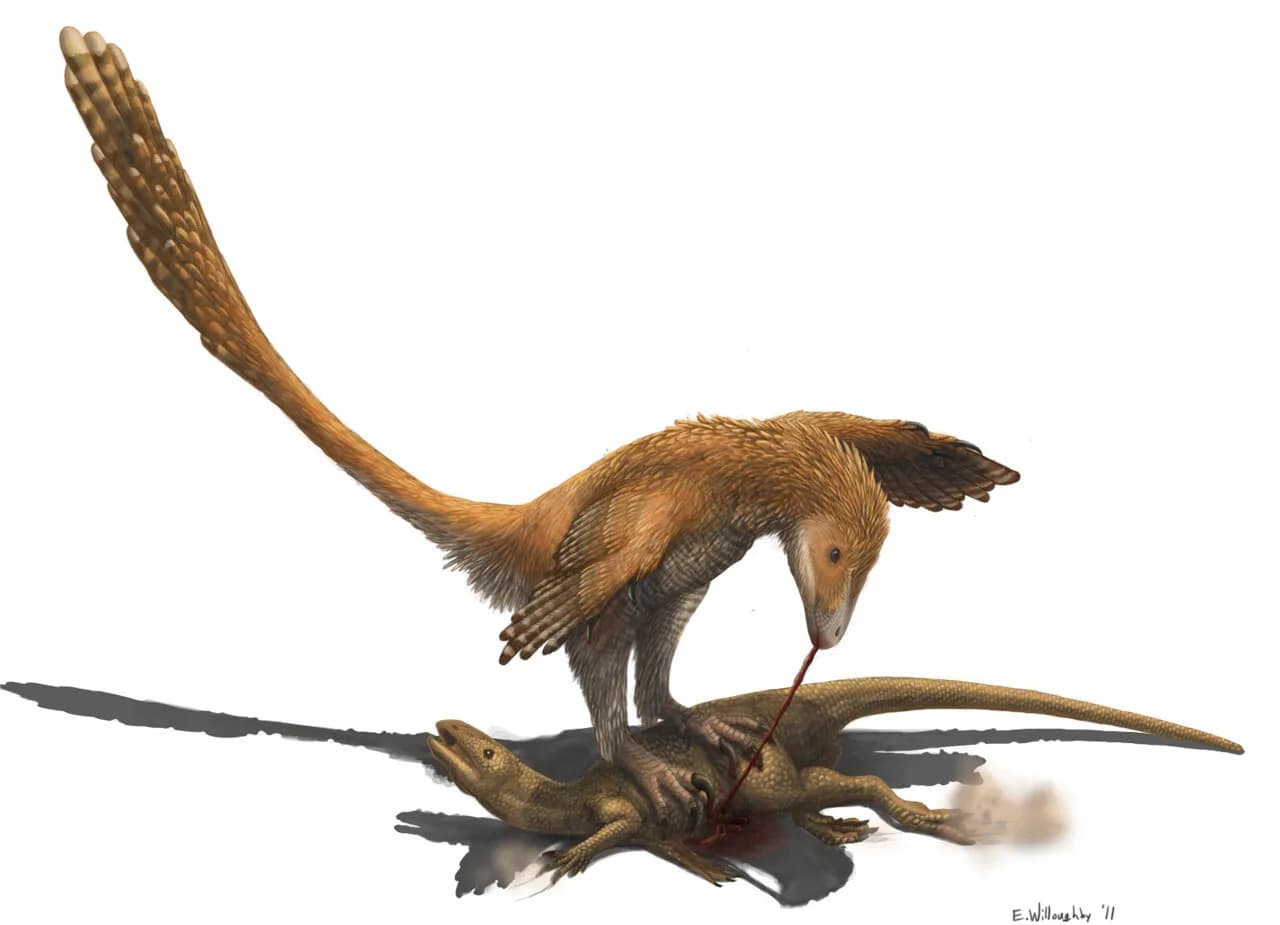
An active carnivore and formidable predator despite its small size, Pyroraptor likely hunted small vertebrates, lizards, and primitive mammals inhabiting the European islands of the Late Cretaceous. Its primary weapon was the large retractable sickle-shaped claw on the second toe of each foot, characteristic of all dromaeosaurids. This curved claw could measure up to 6.5 centimeters and was likely used to slash prey with deadly efficiency and precision. Pyroraptor's jaw was lined with sharp, serrated teeth perfectly adapted for slicing through flesh. Its opportunistic diet probably also included dinosaur eggs and carrion when the opportunity arose, a common strategy among small insular theropods facing limited prey resources on island ecosystems.
Pyroraptor lived on the islands of the European archipelago during the Late Cretaceous, in the region that corresponds today to southern France, specifically Provence. The environment was a subtropical island ecosystem characterized by warm temperatures and high humidity throughout the year. The islands were covered with dense forests composed of conifers, tree ferns, and early angiosperms that provided ample cover for predators. Rivers and coastal wetlands offered essential water sources for the local fauna. This insular habitat imposed particular constraints on large animals, favoring the evolution of smaller forms than their continental cousins, a well-documented phenomenon in insular paleontology known as the island rule.
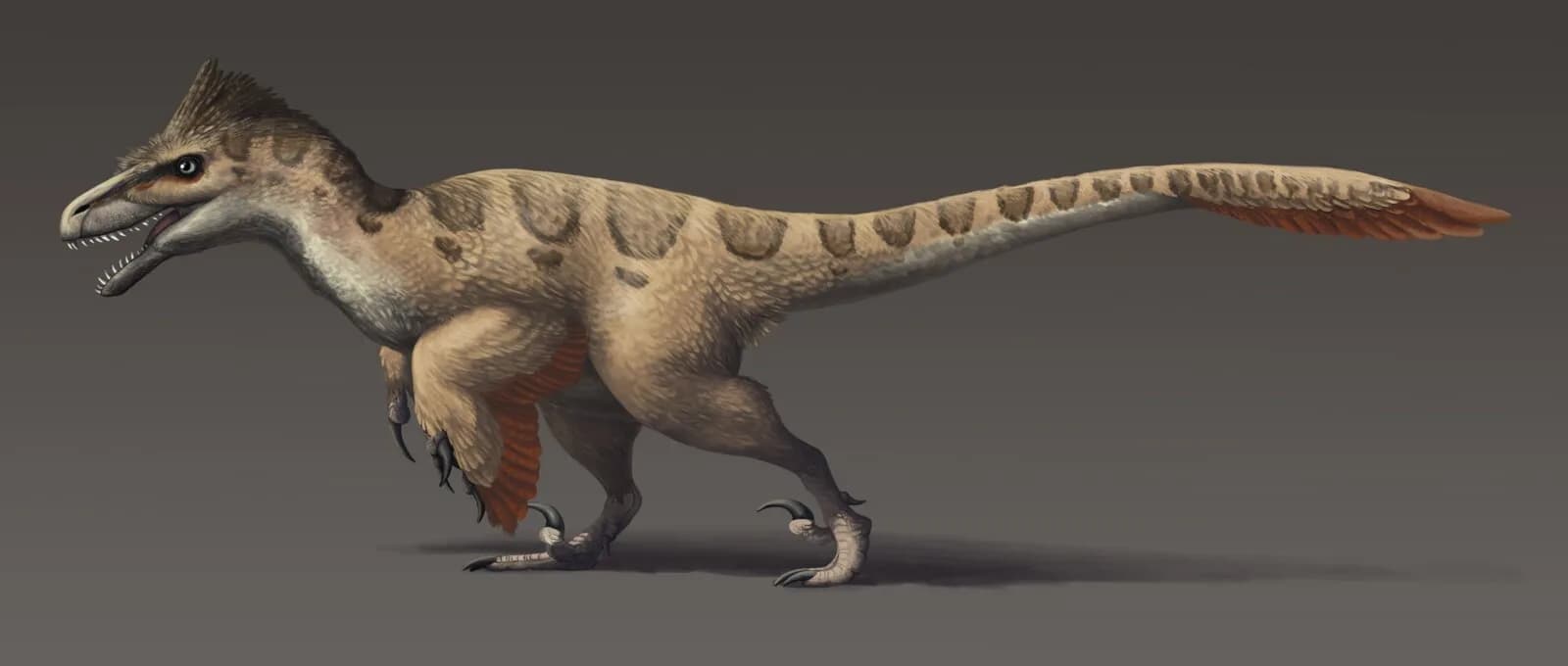
The anatomy of Pyroraptor reveals a predator perfectly adapted for active hunting in its island environment. Its most distinctive feature was the large sickle claw on the second toe, retractable and held raised while walking to maintain its razor-sharp edge. This hyperextensible claw could be rapidly deployed to strike or grip prey with devastating force. Pyroraptor's lightweight and aerodynamic body was built for speed and maneuverability in dense forest environments. Its hollow bones reduced weight without compromising structural strength, a feature shared with modern birds. The forelimbs were equipped with three clawed fingers capable of firmly grasping struggling prey. The tail, stiffened by ossified tendons, served as a counterbalance during rapid direction changes while pursuing agile prey through the island forests.
Behavioral hypotheses regarding Pyroraptor suggest an agile and potentially gregarious predator, capable of hunting in small coordinated packs to take down larger prey. This pack hunting strategy, observed in several dromaeosaurid species based on fossil evidence, would have allowed these small raptors to attack prey much larger than themselves. The insular ecology of Pyroraptor implies relatively restricted hunting territories and population density limited by the resources available on the islands. Its likely binocular vision and relatively developed brain for a dinosaur of its size suggest advanced cognitive abilities, necessary for coordinating complex group attacks on prey. Communication between individuals likely involved vocalizations and visual signals, perhaps enhanced by colorful plumage displays. As an insular predator, Pyroraptor probably occupied the top of the local food chain.
The discovery story of Pyroraptor is intimately linked to fire. In 1992, a violent forest fire ravaged a hillside near Aix-en-Provence in southern France, exposing geological layers dating from the Late Cretaceous period that had been hidden for millions of years. It was in these sediments laid bare by the flames that the fossilized remains of this small raptor were discovered, giving rise to its scientific name meaning 'fire thief.' The recovered fossils remain fragmentary: primarily claws, teeth, and a few limb bones, which limits our complete understanding of the animal. Paleontologist Ronan Allain and his colleagues officially described the species Pyroraptor olympius in the year 2000. Despite the scarcity of remains, the characteristics of the claws and teeth firmly place Pyroraptor among the dromaeosaurids, the family of 'raptors' made famous by cinema.
| Period | Crétacé supérieur / Late Cretaceous |
| Era | Mésozoïque / Mesozoic |
| Age | 70 Ma |
| Location | Sud de la France (Provence) / Southern France (Provence) |
| Length | 2.5 m |
| Height | ~1 m |
| Weight | ~50 kg |
| Diet | Carnivore |
| Discovery | 1992 |
Pyroraptor olympius fossils were discovered in 1992 after a violent forest fire that swept a hillside near Aix-en-Provence, southern France, exposing Late Cretaceous sediments (approximately 70 Ma). Paleontologist Ronan Allain and colleagues officially described the species in 2000. Its name means 'fire thief' in reference to the flames that enabled its discovery.
Pyroraptor olympius measured approximately 2.5 meters long with an estimated weight of 50 kilograms — comparable to a Velociraptor. Its main weapon was the large retractable sickle claw on the second toe, measuring up to 6.5 centimeters, held raised while walking to preserve its edge. Like all dromaeosaurids, it almost certainly had dense plumage.
During the Late Cretaceous, Europe was an archipelago of islands separated by the Tethys Sea, making faunal exchanges difficult. Most dromaeosaurids were known from Asia and North America, not Europe. Pyroraptor olympius is known only from fragmentary fossils (a few claws, teeth, and limb bones), making it one of the most mysterious dinosaurs from France and one of the few documented European raptors.
Pyroraptor olympius illustration
Wikimedia Commons
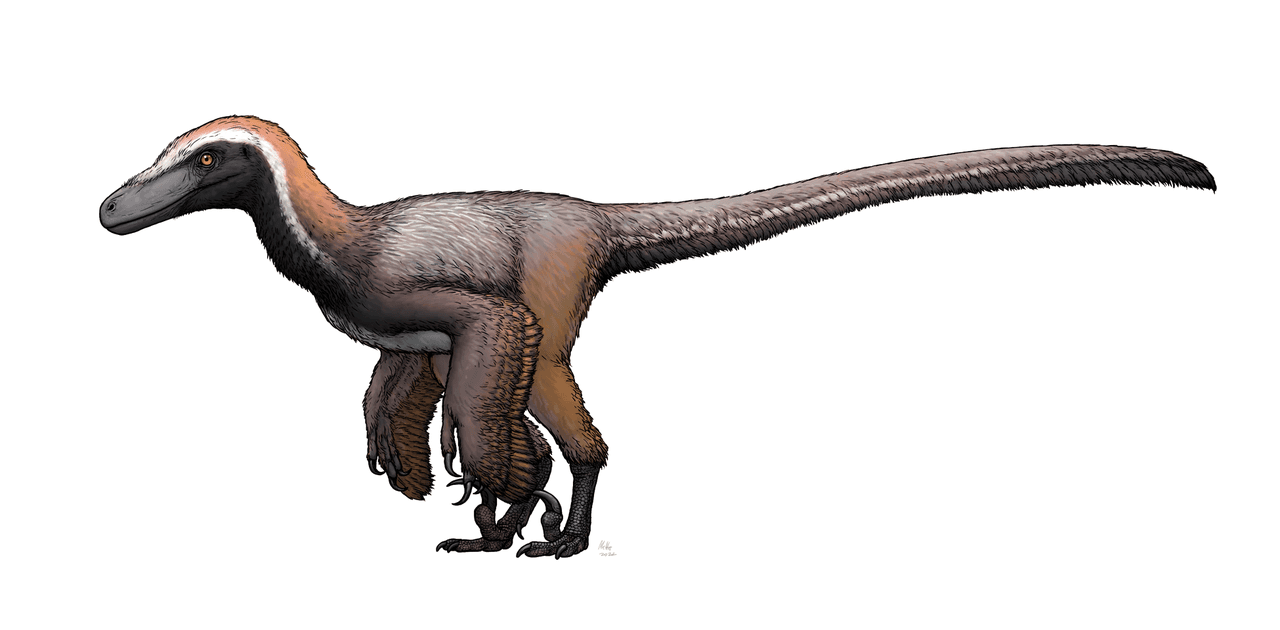
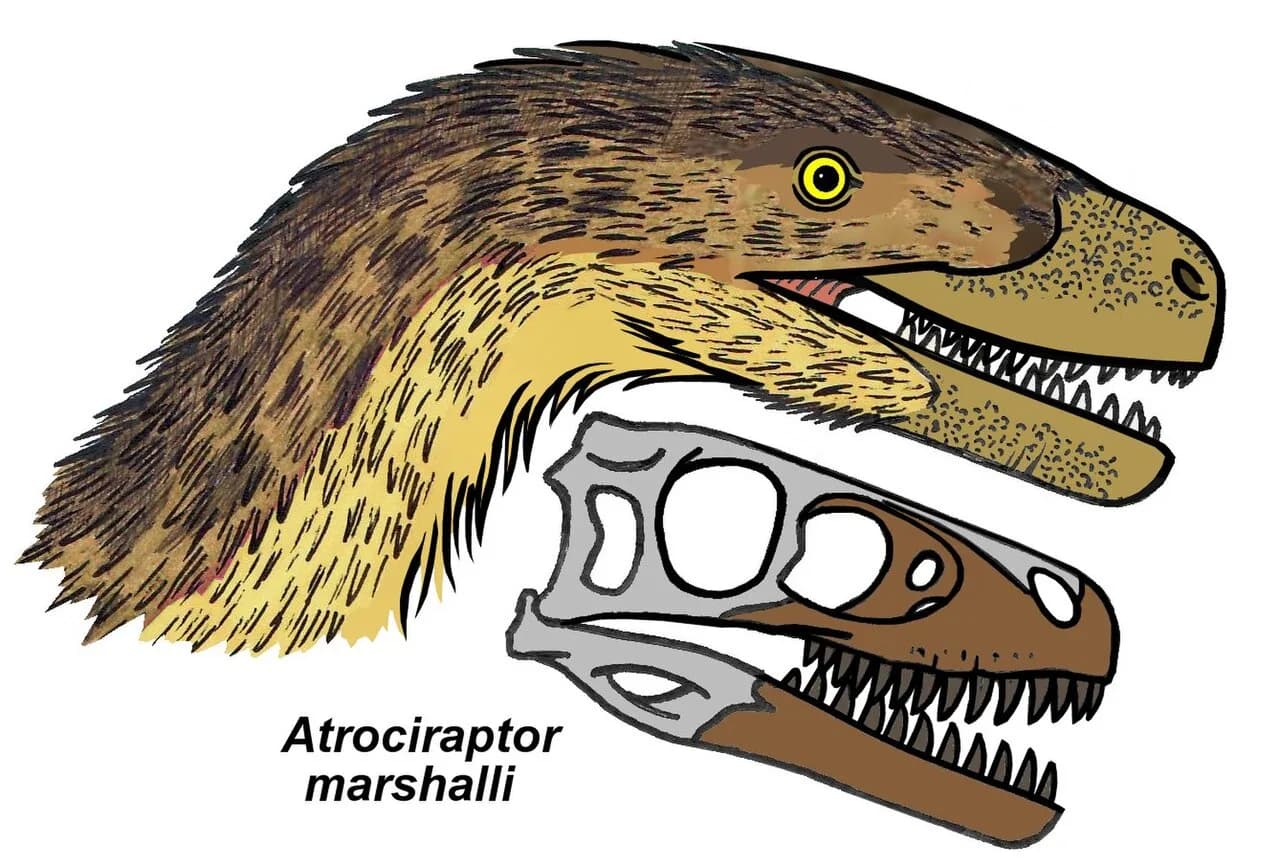
Pyroraptor olympius reconstruction
Wikimedia Commons