Pycnonemosaurus
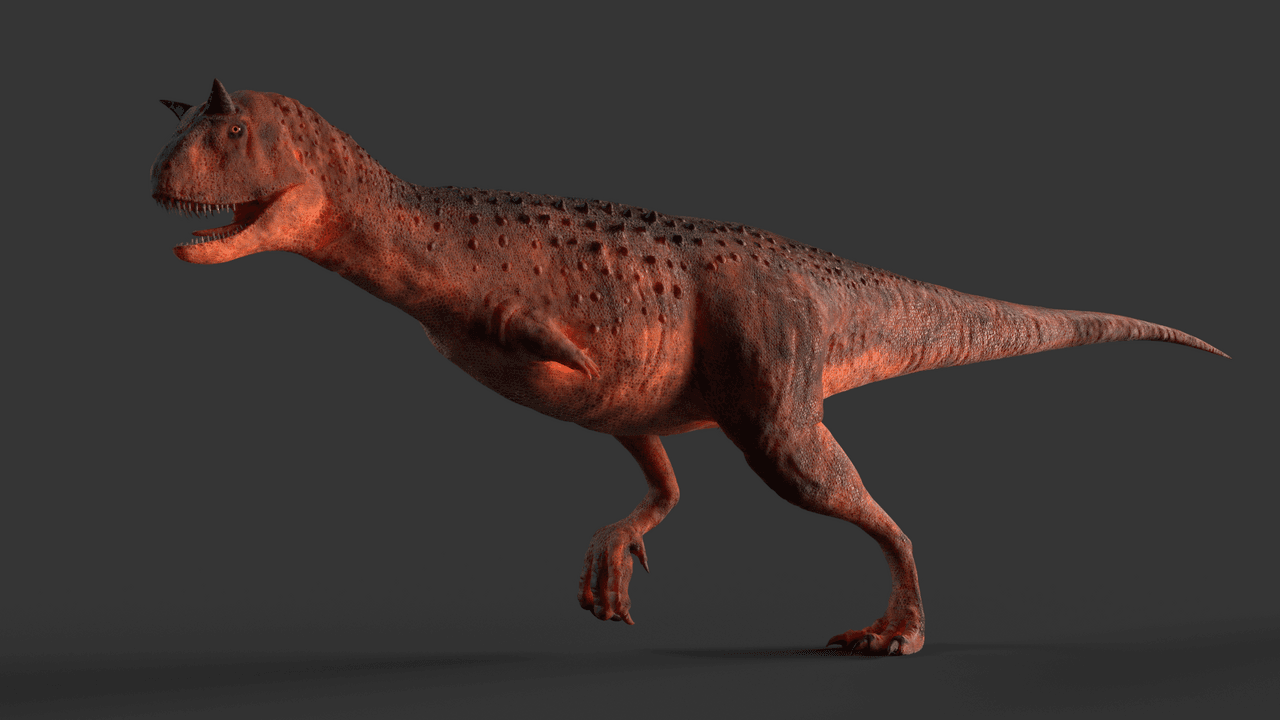
Pycnonemosaurus nevesi is currently the largest known abelisaurid, at close to 9 metres. Its name means « thick forest lizard », from the Greek pyknos and nemos. Described in 2002 from the Adamantina Formation in Brazil, it hunted around 70 million years ago. Like all abelisaurids, its arms were even more reduced than a tyrannosaur's.
Playable in Path of Titans
See Pycnonemosaurus nevesi's stats, abilities and role on our survival server.
Pycnonemosaurus lived at the end of the Late Cretaceous, during the Maastrichtian, about 70 million years ago. Its remains come from the Adamantina Formation, in the Bauru Group, in Mato Grosso, Brazil. At that time, the interior of Brazil was a vast semi-arid plain crossed by seasonal rivers and subject to marked dry seasons. This landscape supported a fauna dominated by titanosaurs, the giant long-necked sauropods, and by various land-dwelling crocodyliforms. It was in this South American setting, very different from the humid forests of North America at the same time, that this large abelisaurid predator lived.
Pycnonemosaurus was described in 2002 by Brazilian palaeontologists Alexander Kellner and Diogenes de Almeida Campos. The name means "dense forest lizard", from the Greek pyknos ("dense") and nemos ("wood, forest"), while the epithet nevesi honours the collector Iedo Batista Neves. The genus is monotypic, containing only the type species, P. nevesi. The known material, though fragmentary, was enough to recognise a large abelisaurid whose importance was only fully appreciated later, when new estimates made it the largest known member of its family.
Long underestimated, Pycnonemosaurus is now considered the largest known abelisaurid. Early estimates placed it around 7 metres long, but later analyses revised its size upward, to nearly 9 metres. It was therefore a top-tier predator, comparable in size to the largest southern-hemisphere carnivores of the latest Cretaceous. Like other abelisaurids, it combined a robust body, powerful hindlimbs and a stocky silhouette built for strength. This size made it one of the main hunters of its ecosystem, able to tackle large prey.
Pycnonemosaurus was a carnivore at the top of the food chain in its environment. Like other large South American abelisaurids, it probably hunted titanosaurs, the giant sauropods abundant in the Adamantina Formation, or at least their young and weakened individuals. Its short, deep skull, typical of abelisaurids, suggests a powerful bite but a different attack strategy from long-snouted theropods: rather than slicing, it likely delivered repeated bites to wear its prey down. Its robust, recurved teeth suited the capture and holding of large prey. In South America, titanosaur sauropods reached colossal sizes, and a single predator was unlikely to bring down a healthy adult. Pycnonemosaurus more likely targeted juveniles, the sick or carcasses, as large modern predators do with prey beyond their reach.
The Adamantina Formation represents a semi-arid continental environment of the Late Cretaceous, with seasonal watercourses and characteristic red soils. Pycnonemosaurus shared its range with a distinctly Gondwanan fauna: titanosaurs of several sizes, many land-dwelling crocodyliforms with varied lifestyles, and other small theropods. In this ecosystem, abelisaurids like Pycnonemosaurus held the role of apex predators, the one tyrannosaurs held in the northern hemisphere. The diversity of terrestrial crocodyliforms, particularly rich in Brazil, added unusual competition for medium-sized prey. The absence of tyrannosaurs in the southern hemisphere is no minor detail: it left the field open for entirely different families, abelisaurids foremost, to fill the dominant-predator role. Studying Pycnonemosaurus thus means exploring a parallel evolutionary history, where the large carnivores of the latest Cretaceous had neither the same face nor the same ancestors as in the north.
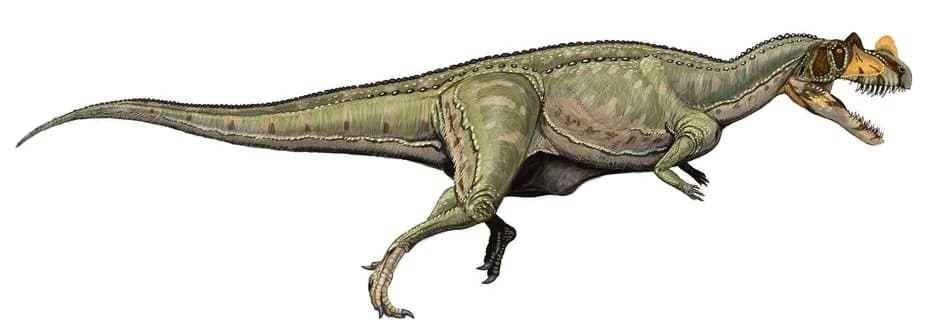
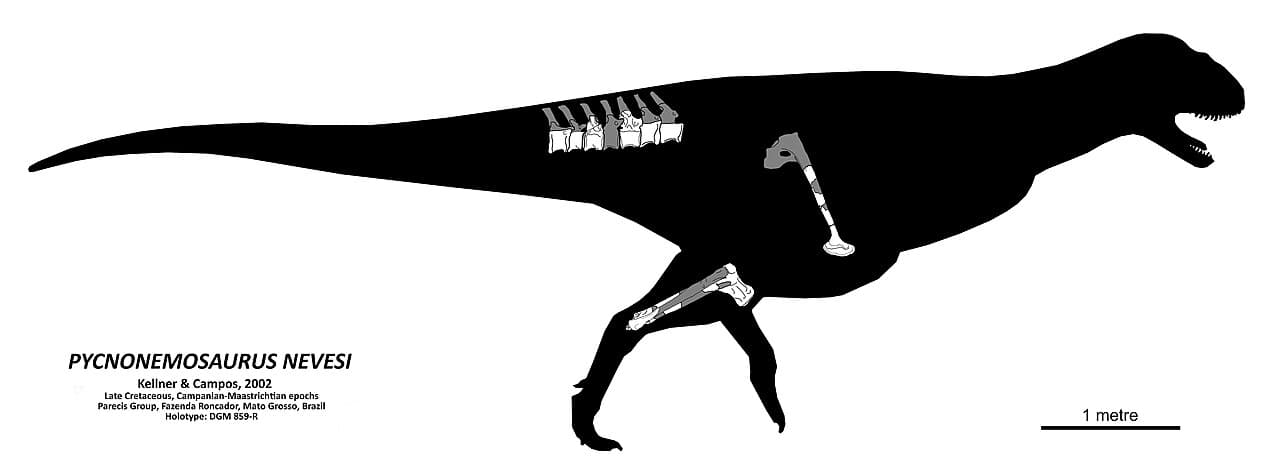
Pycnonemosaurus had the characteristic anatomy of abelisaurids: a short, tall skull often ornamented with bony reliefs, extremely reduced forelimbs — even smaller and more useless than tyrannosaur arms — and powerful hindlimbs. This arm reduction went with a specialisation of the head and neck as the main weapons. Its robust body rested on strong legs, built for power more than pure speed. Although the known material is incomplete, the preserved elements, such as vertebrae and limb bones, confirm its place in this family of stocky predators and its status as a giant among them. In abelisaurids, the arms were not merely short: the hand itself was reduced to stubby, fixed fingers with no grasping function. This extreme regression, pushed even further than in tyrannosaurs, shows that the entire hunting strategy rested on the head, neck and bite, with the forelimbs playing no role in capturing prey.
Pycnonemosaurus's anatomy paints the picture of a powerful predator relying on the strength of its head and bite rather than speed or its arms. As in other abelisaurids, a predation strategy suited to large prey is assumed: repeated attacks, powerful bites and use of body weight. The question of possible group behaviour remains, as for most theropods, hard to settle from fossils alone. What is better established is its role as a dominant apex predator, atop an ecosystem rich in giant sauropods. The thickness and robustness of abelisaurid skulls led some researchers to propose a bite-and-hold behaviour, where the predator bites, holds, then lets its prey tire out, rather than tearing off large mouthfuls like a tyrannosaur. Applied to a giant like Pycnonemosaurus, this hunting style would have been formidably effective against large herbivores.
Pycnonemosaurus belongs to the family Abelisauridae, a group of carnivorous theropods mainly known from Gondwana — South America, Africa, India and Madagascar. More precisely, it belongs to the clade Furileusauria, which gathers short-snouted, robust-skulled abelisaurids. Abelisaurids dominated the terrestrial ecosystems of the southern hemisphere at the end of the Cretaceous, filling the large-predator niche left vacant by the absence of tyrannosaurs in that part of the world. Within this group, Pycnonemosaurus stands out for its very large size, making it an important marker for understanding how far this family pushed gigantism. Its discovery and reassessment helped establish that gigantism was not the preserve of tyrannosaurs and carcharodontosaurs alone: other families, like the abelisaurids, also produced very large predators, by their own morphological rules.
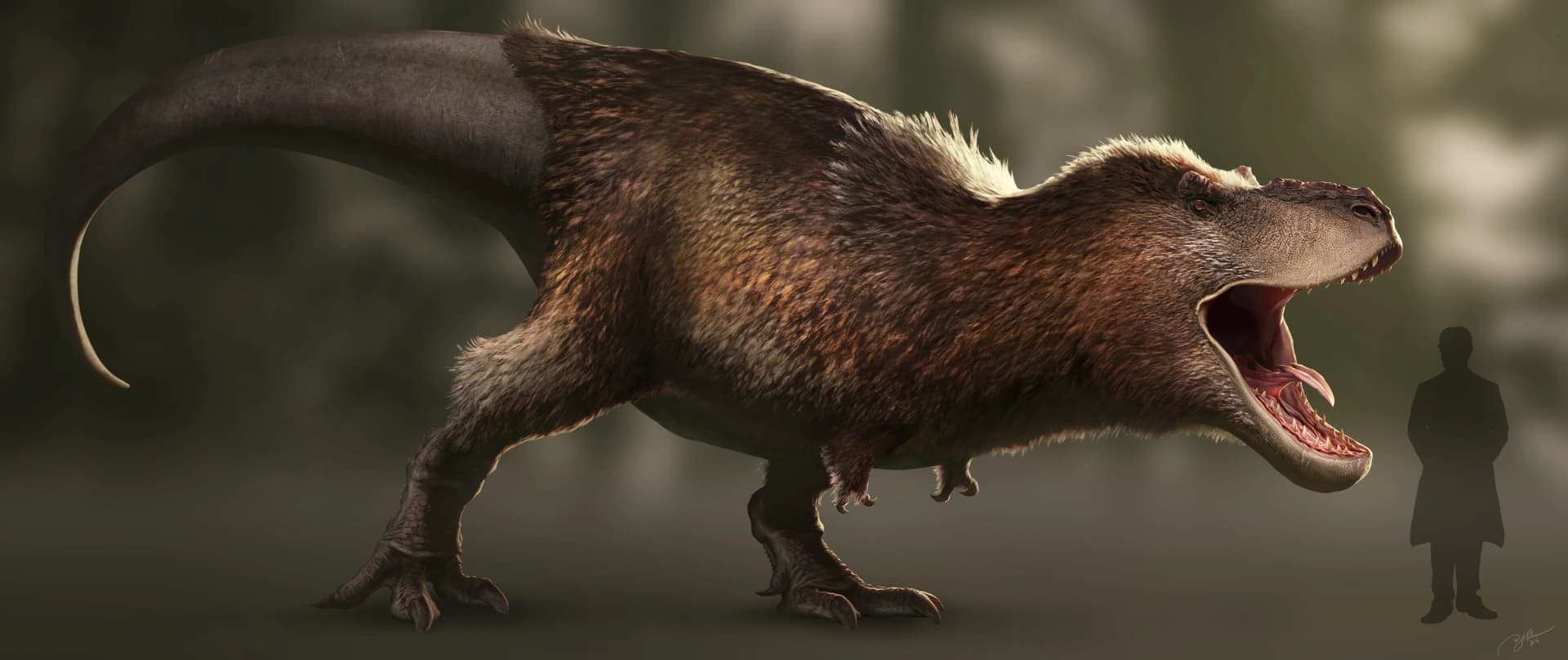
Compared with the famous tyrannosaurs of the northern hemisphere, Pycnonemosaurus illustrates a parallel evolutionary response to the same challenge: becoming a large terrestrial predator. But the two families took different paths. Where tyrannosaurs combined a massive skull and a crushing bite, abelisaurids like Pycnonemosaurus evolved shorter, ornamented skulls, even more reduced arms and a distinct hunting mechanic. Within the abelisaurids themselves, smaller forms like Carnotaurus lived alongside giants like Pycnonemosaurus, showing the range of sizes this lineage reached. This Gondwanan diversity, long less publicised than the north's, is now better recognised. Recognising Pycnonemosaurus as the largest of its family also has symbolic weight: it reminds us that southern-hemisphere palaeontology, long less funded and less publicised, still holds records and surprises waiting to be brought to light by new research.
The known material of Pycnonemosaurus remains fragmentary: it includes vertebrae, limb bones such as a tibia, part of the pelvis and teeth. Despite being incomplete, this set was enough to establish its identity as a giant abelisaurid and, years later, to revise estimates of its size. This partial nature is common for South American theropods, many of which are known from only a few bones. Each new discovery in the Bauru Group formations can therefore refine our view of this predator and, more broadly, of the latest-Cretaceous ecosystems of Brazil, still being explored. The 2017 revision, which made Pycnonemosaurus the largest known abelisaurid, rests precisely on a reassessment of these fragmentary bones using more rigorous comparison methods. It is a good example of how already-known fossils can deliver new surprises years after their first description.
Less known to the general public than the large North American carnivores, Pycnonemosaurus remains an important figure for South American palaeontology and a symbol of abelisaurid richness. It has gained visibility through video games: it features among the playable creatures of Path of Titans, where it is presented as a fast pursuit predator. This digital popularity has a merit: it draws attention to a family of dinosaurs long overshadowed by tyrannosaurs, and to Gondwanan fauna in general. It reminds us that, far from North America, other lineages of large predators thrived, with their own adaptations and their own giants.
| Period | Crétacé supérieur / Late Cretaceous (Maastrichtien) |
| Era | Mésozoïque / Mesozoic |
| Age | ~70 Ma |
| Location | Brésil / Brazil (Formation d'Adamantina) |
| Length | ~7–9 m |
| Height | — |
| Weight | — |
| Diet | Carnivore |
| Discovery | 2002 |
Pycnonemosaurus nevesi measured approximately 7 to 9 meters long according to a 2017 revision (Grillo & Delcourt, Cretaceous Research 69:71-89), making it the largest known abelisaurid. This reassessment of fragmentary fossils (vertebrae, tibia, pelvis) demonstrated that gigantism was not exclusive to tyrannosaurs: Gondwanan abelisaurids also produced very large-bodied predators.
Pycnonemosaurus nevesi had even more reduced arms than tyrannosaurs — the hand was reduced to stubby, fixed fingers with no grasping function. Its skull was short, tall, and sometimes ornamented with bony ridges, very different from the long, massive skull of tyrannosaurs. This anatomy points toward a bite-and-hold strategy rather than the crushing bites of tyrannosaurs.
Pycnonemosaurus nevesi lived in the Adamantina Formation (Bauru Group, Mato Grosso, Brazil) about 70 Ma ago, in a vast semi-arid plain with seasonal rivers. It shared its range with titanosaurs (giant sauropods), numerous terrestrial crocodyliforms, and other small theropods. In the absence of tyrannosaurs in South America, abelisaurids occupied the role of dominant apex predators.
Information on this page is based on peer-reviewed scientific publications.
Skeletal diagram of Pycnonemosaurus nevesi, the largest known abelisaurid.
Gunnar Bivens, CC BY-SA 4.0, via Wikimedia Commons
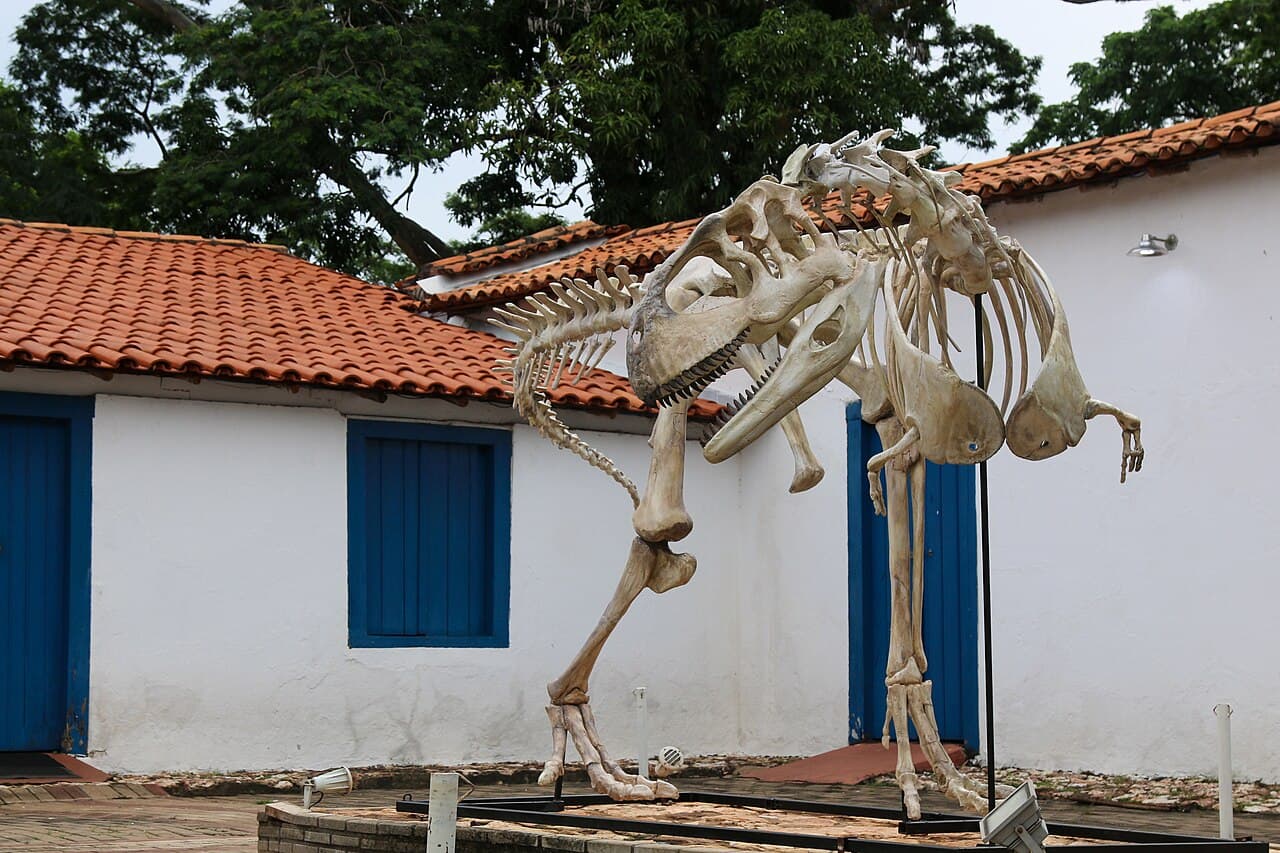
Replica of Pycnonemosaurus nevesi on display in a Brazilian museum.
MHNMT, CC BY-SA 4.0, via Wikimedia Commons