Gigantopithèque
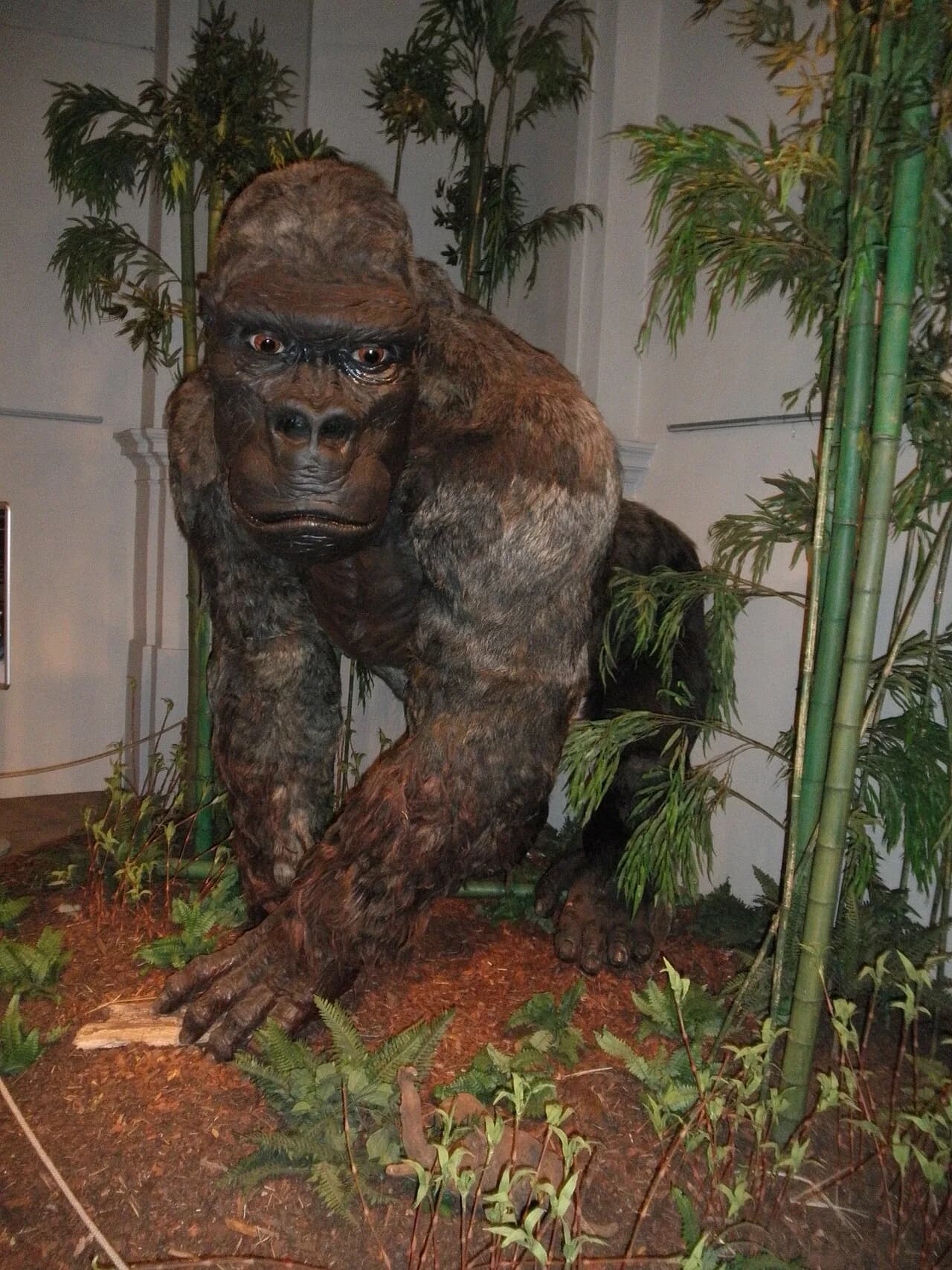
Gigantopithecus blacki is the largest known primate: around 3 metres standing and 200 to 300 kilograms. It haunted the forests of southern China and Vietnam between 2 million and 300,000 years ago. It is known only from teeth and jaws, with no complete skull or skeleton. Its stature has made it a recurring source of inspiration for Yeti legends.
Gigantopithecus lived during the Pleistocene, from approximately 2 million to 300,000 years ago, in the tropical and subtropical forests of Southeast Asia. This colossal primate appeared at the beginning of the Pleistocene in what is now southern China and northern Vietnam, where it coexisted for hundreds of thousands of years with other large mammals of the Asian megafauna. Gigantopithecus blacki is the only well-documented species of the genus, although two other older and smaller species have been proposed. The extinction of Gigantopithecus coincided with significant climatic and environmental changes during the Middle Pleistocene, notably the gradual transformation of dense forests into savannas and open grasslands, a habitat to which this forest giant could not adapt. Its disappearance occurred well before the arrival of Homo sapiens in the region, but it shared its territory with Homo erectus for a significant portion of its existence.
Gigantopithecus is considered the largest primate that ever existed on Earth. Estimates based on the size of its mandibles and molars suggest a stature that could reach 3 meters tall in an upright position, with an estimated weight between 200 and 300 kilograms. For comparison, the male mountain gorilla, the largest living primate today, barely exceeds 1.8 meters standing and 220 kg in exceptional cases. Gigantopithecus would therefore have been at least one and a half times taller than a silverback gorilla. However, these estimates remain approximate because no postcranial bones (limbs, pelvis, spine) have ever been found. The extraordinary size of its jaws and teeth leaves little doubt about its gigantic proportions, but debate persists regarding its exact build and precise body proportions.
Gigantopithecus was a specialized herbivore whose diet primarily consisted of bamboo, fruits, and fibrous vegetation from tropical forests. Analysis of dental microwear and phytoliths (plant silica particles) embedded in the enamel of its molars reveals a diet rich in tough plant fibers, very similar to that of the modern giant panda. Its enormous flat molars and powerful jaws were perfectly adapted for grinding tough bamboo stems and fibrous plant material. Carbon isotopic analysis of tooth enamel confirms an exclusively C3-plant diet, typical of dense forests, ruling out savanna grasses. This extreme dietary specialization was likely a key factor in its extinction: when bamboo forests shrank during the Middle Pleistocene, Gigantopithecus could not sufficiently diversify its diet to survive.
Gigantopithecus inhabited the dense tropical and subtropical forests of Southeast Asia, primarily in regions corresponding to present-day southern China (Guangxi, Guizhou, and Hubei provinces) and northern Vietnam. Its environment was characterized by broadleaf and bamboo forests with dense canopy cover, crossed by waterways and punctuated by limestone karst formations — it is precisely in caves within these karst landscapes that most fossils have been discovered. The climate was warm and humid, with abundant rainfall supporting lush vegetation. Gigantopithecus shared its habitat with a diverse fauna including the ancestral giant panda (Ailuropoda microta), the orangutan (Pongo), tapirs, Sumatran rhinoceros, stegodons, and Homo erectus. The fragmentation and reduction of this dense forest habitat, progressively replaced by more open environments, directly contributed to its extinction.
The anatomy of Gigantopithecus is known only through its teeth and mandibles, the sole fossils ever discovered for this species. No complete skull, no limb bones, and no postcranial elements have been found to date. Its mandibles are the most massive of any known primate: they measure approximately 30 centimeters wide and display exceptional robustness with a thick mandibular body and powerful ascending rami. Its molars are enormous, the largest of all hominids, with thick enamel and flat, crenulated chewing surfaces adapted for grinding hard plant material. The canines are proportionally small relative to the molars, an unusual trait among great apes that suggests low sexual dimorphism in canine size and a diet not requiring large canines for food processing. Enamel structure and dental morphology indicate a kinship with orangutans, placing Gigantopithecus within the Ponginae subfamily.
The behavior of Gigantopithecus remains largely speculative due to the extremely fragmentary fossil record limited to teeth and mandibles alone. Nevertheless, several reasonable inferences can be drawn from its dental morphology, diet, and comparison with living great apes. Its large body size suggests a primarily terrestrial lifestyle, as an animal weighing 200 to 300 kg could not have moved through the forest canopy like modern orangutans. It was likely solitary or lived in small family groups, similar to modern orangutans to which it is related. The low canine dimorphism could indicate reduced male-to-male competition compared to gorillas. Its pace of life was presumably slow, with prolonged maturation and a low reproductive rate, characteristics typical of great apes that make them particularly vulnerable to environmental changes and that partly explain why Gigantopithecus did not survive the climatic upheavals of the Middle Pleistocene.
The discovery story of Gigantopithecus is one of the most notable in paleontology. In 1935, German paleontologist Ralph von Koenigswald spotted an unusually giant molar in a Hong Kong apothecary shop, where it was being sold as a 'dragon bone' — a traditional ingredient in Chinese medicine. This tooth, far larger than any known primate molar, allowed him to describe the genus Gigantopithecus. Since that initial discovery, approximately 2,000 isolated teeth and four partial mandibles have been collected, primarily from karst caves in Guangxi, southern China, and in northern Vietnam. No postcranial bones have ever been found, likely because the acidic tropical forest environments rapidly decompose bone, while teeth with their resistant enamel survive fossilization better. In 2019, a major breakthrough was achieved through proteomic analysis of tooth enamel from a 1.9-million-year-old specimen, confirming that Gigantopithecus is a close relative of the orangutan within the Ponginae subfamily.
| Period | Pléistocène / Pleistocene |
| Era | Cénozoïque / Cenozoic |
| Age | 2 Ma - 300 000 ans |
| Location | Chine méridionale, Vietnam / Southern China, Vietnam |
| Length | ~3 m (debout / standing) |
| Height | 3 m |
| Weight | 200-300 kg |
| Diet | Herbivore |
| Discovery | 1935 |
Estimates suggest Gigantopithecus blacki could stand 3 meters tall and weigh 200 to 300 kg, making it the largest primate to ever exist. However, no postcranial bones have ever been found — only teeth and mandibles are known. All size estimates are extrapolated from the extraordinary size of its molars and mandibles, the most massive of any known hominid.
Gigantopithecus blacki likely went extinct due to the reduction of the dense bamboo forests it consumed exclusively. Isotopic analysis of tooth enamel confirms a C3 forest plant diet. During the Middle Pleistocene, the fragmentation of Southeast Asian forests in favor of more open environments deprived this specialized giant of its food resources. Its disappearance predates the arrival of Homo sapiens in the region.
The first Gigantopithecus blacki tooth was spotted in 1935 by German paleontologist Ralph von Koenigswald in a Hong Kong apothecary shop, sold as a 'dragon bone.' A proteomic analysis of tooth enamel from a 1.9-million-year-old specimen, published in 2019, confirmed that Gigantopithecus is a close relative of the orangutan within the Ponginae subfamily.
Gigantopithecus blacki, the largest primate that ever lived
Wikimedia Commons
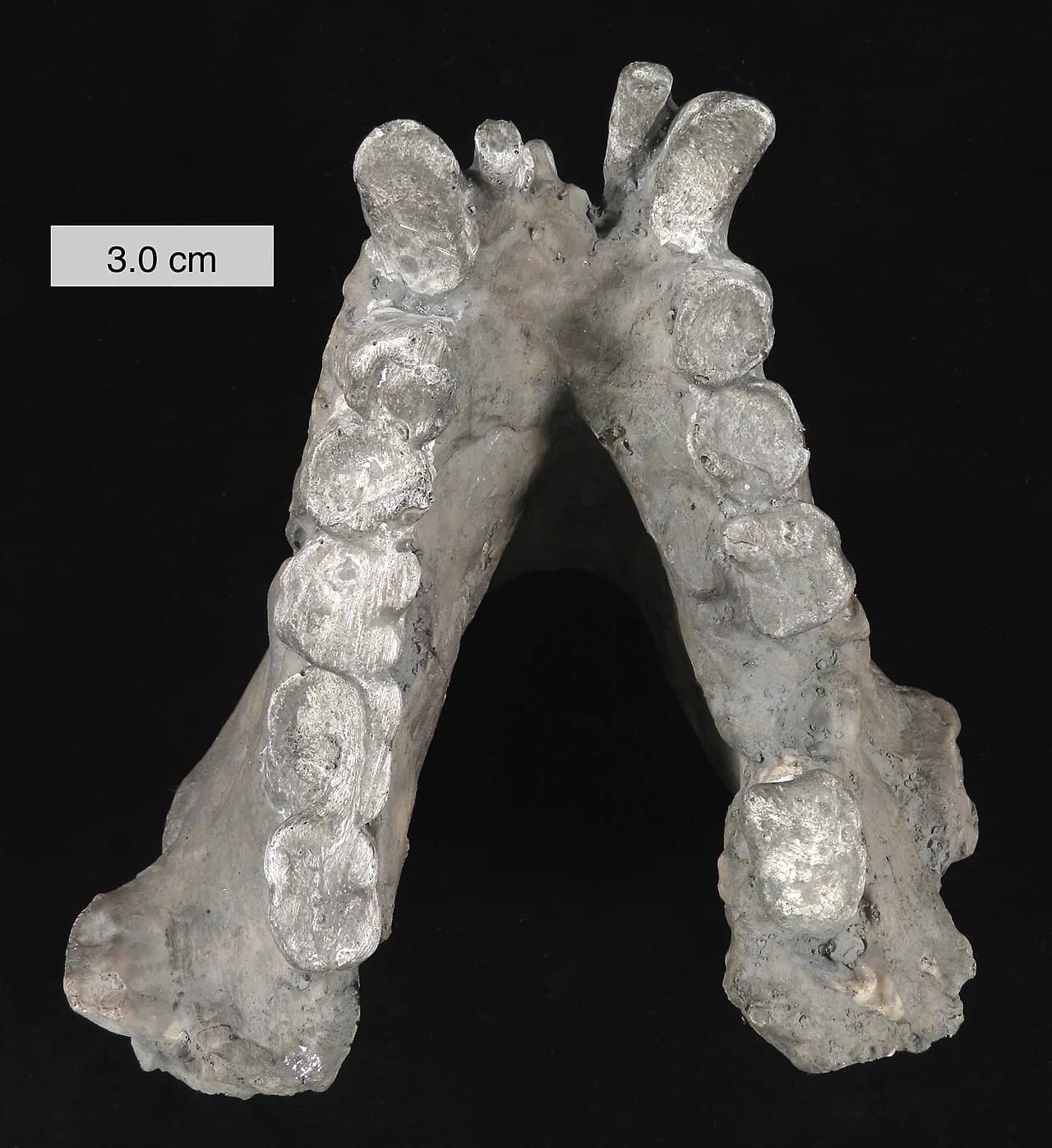
Gigantopithecus blacki, a giant ape from the forests of Asia
Wikimedia Commons