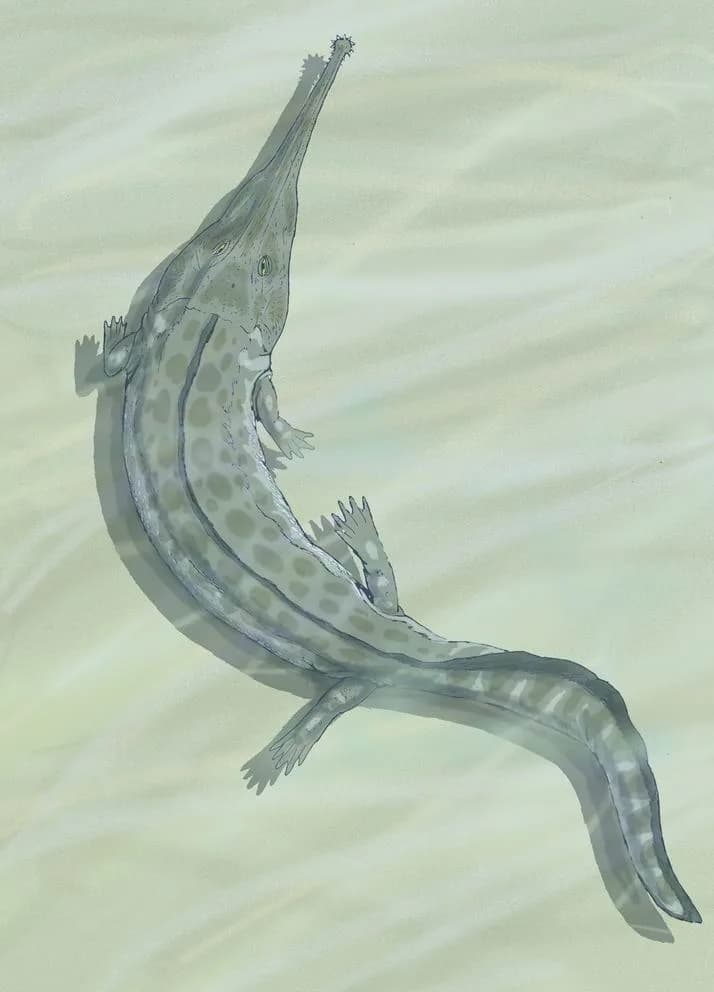
Prionosuchus
Prionosuchus plummeri is the largest amphibian known: up to 9 metres long and 500 to 2,000 kilograms. Described in 1948 from fossils in Piauí, Brazil, it lived around 270 million years ago. Its elongated skull recalls that of a gharial — a case of convergent evolution that happened 250 million years before those crocodilians.
Prionosuchus lived during the Middle Permian, approximately 270 million years ago. This giant temnospondyl belongs to the family Archegosauridae, a group of large aquatic amphibians that dominated freshwater ecosystems during the Permian across many Gondwanan regions. It evolved in the tropical lakes and rivers of present-day northeastern Brazil, at a time when this region lay near the equator within the supercontinent Pangaea. Prionosuchus is considered the largest amphibian that ever existed — an impressive title in a group that produced numerous giants throughout geological eras.
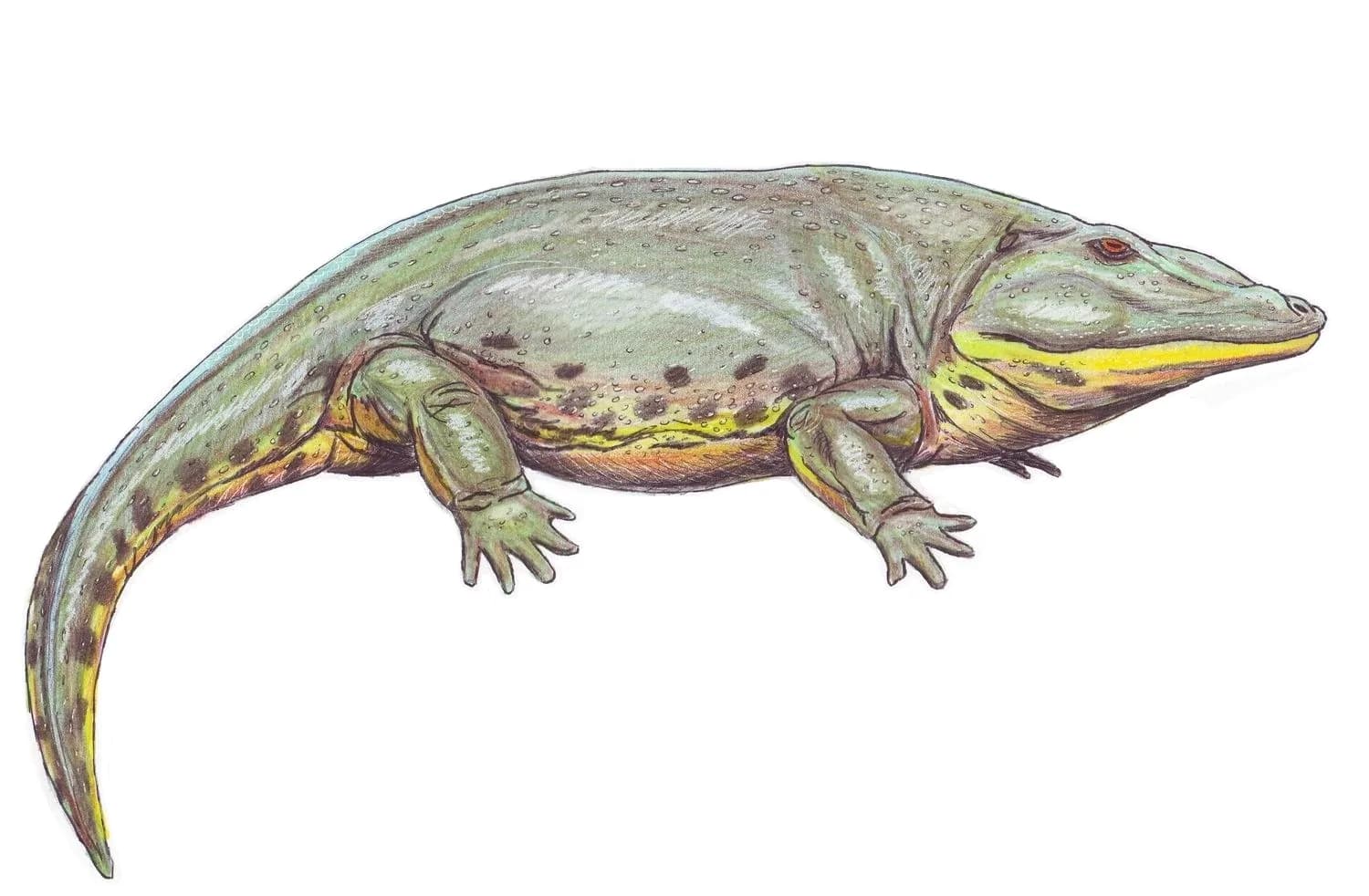
Prionosuchus holds the record for the largest amphibian of all time. Length estimates, based on an incomplete skull and comparisons with better-known archegosaurids, range between 5.5 and 9 meters depending on authors. The most commonly cited estimate is approximately 5.5 meters, but some paleontologists suggest the largest individuals may have exceeded 7 meters. Its gharial-shaped elongated skull probably measured approximately 1 meter long. Its weight is estimated between 500 kilograms and 2 tonnes, depending on the length estimate used. Its morphology was that of an elongated, hydrodynamic aquatic predator.
Prionosuchus was an aquatic apex predator specialized in catching fish and other aquatic vertebrates. Its elongated, narrow snout lined with sharp conical teeth is characteristic of piscivorous predators — a remarkable evolutionary convergence with modern gharials, Triassic phytosaurs, and Cretaceous spinosaurids. Its long, pointed teeth were perfectly adapted for grasping slippery prey such as fish and small aquatic tetrapods. Its hunting technique probably involved rapid lateral head movements to catch fish, similar to that of modern gharials and narrow-snouted crocodiles.
Prionosuchus inhabited the tropical lakes and rivers of the Pedra de Fogo Formation in the Parnaíba Basin, in present-day Piauí State in northeastern Brazil. During the Middle Permian, this region was located near the equator and enjoyed a warm, humid tropical climate with abundant waterways and lakes. The environment was a tropical rainforest crossed by large river systems — an ideal habitat for a giant aquatic predator. It shared this ecosystem with other amphibians, fish, and the earliest terrestrial vertebrate communities of eastern Gondwana.
The anatomy of Prionosuchus is dominated by its gharial-shaped elongated skull, with a narrow, pointed snout bearing numerous interlocking conical teeth. This cranial morphology is an adaptation to piscivory — the narrow jaws create less water resistance and allow rapid lateral movements. Its orbits are positioned dorsally and slightly posteriorly, typical of a predator watching from the surface. Its body was elongated and laterally compressed, with a large tail serving as the main propulsor. Its limbs were relatively small compared to its body, suggesting a primarily aquatic lifestyle with rare terrestrial excursions.
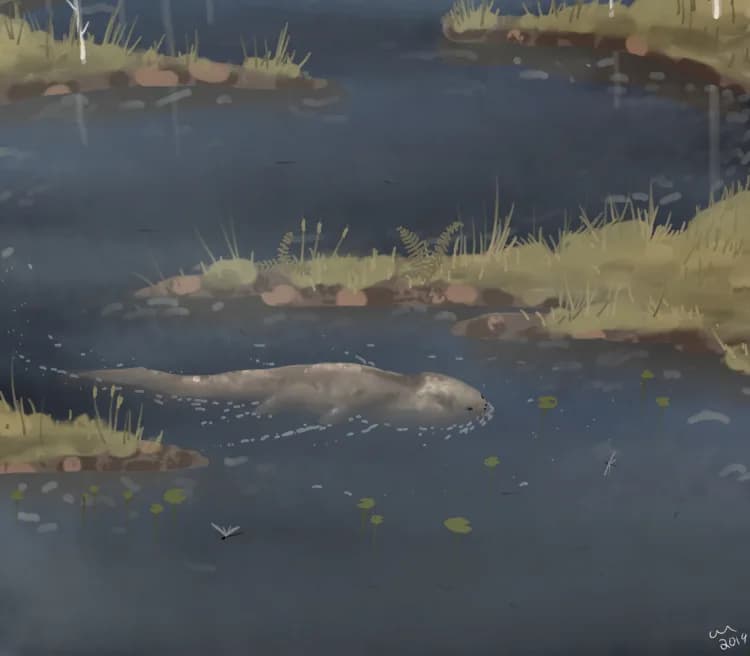
Prionosuchus was a specialized aquatic predator, probably spending nearly its entire life in water. Its gharial-like snout and hydrodynamic morphology indicate an active hunter in open water, capable of rapid pursuit in tropical rivers and lakes. It probably positioned itself in currents with mouth open facing the flow, waiting for fish to pass between its jaws — a technique still used by the modern Ganges gharial. Its large size made it the dominant predator of its aquatic ecosystem, with no known rival in Permian Brazilian freshwaters.
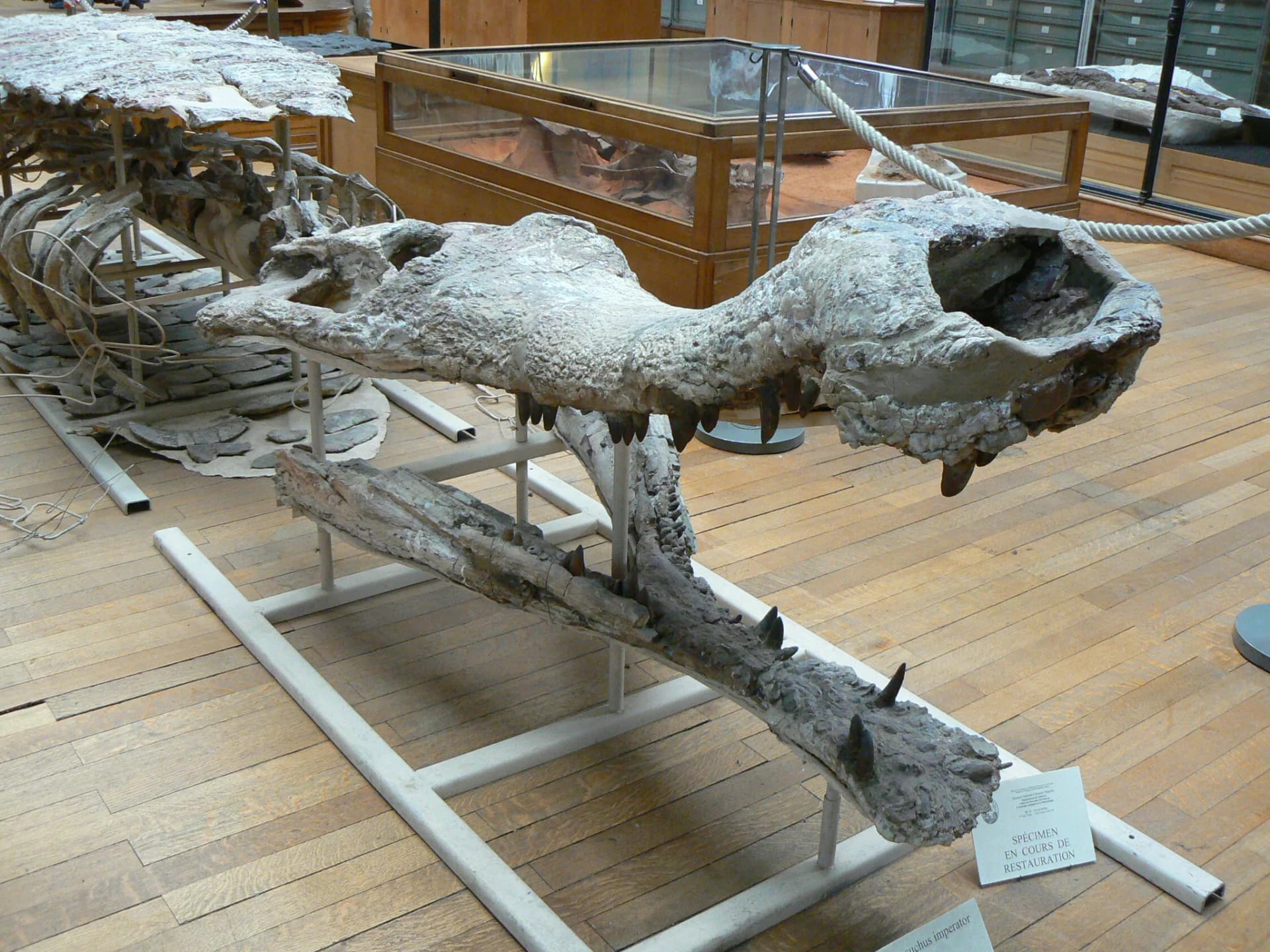
Prionosuchus was described in 1948 by paleontologist L.I. Price from fossils discovered in the Pedra de Fogo Formation, in the Parnaíba Basin of northeastern Brazil. The name means 'saw crocodile' (from Greek prion 'saw' + suchos 'crocodile'), referring to its serrated teeth. The holotype consists of an incomplete skull and fragmentary postcranial elements. Despite the fragmentary nature of the material, the distinctive skull morphology allowed clear identification as an archegosaurid. Additional remains discovered in the same formation have allowed better estimation of its colossal size, though complete skeletons remain to be discovered.
| Period | Permien moyen / Middle Permian |
| Era | Paléozoïque / Paleozoic |
| Age | ~270 Ma |
| Location | Brésil (Piauí) / Brazil (Piauí) |
| Length | 5.5-9 m |
| Height | 80 cm |
| Weight | 500-2000 kg |
| Diet | Piscivore |
| Discovery | 1948 |
Neither. Prionosuchus plummeri was a giant temnospondyl of the family Archegosauridae — an amphibian, not a reptile. It lived in the Middle Permian (about 270 Ma) in Brazil, long before the first dinosaurs. Despite its appearance and its name meaning 'saw crocodile,' it is the largest amphibian of all time.
Prionosuchus plummeri is estimated between 5.5 and 9 meters long depending on the author, with a weight between 500 kilograms and 2 tonnes. Its gharial-shaped elongated skull probably measured about 1 meter. These estimates remain uncertain as only an incomplete skull and fragmentary postcranial elements have been found in the Pedra de Fogo Formation (Piauí, Brazil).
Prionosuchus plummeri had a narrow, elongated snout lined with interlocking conical teeth, adapted for catching fish in the Permian lakes and rivers of Brazil. This morphology is a case of convergent evolution with modern gharials (Gavialis gangeticus), Triassic phytosaurs, and Cretaceous spinosaurids — piscivorous predators separated by hundreds of millions of years.
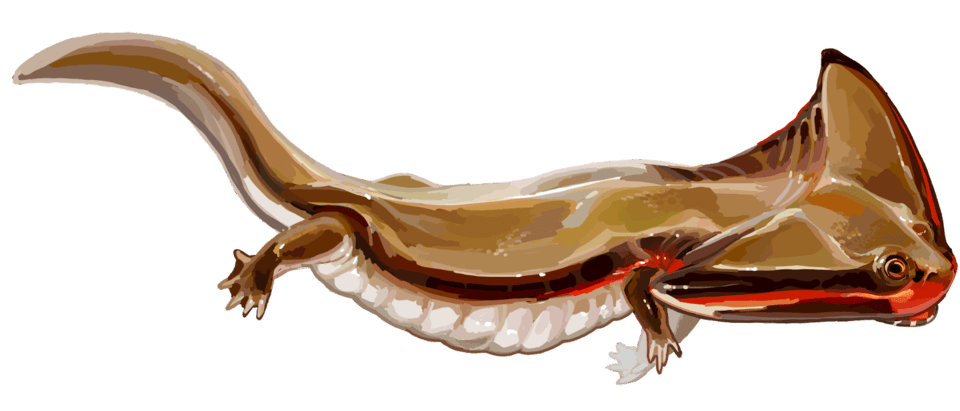
Prionosuchus plummeri life reconstruction
Dmitry Bogdanov, CC BY 3.0
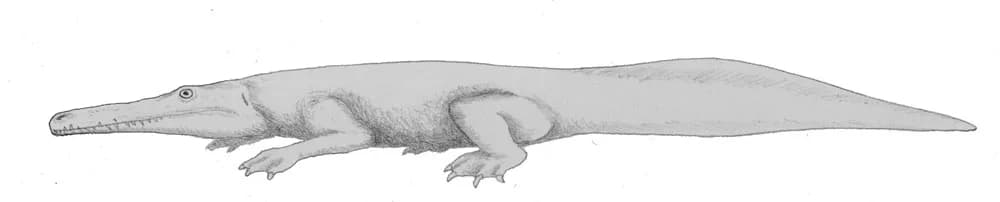
Prionosuchus fossil
Ghedoghedo, CC BY-SA 3.0