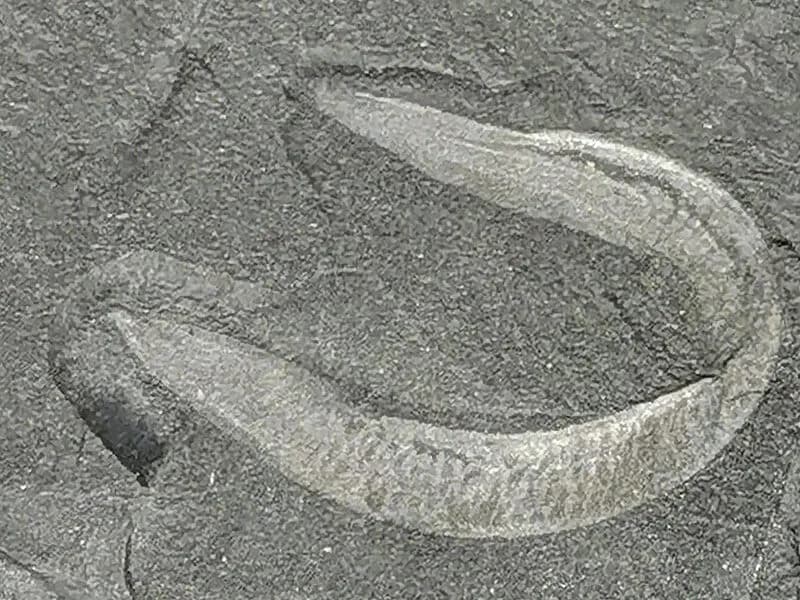
Pikaia
Pikaia gracilens measures only 5 centimetres, yet it carries a notochord: the supporting structure from which the vertebral column derives. On that basis it is often presented as a close relative of the stock from which all vertebrates descend, fish and mammals alike. It comes from the Burgess Shale in British Columbia and dates to 508 million years ago.
Pikaia lived during the Middle Cambrian, approximately 508 million years ago, in the shallow seas that covered what is now British Columbia, Canada. This period corresponds to the heart of the Cambrian Explosion, the most revolutionary event in the history of life on Earth, during which virtually all major animal phyla appeared within just a few million years. Pikaia is one of the most famous animals from the Burgess Shale deposit, an exceptional fossil site classified as a UNESCO World Heritage Site. Its significance far exceeds its modest size: Pikaia is considered one of the earliest known chordates.
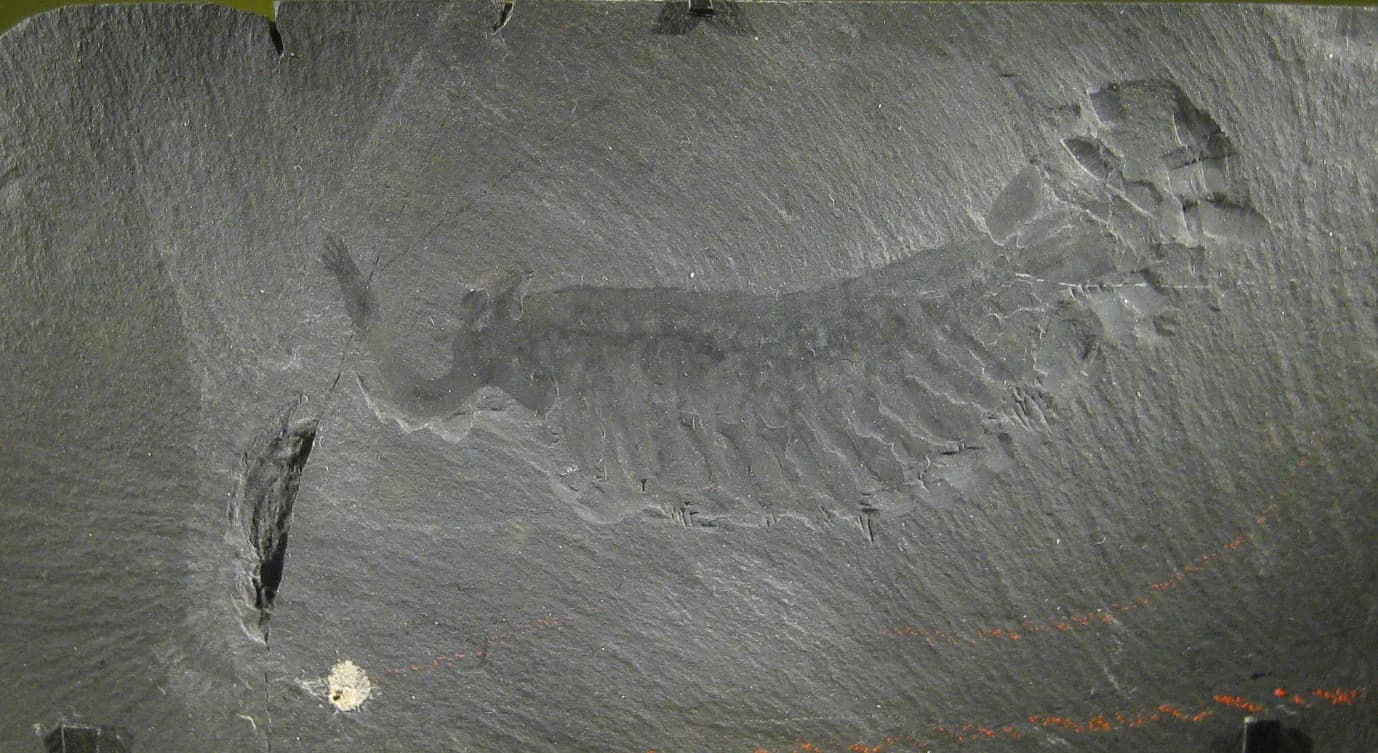
Pikaia gracilens was a tiny creature, measuring approximately 5 centimeters in length and barely 1 centimeter in height. Its body was laterally compressed, elongated, and fusiform, vaguely resembling the shape of a small eel or primitive anchovy. Its weight probably did not exceed a few grams. Despite this tiny size, Pikaia possessed a remarkably sophisticated body organization for its time: segmented muscle blocks (myomeres) arranged in chevron patterns along the body, a rigid notochord serving as a support axis, and a small head bearing two sensory tentacles. This anatomy already foreshadows the body plan of all future vertebrates.
Pikaia likely fed by filtration, ingesting tiny organic particles, phytoplankton, and bacteria suspended in the water. Its small ventral mouth, lacking jaws, drew in water containing nutrients while gill-like structures filtered food particles. This filter-feeding mode is similar to that of the modern amphioxus (Branchiostoma), a living primitive chordate considered a contemporary analogue of Pikaia. Some researchers suggest it may also have scraped bacterial biofilms from the seafloor. Its microphagous diet placed it at the bottom of the Cambrian food chain, as prey for larger predators like Anomalocaris.
Pikaia lived in the shallow, warm marine waters of the Middle Cambrian, in a tropical environment situated near the equator. The Burgess Shale site represents an ancient sponge reef located at the foot of a steep underwater escarpment called 'the Cathedral.' Underwater mud flows periodically buried seafloor communities, preserving soft-bodied organisms in extraordinary detail. Pikaia probably swam above the seafloor in the open water column, avoiding benthic predators. It coexisted with a teeming community of extraordinary Cambrian organisms including Anomalocaris, Hallucigenia, Opabinia, and Wiwaxia.
Pikaia's anatomy is of paramount importance for understanding vertebrate evolution. Its elongated body bore a series of myomeres (segmented muscle blocks) arranged in V-shaped or chevron patterns, visible as regular bands in the fossils. A notochord — a semi-rigid rod running the entire length of the body — served as an internal support axis, the ancestor of the vertebrate spinal column. Its head bore two small tentacles whose exact function remains debated: tactile sensory organs, chemoreceptors, or feeding structures. A low, continuous dorsal fin ran along the back, while a small caudal fin terminated the body. These features firmly classify it among basal chordates.
Pikaia was an active swimmer that moved by lateral undulation of its body, propelled by alternating contractions of its segmented myomeres — exactly the same mechanism used by modern fish. This undulatory locomotion, made possible by the rigid notochord serving as an anchor point for muscles, was remarkably efficient for such a primitive animal. Pikaia probably swam in small groups in the water column above the seafloor, filtering nutritive particles in suspension. Its swimming speed was modest, making it vulnerable to large Cambrian predators. Its pelagic lifestyle distinguished it from many other Burgess Shale animals that were benthic.
Pikaia was initially described in 1911 by Charles Doolittle Walcott, the discoverer of the Burgess Shale deposit, under the name Pikaia gracilens. The genus name references Pika Peak, a mountain summit near the discovery site in the Canadian Rocky Mountains. Over 60 specimens have been found in the Burgess Shale layers. Simon Conway Morris redescribed it in 1979, recognizing its importance as one of the earliest chordates. In 2012, a detailed study by Jean-Bernard Caron and colleagues, published in Biological Reviews, confirmed the presence of the notochord and myomeres, solidifying its status as a basal chordate. The Royal Ontario Museum in Toronto houses the majority of known specimens.
| Period | Cambrien moyen / Middle Cambrian |
| Era | Paléozoïque / Paleozoic |
| Age | 508 Ma |
| Location | Schistes de Burgess, Colombie-Britannique, Canada / Burgess Shale, British Columbia, Canada |
| Length | 5 cm |
| Height | 1 cm |
| Weight | < 1 g |
| Diet | Filtreur |
| Discovery | 1911 |
Pikaia gracilens was neither a fish nor an invertebrate in the strict sense. It was a basal chordate: an animal possessing a notochord (ancestor of the spinal column) but without bony vertebrae or jaws. Measuring 5 cm, it sits in the ancestral lineage of all vertebrates, well before the first jawed fish that appeared tens of millions of years later.
Pikaia gracilens, dating to 508 million years ago (Middle Cambrian, Burgess Shale), is one of the earliest known evidence of a notochord — the precursor structure to the spinal column. In 2012, Caron et al. (Biological Reviews) confirmed its segmented myomeres and notochord, solidifying its status as a basal chordate and milestone in understanding vertebrate origins.
Pikaia gracilens measured approximately 5 cm in length and weighed less than one gram. It fed by filtration, drawing in water through its ventral mouth and filtering bacteria, phytoplankton, and suspended organic particles in the shallow Middle Cambrian seas. This feeding mode is similar to that of the living amphioxus (Branchiostoma), its closest modern analogue.
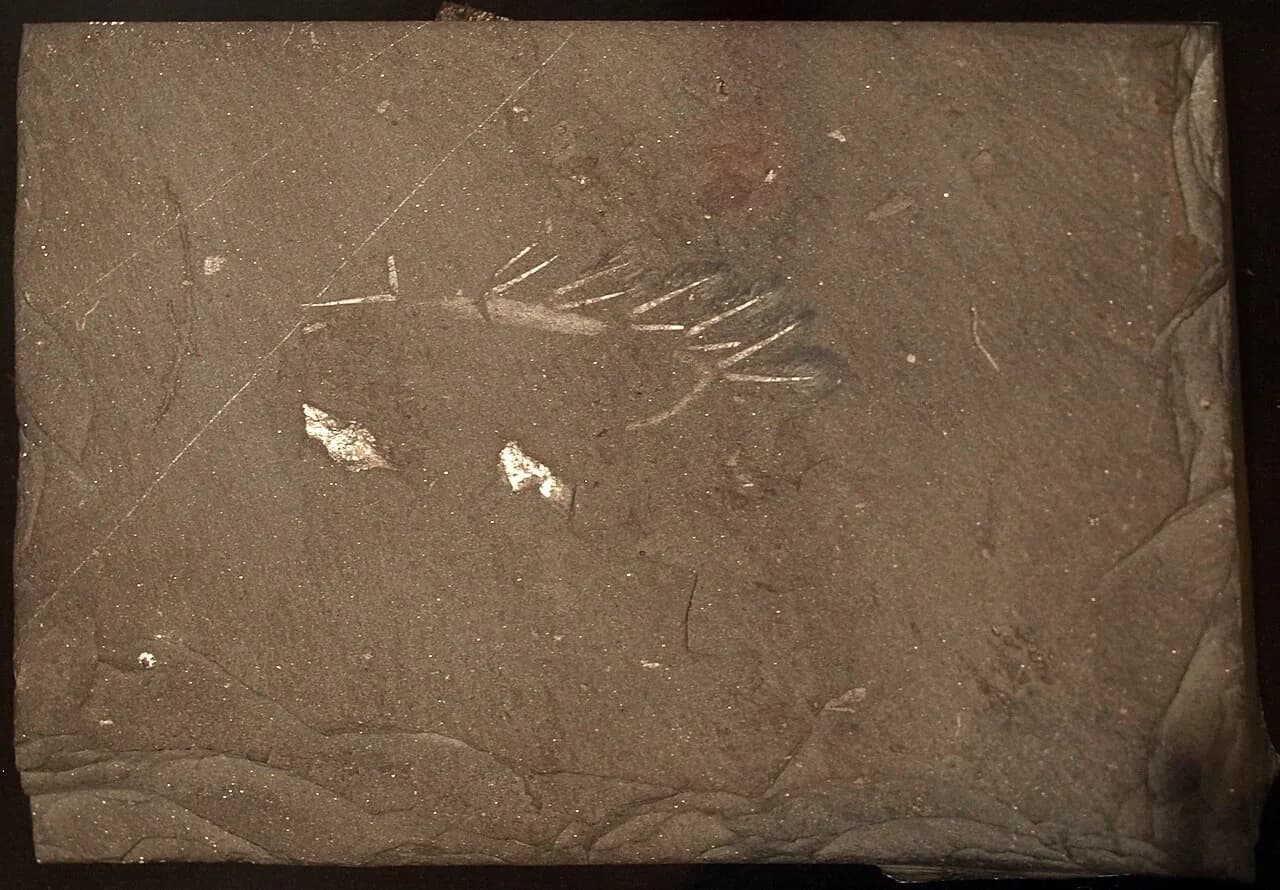
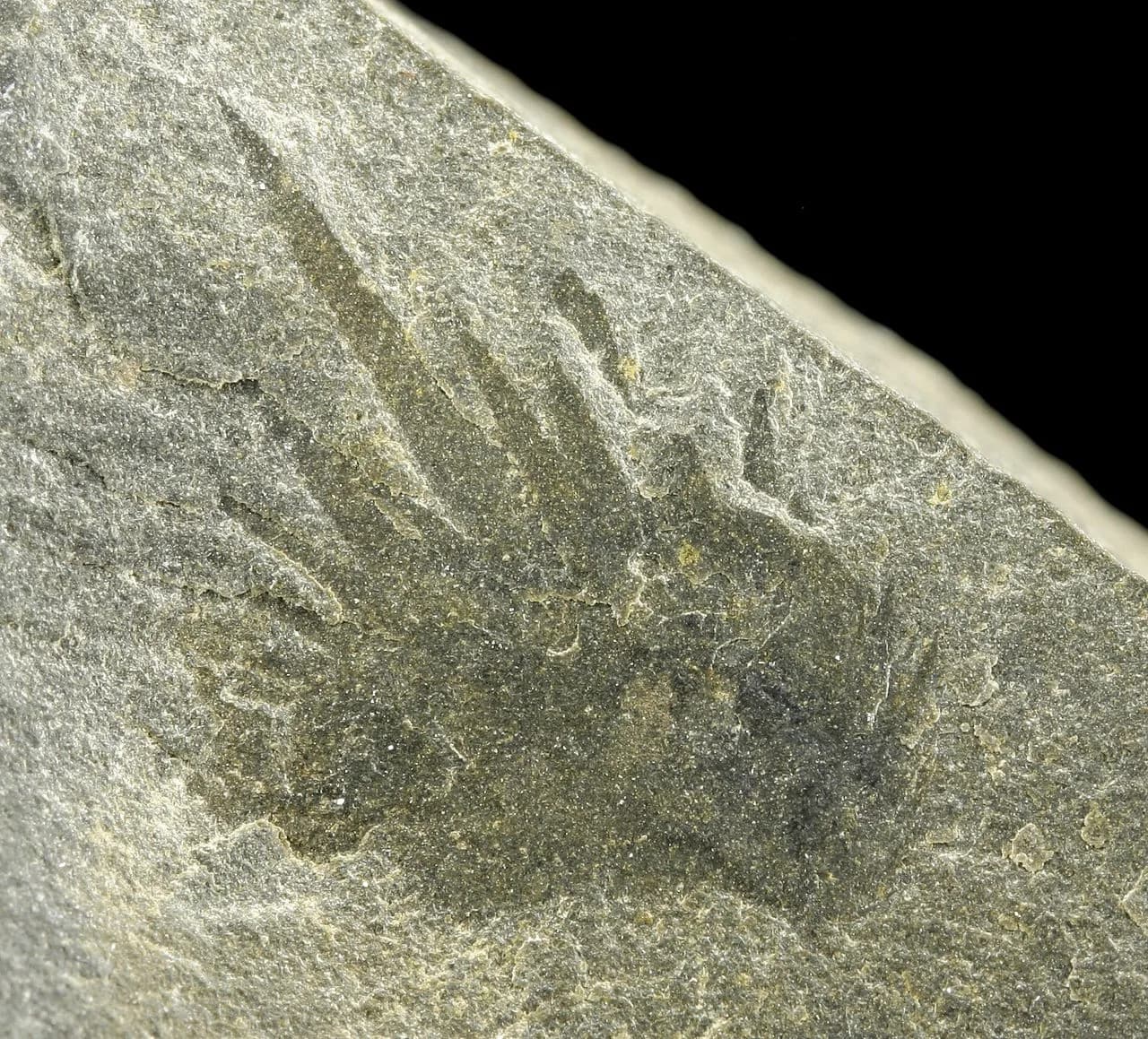
Fossil of Pikaia gracilens from the Burgess Shale
Wikimedia Commons
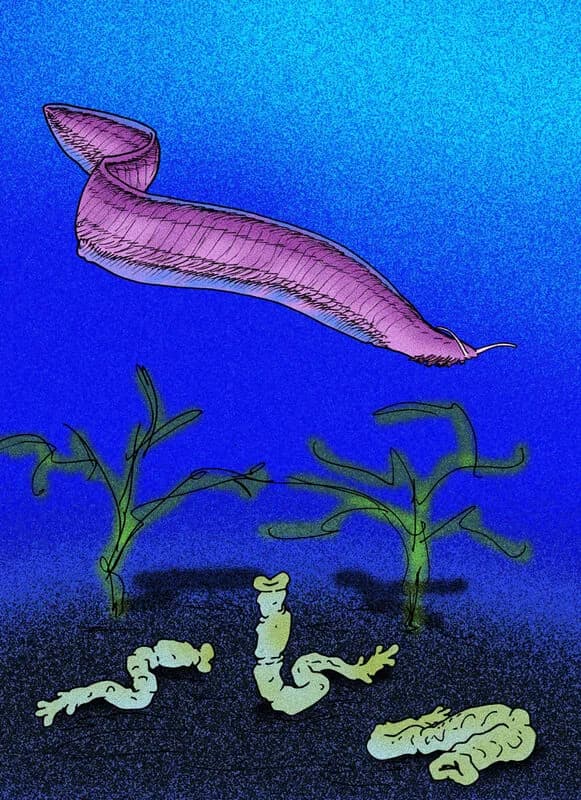
Fossil specimen of Pikaia gracilens showing segmented myomeres
Wikimedia Commons