Baleine du Pakistan
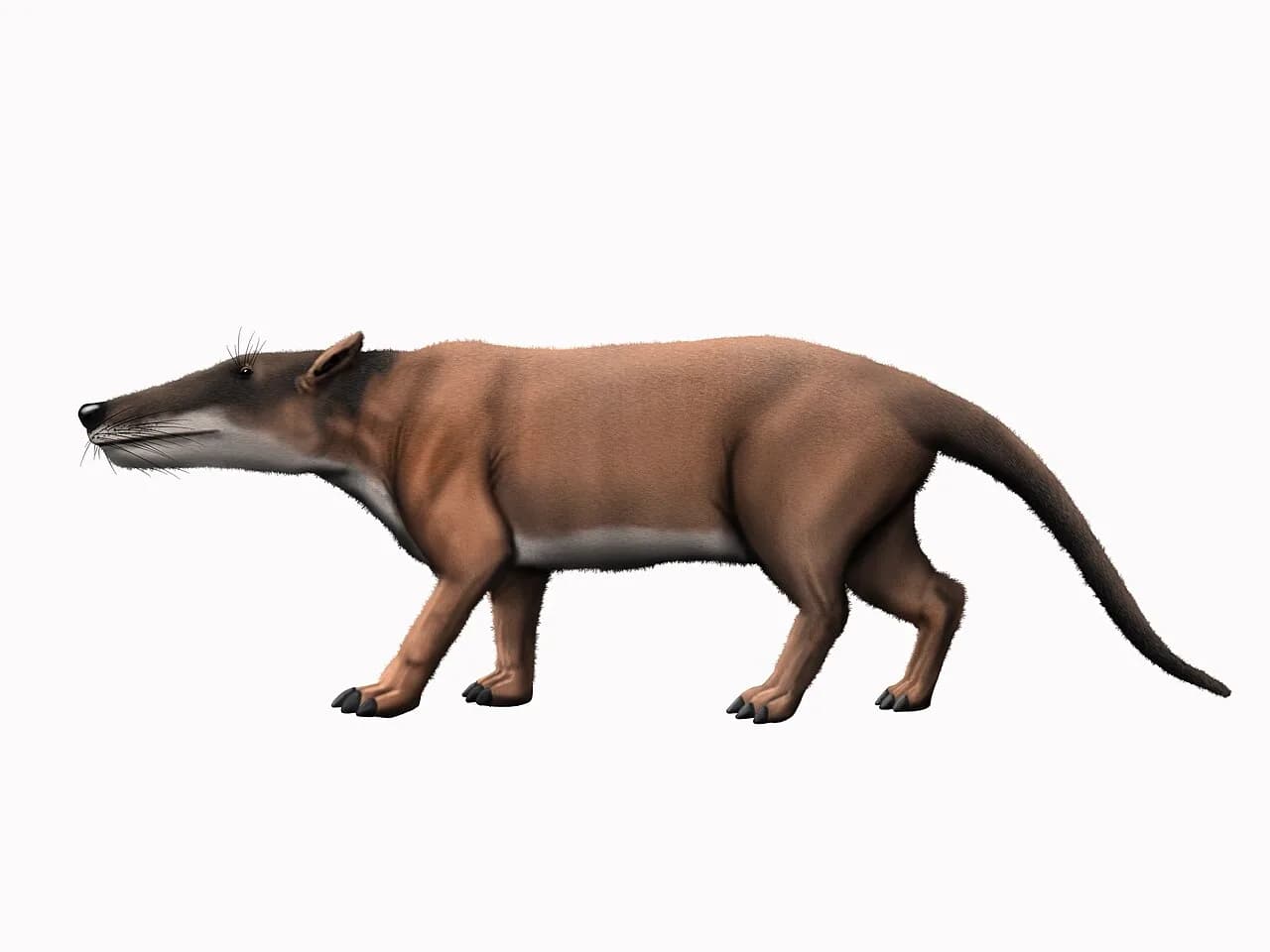
Pakicetus inachus is the oldest known ancestor of whales, yet it looked like a wolf: 1 to 2 metres and 25 to 50 kilograms, on four legs. Nothing in its outline gave it away. It was the structure of its inner ear, unique to cetaceans, that established the link. Described in 1983 in Pakistan, it lived 56 to 50 million years ago.
Pakicetus inachus lived during the Early Eocene, approximately 56 to 50 million years ago, a crucial era in the evolutionary history of marine mammals. This small terrestrial mammal is recognized as the oldest known ancestor of cetaceans, the group that includes modern whales, dolphins, and porpoises. It lived on the shores of the ancient Tethys Sea, a vast tropical ocean that separated the continents of Gondwana and Laurasia, in the region corresponding to present-day Pakistan and India. Pakicetus represents the very beginning of an extraordinary evolutionary transition: the passage from terrestrial quadruped mammals to entirely aquatic creatures, a process that spanned approximately 15 million years and constitutes one of the most spectacular transformations in the animal kingdom.
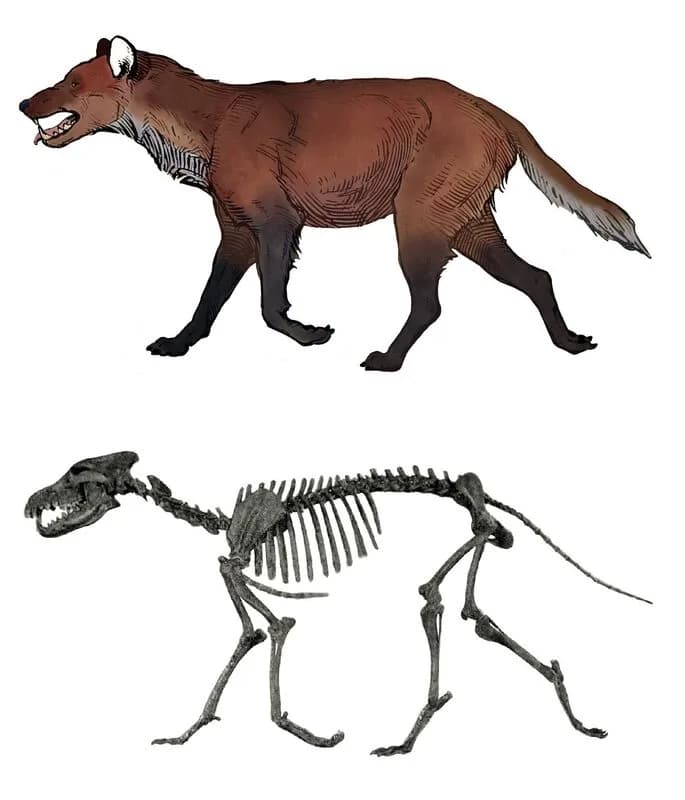
Pakicetus inachus was a modestly sized mammal, far removed from the colossal dimensions of its whale descendants. It measured between 1 and 2 meters in length, with a shoulder height of approximately 50 centimeters, roughly the size of a modern gray wolf. Its estimated weight ranged between 25 and 50 kilograms, comparable to a medium to large-sized dog. Its general silhouette resembled a canid or mesonychid more than a cetacean, with an elongated body, well-developed limbs for terrestrial locomotion, and a relatively long tail. Its body proportions indicated an agile animal and probable good runner, capable of moving efficiently on land while also being comfortable in the shallow waters of rivers and coastal estuaries.
Pakicetus inachus was an active carnivore that primarily hunted fish and small aquatic animals in rivers and coastal estuaries bordering the ancient Tethys Sea. Analysis of its teeth, equipped with sharp triangular molars typical of early cetaceans, reveals an adaptation for grasping and cutting slippery prey such as fish. Oxygen isotope studies of Pakicetus dental enamel showed that it primarily consumed fresh water, suggesting it hunted in rivers rather than the open sea. Its diet probably also included crustaceans, amphibians, and small reptiles found along riverbanks. Unlike modern whales that filter plankton or hunt in the open ocean, Pakicetus was a shoreline predator that entered the water to hunt before returning to dry land, similarly to a giant otter.
Pakicetus inachus inhabited the coastal regions and estuaries of the northern Indian subcontinent during the Early Eocene, in a warm and humid tropical environment bordering the ancient Tethys Sea. This now-vanished sea stretched between Africa and Eurasia, and its Pakistani shores offered an ideal habitat combining fresh, brackish, and marine waters. The Kuldana and Chorlakki geological formations in Pakistan, where Pakicetus fossils were discovered, correspond to ancient floodplain environments with meandering rivers and coastal lagoons. The Early Eocene climate was considerably warmer than today, with global average temperatures over 10 degrees Celsius higher. This semi-aquatic environment provided Pakicetus with an abundance of aquatic prey while allowing it to retreat to land to escape marine predators.
The anatomy of Pakicetus inachus constitutes a remarkable snapshot of cetacean evolution at its earliest stage. Externally, nothing distinguished it from an ordinary terrestrial mammal: four well-developed legs, an elongated snout, and a fur-covered body. However, examination of its inner ear reveals the secret of its connection to whales. The tympanic bone of Pakicetus, the auditory bulla that protects the middle ear, presented a unique intermediate structure between that of terrestrial mammals and cetaceans. In modern whales, this bone is dense and isolated from the skull to capture sound vibrations in water. In Pakicetus, this structure was partially developed, allowing it to hear correctly both on land and underwater, a remarkable transitional adaptation. Its eyes were positioned on top of the skull, suggesting a semi-aquatic lifestyle similar to crocodiles or hippopotamuses.
Pakicetus inachus likely led a semi-aquatic lifestyle comparable to that of an otter or giant mink, spending a significant portion of its time in rivers and estuaries while remaining fundamentally a terrestrial animal. Its dorsally positioned eyes allowed it to watch for prey and predators while keeping its body partially submerged, a strategy adopted by many semi-aquatic predators. It likely hunted from ambush along riverbanks or by actively swimming in shallow waters, using its legs for propulsion rather than a nonexistent tail fluke. Its underwater hearing ability, though primitive compared to modern whales, gave it an advantage in detecting fish and aquatic prey. Pakicetus was probably a diurnal animal, either solitary or living in small family groups along waterways.
Pakicetus was first described in 1983 by paleontologists Philip Gingerich and Donald Russell, based on cranial fragments discovered in the Kuldana geological formation in northern Pakistan, in Punjab province. The name Pakicetus literally means 'whale of Pakistan,' combining the country's name with the Latin cetus meaning whale. The initial discovery comprised only a partial skull and some teeth, which led scientists to imagine an already semi-aquatic animal resembling a seal. It was not until 2001, with the discovery of more complete skeletons by Hans Thewissen and his team, that the true terrestrial appearance of Pakicetus was revealed, overturning previous reconstructions. These new fossils showed a terrestrial quadruped resembling a wolf, capable of running on land. The discovery of Pakicetus is considered one of the most compelling pieces of evidence for Darwinian evolutionary theory.
| Period | Éocène inférieur / Early Eocene |
| Era | Cénozoïque / Cenozoic |
| Age | 56 - 50 Ma |
| Location | Pakistan / Pakistan |
| Length | 1-2 m |
| Height | 0.5 m (au garrot / at shoulder) |
| Weight | 25-50 kg |
| Diet | Carnivore |
| Discovery | 1983 |
Pakicetus inachus was fundamentally terrestrial. Measuring 1 to 2 meters and 25 to 50 kg, it resembled a canid and had four well-developed legs. It hunted in rivers and estuaries but remained a semi-aquatic terrestrial animal. It was only in 2001, with the discovery of complete skeletons, that its true appearance was understood, differing entirely from the early seal-like reconstructions.
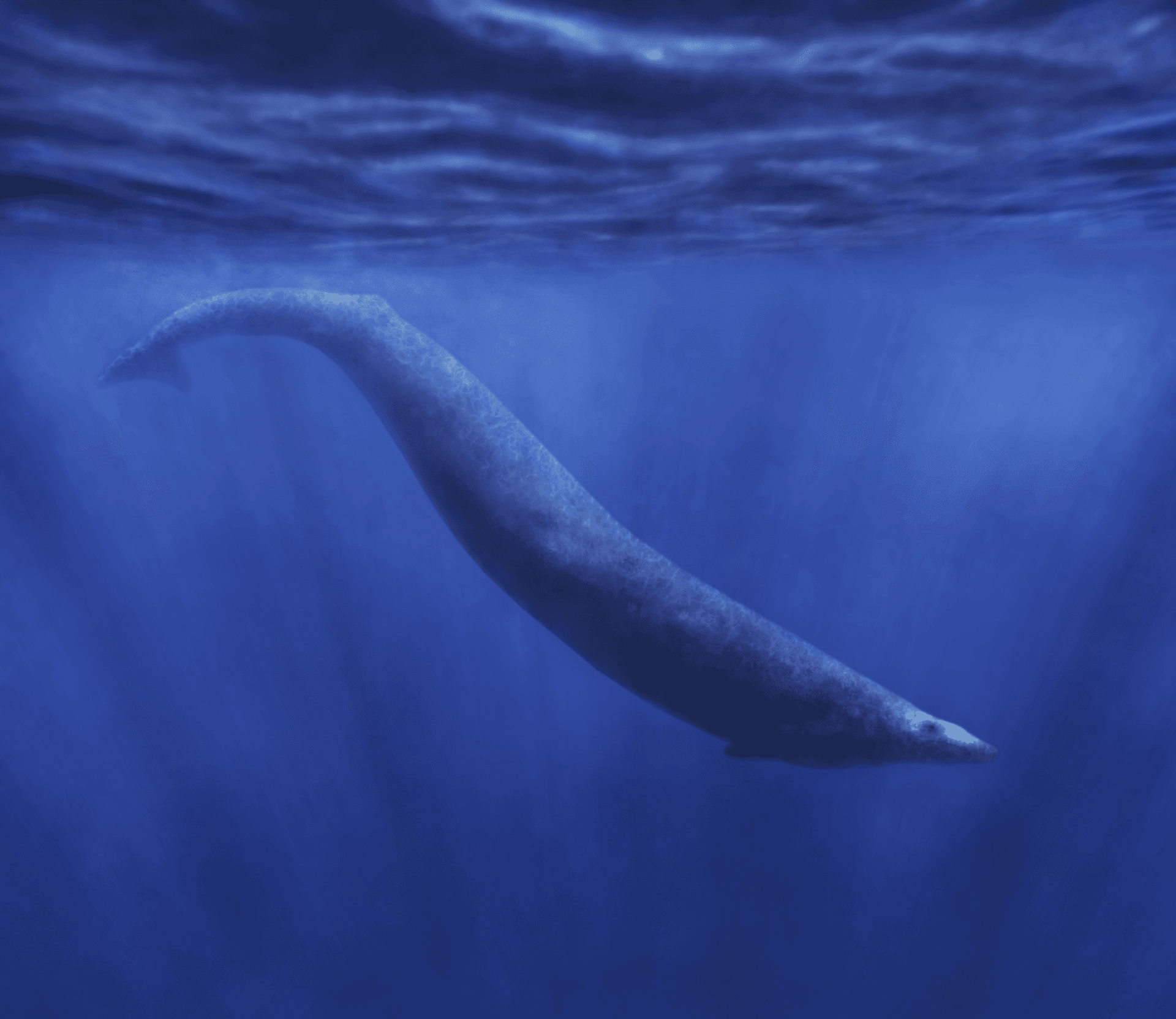
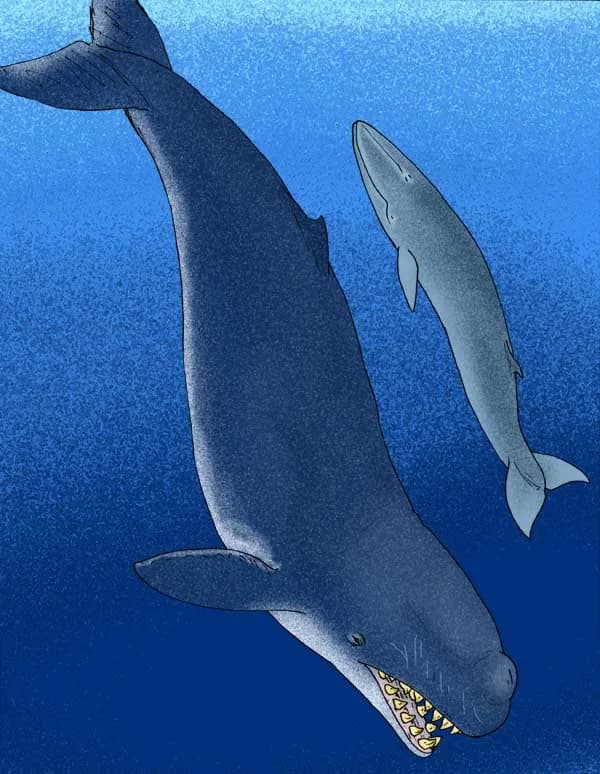
Pakicetus inachus is recognized as one of the oldest known ancestors of cetaceans (whales, dolphins, porpoises). Its tympanic bone shows an intermediate structure between that of terrestrial mammals and cetaceans — anatomical evidence of its transitional position. In just 15 million years, its descendants went from this 50 kg quadruped to the 18-meter-long Basilosaurus.
Pakicetus inachus lived during the Early Eocene, 56 to 50 million years ago, on the shores of the ancient Tethys Sea in what is today Pakistan (Punjab province, Kuldana Formation). This warm tropical climate, with rivers and coastal lagoons, provided an abundance of fish to catch and the ability to retreat onto dry land.
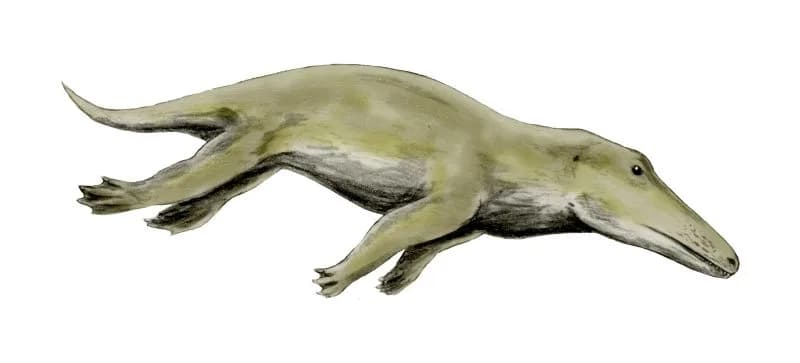
Artistic reconstruction of Pakicetus inachus in its coastal environment
Wikimedia Commons
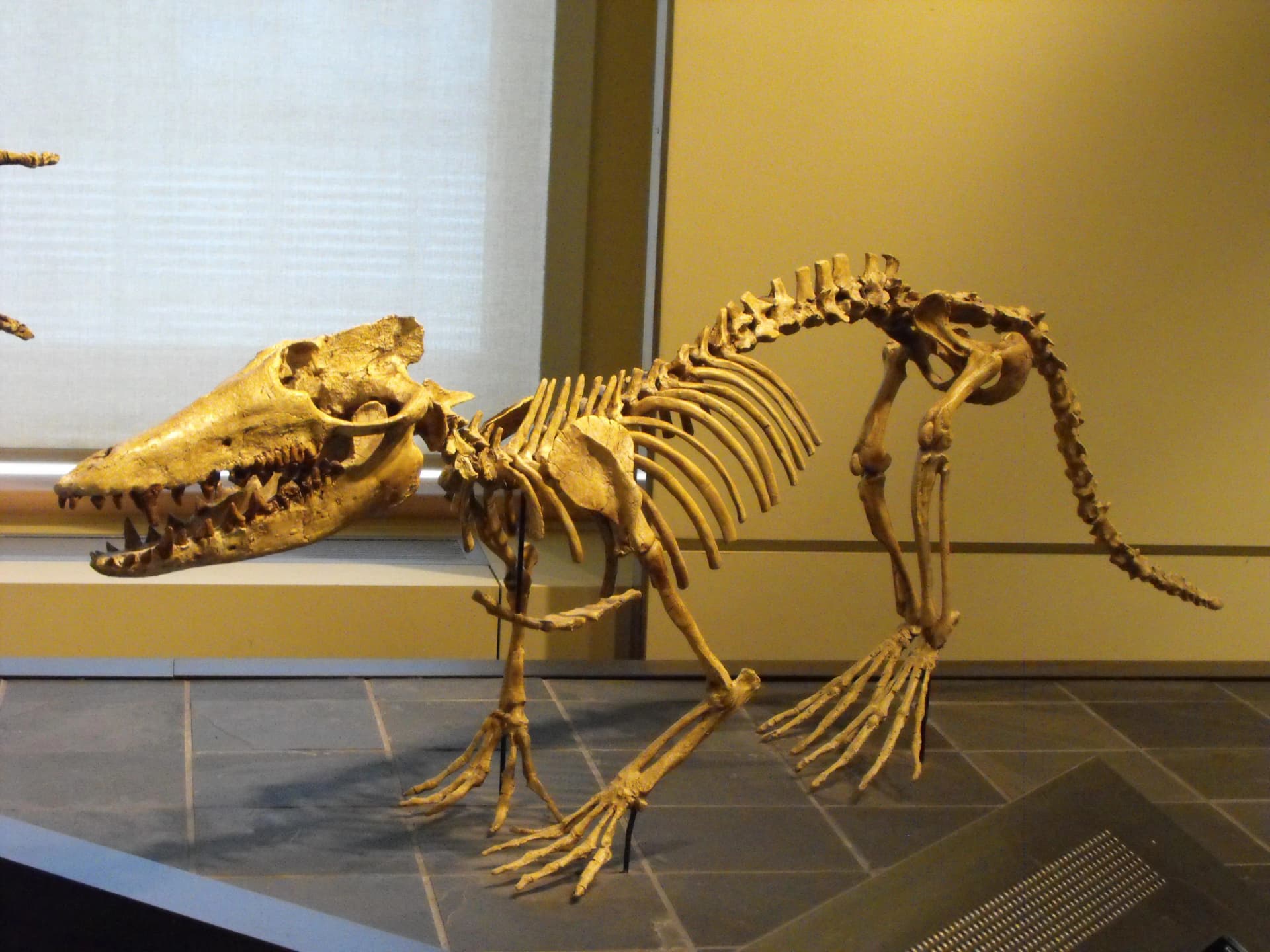
Reconstructed skeleton of Pakicetus on museum display
Wikimedia Commons