Basilosaure
Basilosaurus cetoides is an archaic whale 15 to 18 metres long and 5 to 8 tonnes, which hunted the seas 41 to 34 million years ago. Its name means « king lizard »: a misclassification made in 1834 that the nomenclature has kept ever since. It still carried vestigial hind legs 60 centimetres long, direct evidence of the land origin of whales.
Basilosaurus cetoides lived during the Late Eocene, approximately 41 to 34 million years ago. Despite its misleading name meaning 'king lizard,' Basilosaurus is not a reptile but one of the first giant whales in history, an archaeocete cetacean that swam in the warm Tethys seas. It represents a crucial stage in cetacean evolution: its ancestors were four-legged terrestrial mammals that returned to the sea in the early Eocene, and Basilosaurus illustrates an advanced stage of this transition. Its hind limbs were vestigial but still present, too small for locomotion but witnesses to its terrestrial heritage.
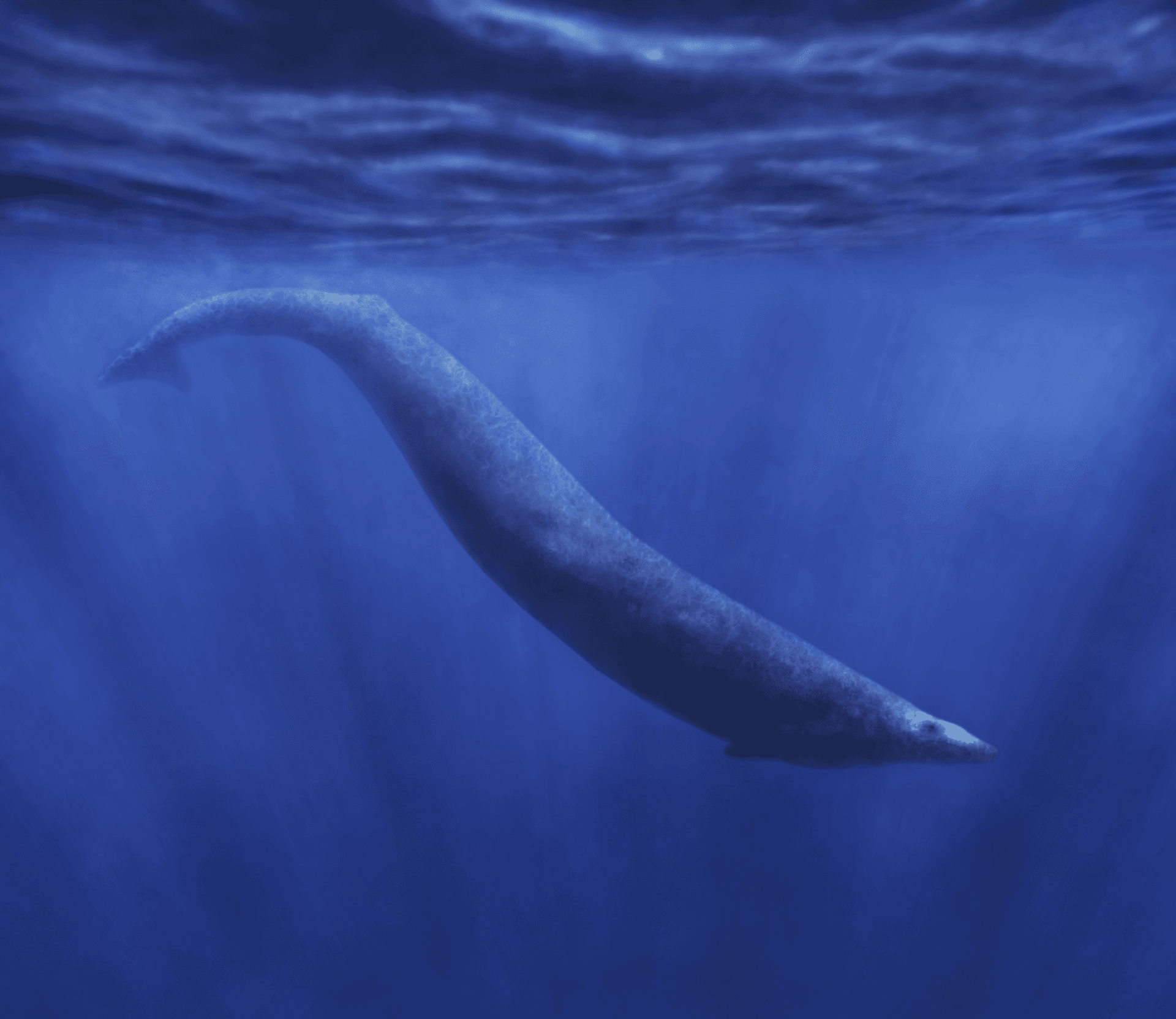
Basilosaurus was one of the largest marine animals of the Eocene and the largest known cetacean of its time. B. cetoides, the North American species, reached 15 to 18 meters in length, while B. isis, the Egyptian-African species, measured approximately 15 to 18 meters as well. Its estimated weight ranged between 5 and 8 tonnes, relatively light for its length due to its extremely elongated, serpentine body. Unlike modern whales with fusiform, compact bodies, Basilosaurus had an exceptionally long, narrow body with a spine containing over 70 vertebrae, many of which were elongated. This serpentine morphology is unique among cetaceans and gave it an appearance very different from modern whales.
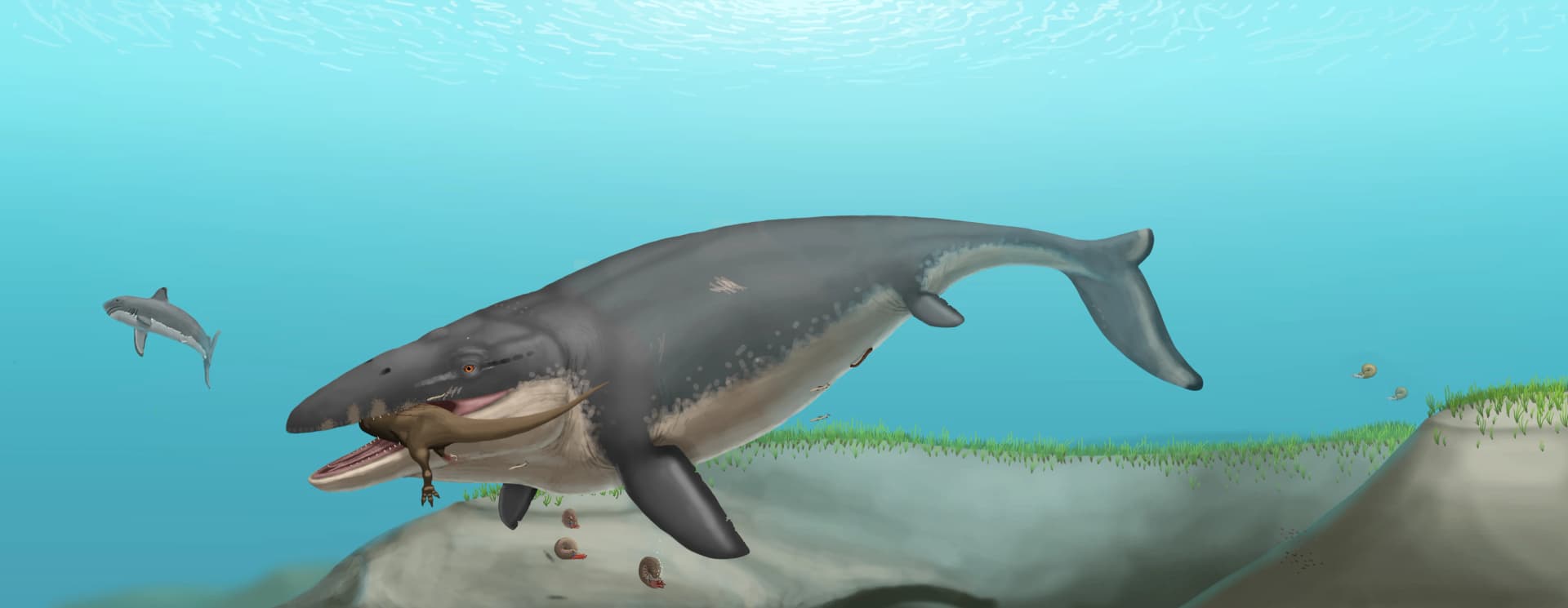
Basilosaurus was a hypercarnivorous apex predator sitting atop the Eocene marine food chains. Its heterodont dentition — conical incisors for grasping, serrated molars for slicing — was perfectly adapted for active predation on large animals. Fossil stomach contents and bite mark analyses revealed that Basilosaurus primarily fed on large fish and especially smaller cetaceans, notably juvenile Dorudon atrox, a 5-meter archaeocete whose fossils frequently bear Basilosaurus bite marks. This predation on other whales makes Basilosaurus the Eocene equivalent of the modern orca. Fossils of sharks and large fish have also been found in association with Basilosaurus remains.
Basilosaurus lived in the warm, shallow seas of the Late Eocene, an era when global temperatures were significantly higher than today. In North America, its fossils are abundant in marine formations of Alabama, Mississippi, and Louisiana, regions that were then submerged beneath the Gulf Sea. The site of Wadi Al-Hitan (the Valley of the Whales) in Egypt, a UNESCO World Heritage Site, has yielded hundreds of Basilosaurus isis skeletons in exceptional states of preservation, in what was once a shallow sea of the Tethys. Basilosaurus probably frequented coastal waters and shallow continental shelves rather than the open ocean, as evidenced by the depositional environments where its fossils are found.
Basilosaurus anatomy spectacularly illustrates the evolutionary transition from terrestrial mammals to marine cetaceans. Its most remarkable feature was its vestigial hind limbs: small rear legs about 60 centimeters long, complete with femur, tibia, fibula, and toes, but far too small to support the animal out of water or contribute to swimming. These vestiges attest to the terrestrial origin of cetaceans. The forelimbs were transformed into short but functional pectoral flippers. The serpentine body was propelled by vertical undulations, like modern whales, but with greater lateral flexibility. The skull retained nostrils situated halfway between the snout and skull top, representing an intermediate stage in the evolutionary migration of the blowhole.
Basilosaurus behavior can be reconstructed thanks to the abundance of its fossils and taphonomic evidence. The Wadi Al-Hitan site in Egypt preserves assemblages suggesting that female Basilosaurus used shallow coastal waters as calving and nursery zones, a behavior similar to that of many modern cetaceans. Concentrations of juvenile Dorudon fossils bearing Basilosaurus bite marks in the same formations indicate that Dorudon nurseries were favored hunting grounds for adult Basilosaurus — opportunistic predatory behavior comparable to great white sharks patrolling seal breeding areas. Its swimming mode, through vertical body undulations, gave it considerable speed. Vestigial hind limbs may have served as guides or claspers during mating.
Basilosaurus was first described in 1834 by the naturalist Richard Harlan from vertebrae discovered in Alabama. Harlan initially believed he was dealing with a giant marine reptile, hence the name Basilosaurus meaning 'king lizard.' When Richard Owen demonstrated in 1839 that it was actually a mammal, he proposed the name Zeuglodon, but nomenclature rules required keeping the original name. Basilosaurus fossils are remarkably abundant in the southern United States, particularly in Alabama where it has been the state fossil since 1984. The most spectacular site is Wadi Al-Hitan in Egypt, a UNESCO World Heritage Site since 2005, where hundreds of B. isis skeletons emerge from the desert sand.
| Period | Éocène supérieur / Late Eocene |
| Era | Cénozoïque / Cenozoic |
| Age | 41 - 34 Ma |
| Location | Mondial (USA, Égypte, Pakistan, Jordanie) / Worldwide (USA, Egypt, Pakistan, Jordan) |
| Length | 15-18 m |
| Height | ~1.5 m |
| Weight | 5-8 tonnes |
| Diet | Carnivore |
| Discovery | 1834 |
No, Basilosaurus cetoides was a mammal — a Late Eocene archaeocete whale (41-34 Ma), ancestor of modern cetaceans. Described in 1834 by Richard Harlan as a giant reptile, its name means 'king lizard,' but Richard Owen demonstrated as early as 1839 that it was in fact a mammal. It still had vestigial hind legs of 60 cm, attesting to the terrestrial origin of whales.
Basilosaurus cetoides reached 15 to 18 meters in length weighing 5 to 8 tonnes, with an exceptionally elongated, serpentine body. An apex hypercarnivore, it hunted large fish and especially smaller cetaceans like Dorudon atrox — Basilosaurus bite marks are frequently found on juvenile Dorudon fossils at Wadi Al-Hitan in Egypt.
Wadi Al-Hitan (the Valley of the Whales) in Egypt, a UNESCO World Heritage Site since 2005, is the world's main Basilosaurus isis deposit. Hundreds of complete skeletons emerge directly from desert sand in what was once a shallow Tethys sea 41 to 34 million years ago. This site provided the first complete specimens showing vestigial hind limbs, key evidence for whale evolution.
Basilosaurus cetoides, a primitive whale
Wikimedia Commons
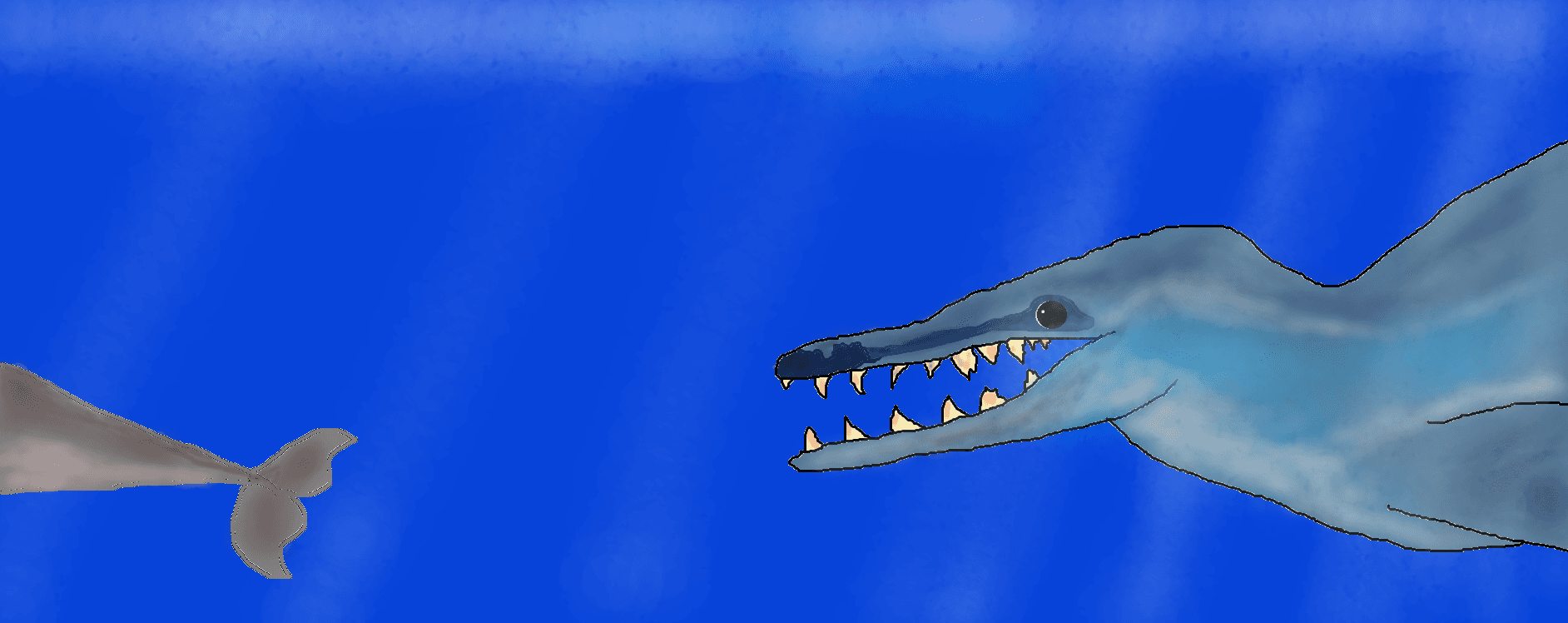
Basilosaurus cetoides, the serpentine ancestor of whales
Wikimedia Commons