Livyatan
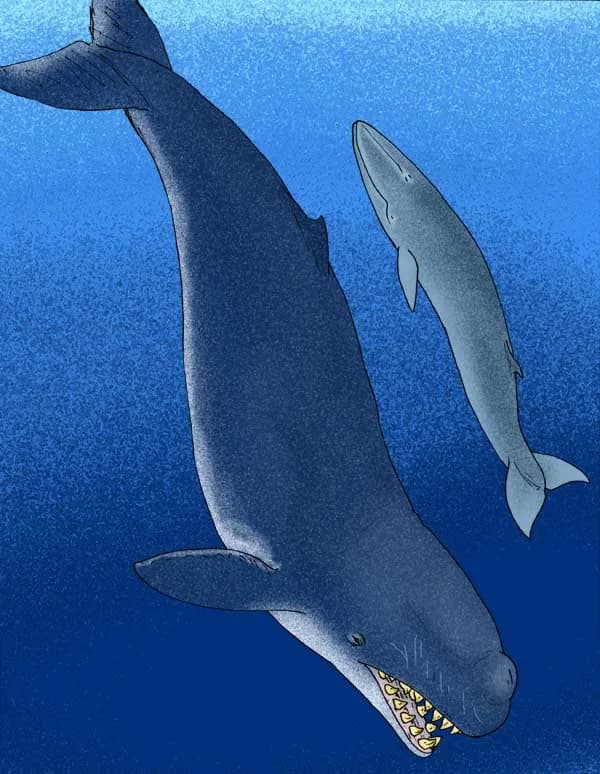
Livyatan melvillei carried teeth 36 centimetres long, the largest functional teeth known in any animal, longer than those of Tyrannosaurus rex. This sperm whale, 13.5 to 17.5 metres and some 50 tonnes, was described in 2008 from the Pisco Basin in Peru, and hunted 12 to 13 million years ago. Its name pairs the biblical Leviathan with Herman Melville.
Livyatan lived during the Middle Miocene, approximately 12 to 13 million years ago, in the warm waters of the eastern Pacific Ocean. This period represents a golden age for cetaceans, with exceptional diversity of whales and dolphins populating the world's oceans. The Miocene was characterized by globally higher temperatures than today, favoring intense marine productivity and an abundance of prey for large marine predators. Livyatan shared its environment with other giants, notably the shark Megalodon, creating an ecosystem where apex predators competed for the top of the food chain. Its discovery revolutionized our understanding of Miocene marine trophic networks.
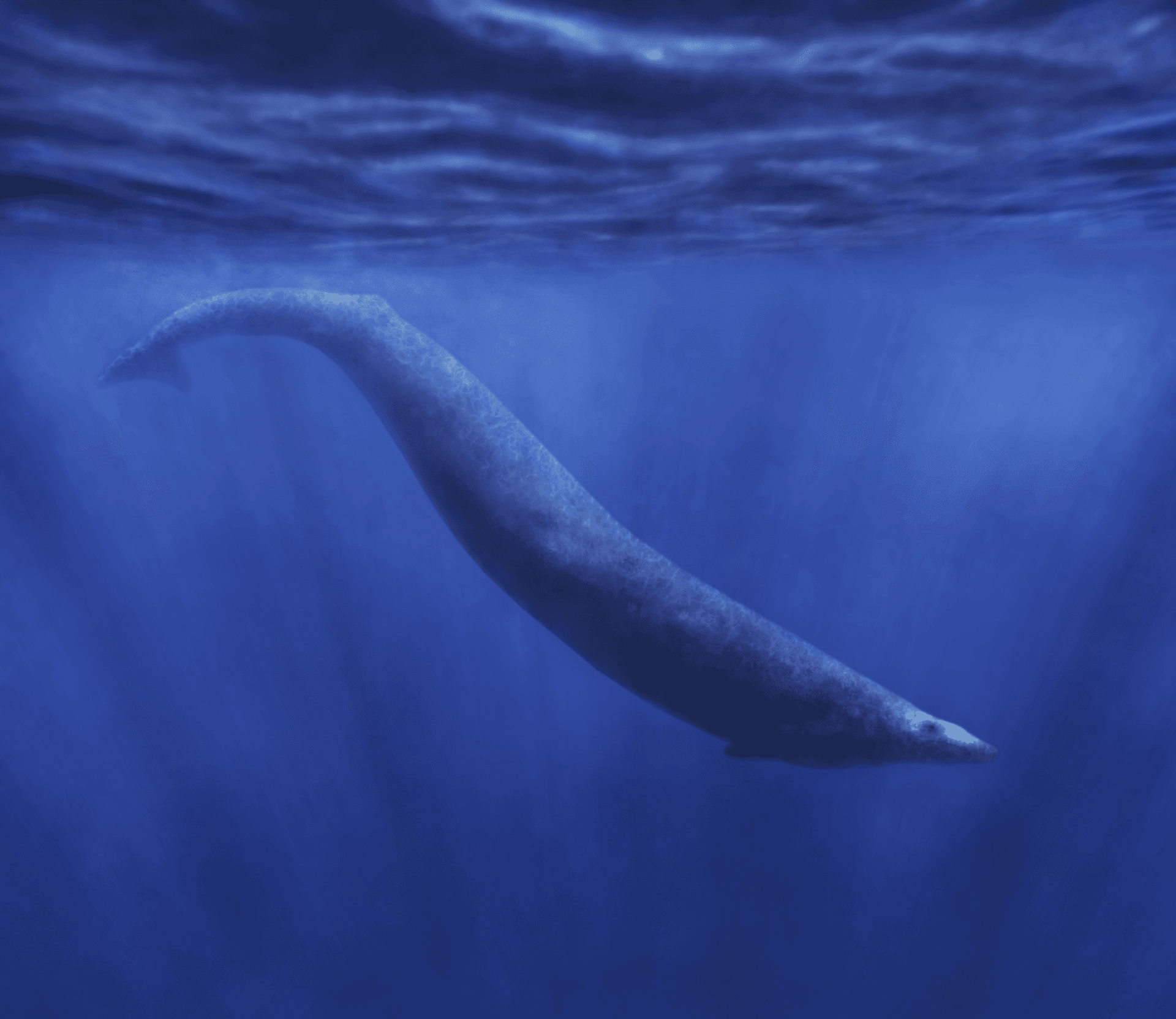
Livyatan was among the largest marine predators of all time, with an estimated length of 13.5 to 17.5 meters and a weight likely exceeding 50 tonnes. Its massive skull measured approximately 3 meters long, making it one of the largest skulls of any known mammal. For comparison, this is a size comparable to the modern sperm whale, but with a much more powerful jaw and functional teeth in both jaws. Its head represented about a quarter of its total length, a characteristic proportion of physeteroids. This colossal size allowed it to attack large prey, including other cetaceans.
Livyatan was an active macropredator, hunting other whales, seals, dolphins, and large fish in the eastern Pacific waters. Unlike the modern sperm whale, which primarily suctions giant squid in the deep sea, Livyatan used its enormous teeth to seize and tear surface and mid-depth prey. Its teeth, reaching up to 36 centimeters long, were the largest functional teeth of any known animal, surpassing even those of Tyrannosaurus rex. Isotopic analysis of its teeth suggests a diet composed primarily of medium-sized marine mammals, such as small Miocene baleen whales. Its hunting strategy likely resembled that of modern orcas, combining brute force and social intelligence.
Livyatan inhabited the coastal and pelagic waters of the eastern Pacific, in the region corresponding to modern-day Peru. The Pisco Basin, where its fossils were discovered, was during the Miocene a productive marine environment bathed by nutrient-rich upwelling currents, similar to current conditions of the Humboldt Current. These cold, plankton-rich waters attracted immense schools of fish and marine mammals, creating an ideal hunting ground for an apex predator of this size. The Pisco Formation is famous for its richness in exceptionally preserved marine fossils, including whales, sharks, seals, and seabirds. This site is considered one of the world's most important marine fossil deposits.
Livyatan's anatomy reveals a formidable predator. Its 3-meter skull housed a deep supracranial basin, suggesting the presence of a spermaceti organ similar to that of the modern sperm whale, used for echolocation and buoyancy regulation. Its massive teeth, present in both jaws unlike the modern sperm whale which only has functional teeth in the lower jaw, could reach 36 centimeters long with 17-centimeter roots. The lower jaw was robust and slightly curved, optimized for generating considerable bite force. Its streamlined body was propelled by a powerful horizontal tail fluke characteristic of cetaceans. The structure of its temporal bones indicates extremely developed masticatory muscles.
Livyatan was probably a social hunter, operating in small family groups to track and corner prey, similar to modern orcas. Its imposing size and formidable teeth made it the direct rival of Megalodon in Miocene marine ecosystems. The two apex predators may have competed for the same prey, and direct confrontations between them were probable. The spermaceti organ in its skull likely enabled echolocation to detect prey in murky waters or at great depth. Like modern cetaceans, Livyatan had to regularly surface to breathe, limiting its deep dives. Its intelligence, inherited from the cetacean lineage, was probably comparable to that of modern orcas and sperm whales.
Livyatan's skull was discovered in 2008 by Dutch paleontologist Klaas Post in the Ica Desert of Peru, in sediments of the Pisco Formation. The species was officially described in 2010 by Olivier Lambert and colleagues in the journal Nature, creating a worldwide sensation in the scientific community. The genus name, Livyatan, refers to the biblical Leviathan, while the species name melvillei honors Herman Melville, the author of Moby Dick. The holotype comprises a remarkably complete 3-meter skull with several massive teeth still in place. The fossil is housed at the Museo de Historia Natural in Lima. The discovery demonstrated that macropredatory sperm whales with functional teeth in both jaws were more diverse and larger than previously thought.
| Period | Miocène / Miocene |
| Era | Cénozoïque / Cenozoic |
| Age | ~12–13 Ma |
| Location | Pérou (bassin de Pisco) / Peru (Pisco Basin) |
| Length | 13.5–17.5 m |
| Height | ~3.5 m |
| Weight | ~50 000 kg |
| Diet | Piscivore |
| Discovery | 2008 |
No. Livyatan melvillei was a physeteroid — a cetacean related to modern sperm whales — that lived 12 to 13 million years ago in the Middle Miocene, in eastern Pacific waters (present-day Peru). Cetaceans are marine mammals, not reptiles or dinosaurs. Its 3-meter skull was discovered in 2008 in the Pisco Formation and described in 2010 in Nature.
Livyatan melvillei's teeth reached up to 36 centimeters long with 17-centimeter roots — the largest functional teeth of any known animal, surpassing even those of Tyrannosaurus rex. Unlike the modern sperm whale (Physeter macrocephalus) which only has functional teeth in the lower jaw, Livyatan had them in both jaws.
Yes. Livyatan melvillei and Otodus megalodon coexisted in the same eastern Pacific waters during the Middle Miocene, about 12 to 13 million years ago. Both targeted medium-sized cetaceans as main prey. Direct confrontations were probable. This coexistence of two giant apex predators in the same basin represents one of the most extreme marine ecosystems known.
Life reconstruction of Livyatan melvillei
Apokryltaros, CC BY-SA 3.0, via Wikimedia Commons
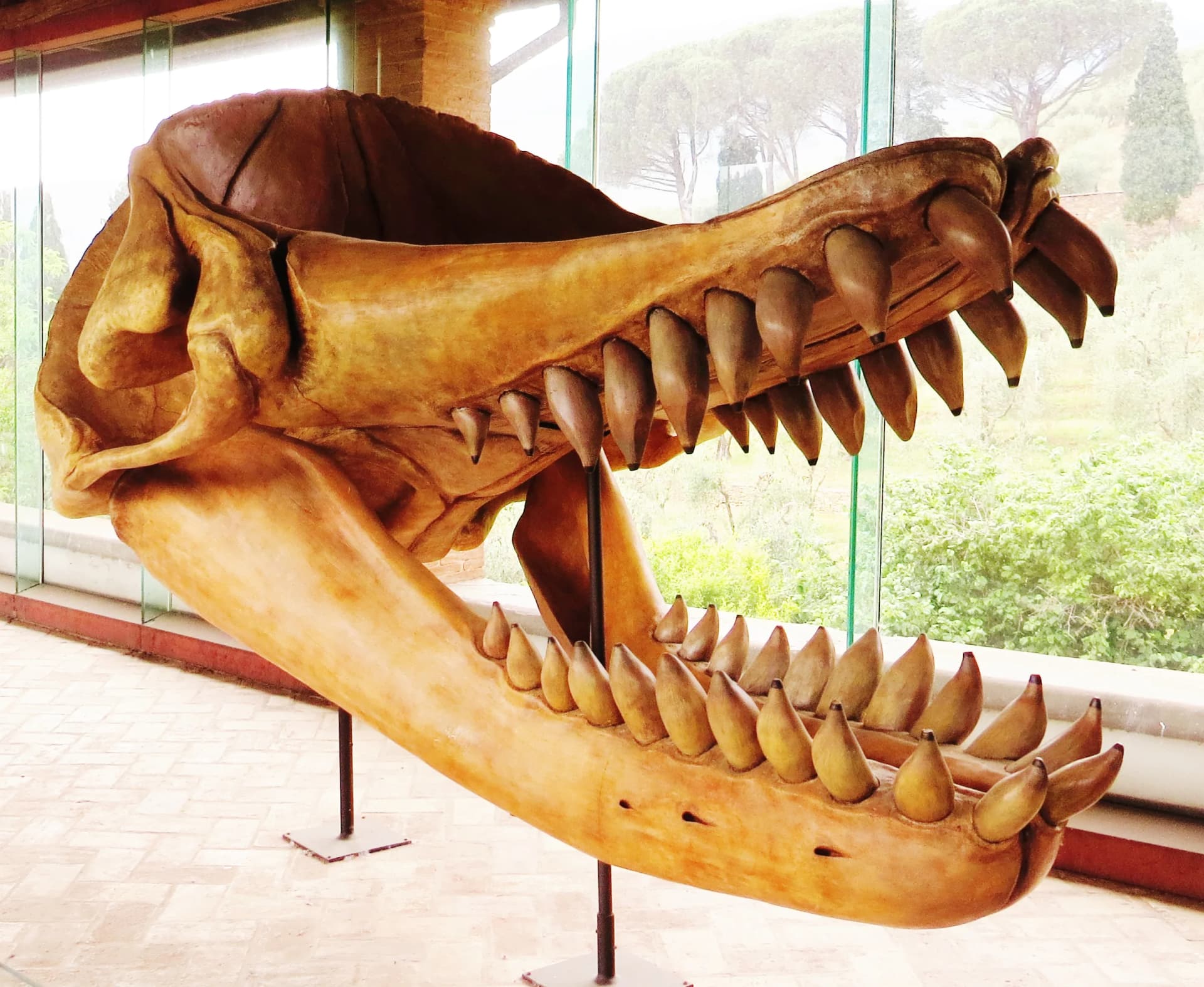
Fossil skull of Livyatan melvillei
Ghedoghedo, CC BY-SA 3.0, via Wikimedia Commons