Oxalaia
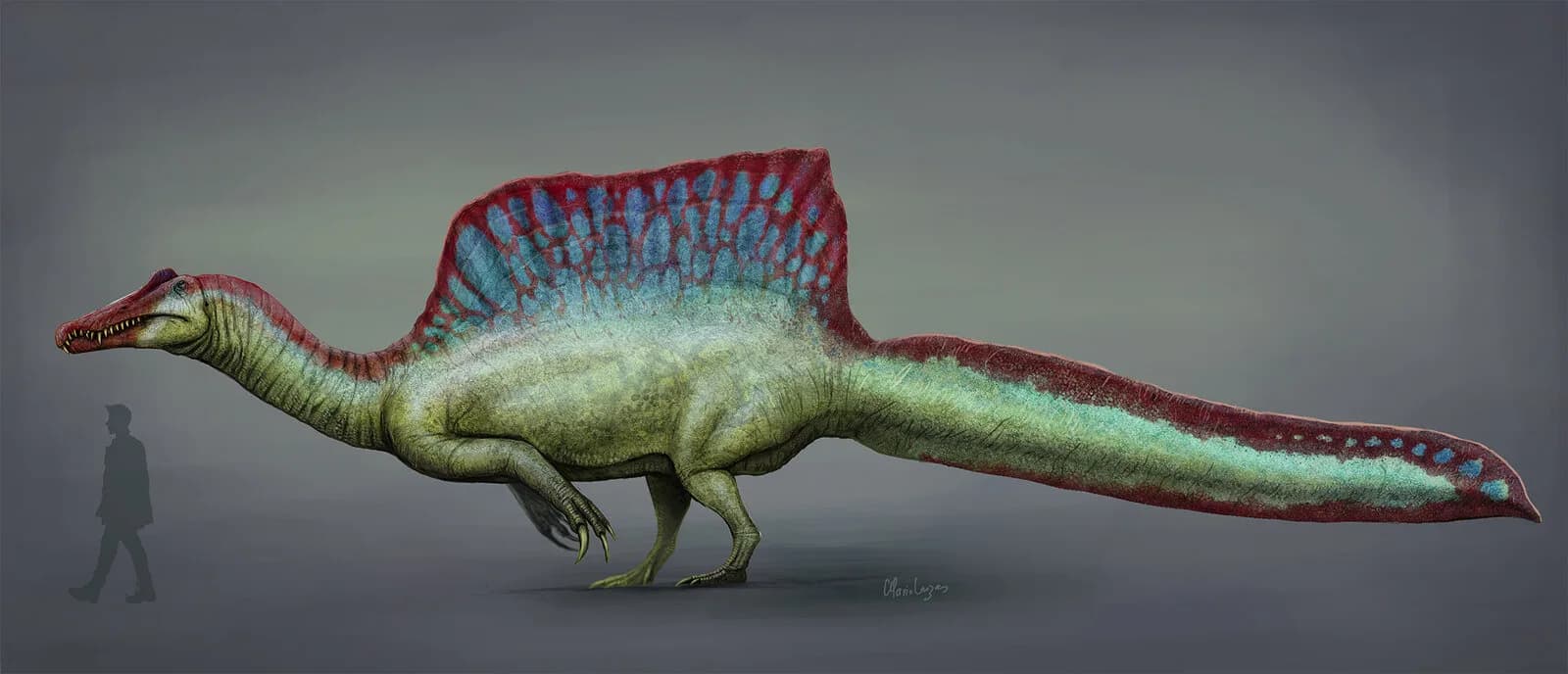
Oxalaia quilombensis is the largest carnivorous dinosaur found in Brazil: 12 to 14 metres and 5 to 7 tonnes, a size comparable to the African Spinosaurus. Described in 2011 from two skull fragments recovered in Maranhão, it lived 95 million years ago. Its name honours Oxalá, a deity of Brazilian Candomblé.
Oxalaia lived during the Late Cretaceous, approximately 95 million years ago, during the Cenomanian stage. This period corresponds to an era when South America was still partially connected to Africa, explaining the faunal similarities between spinosaurids on both continents. The climate was hot and humid, with high sea levels creating coastal environments rich in fish and aquatic life. Tropical temperatures supported abundant marine biodiversity, providing piscivorous predators like Oxalaia with considerable food resources throughout the year. The Cenomanian was one of the warmest stages of the Cretaceous, with minimal polar ice.
Oxalaia was a massive spinosaurid, estimated at 12 to 14 meters in length and weighing 5 to 7 tonnes, making it the largest carnivorous dinosaur ever discovered in Brazil and the largest spinosaurid from South America. Its skull, partially known, featured an elongated narrow snout typical of spinosaurids, with set-back nostrils allowing breathing while the mouth was partially submerged. Its size rivaled that of the famous African Spinosaurus. Size estimates are based on extrapolation from recovered cranial fragments compared to the known proportions of Spinosaurus.
Primarily a piscivore, Oxalaia fed mainly on large fish, including coelacanths and lungfish that populated the coastal waters of Cenomanian Brazil. Its elongated snout, equipped with interlocking conical teeth at the front, was perfectly adapted for grasping slippery prey in water. Like other spinosaurids, it likely supplemented its diet with pterosaurs, small dinosaurs, and turtles, adopting a semi-aquatic lifestyle comparable to modern crocodilians. Fossils of the large fish Mawsonia found in the same formation confirm the presence of suitable prey for a predator of this magnitude.
Oxalaia inhabited the coastal and estuarine environments of what is now northeastern Brazil, on Ilha do Cajual in the state of Maranhão. During the Cenomanian, this region was a tropical coastal zone bordering the nascent Atlantic Ocean, with mangroves, lagoons, and river deltas rich in fish. The Alcântara Formation, where the fossils were discovered, represents an ancient tidal coastal plain environment. This formation has also yielded remains of pterosaurs, crocodilians, and other theropod dinosaurs, attesting to a particularly diverse coastal ecosystem.
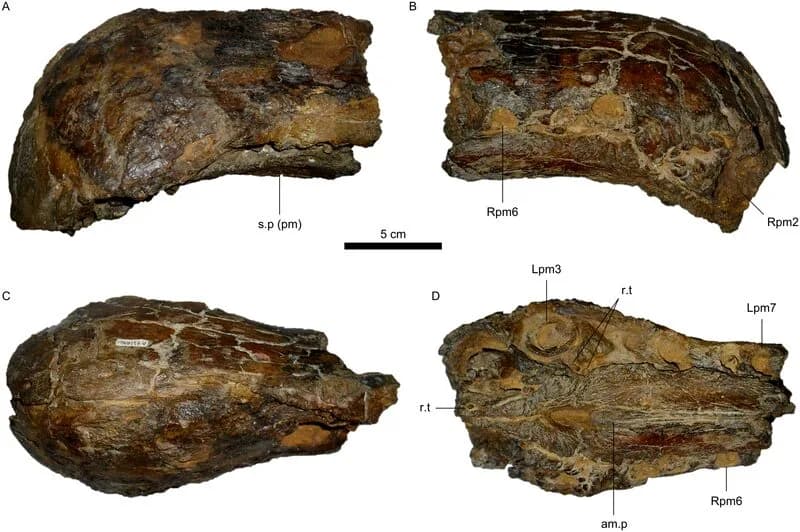
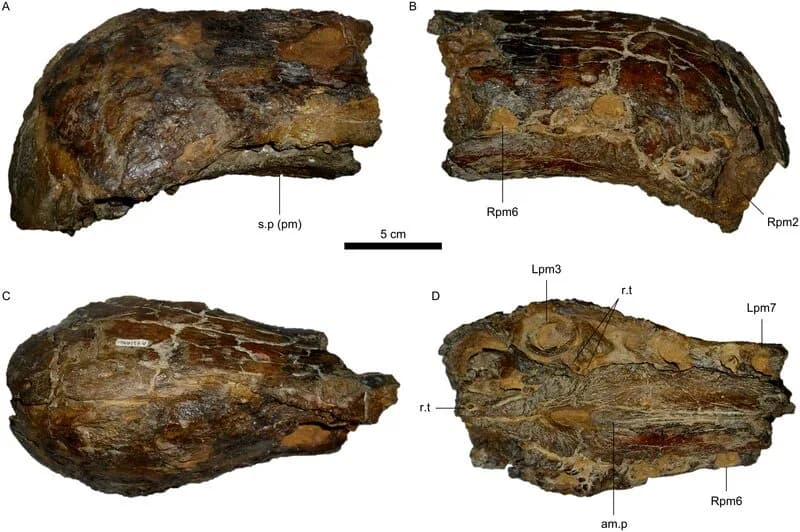
The anatomy of Oxalaia is known primarily from cranial fragments, including a portion of premaxilla and a maxillary fragment. The premaxilla shows a terminal rosette characteristic of spinosaurids, with large dental alveoli indicating robust conical teeth. The cranial morphology is remarkably similar to that of Spinosaurus aegyptiacus, suggesting a comparable lifestyle. The absence of postcranial material prevents confirmation of a dorsal sail, though given its close affinity to Spinosaurus, such a structure is plausible. Phylogenetic analyses place Oxalaia as a member of Spinosaurinae, closer to Spinosaurus than to Baryonyx or Suchomimus.
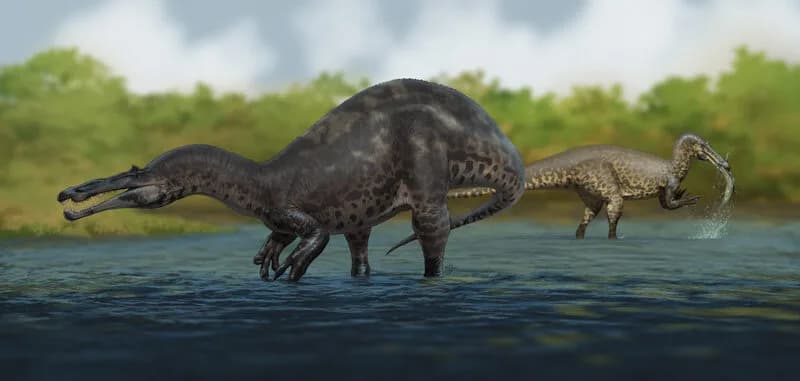
Oxalaia likely adopted a semi-aquatic lifestyle, spending much of its time in or near water to fish. Like Spinosaurus, it presumably used its long, sensitive snout to detect fish vibrations in the murky waters of estuaries. Its large size placed it at the top of the food chain in its coastal ecosystem, where it probably had no natural predators. Spinosaurids were possibly solitary, territorial hunters. Sensory receptors in the snout, similar to those found in crocodilians, would have allowed it to locate prey even in turbid waters.
Oxalaia quilombensis was described in 2011 by Alexander Kellner and colleagues from cranial fragments discovered on Ilha do Cajual, in the state of Maranhão, Brazil. The generic name honors Oxalá, a deity of Brazilian Candomblé, and the specific epithet references the quilombola communities of the region. Only an incomplete premaxilla and a maxillary fragment are known, but their large size and distinctive spinosaurid morphology allowed for reliable identification. The fossils come from shallow marine sediments, indicating that the animal frequented coastal areas subject to tidal influence.
| Period | Crétacé supérieur / Late Cretaceous |
| Era | Mésozoïque / Mesozoic |
| Age | 95 Ma |
| Location | Brésil (Maranhão) / Brazil (Maranhão) |
| Length | 12-14 m |
| Height | 4 m |
| Weight | 5-7 tonnes |
| Diet | Piscivore |
| Discovery | 2011 |
Oxalaia quilombensis, described in 2011 by Alexander Kellner, is known only from an incomplete premaxilla and a maxillary fragment discovered on Ilha do Cajual, in Maranhão (Brazil). Despite this partial material, the terminal rosette typical of spinosaurids and the large size of the dental alveoli allowed reliable identification and placement within Spinosaurinae.
Hard to compare due to incomplete material. Estimates place Oxalaia quilombensis between 12 and 14 meters and 5 to 7 tonnes, rivaling the minimum sizes proposed for Spinosaurus aegyptiacus. Oxalaia remains the largest carnivorous dinosaur known from Brazil and the largest spinosaurid from South America identified to date.
The generic name honors Oxalá, the principal deity of Brazilian Candomblé, an Afro-Brazilian religion. The epithet quilombensis references the quilombola communities of Maranhão, descendants of freed African slaves. These naming choices pay tribute to the local Amazonian culture — a rare gesture in paleontology where names typically refer to anatomical traits or scientists.
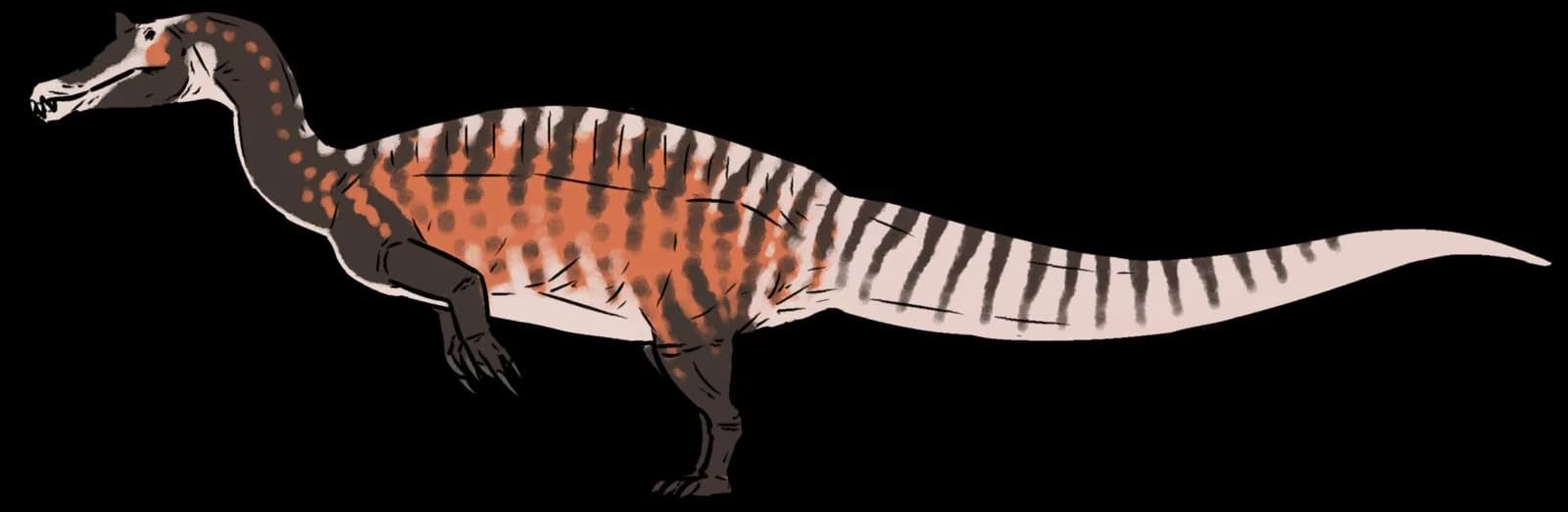
Oxalaia quilombensis restoration
PaleoGeek, Wikimedia Commons, CC BY-SA
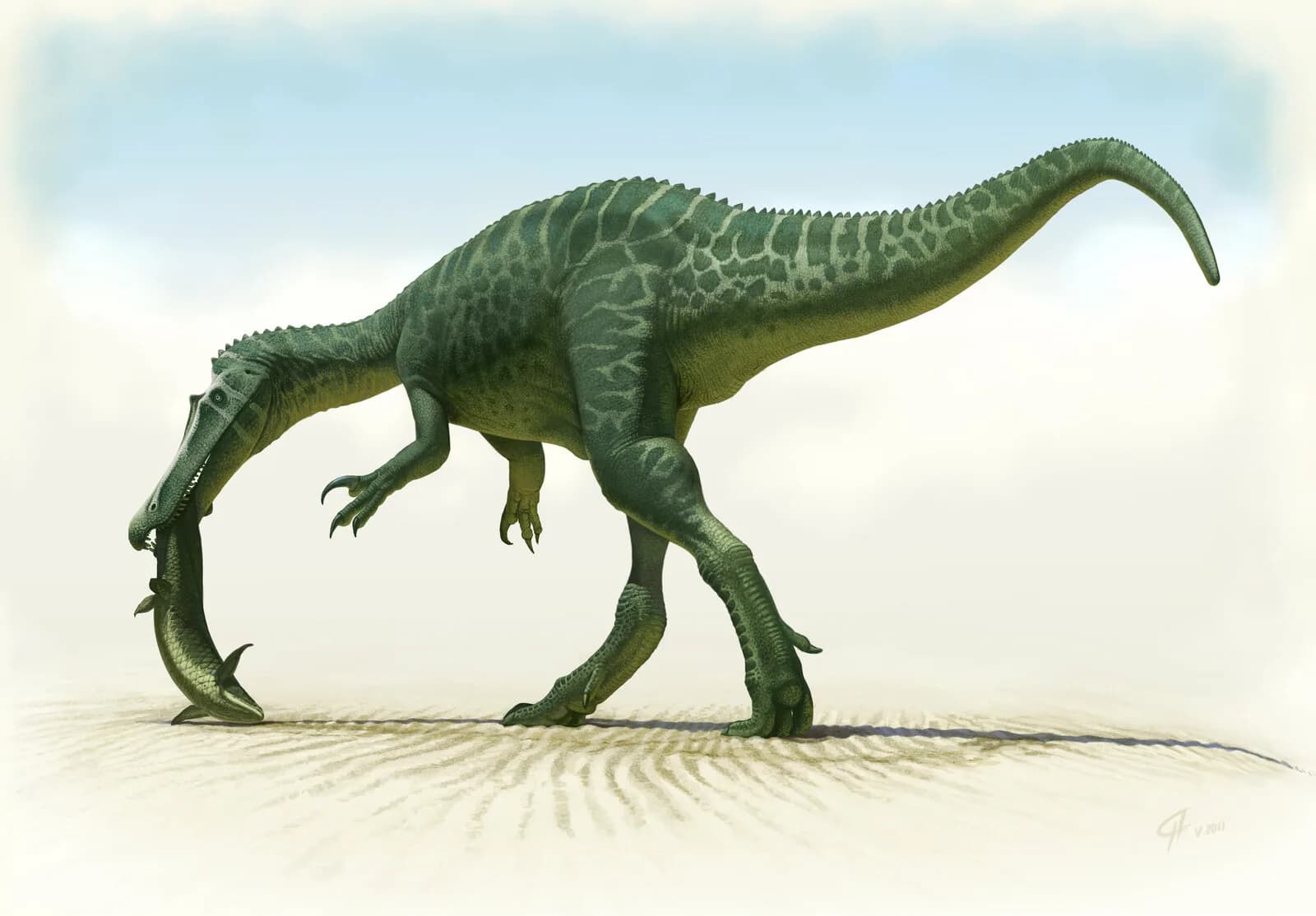
Baryonyx restoration, close relative of Oxalaia
Wikimedia Commons, CC BY-SA