Oviraptor
Oviraptor philoceratops carries one of palaeontology's least fair names: « egg thief ». The first specimen, described in 1923, was found on a nest assumed to have been raided. It took seventy years to establish that it was brooding its own eggs. This theropod, 1.5 to 2 metres and 20 to 40 kilograms, lived in Mongolia 75 to 71 million years ago.
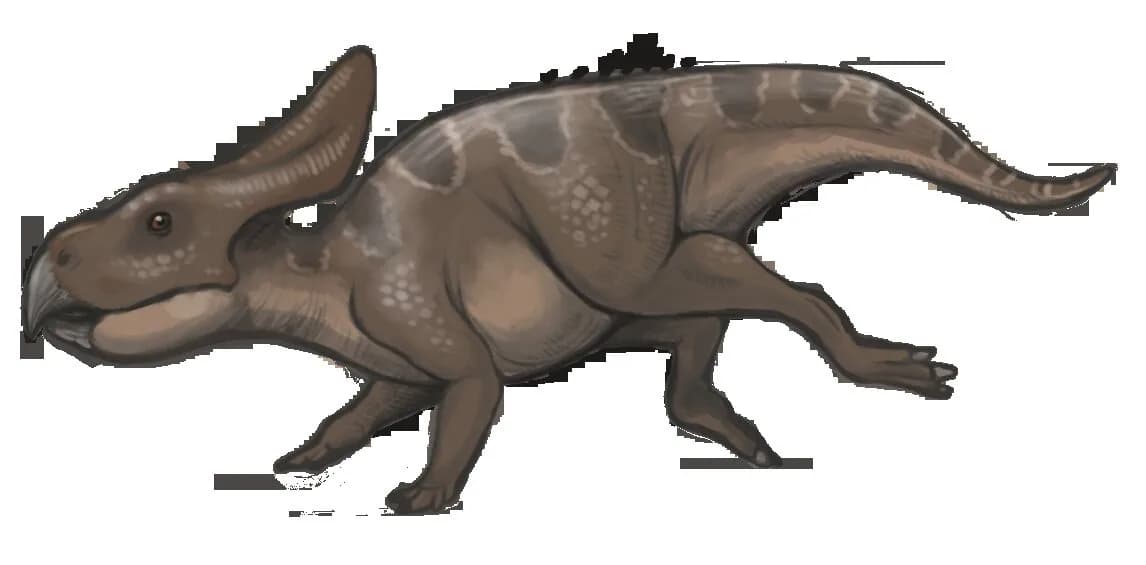
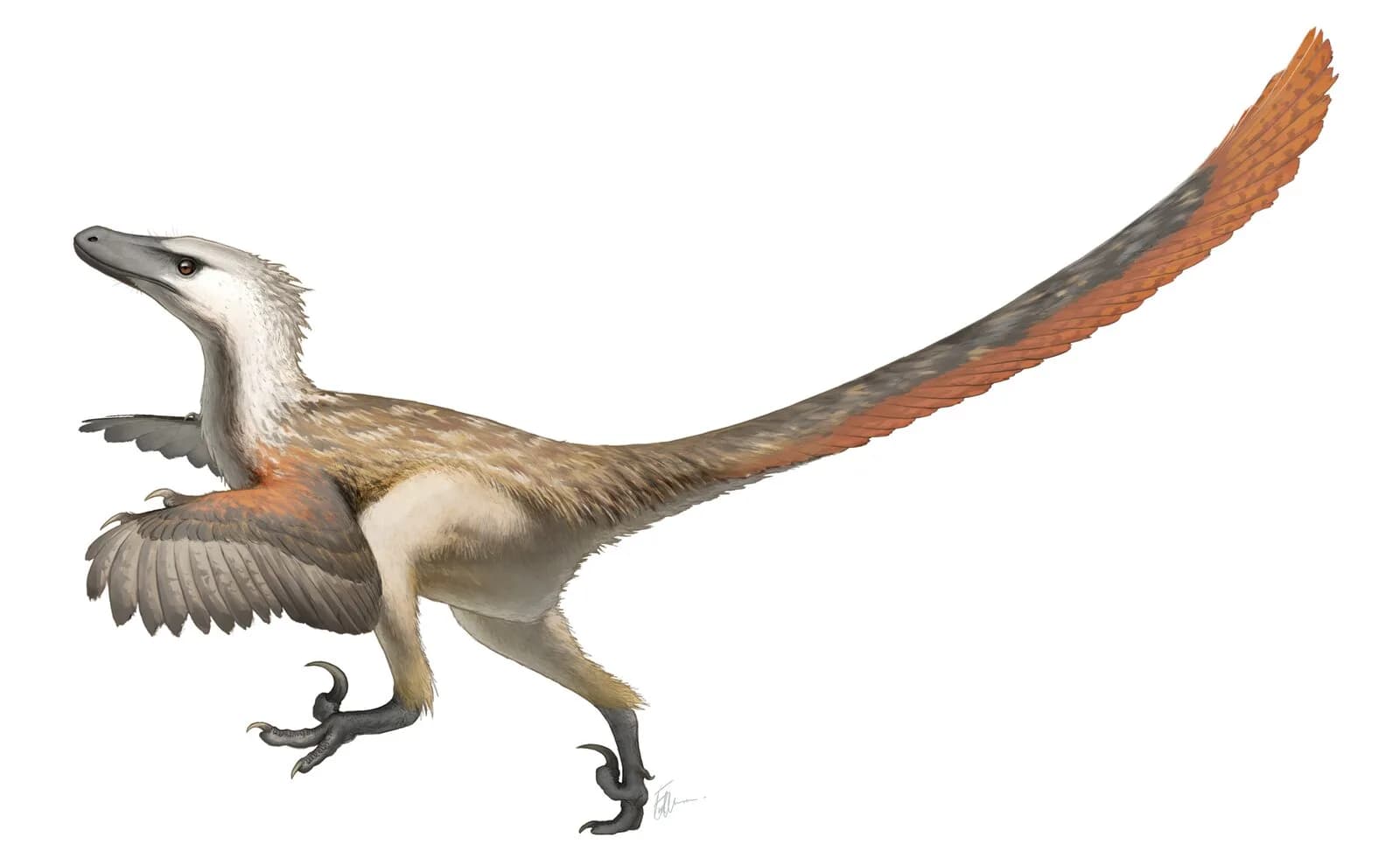
Oviraptor lived during the Late Cretaceous period, approximately 75 to 71 million years ago, during the Campanian stage, in what is now the Djadokhta Formation of Mongolia. This formation is famous for preserving a remarkable snapshot of Late Cretaceous desert and semi-arid ecosystems, with frequent sandstorms that occasionally buried animals alive, creating exceptionally preserved fossils. Oviraptor shared its environment with Protoceratops, Velociraptor, and various small mammals and lizards. The name Oviraptor, meaning 'egg thief,' was assigned based on a now-disproven assumption that the animal was stealing eggs when it was actually brooding its own nest.
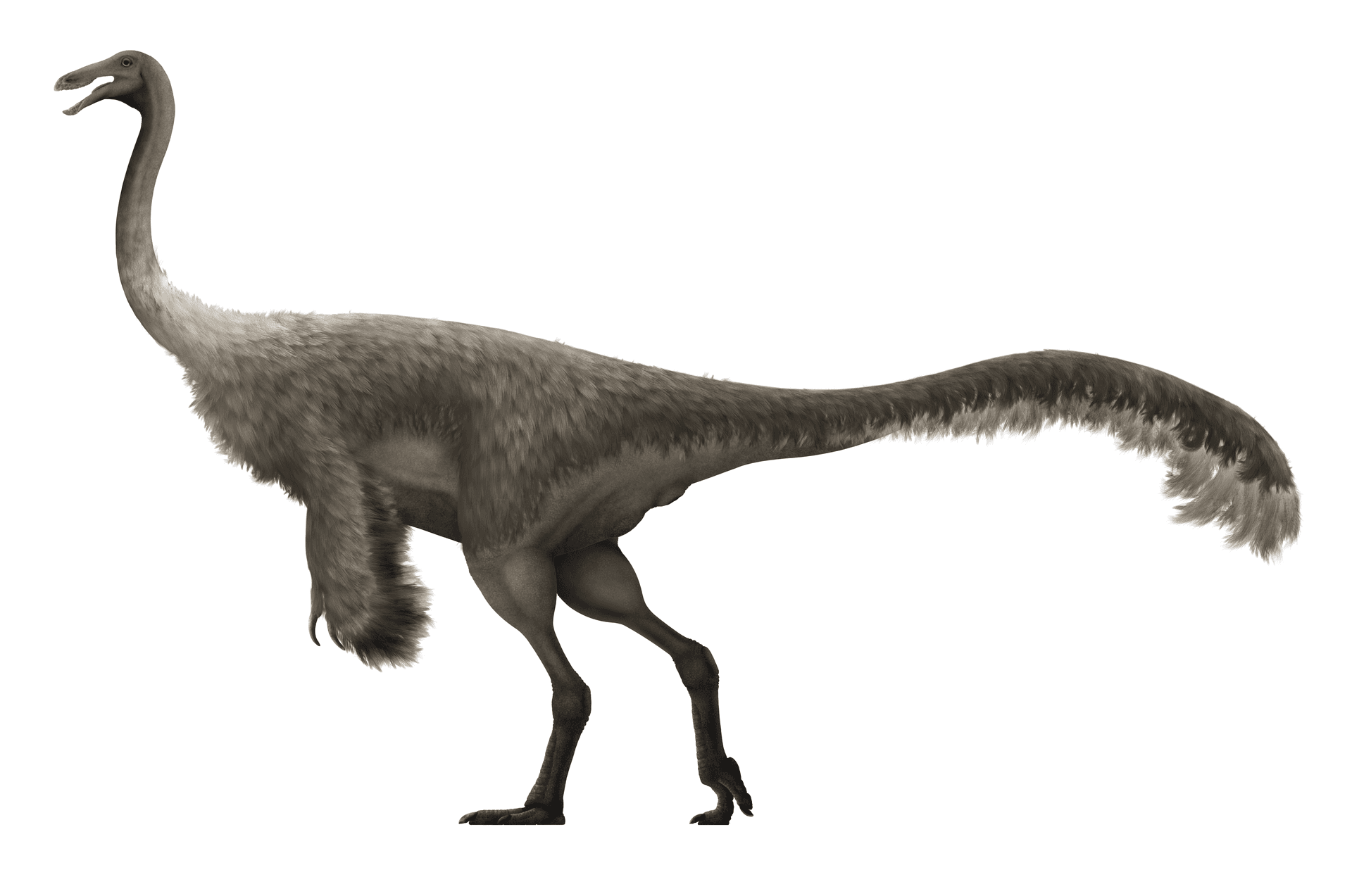
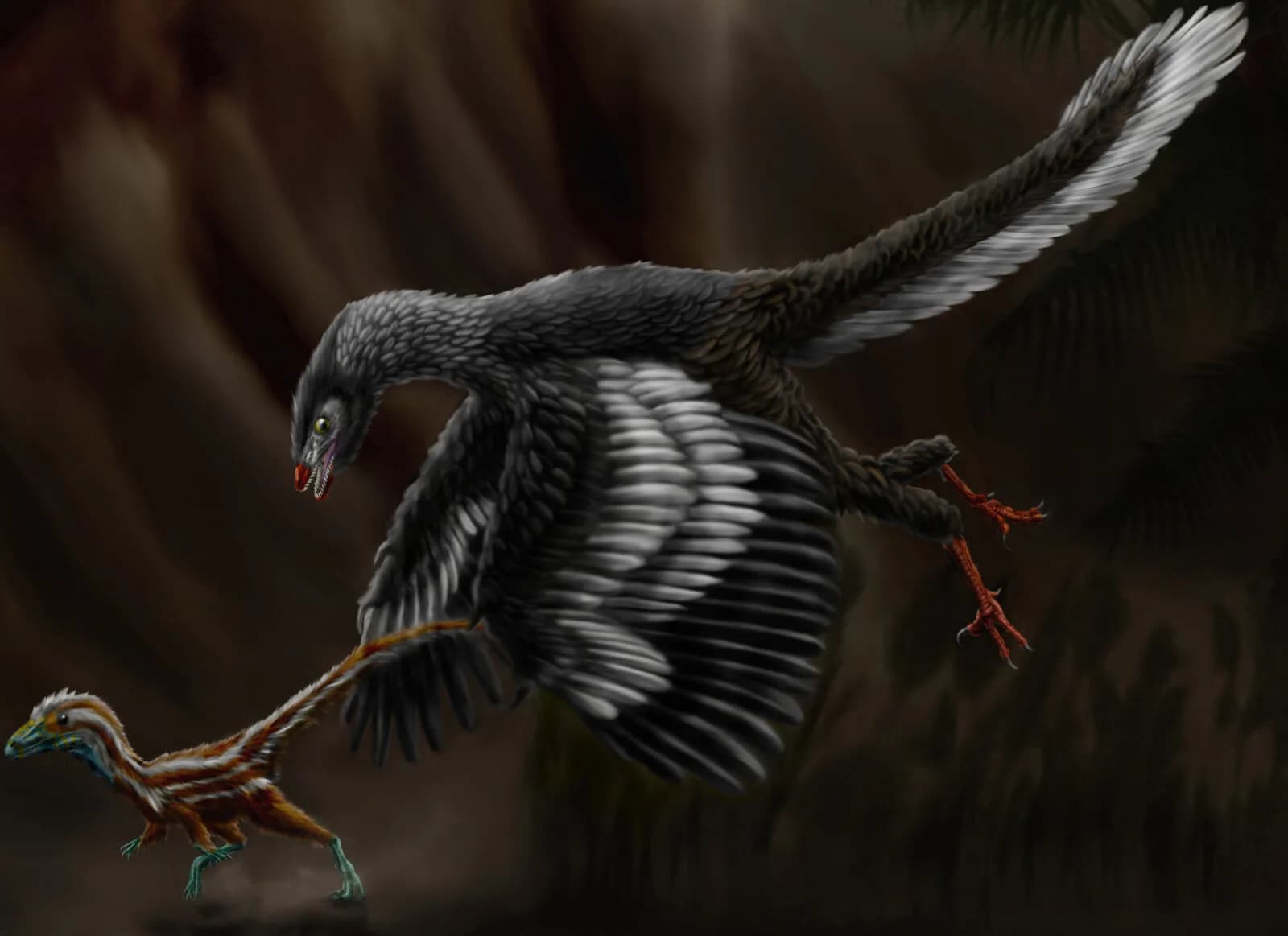
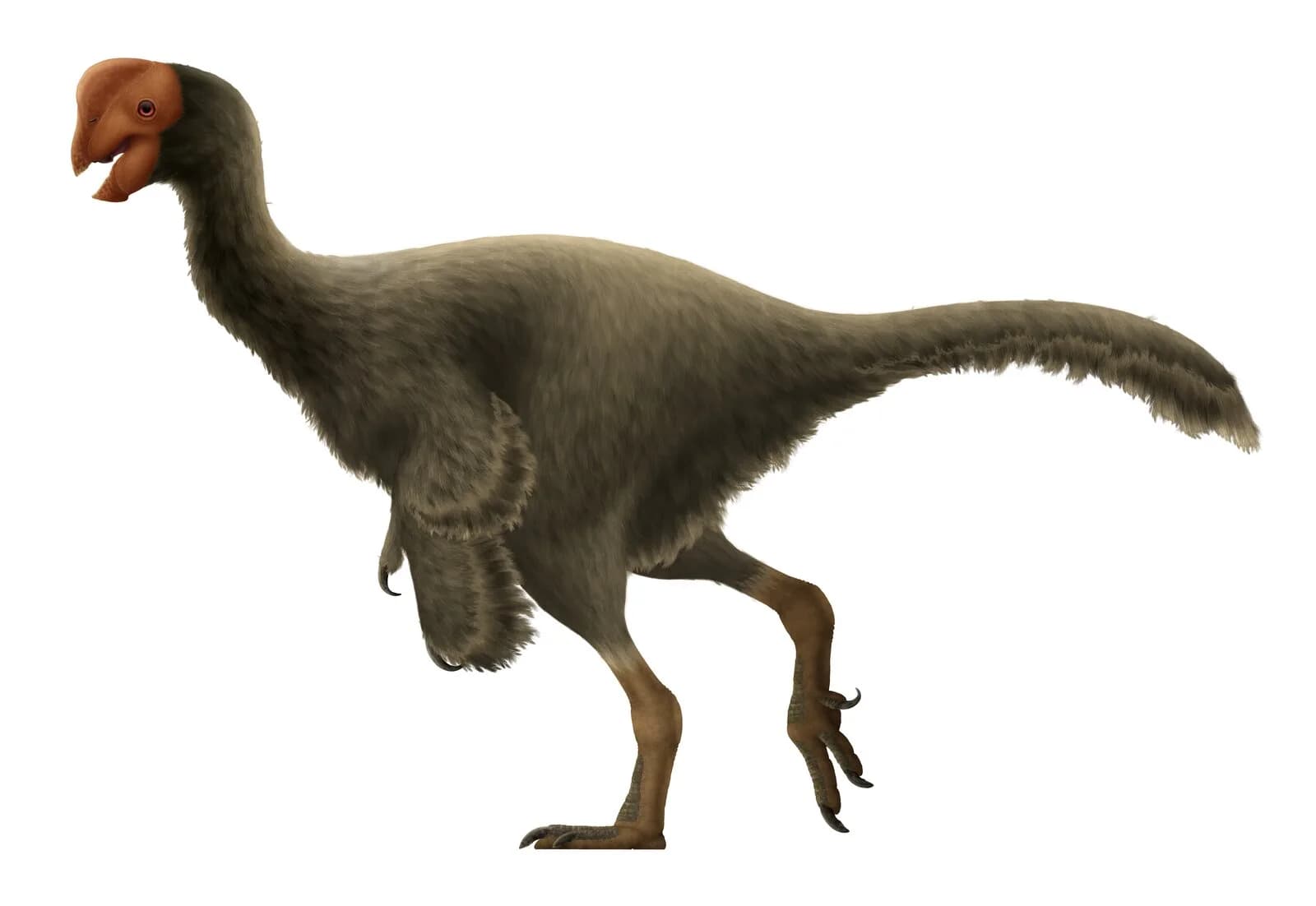
Oviraptor was a moderately sized theropod dinosaur, measuring about 1.5 to 2 meters long with an estimated weight of 25 to 35 kilograms. Its size was comparable to a large modern emu or cassowary. Its head was short and rounded, bearing a distinctive bony crest atop the skull similar to a cassowary's. Its toothless, powerful beak was covered by a horny rhamphotheca. Its arms were relatively long, ending in three clawed fingers, and its body was covered in feathers, probably including long pennaceous feathers on the arms and tail.
Oviraptor's diet is subject to debate. Its powerful, toothless beak with two bony projections on the palate was capable of exerting significant compressive force, suggesting it could crack mollusk shells or nuts. It was probably omnivorous, feeding on fruits, seeds, insects, small vertebrates, and possibly mollusks. Some scientists have proposed it did indeed feed on eggs, but evidence points more toward a generalist diet. Its jaw was remarkably adapted to exert strong crushing pressure at the front of the beak.
Oviraptor inhabited the semi-arid environments of the Djadokhta Formation in Late Cretaceous Mongolia. The landscape was characterized by sand dunes, dry streambeds, and sparse vegetation adapted to arid conditions, not unlike parts of the modern Gobi Desert though warmer overall. Despite the harsh conditions, this environment supported a surprisingly diverse fauna of dinosaurs, mammals, and reptiles. Oviraptor likely occupied oasis-like habitats where water and food were more readily available, nesting in sandy substrates that provided natural insulation for its eggs. The discovery of multiple nesting sites in this formation suggests these animals returned to favorable nesting grounds, possibly demonstrating site fidelity across breeding seasons.
Oviraptor's anatomy reflects that of an agile and intelligent theropod. Its pneumatized skull (lightened by air-filled cavities) bore a cassowary-like crest whose exact function remains debated — sexual signaling, thermoregulation, or species recognition. Its toothless, powerful beak was the primary tool for manipulating food. Its long, mobile arms covered in feathers were capable of embracing movements used for brooding eggs. Its hindlimbs were adapted for fast running. Its tail ended in a pygostyle (fused vertebrae), a structure that supported a fan of tail feathers.
The most remarkable behavior of Oviraptor is its nesting. Several specimens have been found fossilized in brooding position, arms extended over a circle of eggs, protecting their nest exactly as modern birds do. This discovery corrected the historical error of its name: it was not stealing eggs, it was brooding them. Oviraptorosaur nests typically contained 12 to 22 eggs arranged in concentric circles. The brooding posture with spread arms strongly suggests the presence of long pennaceous feathers on the arms, used as thermal insulation for the eggs.
Oviraptor was described in 1924 by Henry Fairfield Osborn from a specimen discovered during Roy Chapman Andrews' expeditions in Mongolia. The holotype skull (AMNH 6517) was found near a nest of eggs attributed to Protoceratops, leading Osborn to name the animal 'egg thief.' It was not until 1993, with the discovery of an oviraptorosaur embryo inside a similar type of egg, that it was understood these eggs actually belonged to Oviraptor itself — it was brooding its own nest! In 1995, the iconic fossil of a Citipati (a close relative) in brooding posture definitively confirmed this parental behavior.
| Period | Crétacé supérieur / Late Cretaceous (Campanien) |
| Era | Mésozoïque / Mesozoic |
| Age | 75–71 Ma |
| Location | Asie Centrale / Central Asia (Mongolie / Mongolia) |
| Length | 1.5–2 m |
| Height | ~0.7 m |
| Weight | 20–40 kg |
| Diet | Omnivore |
| Discovery | 1923 |
When Henry Fairfield Osborn described Oviraptor philoceratops in 1924, the holotype skull (AMNH 6517) lay on a nest of eggs attributed to Protoceratops. Osborn concluded it was stealing them. It was not until 1993, with the discovery of an oviraptorosaur embryo inside an identical egg, that it became clear it was brooding its own nest — a misidentification sustained for 70 years.
The exact function of the bony crest of Oviraptor philoceratops remains debated. The main hypotheses include intraspecific visual signaling (individual recognition), sexual selection during courtship displays, or thermoregulation. Variation in crest size and shape between species and individuals supports a display role.
Fossils of oviraptorosaurs show the animal at the center of a ring of 12 to 22 eggs, arms spread in an incubation posture identical to that of modern birds. The pennaceous feathers on adult arms provided thermal insulation. This posture, confirmed in Citipati (a close relative) in 1995, demonstrates elaborate parental behavior rare among non-avian dinosaurs.
Life restoration of Oviraptor philoceratops
PaleoNeolitic, CC BY 4.0, via Wikimedia Commons
Oviraptor philoceratops reconstruction
PaleoNeolitic, CC BY 4.0