Griffe paresseuse
Nothronychus mckinleyi was a theropod from New Mexico and Utah, described in 1998 and dated to 92 to 91 million years ago. At 4.5 to 6 metres and 800 kilograms to 1 tonne, it descended from predators but shifted to a plant diet — a rare turn among theropods. Its name means sloth claw, after its giant-sloth silhouette.
Nothronychus lived during the middle to late Cretaceous, approximately 92 to 91 million years ago, in North America. This herbivorous theropod dinosaur belonged to the therizinosaur family, a remarkable group of carnivorous dinosaurs that evolved toward an herbivorous diet, an extraordinary evolutionary shift among theropods. Nothronychus is the first therizinosaur discovered in North America, a continent where this group was previously unknown, rewriting our understanding of the geographic distribution of these strange dinosaurs. Its discovery in New Mexico sediments proved that therizinosaurs were not limited to Asia and had colonized other regions of the world.
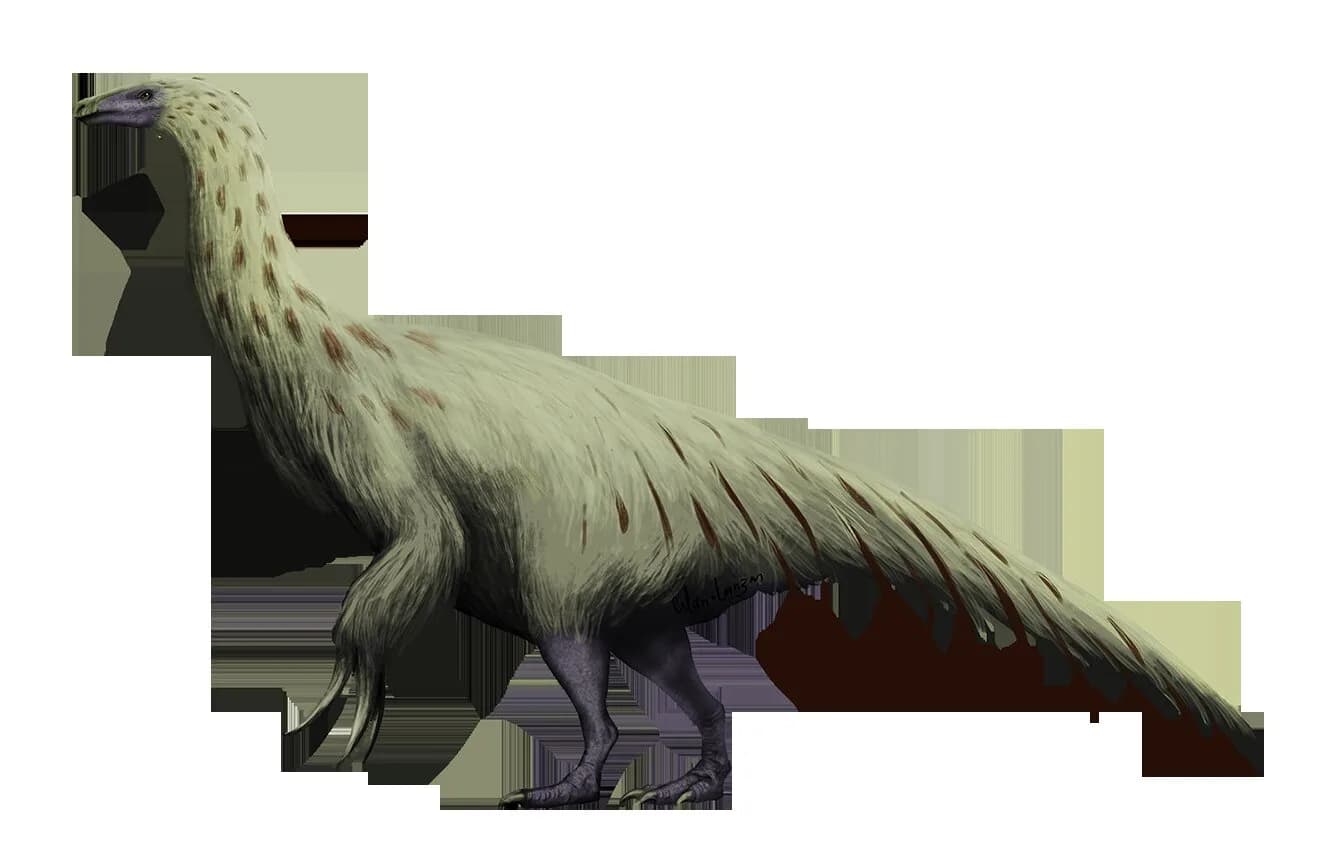
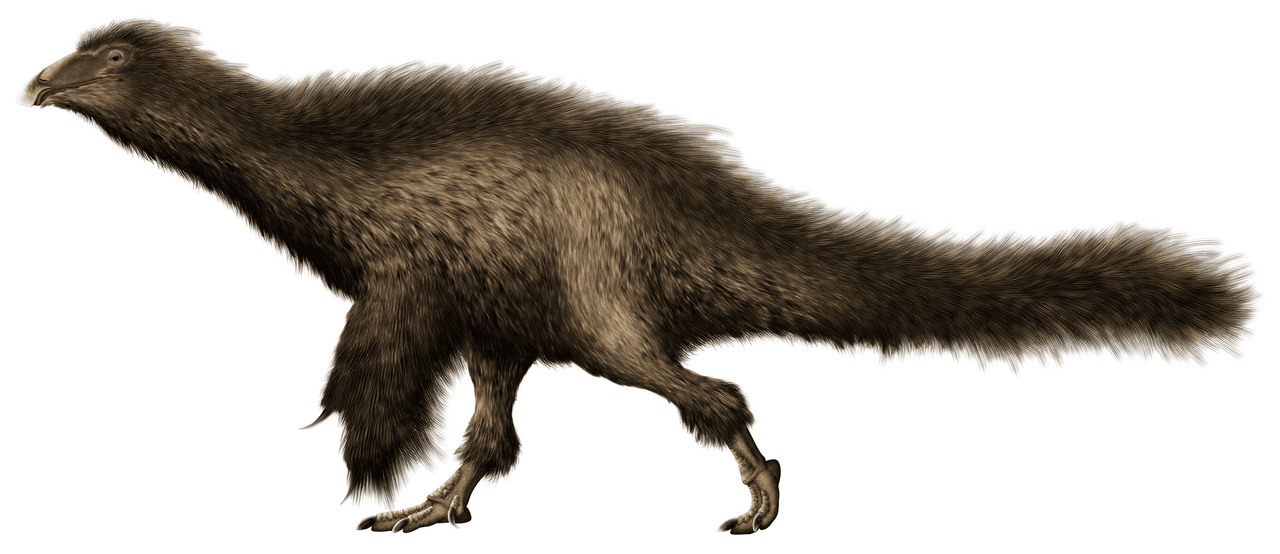
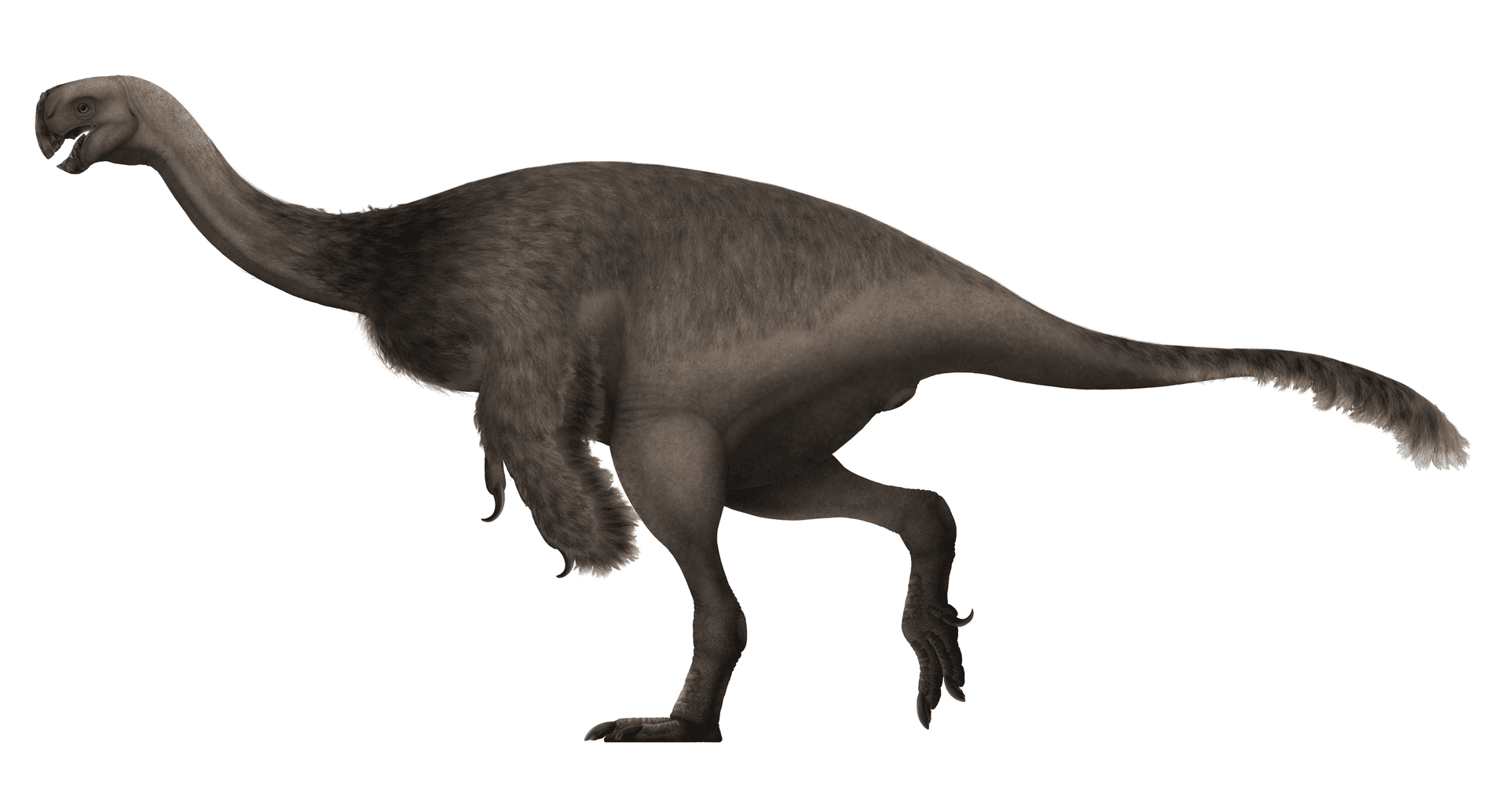
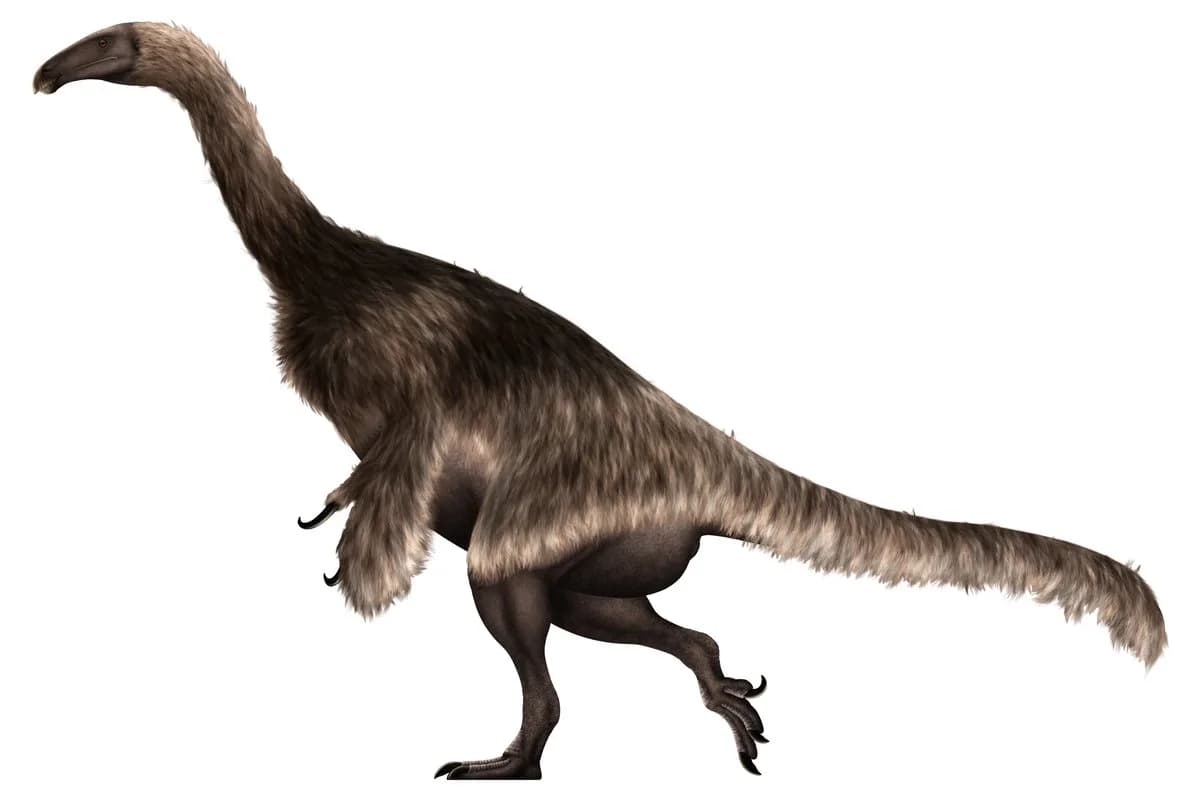
Nothronychus was a medium-sized therizinosaur, measuring approximately 4.5 to 6 meters long with a height of about 3 meters in upright bipedal position. Its weight was estimated between 800 kilograms and one tonne, a respectable but modest build compared to its giant Asian cousin Therizinosaurus. Two species are recognized: N. mckinleyi, slightly smaller, and N. graffami, described later and somewhat larger. Its silhouette was unique among dinosaurs, with a round, massive body, a long neck, a small head, and immense claws on elongated arms, giving it an appearance paleontologists often compare to that of a prehistoric giant ground sloth.
Nothronychus was a confirmed herbivore, an absolute rarity among theropods that are traditionally carnivores. Its small skull bore a toothless horny beak at the front, followed by small leaf-shaped teeth adapted for shearing plant material, a dentition radically different from that of its predatory ancestors. Its diet likely consisted of leaves, tender shoots, fruits, and buds from the conifers and angiosperms that were beginning to diversify Cretaceous forests. Its long claws, reaching up to 30 centimeters, were not used for killing but for grasping high branches and shredding vegetation, similar to modern sloths or giant pandas.
Nothronychus inhabited the coastal environments and forests of middle Cretaceous western North America, in what is now New Mexico and Utah. The Moreno Hill Formation (N. mckinleyi) and the Tropic Shale Formation (N. graffami) indicate paleo-environments of coastal margins along the Western Interior Seaway, an inland sea that split North America in two. The climate was warm and humid, with dense coastal forests composed of conifers, ferns, and early flowering plants. The proximity to the shoreline and marine sediments mixed with terrestrial remains suggest Nothronychus lived very close to the coast.
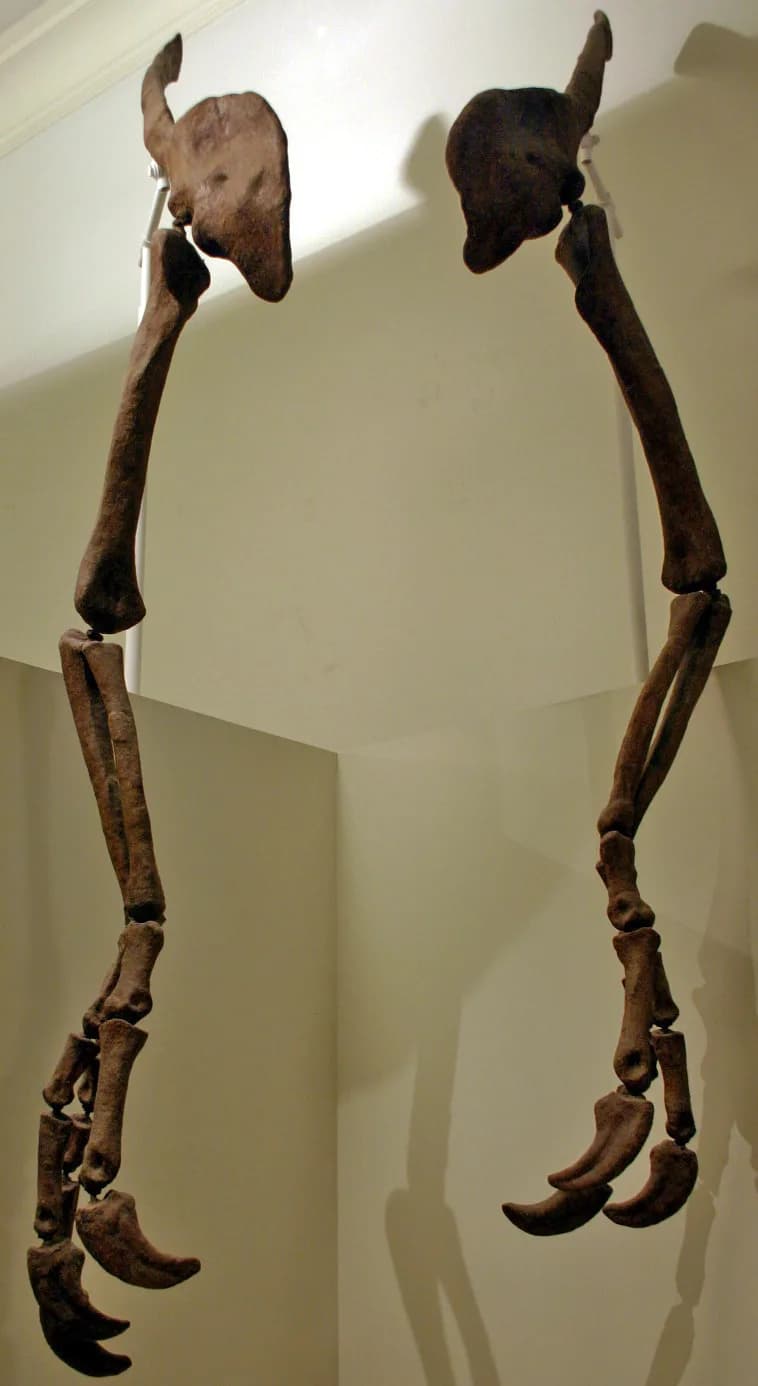
The anatomy of Nothronychus is one of the most bizarre of all dinosaurs, combining carnivore traits inherited from its theropod ancestors with spectacular adaptations for herbivory. Its pelvis was opisthopubic, meaning the pubis pointed backward like in modern birds, a configuration that enlarged the abdominal cavity to accommodate the voluminous digestive system necessary for cellulose digestion. Its disproportionately long forelimbs ended in three fingers armed with enormous, curved, laterally compressed claws. Its tiny skull relative to the body possessed a keratinous beak and small leaf-shaped teeth. Its elongated, flexible neck allowed it to reach vegetation at height.
The behavior of Nothronychus can be reconstructed by analogy with modern large arboreal herbivores and better-documented therizinosaurs. It probably used its immense claws to grip branches and pull them toward its mouth, feeding while standing in a semi-upright position like a bear picking berries. Despite its herbivorous diet, its claws constituted formidable defensive weapons against predators of its era, capable of inflicting lethal lacerations on any attacker. It likely lived in small groups or alone, moving through coastal forests at a slow, methodical pace. Its slow metabolism and voluminous body are reminiscent of the giant ground sloths of the Cenozoic.
The first fossils of Nothronychus were discovered in 1998 by an amateur collector in the Moreno Hill Formation of New Mexico, and the species N. mckinleyi was described by Kirkland and Wolfe in 2001. This discovery was a paleontological sensation as it constituted the first evidence of therizinosaurs in North America. In 2009, a second species, N. graffami, was described from an even more complete skeleton from the Tropic Shale Formation in Utah. This second specimen, remarkably well preserved, allowed for the first time a nearly complete reconstruction of a North American therizinosaur. Both species are displayed in various American museums and have considerably enriched our knowledge of this mysterious group.
| Period | Crétacé moyen-supérieur / Middle-Late Cretaceous (Turonien) |
| Era | Mésozoïque / Mesozoic |
| Age | 92–91 millions d'années / 92–91 million years ago |
| Location | Amérique du Nord (Nouveau-Mexique, Utah) / North America (New Mexico, Utah) |
| Length | 4,5–6 m |
| Height | ~3 m |
| Weight | 800 kg – 1 tonne |
| Diet | Herbivore |
| Discovery | 1998 |
Nothronychus mckinleyi belongs to the therizinosaurs, a group of theropods that underwent a remarkable evolutionary transition from carnivore to herbivore. Its skull bore a toothless horny beak at the front followed by small leaf-shaped teeth for shearing vegetation, its opisthopubic pelvis enlarged the abdominal cavity for a voluminous fermentation gut, and its 30-centimeter claws were used to grasp branches. Discovered in 1998 in New Mexico, described in 2001 by Kirkland and Wolfe.
Nothronychus measured 4.5 to 6 meters long with a height of about 3 meters when upright and a weight of 800 kilograms to 1 tonne. Its discovery in New Mexico in 1998 was a sensation because therizinosaurs were until then considered exclusively Asian. A second species, N. graffami, was described in 2009 from Utah from an even more complete skeleton, considerably expanding knowledge of the group.
Nothronychus mckinleyi's claws reached up to 30 centimeters. They were not used for killing prey — it was a strict herbivore — but for grasping high branches and pulling them toward the mouth, like modern giant ground sloths or giant pandas. Despite the animal's seemingly harmless appearance, these claws also constituted formidable defensive weapons against the carnivores of Cretaceous North America, such as carcharodontosaurids.
Reconstruction of Nothronychus mckinleyi with its characteristic claws
Wikimedia Commons
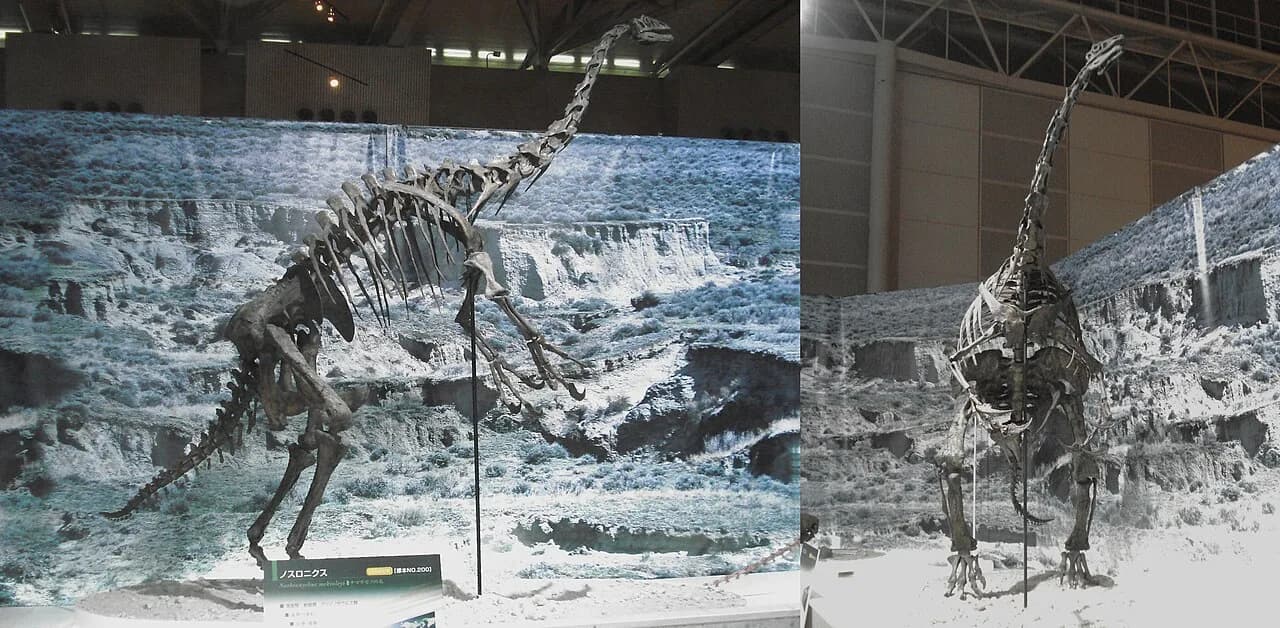
Skeleton and reconstruction of Nothronychus seen from side and front
Wikimedia Commons