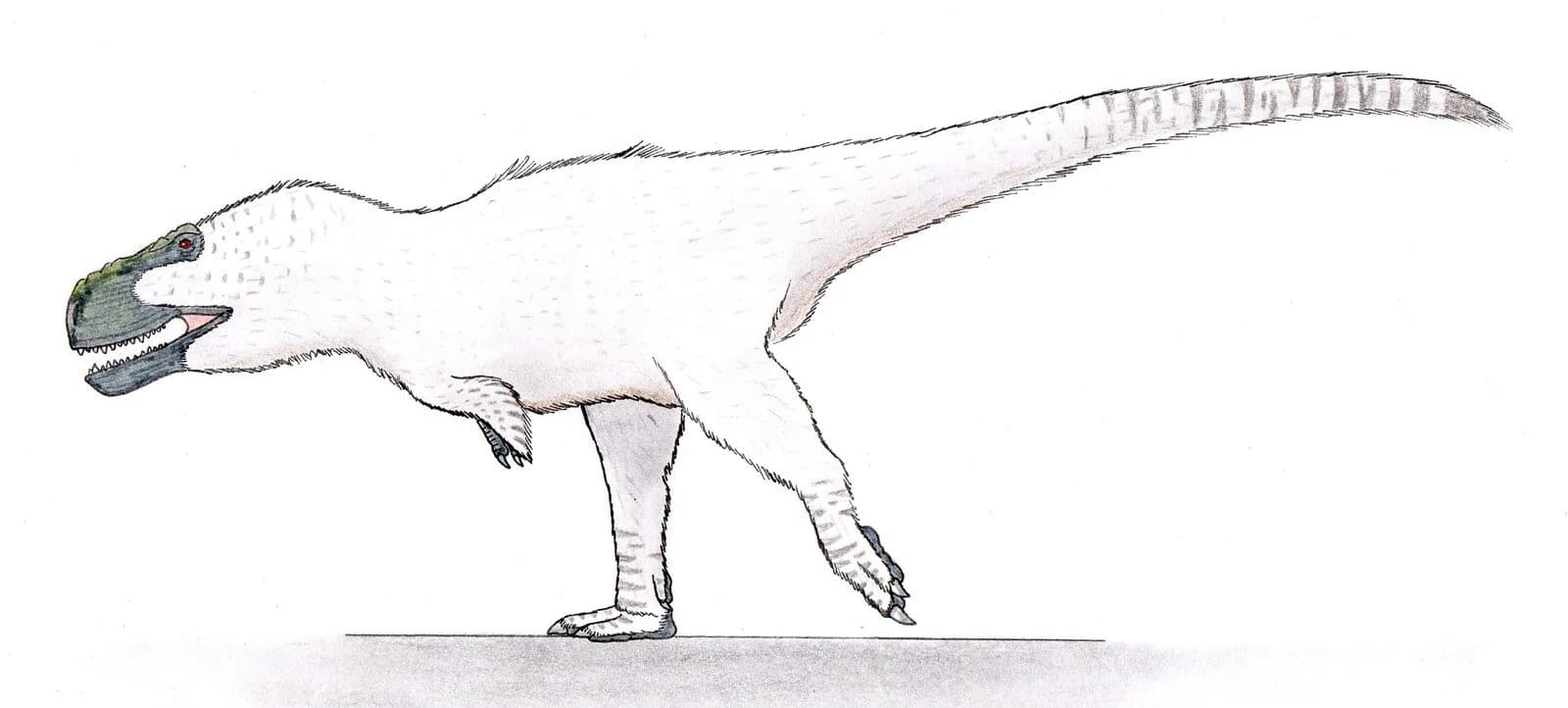
Nanuqsaurus
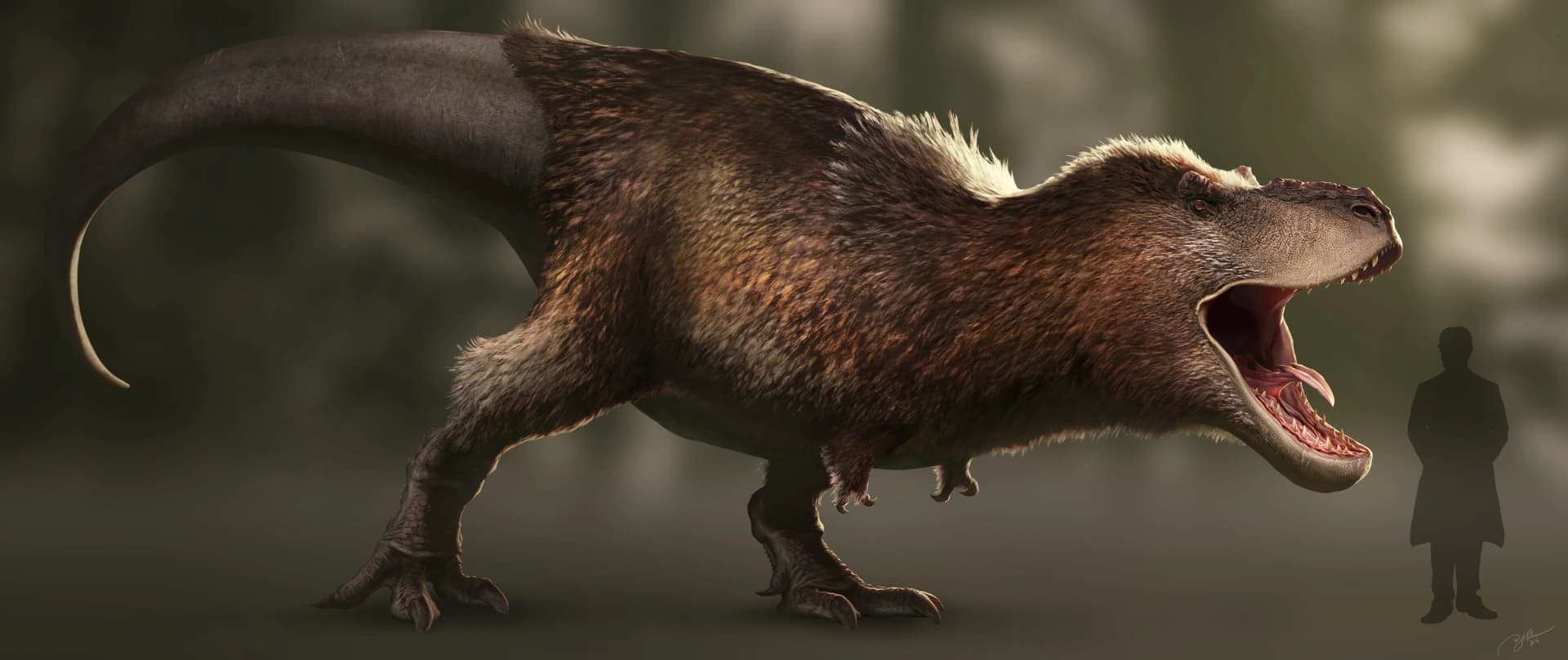
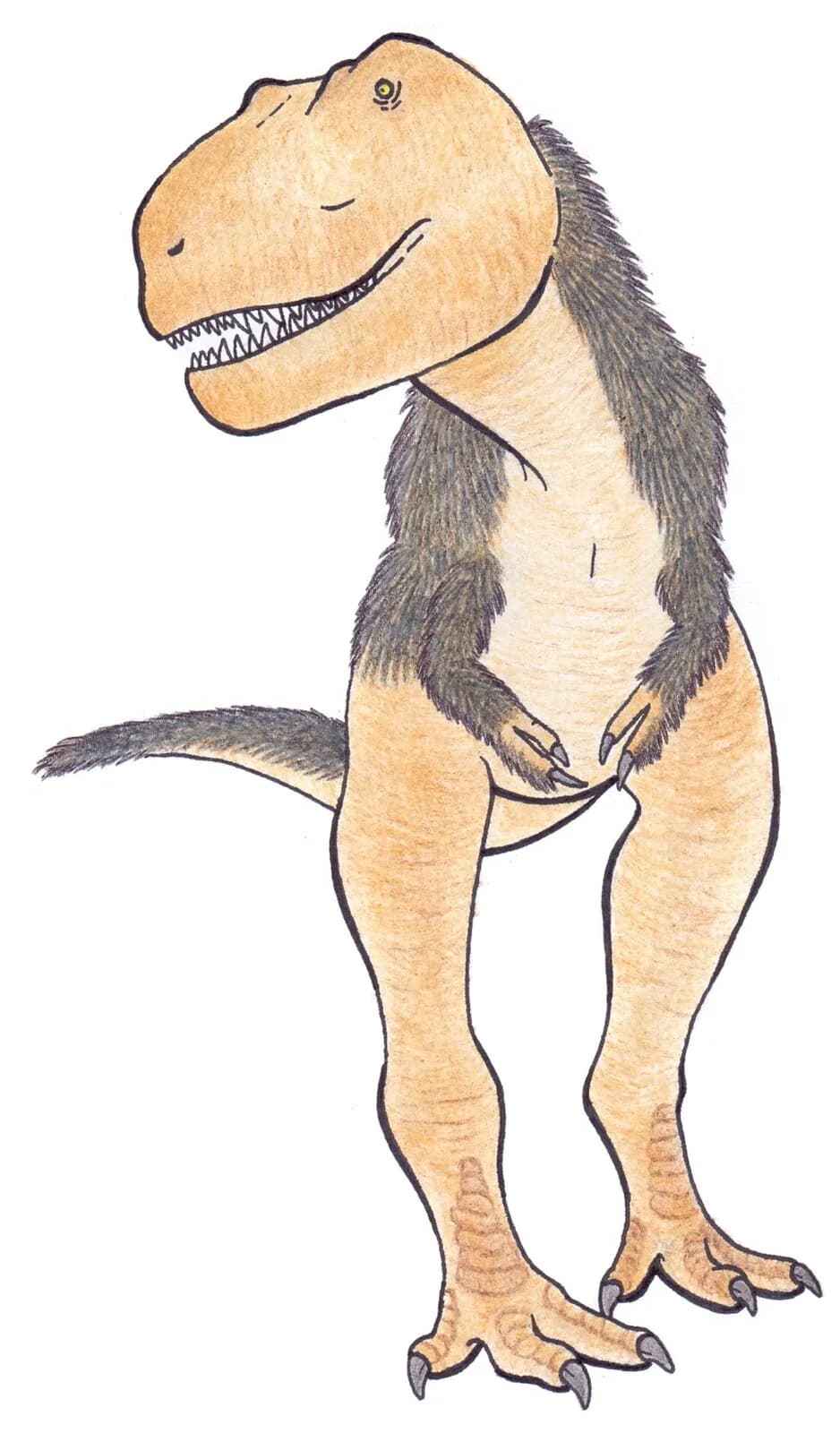
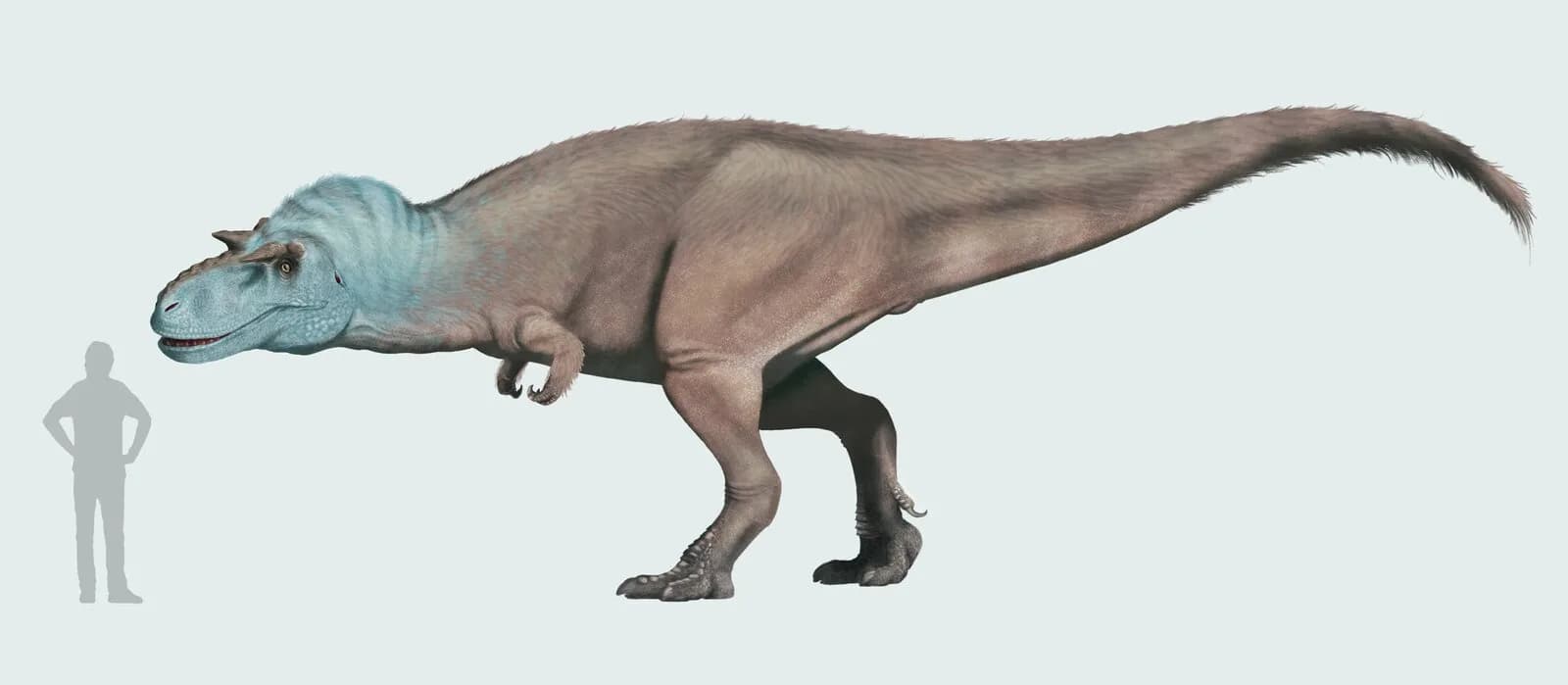
Nanuqsaurus hoglundi is an Arctic tyrannosaurid: it hunted in Alaska 70 to 68 million years ago, in a polar environment. Six to 7 metres long and 400 kilograms to a tonne, roughly half of Tyrannosaurus rex, its small size is read as an adaptation to the limited resources of the far north. Its name comes from « nanuq », polar bear in Iñupiaq.
Nanuqsaurus lived during the Late Cretaceous period, approximately 69 million years ago, during the Maastrichtian stage, in what is now the Prince Creek Formation of northern Alaska. This is one of the most remarkable dinosaur localities in the world, representing an ancient polar ecosystem where dinosaurs lived under conditions of extreme seasonal light variation, including months of continuous winter darkness. The climate, while warmer than today's Arctic, was still cool-temperate with average annual temperatures around 6 degrees Celsius. Nanuqsaurus represents a unique adaptation of tyrannosaur lineage to high-latitude environments, challenging previous assumptions about dinosaur biogeography and thermal tolerance.
Nanuqsaurus was a relatively modestly sized tyrannosaur, estimated at approximately 6 to 7 meters long with a weight of about 500 to 900 kilograms. It was significantly smaller than its cousin Tyrannosaurus rex, which lived at more southern latitudes at the same time. However, recent discoveries of additional material suggest it could have been larger than initial estimates. Its partial skull measures about 60 centimeters long, with teeth typical of tyrannosaurs. Its reduced size might represent a case of island dwarfism or an adaptation to the limited resources of the Arctic.
Nanuqsaurus was a carnivorous tyrannosaur that likely preyed on the hadrosaurs, ceratopsians, and other herbivorous dinosaurs that inhabited the ancient Arctic ecosystem of Late Cretaceous Alaska. Its smaller size compared to lower-latitude tyrannosaurs like T. rex may reflect adaptation to reduced prey availability in the polar environment, where seasonal resource fluctuations created challenging conditions. The Arctic ecosystem supported fewer large herbivores than temperate regions, potentially limiting the maximum body size predators could achieve. Despite its relatively modest size, Nanuqsaurus was almost certainly the apex predator of its polar ecosystem, filling the same ecological role as its larger relatives did in warmer, more productive southern environments.
Nanuqsaurus inhabited the North Slope of Alaska, in the Prince Creek Formation, at a latitude of approximately 80-85° north during the Late Cretaceous. This polar environment was unique: although mean annual temperatures were 2 to 8°C (cooler than for most dinosaurs but warmer than today's Arctic), the region experienced several months of total winter darkness and summers with the midnight sun. Vegetation included conifer and deciduous forests that lost their leaves in winter. This polar ecosystem supported a surprisingly diverse dinosaur fauna.
Nanuqsaurus anatomy, though known from limited material, shows typical tyrannosaur characteristics: a robust skull with massive, serrated teeth, short arms, and powerful hindlimbs. Its brain possessed proportionally large olfactory lobes, suggesting an excellent sense of smell — potentially crucial for hunting in the darkness of long Arctic winters. Its smaller size compared to T. rex could be explained by adaptations to the Arctic's limited resources or by insular ecological constraints. Future studies on additional material will clarify its exact proportions.
Nanuqsaurus faced unique challenges related to its Arctic habitat. During winter months, it had to hunt in near-total darkness, relying on its developed sense of smell and possibly adapted night vision. Whether it migrated south in winter or remained year-round remains debated. If it stayed, it had to cope with periods of fasting and reduced resources. Its relatively modest size could have been an advantage in this environment, requiring less food than a T. rex. It coexisted with other polar dinosaurs, forming a unique ecosystem.
Nanuqsaurus was described in 2014 by Anthony Fiorillo and Ronald Tykoski from a skull fragment (the skull roof and part of the upper jaw) discovered in the Prince Creek Formation on the North Slope of Alaska. The name means 'polar bear lizard,' combining the Inupiaq word 'nanuq' (polar bear) and Greek 'saurus' (lizard), a tribute to the region's indigenous culture. The holotype (DMNH 21461) is housed at the Perot Museum of Nature and Science in Dallas. Since the original description, additional material has been found, suggesting the animal was potentially larger than first estimates indicated.
| Period | Crétacé supérieur / Late Cretaceous (Maastrichtien) |
| Era | Mésozoïque / Mesozoic |
| Age | 70–68 Ma |
| Location | Amérique du Nord / North America (Alaska, USA) |
| Length | 6–7 m |
| Height | ~2 m |
| Weight | 400–1 000 kg |
| Diet | Carnivore |
| Discovery | 2006 |
Nanuqsaurus hoglundi measured approximately 6 to 7 meters long with an estimated weight of 400 to 1,000 kilograms — roughly half the length of its cousin Tyrannosaurus rex. Described in 2014 by Fiorillo and Tykoski from a partial skull (holotype DMNH 21461, Perot Museum, Dallas), this reduced size may reflect adaptation to limited Arctic resources or insular dwarfism in a polar ecosystem.
Nanuqsaurus hoglundi lived at approximately 80–85° north latitude 69 to 68 million years ago, enduring several months of near-total winter darkness. Its brain had proportionally large olfactory lobes, suggesting an excellent sense of smell crucial for hunting in darkness. Seasonal southward migration remains debated. An animal of 700 kilograms required less food than T. rex, an advantage with limited resources.
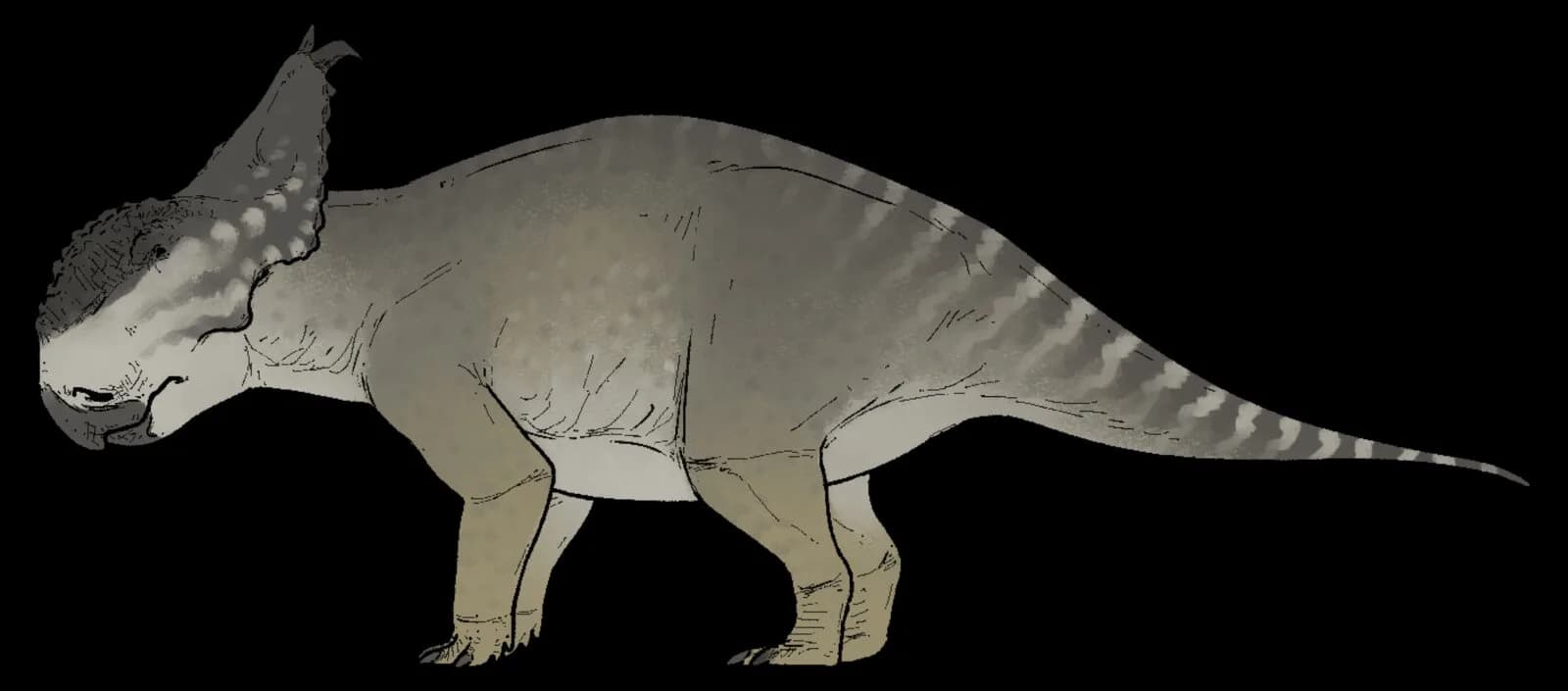
Nanuqsaurus combines the Inupiaq word 'nanuq' (polar bear) and Greek 'sauros' (lizard), honoring Alaska's indigenous culture. This tyrannosaur hunted in the Prince Creek Formation hadrosaurs like Edmontosaurus and ceratopsians like Pachyrhinosaurus perotorum — which cohabited in this unique Late Cretaceous Arctic ecosystem, the most northern known site for non-avian dinosaurs.
Life reconstruction of Nanuqsaurus hoglundi
Federico Benzan, CC BY-SA 4.0, via Wikimedia Commons
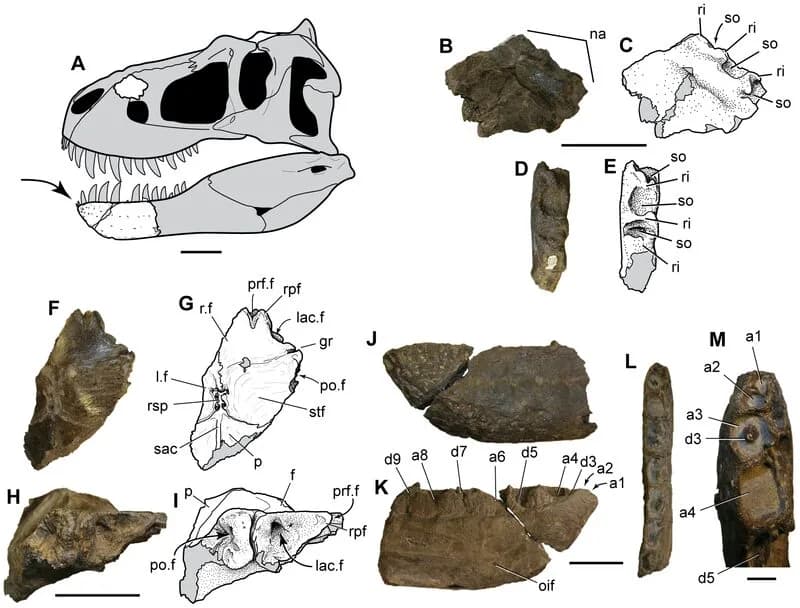
Nanuqsaurus hoglundi fossil fragments
Fiorillo & Tykoski, CC BY 2.5