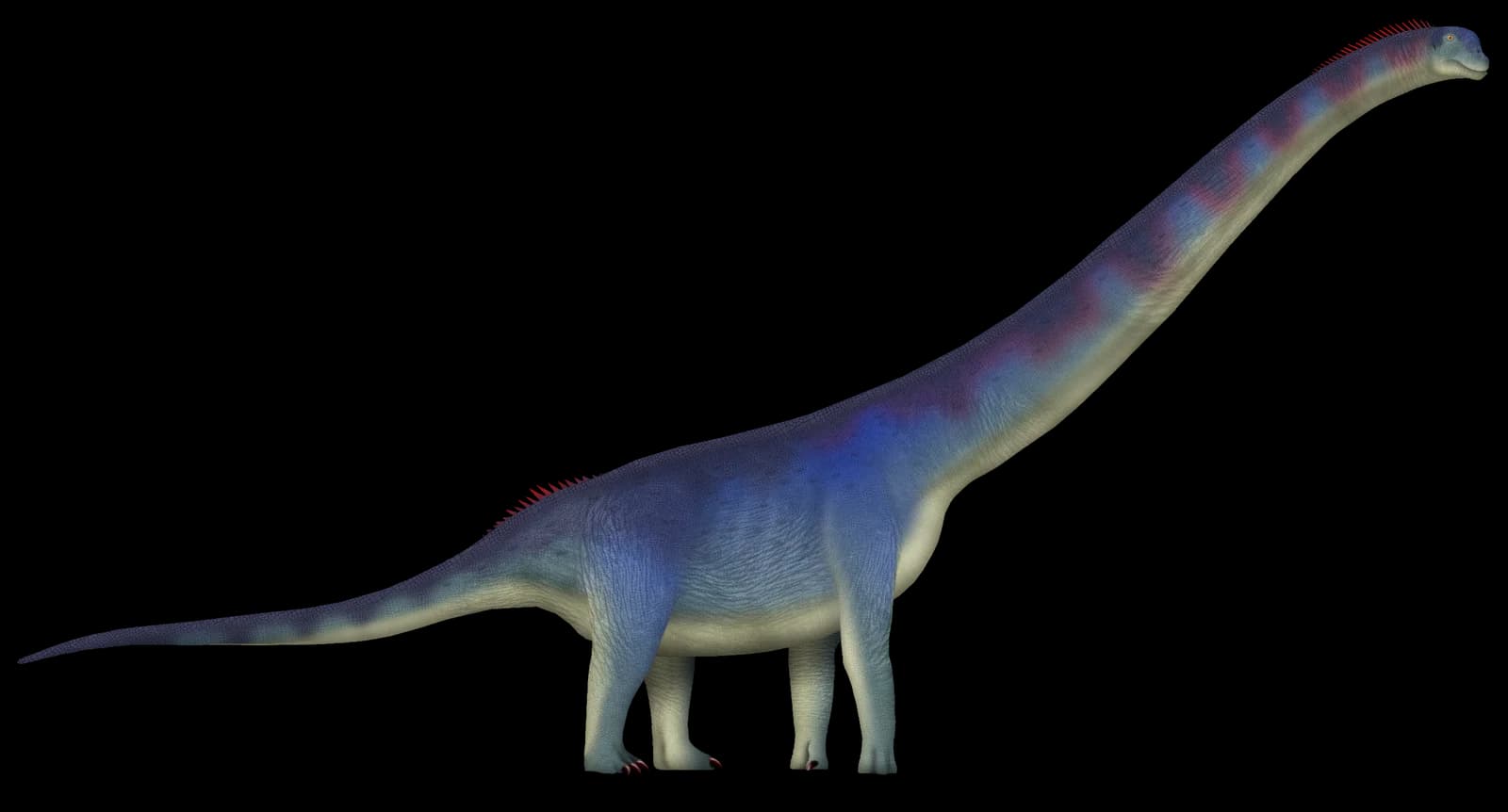
Nagatitan
Nagatitan chaiyaphumensis was uncovered in 2016 by a drought: a falling village pond exposed its bones in Chaiyaphum province, Thailand. This titanosaur, some 27 metres long and 25 to 28 tonnes, lived around 113 million years ago. It is the first sauropod drawn from the Khok Kruat Formation, and the fourteenth dinosaur named from the country.
Nagatitan lived during the Early Cretaceous, around the Aptian–Albian boundary, roughly 113 million years ago. Its remains come from the Khok Kruat Formation in northeastern Thailand — the country's youngest dinosaur-bearing rock unit. The region then belonged to the Sundaland continental block, under a warm, strongly seasonal climate crossed by braided rivers and floodplains. It was in these settings that Asian titanosauriforms reached their largest sizes, and Nagatitan stands as the last known giant of Southeast Asia, closing a long chapter of sauropod evolution in the region.
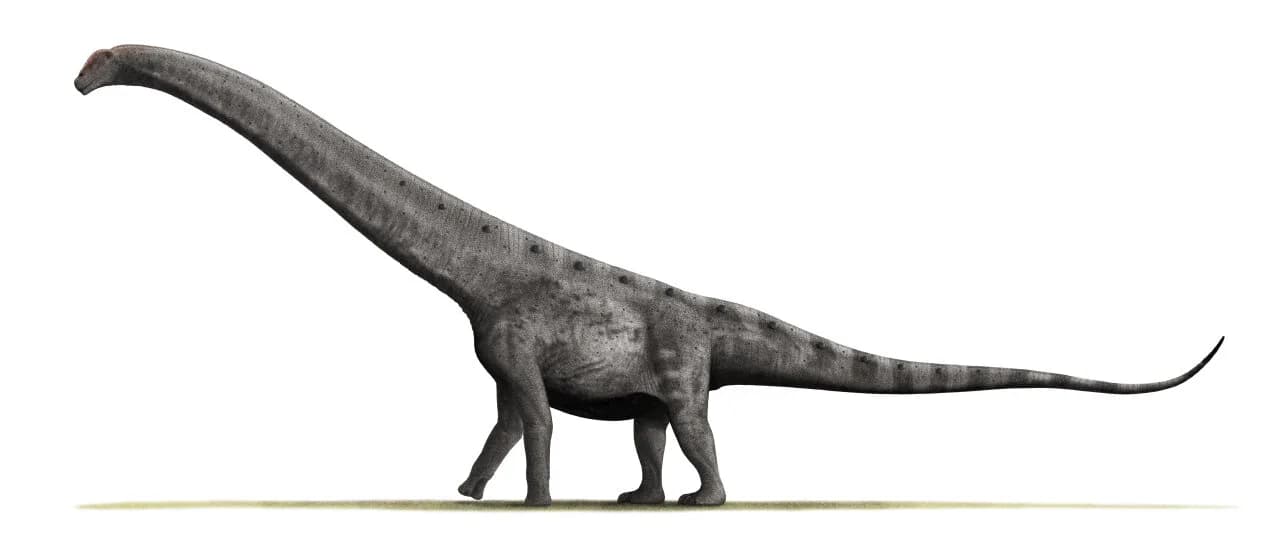
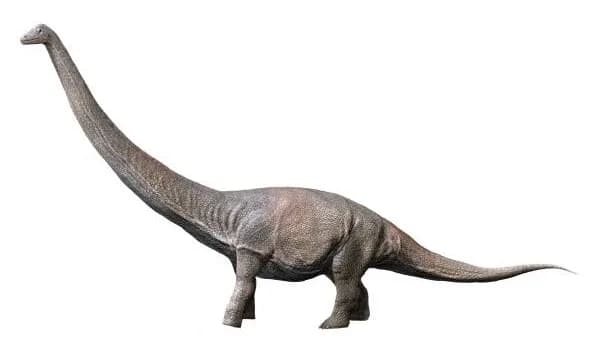
At an estimated length of about 27 meters and a mass of 25 to 28 tonnes, Nagatitan ranks among the largest dinosaurs ever unearthed in Southeast Asia. The recovered material — vertebrae and limb elements — points to an animal built much like the great South American titanosaurs, though it is known from more fragmentary bones. Its size places it at the top of a regional pattern: through the middle Cretaceous, Asian titanosauriforms grew noticeably more massive, and this Thai sauropod marks the culmination of that trend.
Nagatitan was a strict herbivore whose appetite matched its bulk. It browsed the vegetation of the alluvial plains — conifers, ferns, horsetails, and the early flowering plants spreading across the Cretaceous. Like other sauropods, it swallowed its food without chewing and relied on prolonged fermentation in an enormous gut to extract energy. Its long neck let it sweep a wide feeding zone without shifting its massive body, an energy-efficient feeding strategy shared by all large titanosauriforms and one of the keys to their success at giant size.
The sediments of the Khok Kruat Formation record a system of braided rivers and floodplains under a warm climate with a marked dry season. There Nagatitan shared its range with carcharodontosaurid theropods, iguanodonts, and crocodilians, in one of the last great continental ecosystems of the Early Cretaceous in Southeast Asia. Its great size made it a low- to mid-canopy browser, exploiting a layer of vegetation out of reach of smaller herbivores and reducing direct competition for food.
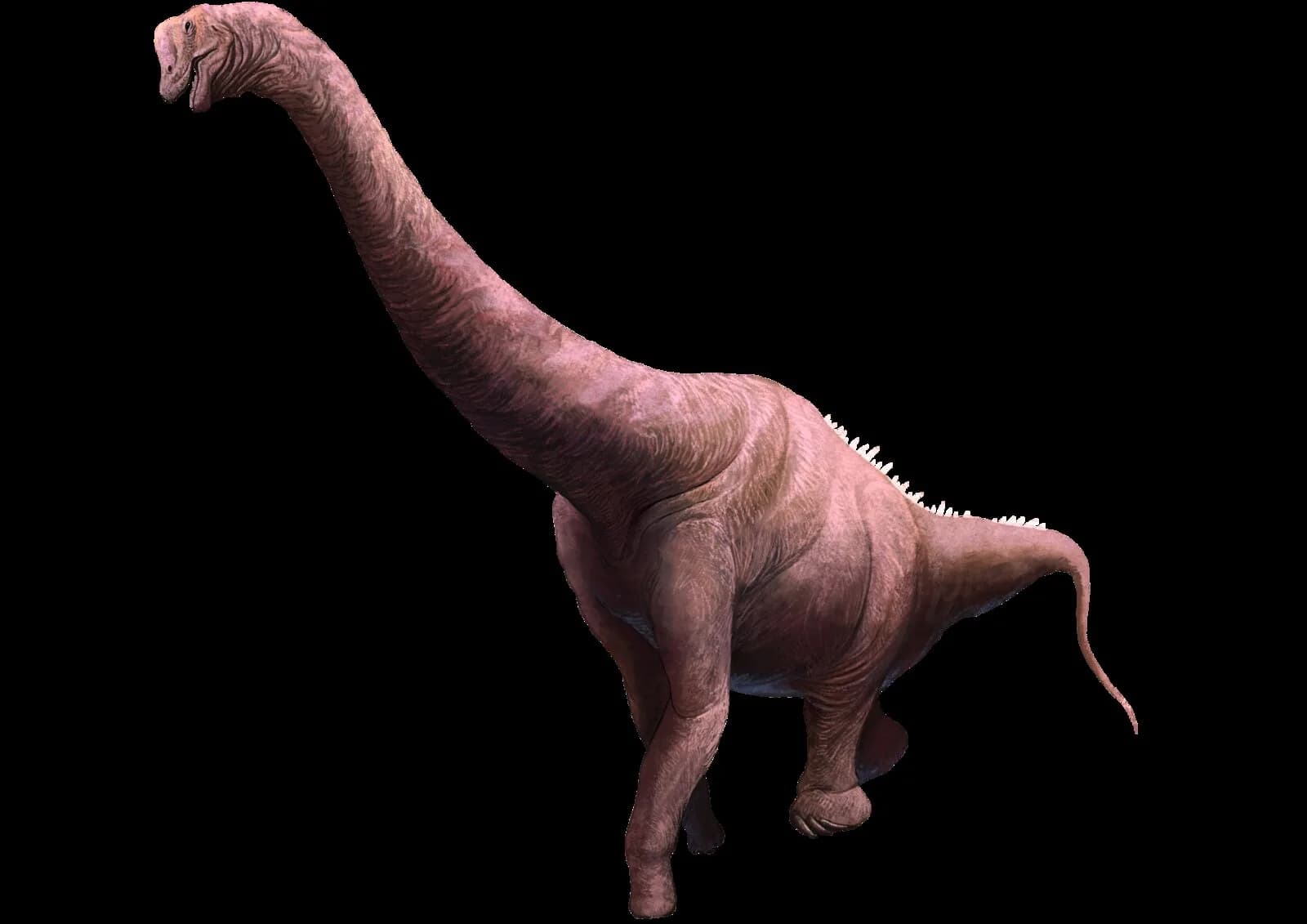
Nagatitan belongs to the somphospondylans, the titanosauriform branch leading to the titanosaurs, and more precisely to the family Euhelopodidae, until now known mainly from East Asia. Its vertebrae show a spongy internal structure (camellate bone) hollowed by pneumatic cavities that lightened the skeleton while keeping it strong — a key adaptation for reaching such a mass. The proportions of its long bones confirm a quadruped with columnar limbs built to carry tens of tonnes over long distances.
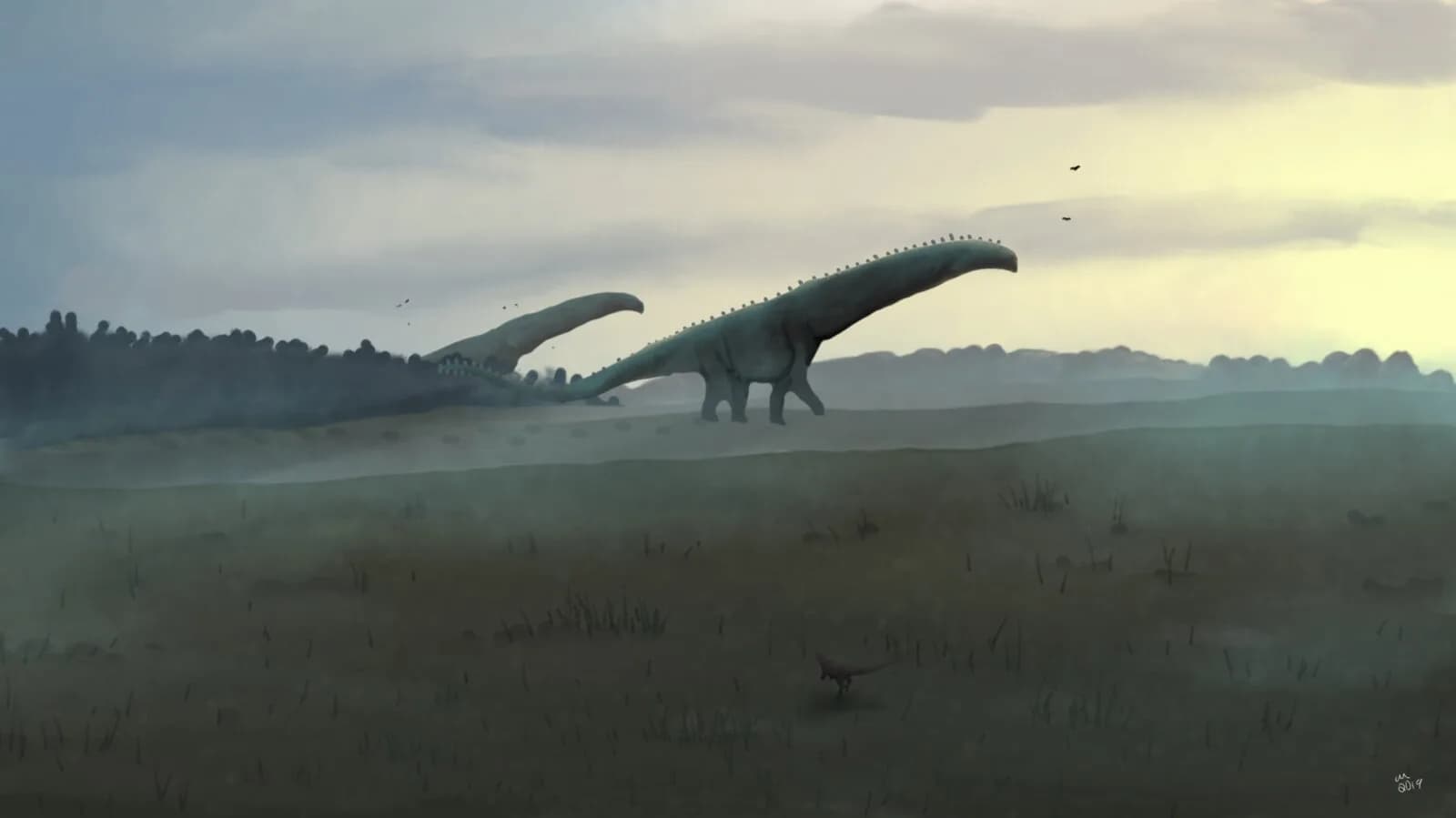
Like other large sauropods, Nagatitan probably moved in loose herds across the plains, following the vegetation through the wet and dry seasons. Its young likely grew fast, going from a few kilograms at hatching to several tonnes within a few years — the best defense against predators being to reach an untouchable size quickly. As an adult, an animal of this mass had few predators, even against the large theropods that shared its habitat.
The first bones were spotted in 2016 by a resident of Ban Pha Nang Sua village, Nong Bua Rawe District (Chaiyaphum Province): a drought had lowered a communal pond and exposed a bone bed at the water's edge. Fieldwork led by paleontologist Sita Manitkoon ran from 2016 to 2019 and was completed in 2024. The species Nagatitan chaiyaphumensis was described on May 14, 2026 in the journal Scientific Reports — Thailand's 14th named dinosaur, and the first sauropod known from the Khok Kruat Formation. The genus name joins the Naga — the mythical serpent of Thai-Lao folklore — with the word 'titan.'
| Period | Crétacé inférieur / Early Cretaceous (Aptien–Albien) |
| Era | Mésozoïque / Mesozoic |
| Age | ~113 Ma |
| Location | Asie / Asia (Thaïlande / Thailand — Chaiyaphum) |
| Length | ~27 m |
| Weight | 25 000–28 000 kg |
| Diet | Herbivore |
| Discovery | 2016 |
Nagatitan chaiyaphumensis reached approximately 27 meters in length with a weight of 25,000 to 28,000 kilograms, making it one of the largest dinosaurs ever unearthed in Southeast Asia. Described on May 14, 2026 in Scientific Reports, it is Thailand's 14th named dinosaur and the first sauropod known from the Khok Kruat Formation. It represents the last known large titanosauriform of the region.
Nagatitan chaiyaphumensis was spotted in 2016 by a resident of Ban Pha Nang Sua village (Chaiyaphum Province): a drought had lowered a communal pond and exposed a bone bed. Excavations by Sita Manitkoon's team ran from 2016 to 2019, completed in 2024. Vertebrae and limb elements were recovered from the Khok Kruat Formation, Thailand's youngest dinosaur-bearing rock unit.
Nagatitan chaiyaphumensis belongs to the somphospondylans and the family Euhelopodidae, a group of titanosauriforms previously known mainly from East Asia (China). It is the first confirmed euhelopodid from Southeast Asia. Its vertebrae show a spongy internal structure (camellate bone) with pneumatic cavities — a key adaptation enabling it to reach a mass exceeding 25 tonnes while keeping the skeleton lightweight.
Information on this page is based on peer-reviewed scientific publications.
Life reconstruction of Nagatitan chaiyaphumensis
TotalDino, CC BY 4.0, via Wikimedia Commons