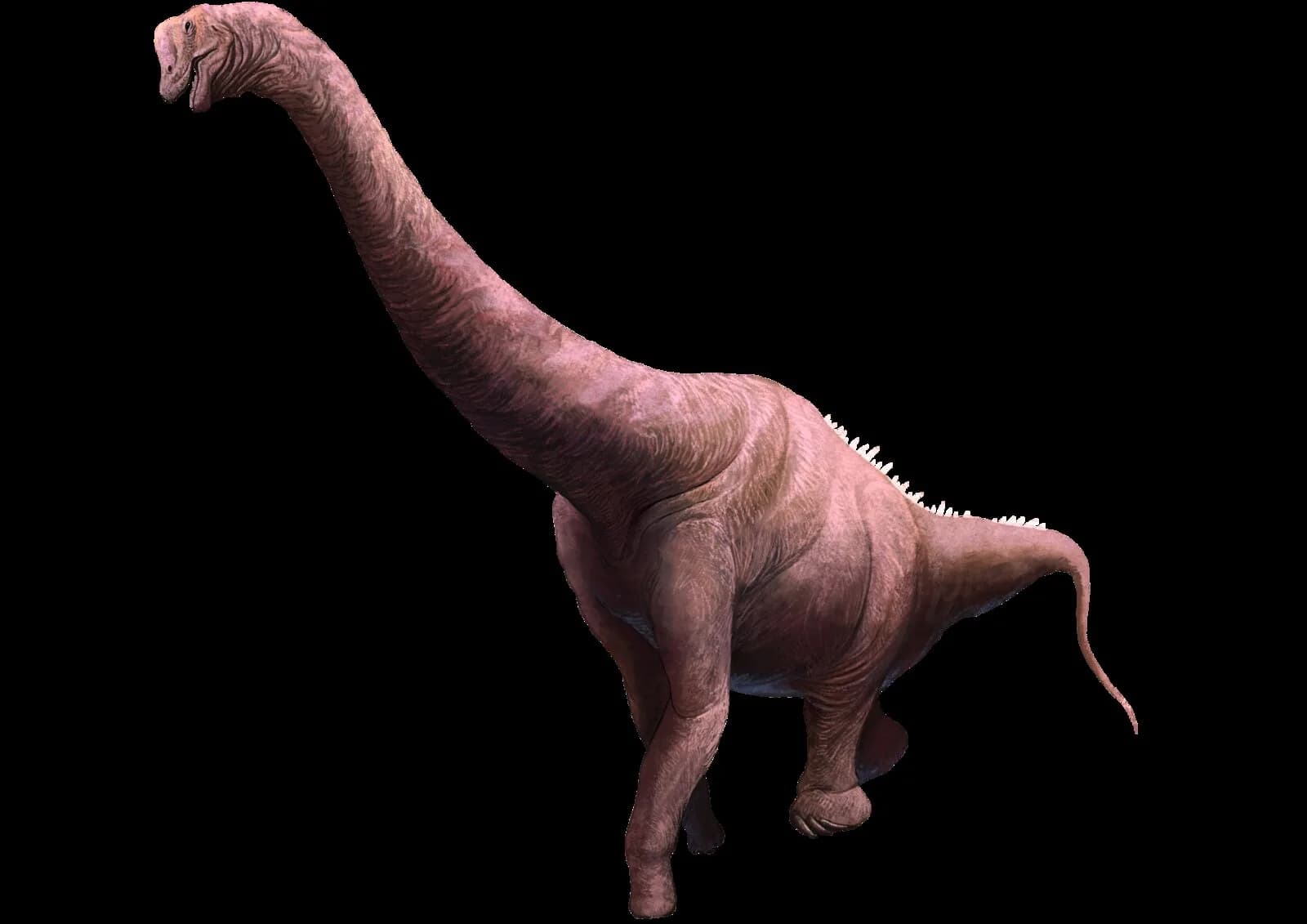
Brachiosaure
Brachiosaurus altithorax was a herbivorous sauropod from North America, described in 1903 from fossils found in Colorado. It measured 20 to 26 metres long and weighed 28 to 58 tonnes, and its forelimbs were longer than its hind limbs, giving it a giraffe-like stance with the head 13 metres above the ground. A mounted skeleton in Berlin stood as the world's largest for a century.
Brachiosaurus lived in the Late Jurassic, approximately 154 to 150 million years ago, during the Kimmeridgian and Tithonian stages. It was part of the diverse and spectacular fauna of the Morrison Formation, one of the world's richest fossil deposits for Jurassic dinosaurs. This period corresponds to the peak of sauropod diversity, with an exceptional variety of herbivorous giants coexisting in the same ecosystem. The Late Jurassic climate was warm and humid, favorable to lush vegetation capable of nourishing these colossal animals. Brachiosaurus shared its environment with other giants like Diplodocus, Apatosaurus, and Camarasaurus, as well as the predator Allosaurus.
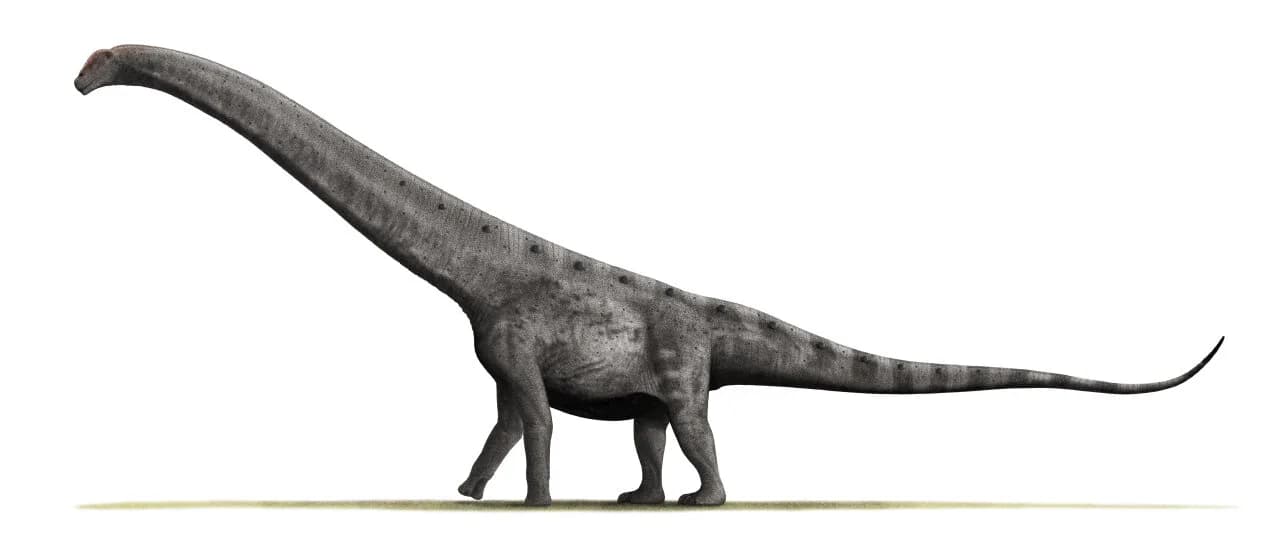
One of the most massive dinosaurs ever discovered: 20 to 26 meters long, 13 meters tall (the height of a four-story building), and an estimated weight of 28 to 58 tonnes. Unlike most sauropods, its forelimbs were longer than its hind limbs, giving it a naturally rearward-sloping posture with its neck angled upward. This unique morphology allowed it to reach vegetation more than 9 meters above the ground without even raising its head. Its relatively small skull compared to its enormous body measured about 81 cm long. A single Brachiosaurus humerus measures over 2 meters, testifying to the extraordinary dimensions of this animal.
A strict herbivore, Brachiosaurus fed on tree canopies, primarily conifers, ginkgoes, and tree ferns. Its spatulate teeth, more robust than those of Diplodocus, were adapted for stripping tough foliage. It is estimated that an adult Brachiosaurus needed to consume about 200 to 400 kg of plant matter per day to maintain its colossal body mass. Its high metabolism (probably intermediate between reptiles and mammals) required considerable caloric intake. Unlike diplodocids that fed at medium height, Brachiosaurus exploited the upper forest canopy, thus reducing food competition with other sauropods in its ecosystem.
Brachiosaurus inhabited the semi-arid plains and open forests of Jurassic North America, primarily in the Morrison Formation extending from Montana to New Mexico. This environment was crossed by seasonal rivers surrounded by dense vegetation of conifers, ferns, and ginkgoes, creating forested corridors in an otherwise semi-arid landscape. The Morrison Formation is one of the world's most important fossil deposits, having yielded dozens of dinosaur species. Fossils attributed to Brachiosaurus have also been found in East Africa, though these are now classified in the separate genus Giraffatitan. The warm climate with marked seasons probably forced Brachiosaurus to travel great distances to find enough food.
Brachiosaurus anatomy is unique among sauropods: its forelimbs longer than its hind limbs created a rearward-sloping back, a characteristic unique among large sauropods. Its nostrils were positioned atop the skull, above the eyes, though the interpretation of this feature has evolved — it is no longer thought they served as an aquatic snorkel. Its enormous rib cage housed massive lungs, probably supplemented by an air sac system similar to modern birds, enabling efficient breathing despite its extremely long neck. Its cervical vertebrae were hollow and lightened by air pockets (pneumatization), without which the neck would have been too heavy to carry. Its heart had to be extraordinarily powerful to pump blood to the brain, situated more than 9 meters above ground level.
Probably solitary or living in small groups, Brachiosaurus had to travel great distances to find enough food. Its daily caloric needs were colossal — estimated at several hundred kilograms of plant matter. Biomechanical studies suggest it could not gallop or run, with its maximum speed estimated at about 10-15 km/h. Juveniles, much more vulnerable than the massive adults, probably formed groups for protection from predators like Allosaurus and Ceratosaurus. Brachiosaurus growth was rapid: bone histological analyses suggest it reached adult size in 15 to 20 years. Its long neck allowed it to survey its surroundings from a height inaccessible to any other land animal of its time.
Described in 1903 by Elmer Riggs from fossils discovered in Colorado, Brachiosaurus is one of the most iconic sauropods. The holotype comes from the Morrison Formation in the Grand River Valley, western Colorado. Remains have also been found in East Africa, formerly attributed to 'Brachiosaurus' brancai but now reclassified in the distinct genus Giraffatitan. The Natural History Museum in Berlin displays the most complete composite skeleton in the world (Giraffatitan), which holds the Guinness record for the largest mounted dinosaur skeleton. American Brachiosaurus fossils are rarer and more fragmentary than those of Giraffatitan. Recent discoveries in Utah and Wyoming have enriched our understanding of this giant, but a complete skeleton of the North American species remains to be found.
| Period | Jurassique supérieur / Late Jurassic (Kimméridgien–Tithonien) |
| Era | Mésozoïque / Mesozoic |
| Age | 154–150 Ma |
| Location | Amérique du Nord / North America (Colorado, Wyoming) |
| Length | 20–26 m |
| Height | ~9–13 m |
| Weight | 28 000–58 000 kg |
| Diet | Herbivore |
| Discovery | 1903 |
Brachiosaurus altithorax measured 20 to 26 meters long and 13 meters tall — the height of a four-story building — weighing 28 to 58 tonnes. Unlike most sauropods, its forelimbs were longer than its hindlimbs, giving it a rearward-sloping back and a naturally upright neck. Its hollow (pneumatized) cervical vertebrae reduced neck weight; without this adaptation the neck would have been impossible to support.
Brachiosaurus altithorax exploited the high forest canopy — conifers, ginkgoes, and tree ferns above 9 meters — where Diplodocus fed at low to medium height. This niche partitioning reduced competition among coexisting sauropods in the Morrison Formation. Its spatulate teeth, more robust than Diplodocus's, allowed it to strip tough foliage. An adult consumed an estimated 200 to 400 kg of plant matter per day.
For decades, East African fossils attributed to 'Brachiosaurus' brancai were reclassified into the distinct genus Giraffatitan by Taylor (2009). The most complete composite skeleton at Berlin's Natural History Museum actually belongs to Giraffatitan, not Brachiosaurus altithorax. Genuine North American Brachiosaurus fossils remain rare and fragmentary, with no complete skeleton discovered to date.
Information on this page is based on peer-reviewed scientific publications.
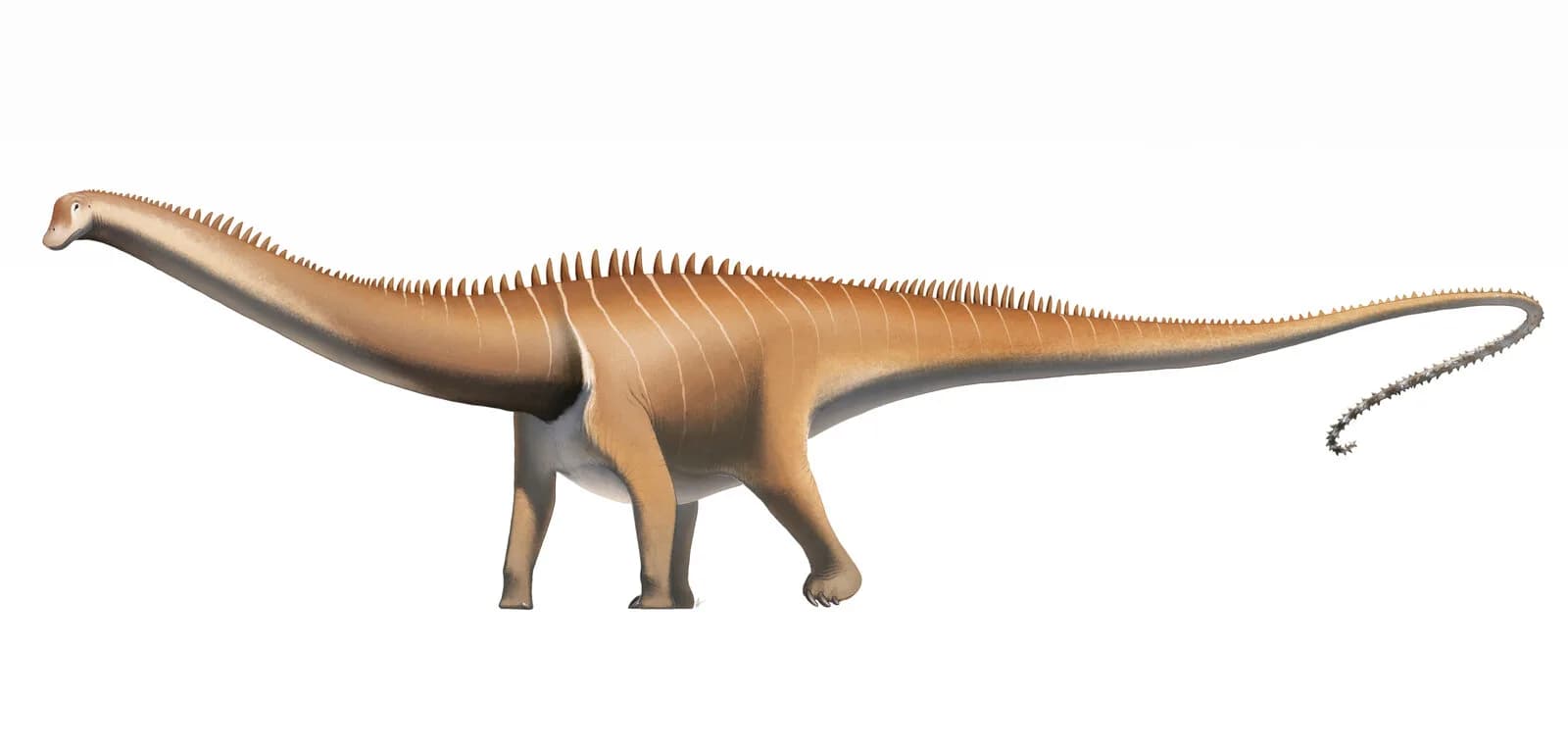
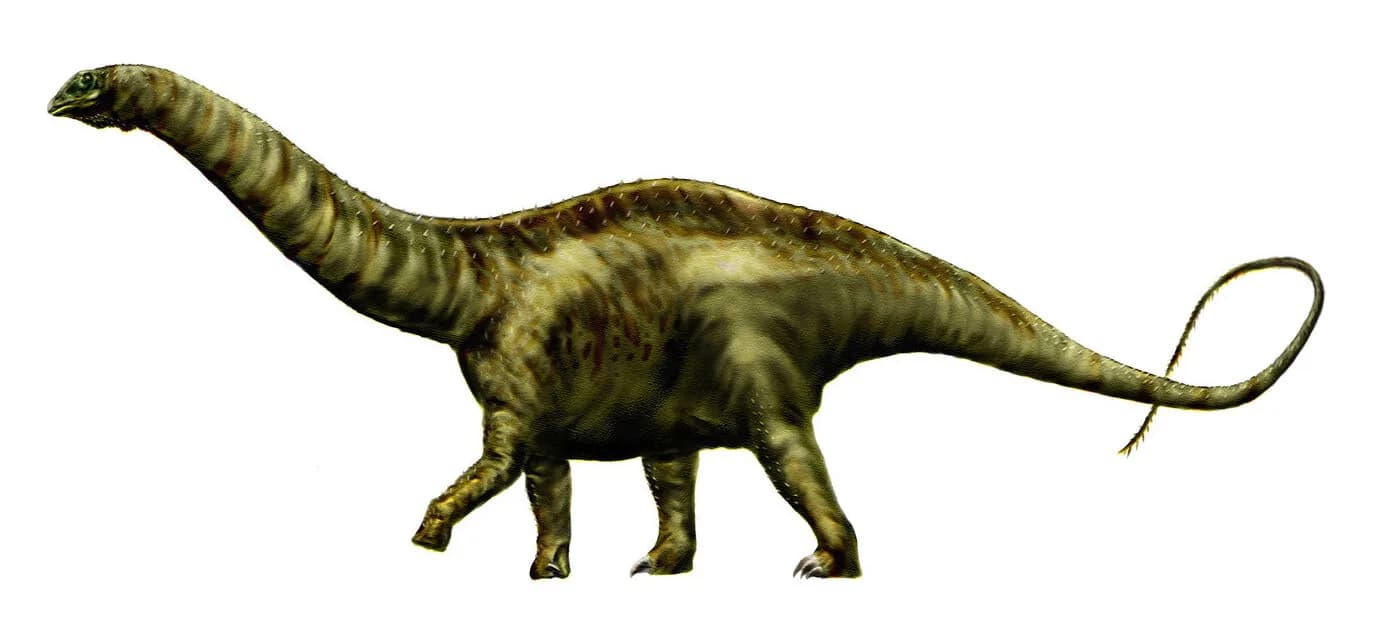
Life reconstruction of Brachiosaurus altithorax
DBCLS, CC BY 4.0, via Wikimedia Commons
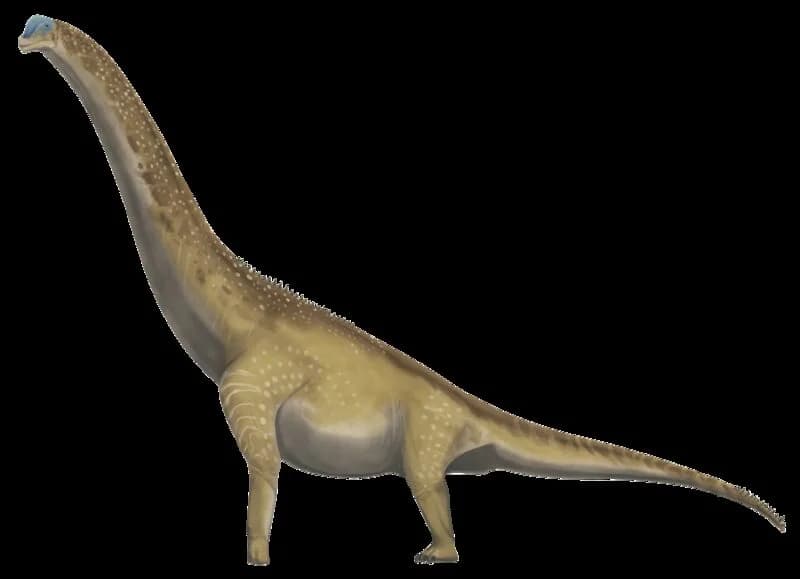
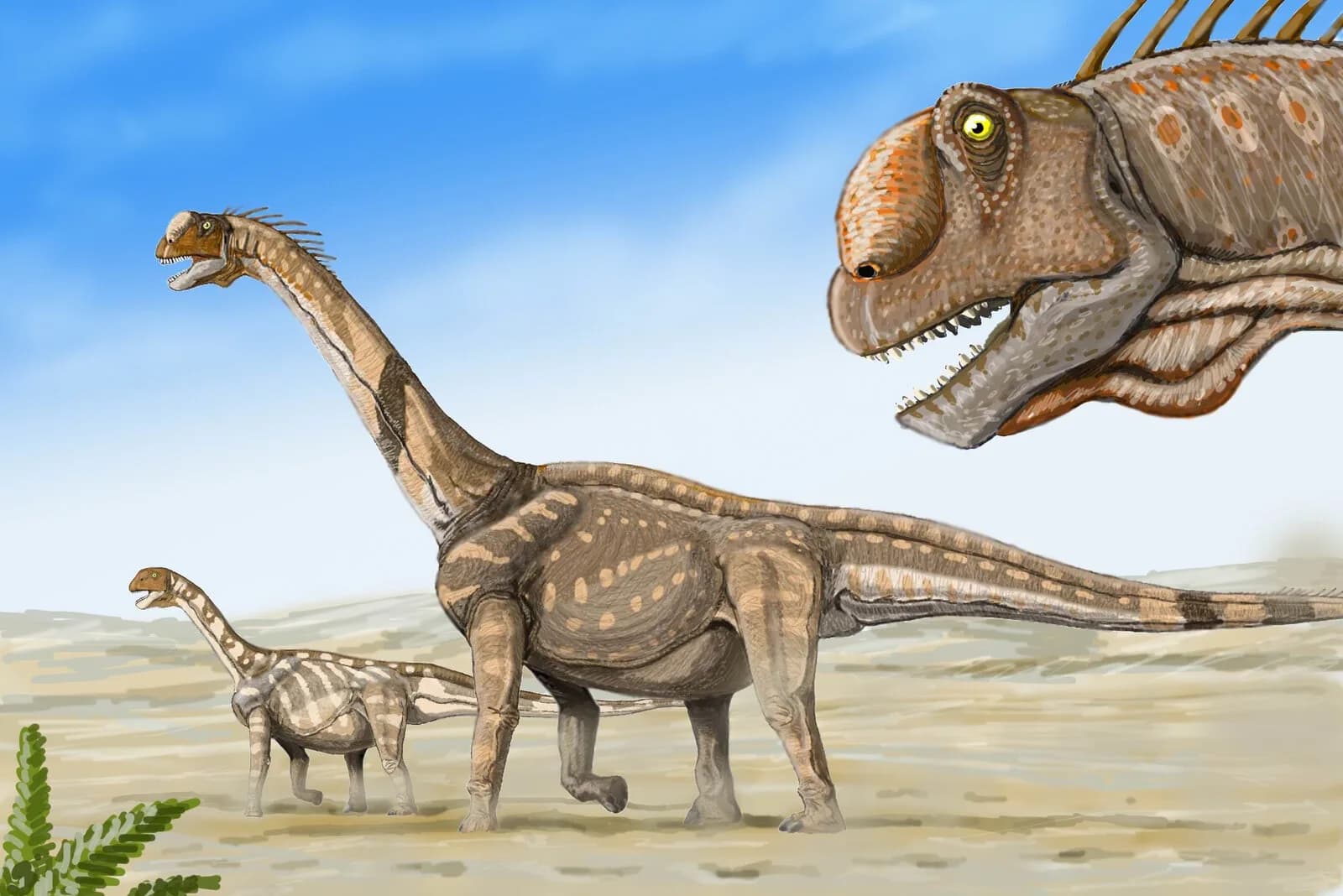
Brachiosaurus altithorax side profile reconstruction
Charles Nye, CC BY-SA 4.0