Meganeuropsis
Meganeuropsis permiana is the largest insect of all time: a 71-centimetre wingspan, matching a peregrine falcon, for a 43-centimetre body and some 150 grams. Described in 1937 from the Wellington Formation in Kansas, it flew 290 to 283 million years ago. Its size depended on air holding 35 % oxygen, against 21 % today.
Meganeuropsis lived during the Early Permian (Artinskian), approximately 290 to 283 million years ago, in the tropical forests of what is now the central United States (Kansas, Oklahoma). The Early Permian still retained the hyperoxic atmosphere of the Carboniferous (about 30-35% oxygen), allowing giant insects to reach record sizes. Meganeuropsis is the largest known insect of all time, with a wingspan that could reach 71 centimeters — surpassing even its famous cousin Meganeura from the Carboniferous. It belonged to the order Meganisoptera (formerly Protodonata), flying predators related to dragonflies but constituting a distinct, more primitive group.
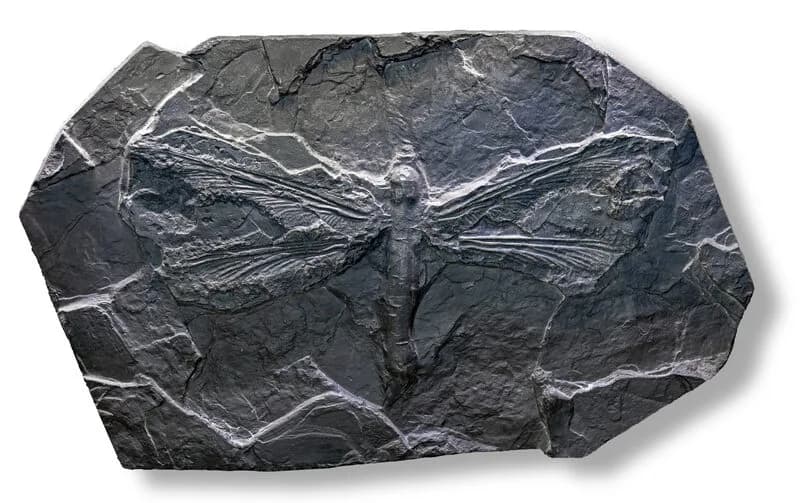
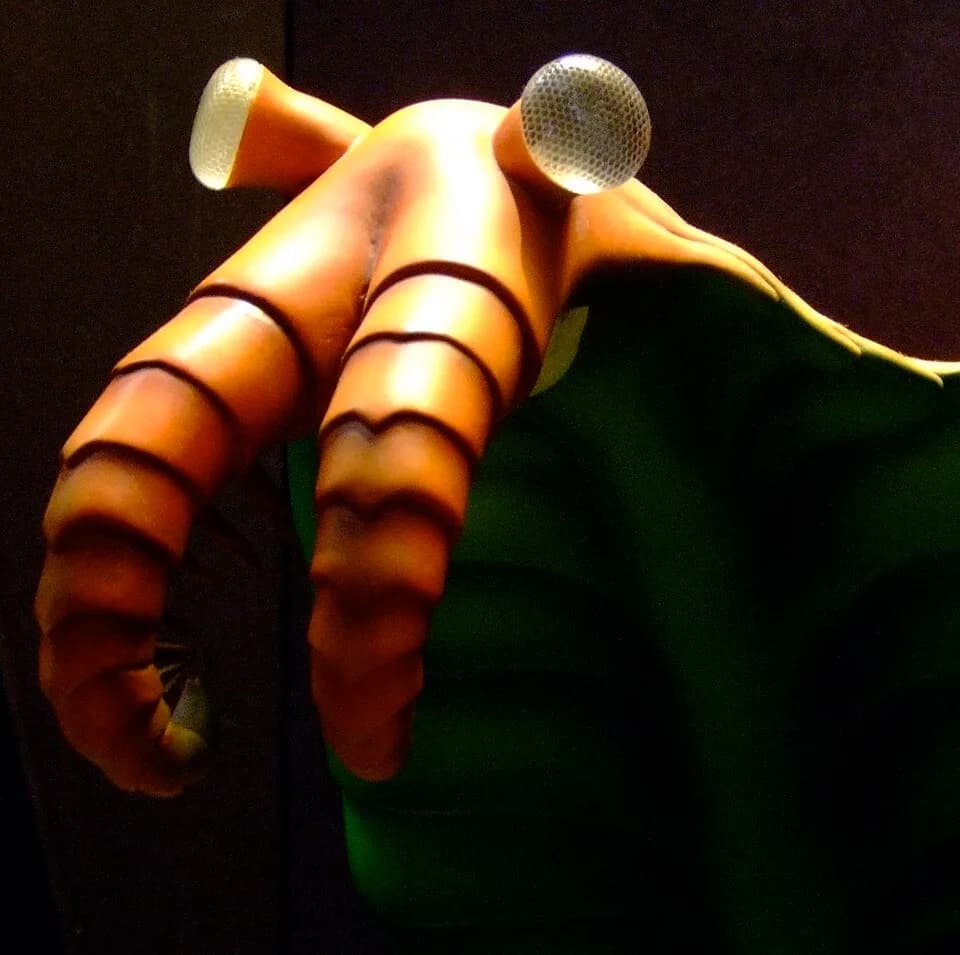
Meganeuropsis permiana holds the absolute record for the largest insect that ever existed, with an estimated wingspan of 69 to 71 centimeters — the wingspan of a peregrine falcon! Its body measured about 43 centimeters in length, almost the size of a human forearm. Its four membranous wings were long and narrow, with dense, complex venation (hence the name Meganeuropsis, 'large veins'). Its head bore large compound eyes occupying much of the skull, giving it exceptional panoramic vision for aerial hunting. Its legs were equipped with spines for capturing prey in flight, as in modern dragonflies.
Meganeuropsis was a formidable aerial predator, the flying super-predator of the Early Permian. Like modern dragonflies but at a much larger scale, it hunted in flight by capturing prey with its spiny legs folded into a capture basket. Its diet probably included other smaller flying insects, crawling insects captured in low passes, and possibly small vertebrates like juvenile amphibians or very small primitive reptiles. Its large compound eyes gave it exceptional vision for spotting and intercepting moving prey. Meganeuropsis' size suggests it had no aerial predators — it reigned unchallenged in Permian skies.
Meganeuropsis lived in the vast tropical rainforests of the Early Permian, in environments rich with lush vegetation. Fossils come from the Wellington Formation in Kansas and Oklahoma, regions that were then near the equator. These forests were dominated by primitive conifers, tree ferns, seed ferns (pteridosperms), and giant horsetails. The hyperoxic atmosphere (30-35% O2) was essential for allowing tracheal breathing of such a massive insect, as the insect respiratory system (tracheae) becomes inefficient beyond a certain size without extra oxygen. Meganeuropsis' disappearance coincides with the gradual decline of atmospheric oxygen levels in the Middle Permian.
Meganeuropsis' anatomy was that of an ultimate aerial predator. Its four wings could not fold over its back (a primitive characteristic shared with modern dragonflies), forcing it to keep its wings permanently spread. The wing venation was dense and complex, ensuring rigidity and resistance to support wings 35 centimeters long each. Its compound eyes, composed of thousands of facets, occupied most of the head and probably offered excellent resolution and motion detection. Its six legs were equipped with rows of spines forming a 'capture basket' for seizing prey in flight. Its tracheal respiratory system, a network of tubes delivering oxygen directly to cells, functioned thanks to the Permian's hyperoxic atmosphere.
Meganeuropsis was a fast, agile aerial predator, capable of flying at speeds estimated comparable to those of large modern dragonflies (up to 50-60 km/h). It probably patrolled above forest clearings and along waterways, searching for prey in flight or on the ground. Its hunting strategy combined hovering, sudden accelerations, and tight turns — all capabilities inherited from Meganisoptera aerodynamics. Like modern dragonflies, Meganeuropsis was probably territorial, with males defending hunting and breeding zones against rivals. Its large size protected it from virtually all predators, except perhaps large amphibians lurking near water.
Meganeuropsis permiana was described in 1937 by Frank Carpenter, the greatest paleontological entomologist of the 20th century, from a remarkably preserved fossil wing discovered in the Wellington Formation (Early Permian) in Kansas, USA. The name means 'similar to Meganeura from the Permian.' A second species, M. americana, was described in 1947 from Oklahoma fossils. The holotype wing of M. permiana measures about 33 centimeters, allowing an estimated total wingspan of 69-71 centimeters. This discovery established Meganeuropsis as the largest known insect, dethroning Meganeura monyi (Late Carboniferous, France) whose wingspan reached 'only' 65 centimeters. Frank Carpenter contributed more than any other scientist to our understanding of Paleozoic fossil insects.
| Period | Permien inférieur (Artinsien) / Early Permian (Artinskian) |
| Era | Paléozoïque / Paleozoic |
| Age | 290-283 Ma |
| Location | Formation de Wellington, Kansas et Oklahoma, USA / Wellington Formation, Kansas and Oklahoma, USA |
| Length | 43 cm (corps / body) |
| Height | 5 cm |
| Weight | ~150 g (estimation) |
| Diet | Carnivore |
| Discovery | 1937 |
Yes. Meganeuropsis permiana holds the absolute record with an estimated wingspan of 69 to 71 centimeters — equivalent to that of a peregrine falcon — and a body 43 centimeters long. It surpasses its cousin Meganeura monyi (Carboniferous, France, ~65–70 cm). This meganisopteran from the Early Permian (290–283 Ma) was described in 1937 by Frank Carpenter from a fossil wing in the Wellington Formation, Kansas (USA).
Meganeuropsis permiana's disappearance coincides with the gradual decline of atmospheric oxygen in the Middle Permian. The insect tracheal respiratory system relies on passive oxygen diffusion; beyond a certain body size, this mechanism becomes insufficient without a hyperoxic atmosphere (30–35% O₂). When oxygen levels fell back toward 21%, giant insects of this wingspan could no longer survive.
Meganeuropsis permiana hunted on the wing, like modern dragonflies but at a larger scale. Its six legs equipped with rows of spines formed a capture basket that closed around prey in midair. Compound eyes occupying most of the head provided panoramic vision to intercept flying insects and possibly small amphibians. Its flight speed is estimated comparable to large modern dragonflies, at 50 to 60 km/h.
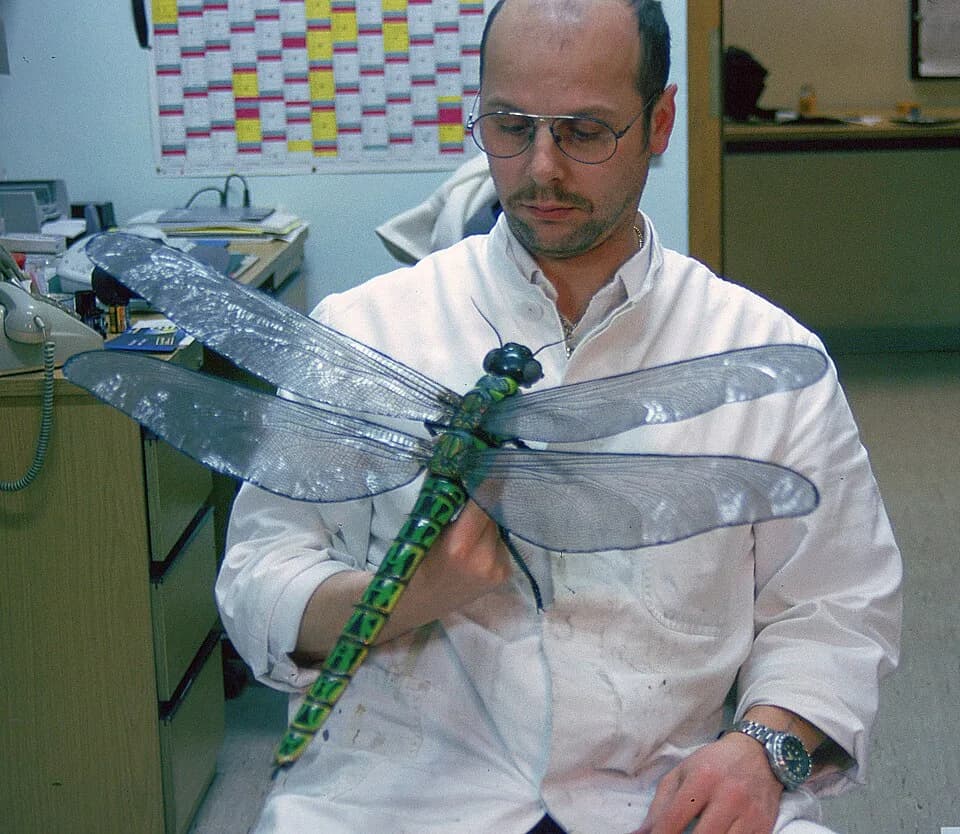
Reconstruction of Meganeuropsis permiana, the largest insect of all time
W. Kraus, Wikipedia Commons
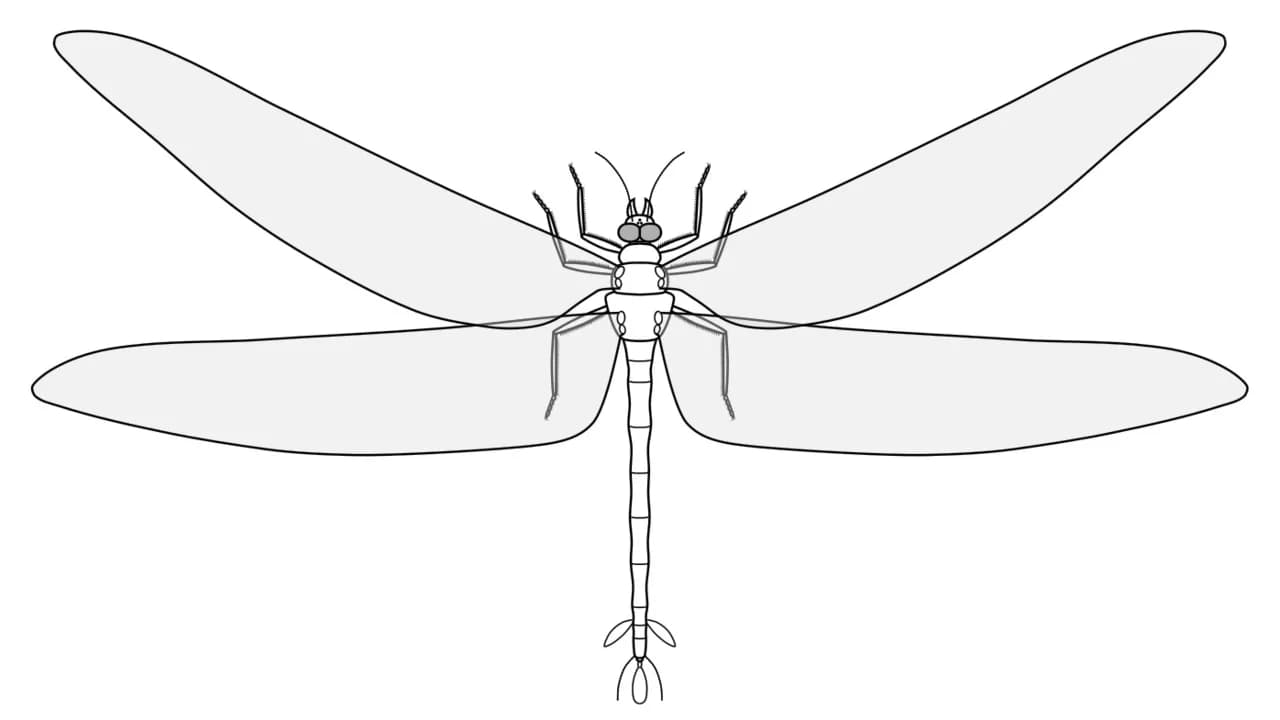
Reconstruction of Meganeura, a close relative of Meganeuropsis
Wikipedia Commons