Mégalograptus
Megalograptus ohioensis was a eurypterid — a sea scorpion — described in 1899 from fossils in Ohio and Kentucky, around 450 million years old. At roughly 1.2 metres and 5 to 10 kilograms, it ranked among the largest predators of its time. Its name means great scratch: its marks were first taken for those of giant graptolites.
Megalograptus lived during the Late Ordovician, approximately 450 million years ago, in the warm, shallow epicontinental seas that covered much of what is now eastern North America. At this time, complex animal life was exclusively marine, and the Ordovician oceans were experiencing a spectacular diversification known as the Great Ordovician Biodiversification Event. Megalograptus belonged to the eurypterids, an order of marine arthropods commonly nicknamed 'sea scorpions' due to their superficial resemblance to terrestrial scorpions. It ranked among the very first large predators in the history of life on Earth, at a time when fish were still only small, primitive, jawless organisms. The Late Ordovician shortly preceded the first major mass extinction, the Ordovician-Silurian extinction, which wiped out approximately 85 percent of marine species.
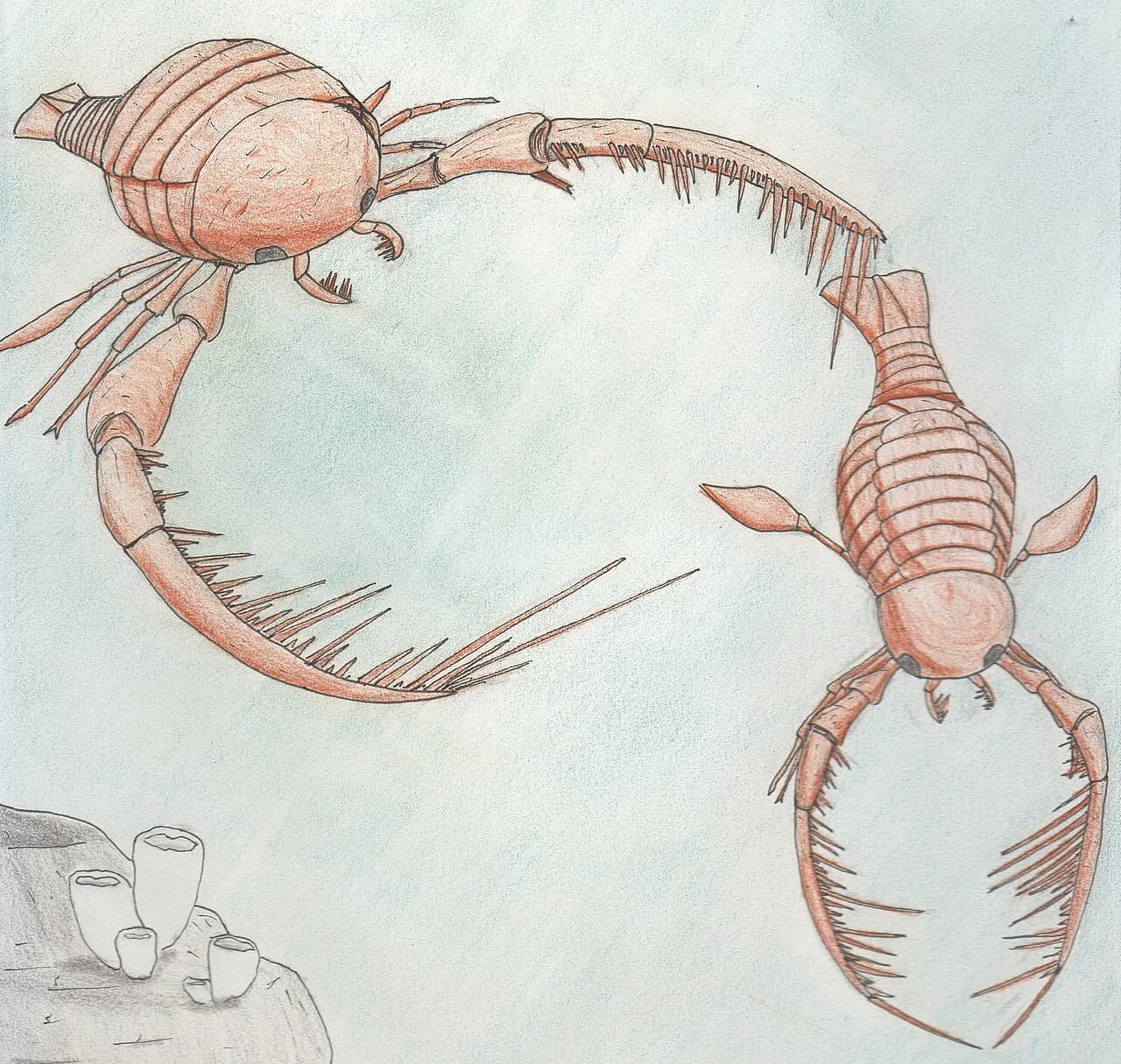
Megalograptus ranked among the largest animals of its time, reaching an impressive length of approximately 1.2 meters from the tips of its prehensile appendages to the end of its telson. For the Late Ordovician, this was a considerable size that made it one of the dominant predators of shallow seas. Its body was elongated and segmented, typical of eurypterids, with a compact prosoma (cephalothorax) bearing six pairs of appendages and an opisthosoma (abdomen) composed of twelve segments ending in a pointed telson. Its anterior legs were armed with long, sharp spines, forming a true capture basket for seizing prey. Unlike later eurypterids such as Jaekelopterus that reached 2.5 meters, Megalograptus remained moderate in size but was nonetheless terrifying to its contemporaries.
Megalograptus was an active and formidable predator of the Ordovician seafloor. Its anterior appendages, lined with long curved spines, formed a deadly trap similar to a capture basket that could close around its prey. It likely fed on trilobites, brachiopods, small nautiloids, marine worms, and other soft-bodied invertebrates that populated the shallow seafloor. Its hunting technique probably involved lurking in ambush on the bottom, waiting for prey to come within reach of its spiny appendages before seizing it in a rapid strike. The presence of numerous spines on its front legs, unlike the pincers of more derived eurypterids, suggests a predation strategy based on impaling and holding rather than crushing.
Megalograptus inhabited the warm, shallow epicontinental seas that covered vast portions of Laurentia (paleo-North America) during the Late Ordovician. Fossils come primarily from geological formations in present-day Ohio and Kentucky, in sediments corresponding to shallow carbonate platform environments. These tropical seas were populated by a rich fauna of marine invertebrates including abundant trilobites, brachiopods, bryozoans, crinoids, and nautiloids. The seafloor consisted of fine calcareous sediments, dotted with reefs of tabulate corals and stromatoporoids. Megalograptus likely lived near the substrate, using its swimming legs to move above the bottom and its spiny appendages to capture benthic prey.
The anatomy of Megalograptus is characteristic of primitive eurypterids, with several unique features that distinguish it from its later cousins. Its prosoma (cephalothorax) bore six pairs of appendages: the first pair, the chelicerae, were small and served to manipulate food toward the mouth. The second and third pairs were the most spectacular, transformed into long prehensile appendages bristling with sharp spines that could reach several centimeters in length. These spiny 'arms' are Megalograptus's anatomical signature and have no exact equivalent in other eurypterids. Its compound eyes, located on top of the prosoma, provided good vision for spotting prey. Its segmented abdomen ended in an elongated pointed telson (tail), lacking the venomous stinger possessed by some later eurypterids. Six pairs of lamellar gills on the ventral surface of the abdomen provided respiration.
Megalograptus was most likely an ambush predator of the shallow seafloor, combining patience with lightning-fast strikes. Its benthic lifestyle is suggested by the morphology of its posterior legs, adapted for walking on the substrate rather than rapid swimming. It could nonetheless swim by undulating its abdomen and using its flattened swimming appendages, similar to a modern shrimp. Its spiny appendages were held deployed in front like a living capture net, ready to close on any unwary prey that came within range. This predatory behavior is reminiscent of certain modern crustaceans such as mantis shrimps. Megalograptus was probably a solitary and territorial animal, each individual defending a hunting territory on the seafloor. Like modern horseshoe crabs, its closest living relatives, it was likely capable of short bursts of speed to capture its prey.
The first fossils of Megalograptus were described in 1899 by American paleontologist August Frederick Foerste, from specimens discovered in Late Ordovician limestone formations in Ohio. The name Megalograptus means 'great writer' or 'great scratch,' referring to the distinctive marks left by its spiny appendages in sediments, initially misinterpreted as traces of giant graptolites. The type species, Megalograptus ohioensis, comes from the Waynesville Formation in southwestern Ohio. Several remarkably complete specimens have been discovered over the decades, allowing faithful reconstruction of this primitive eurypterid. Specimens have also been found in neighboring Kentucky. Megalograptus is particularly important in paleontology because it represents one of the oldest known eurypterids with well-developed prehensile appendages, illuminating the earliest stages of evolution in this remarkable group of extinct marine arthropods.
| Period | Ordovicien supérieur / Late Ordovician |
| Era | Paléozoïque / Paleozoic |
| Age | ~450 Ma |
| Location | Ohio et Kentucky, États-Unis / Ohio and Kentucky, USA |
| Length | ~1,2 m |
| Weight | ~5-10 kg (estimation) |
| Diet | Carnivore |
| Discovery | 1899 |
Megalograptus ohioensis was neither a dinosaur nor an insect. It was a eurypterid, an extinct marine arthropod commonly called a 'sea scorpion.' Belonging to the chelicerates (like modern spiders and scorpions), it lived in the epicontinental seas of the Late Ordovician, approximately 450 million years ago, long before dinosaurs appeared.
Megalograptus ohioensis reached approximately 1.2 meters in total length, making it one of the largest predators of Ordovician seas. Its anterior appendages bristling with long curved spines formed a capture basket: closing them on prey (trilobites, brachiopods, small nautiloids) immobilized the victim. This impalement predation mechanism is unique among eurypterids.
When paleontologist August Frederick Foerste described the species in 1899 from Ohio fossils, the first traces identified in Ordovician sediments resembled scratches or elongated marks. These were initially mistaken for giant graptolites (colonial marine organisms). The name Megalograptus (Greek megas 'great' + graptós 'written/scratched') preserves that history, even though the true arthropod identity was established later.
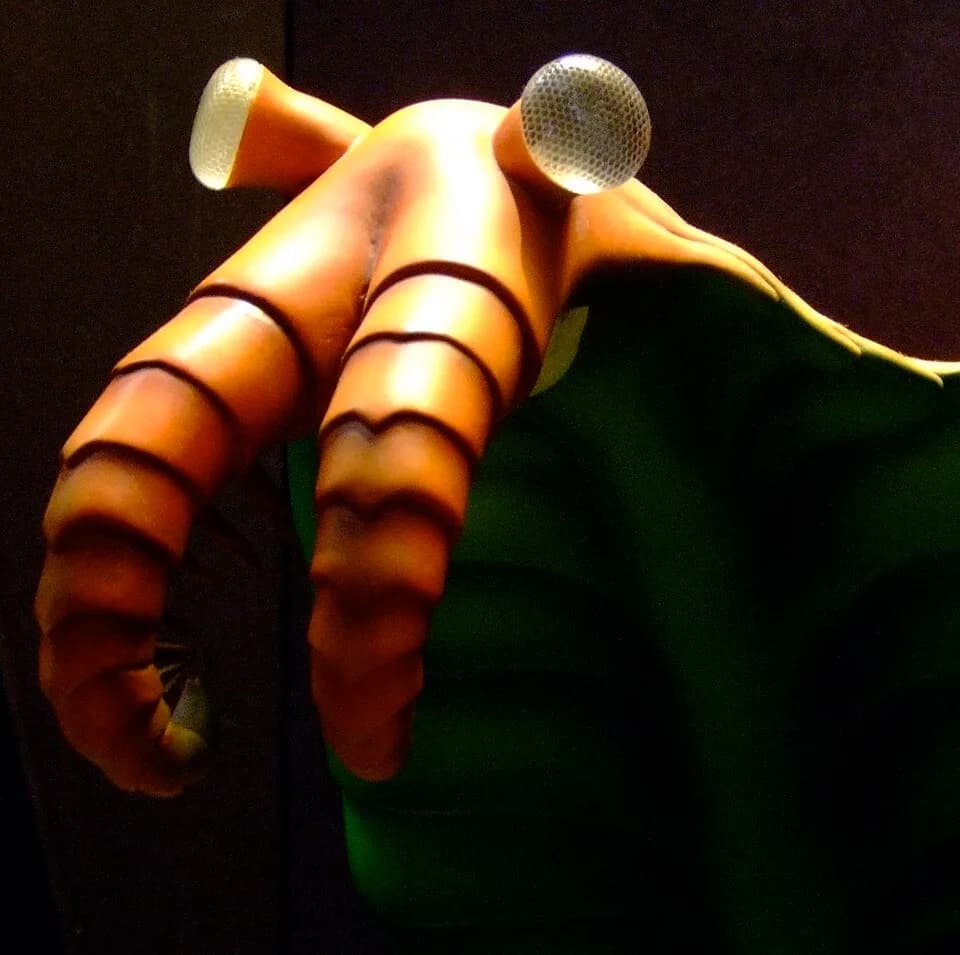
Artistic reconstruction of Megalograptus ohioensis, giant eurypterid from the Late Ordovician
Wikimedia Commons
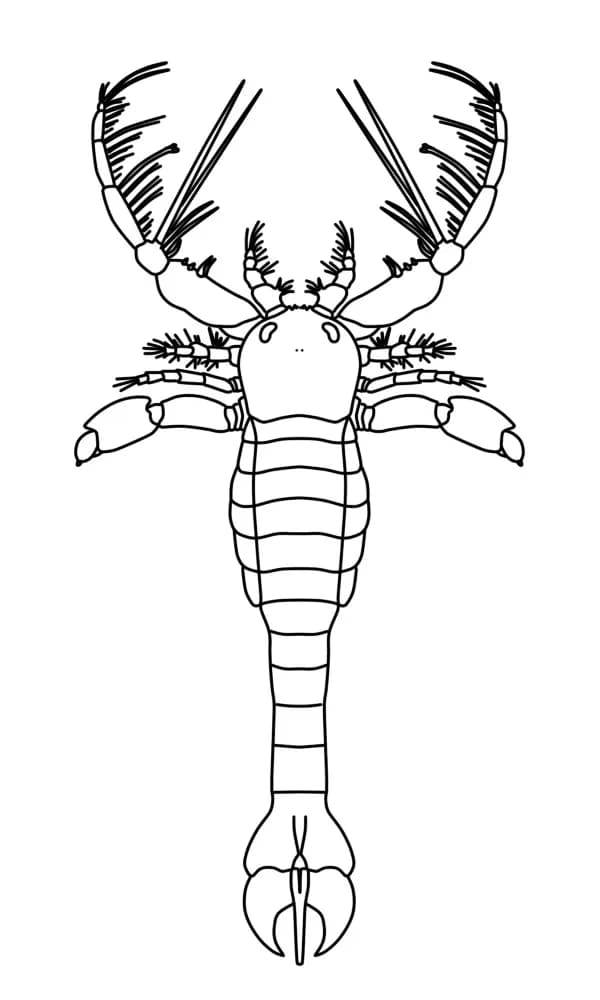
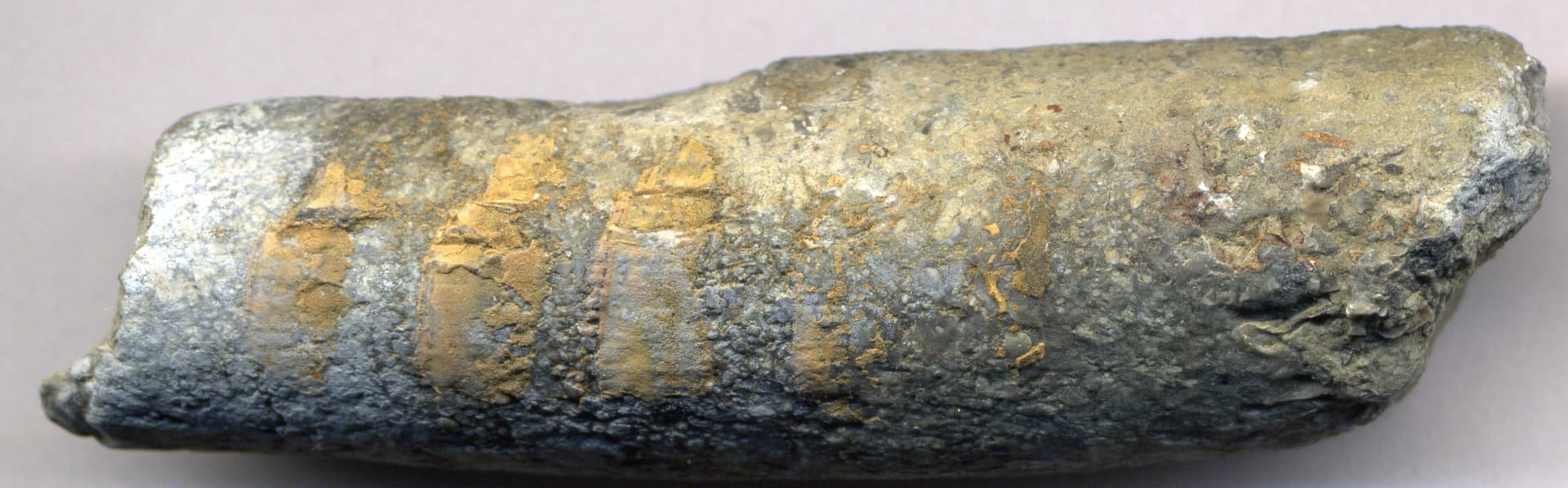
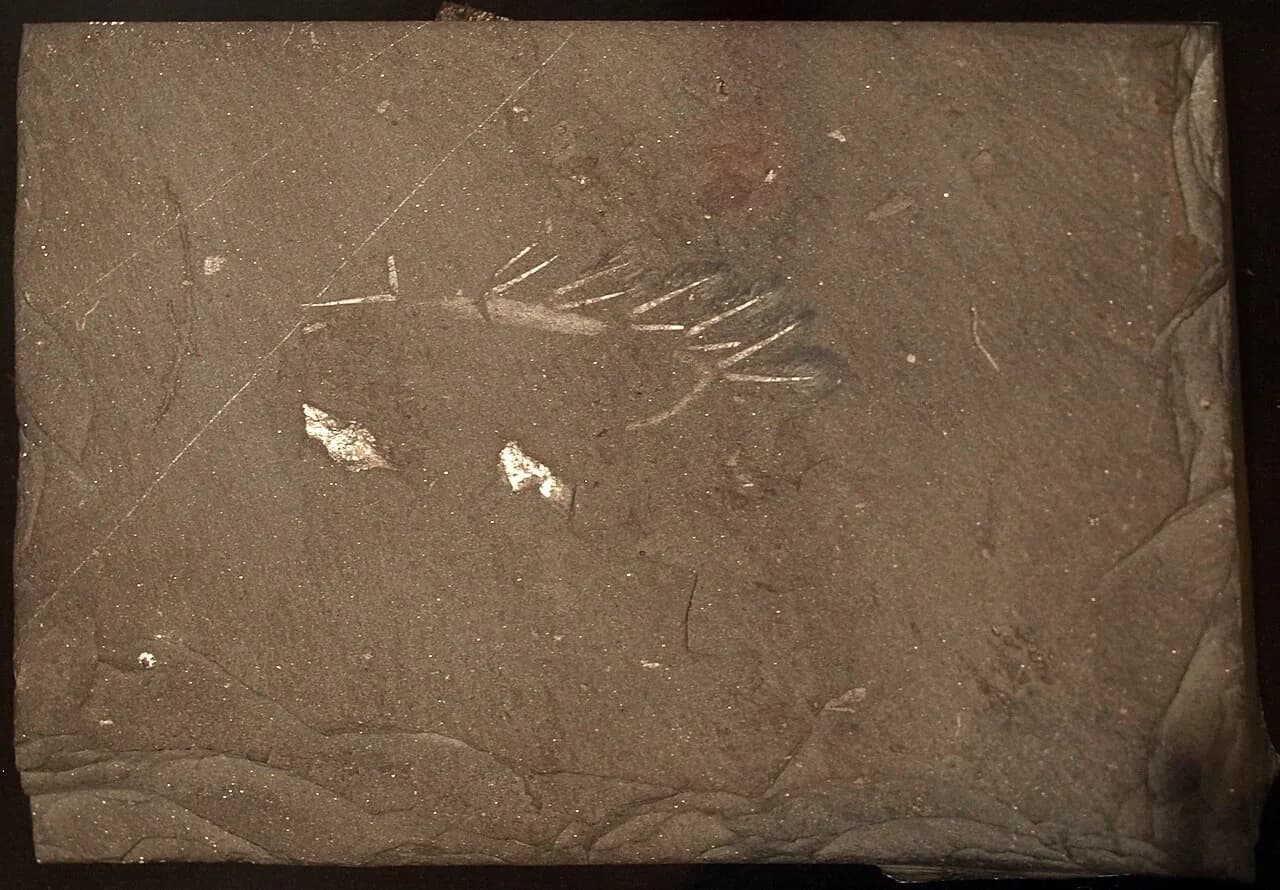
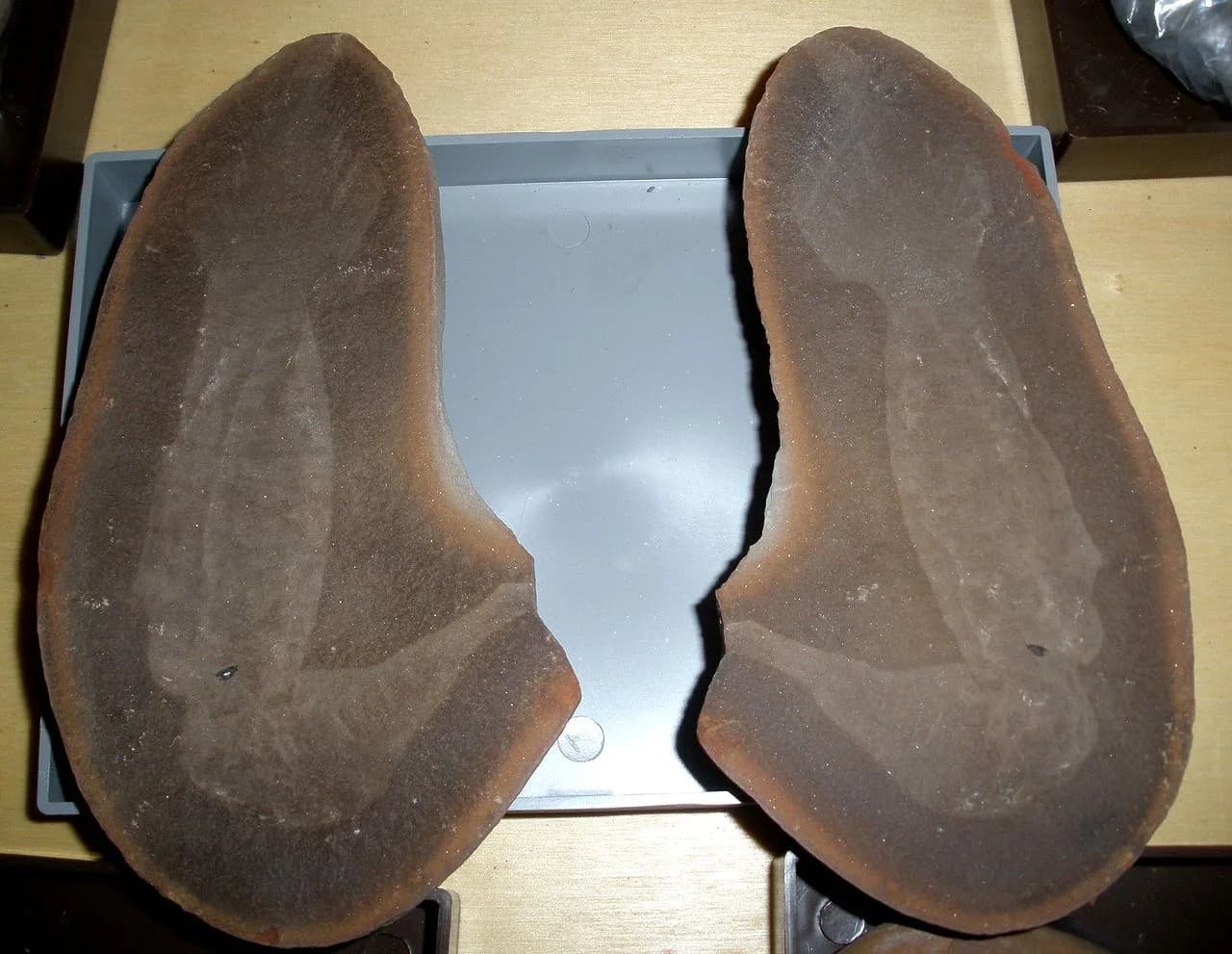
Megalograptus fossil showing the characteristic spiny appendages
Wikimedia Commons