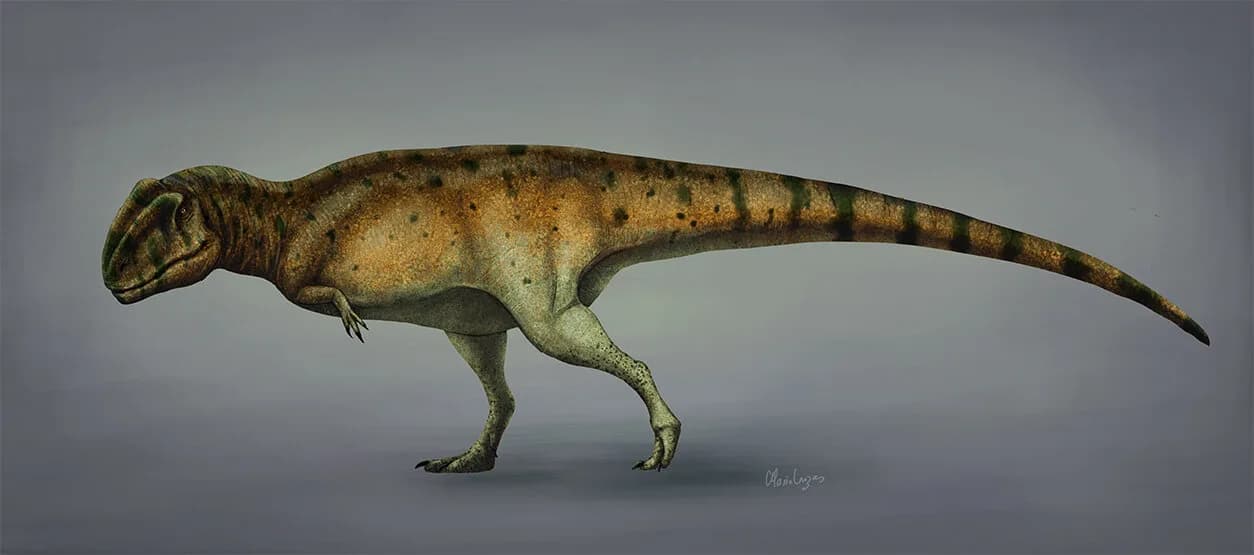
Mapusaurus
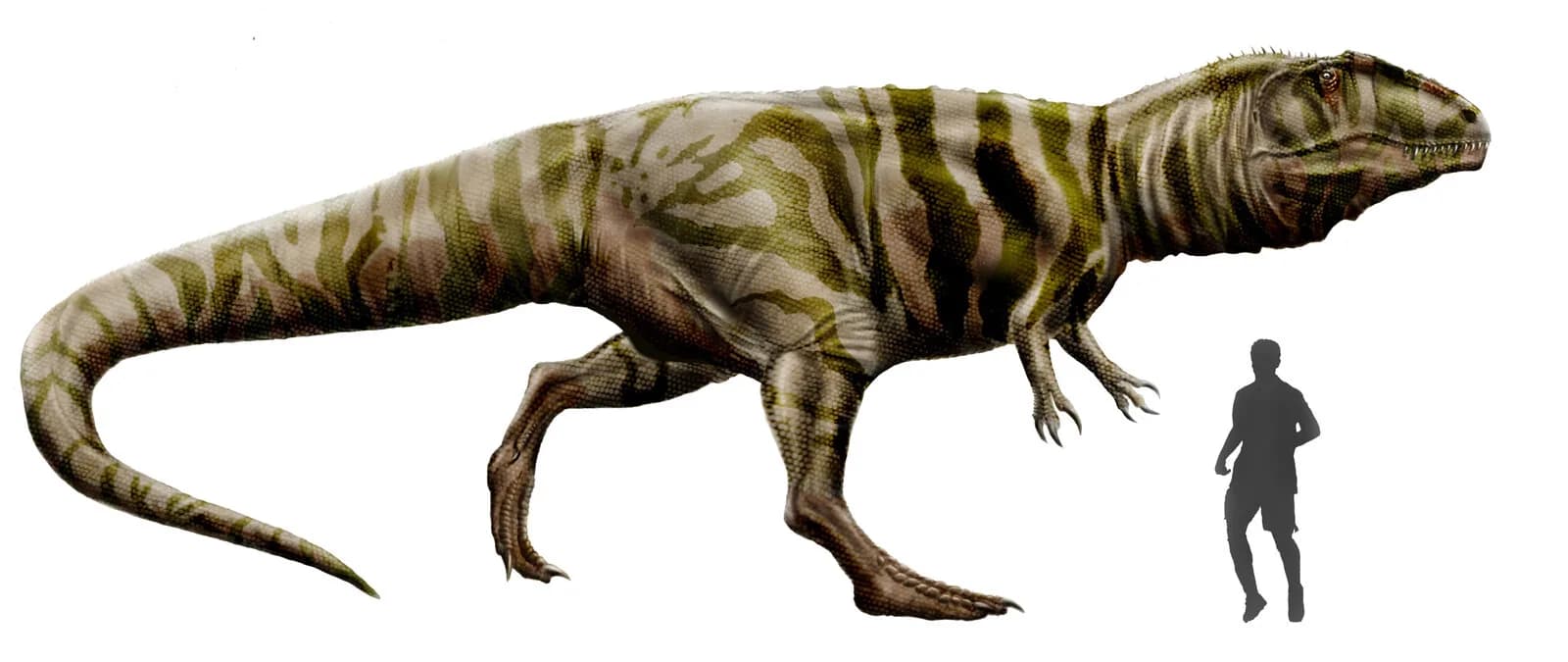
Mapusaurus roseae is a carcharodontosaurid 10 to 12 metres long and 3 to 5 tonnes, described in 1997 in Neuquén province, Argentina. A bone bed yielding seven individuals together stands as the strongest argument for group hunting among large theropods. Its name comes from Mapuche and means « earth lizard ».
Mapusaurus lived during the Late Cretaceous period, approximately 97 to 93 million years ago, during the Cenomanian stage, in what is now Patagonia, Argentina. It inhabited the Huincul Formation, an environment of river valleys and semi-arid floodplains in southern South America. This period corresponds to a time of high global temperatures and significant continental drift, with South America increasingly isolated from other landmasses. Mapusaurus was closely related to Giganotosaurus and represents one of the largest carcharodontosaurid theropods ever discovered. Its temporal range overlaps with a period of remarkable diversity among South American giant predatory dinosaurs.
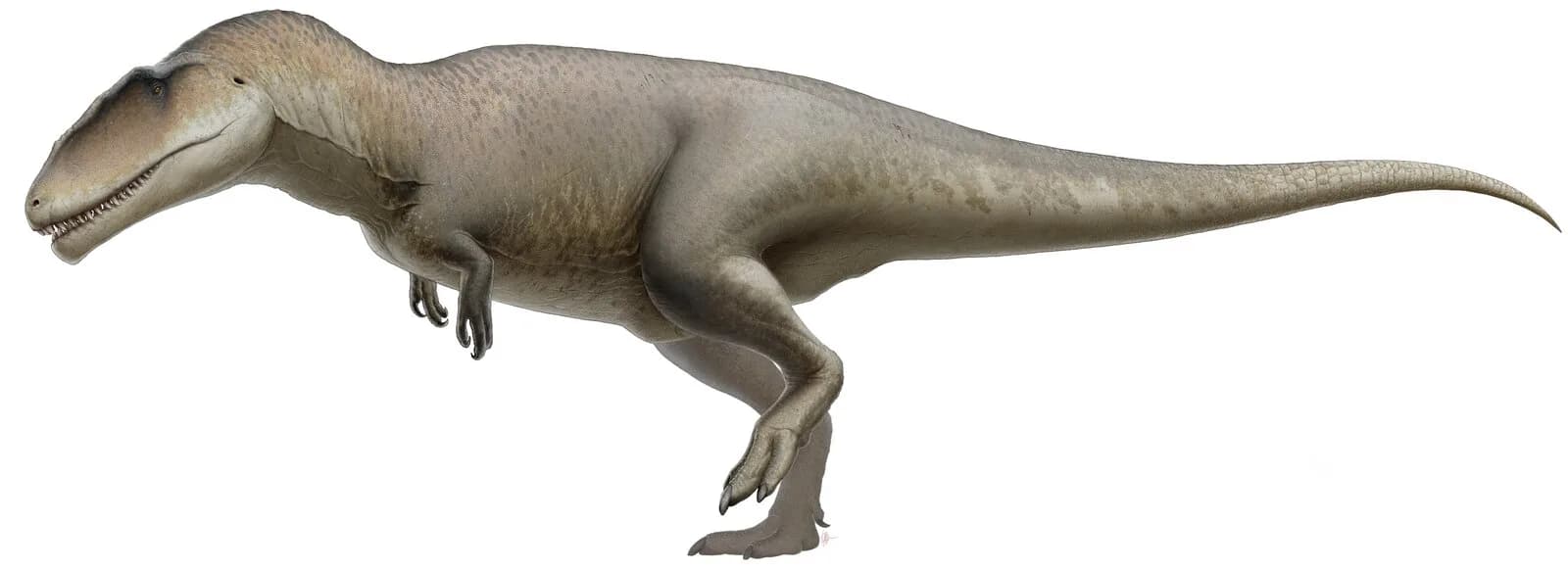
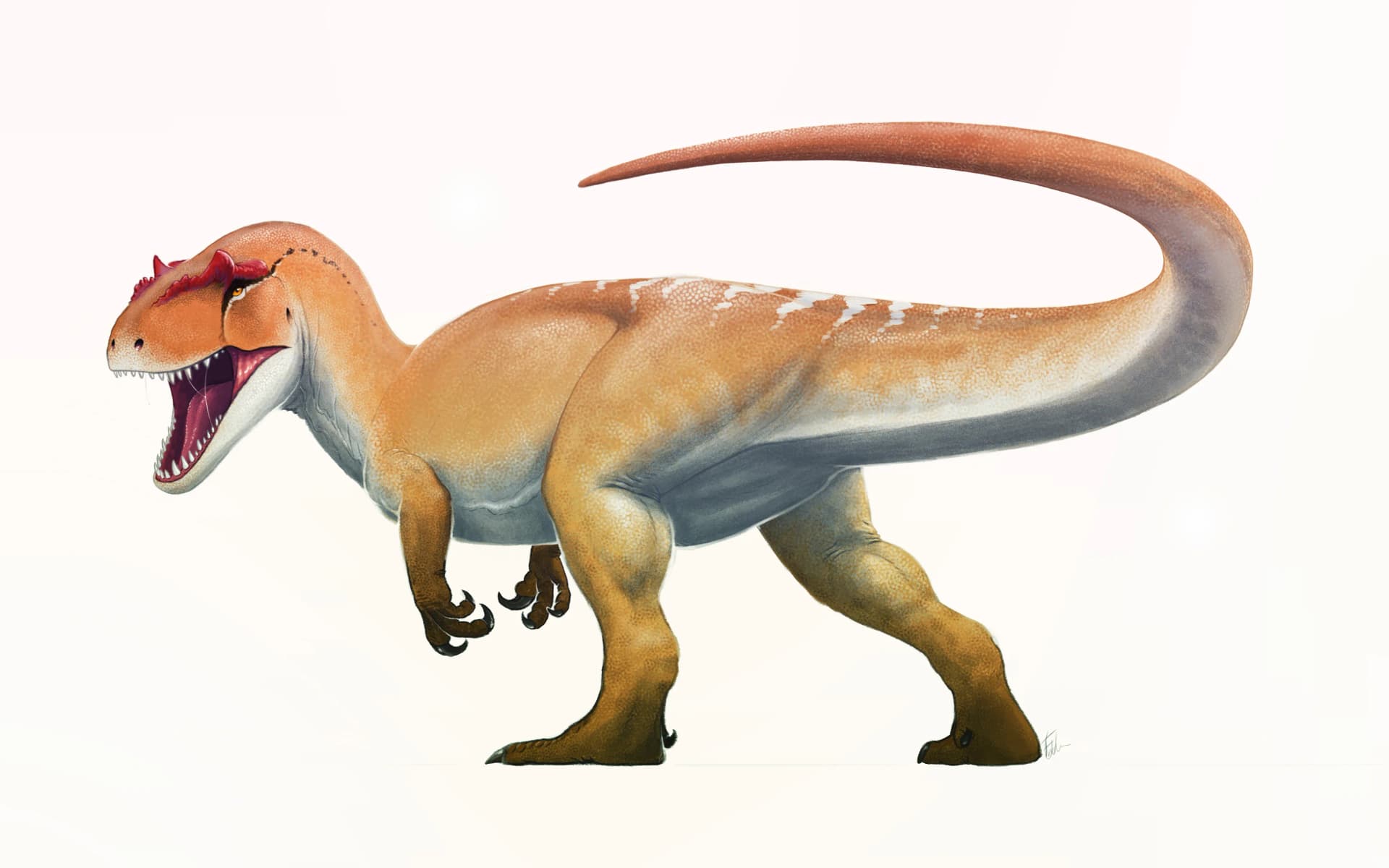
Mapusaurus was one of the largest carnivorous dinosaurs, reaching approximately 10.2 to 12.6 meters in length with an estimated weight of around 3 to 5 tons. Its skull was elongated and narrow, typical of carcharodontosaurids, equipped with large, blade-like serrated teeth designed for slicing through flesh rather than crushing bone. The body was powerfully built with strong hind limbs adapted for bipedal locomotion and relatively short but muscular forelimbs bearing sharp claws. The overall proportions were similar to its close relative Giganotosaurus but with some distinctive skeletal features. The tail was long and muscular, providing balance during movement and possibly during confrontations with prey or rival predators.
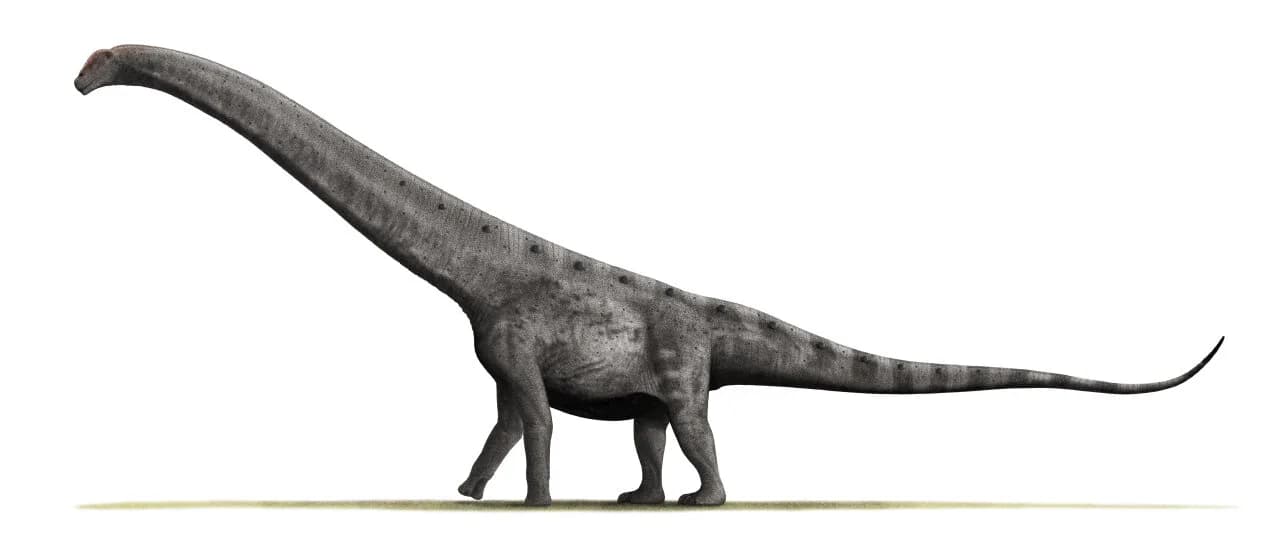
Mapusaurus was an apex predator that likely specialized in hunting the enormous titanosaur sauropods that dominated its Cretaceous Patagonian ecosystem, particularly the massive Argentinosaurus. Its blade-like, serrated teeth were perfectly adapted for inflicting deep slashing wounds that would cause severe bleeding in prey animals. The discovery of multiple individuals at a single site strongly suggests pack hunting or at least cooperative behavior when targeting prey that could weigh up to 70 tons. Unlike tyrannosaurs with their bone-crushing bite, Mapusaurus employed a slash-and-bleed strategy, making repeated attacks until the prey weakened sufficiently. This hunting technique would have been particularly effective against giant sauropods too large to be taken down by a single predator.
Mapusaurus inhabited the semi-arid river valleys and floodplains of the Huincul Formation in what is now Patagonia, Argentina. During the mid-Cretaceous, this region featured seasonal rivers, scattered forests of conifers and early flowering plants, and broad open areas dominated by low-growing vegetation. The climate was warm with pronounced seasonal rainfall patterns, creating a landscape that alternated between verdant wet seasons and dry periods. This environment supported herds of enormous titanosaur sauropods like Argentinosaurus, which constituted the primary prey base for Mapusaurus. The relatively open terrain would have favored the cooperative hunting strategies suggested by the bone bed evidence, allowing groups of Mapusaurus to coordinate attacks on the massive sauropods.
Mapusaurus anatomy is typical of advanced carcharodontosaurids. Its elongated, relatively narrow skull bore lacrimal and nasal crests, giving an ornamented appearance to its face. Its teeth were laterally compressed with fine serrations on the edges, functioning like saw blades. Its forelimbs bore three clawed fingers and were longer than those of tyrannosaurs. Its hindlimbs were powerful and adapted for rapid locomotion. A notable feature is the presence of bony ornamentations on the skull, which probably varied between individuals and served for intraspecific recognition.
The most revealing discovery about Mapusaurus behavior is the fossil site containing remains of at least seven individuals of different ages at the same location. This exceptional accumulation strongly suggests social behavior, possibly cooperative group hunting. If this interpretation is correct, Mapusaurus would be one of the few large theropods for which pack hunting evidence exists. A group of Mapusaurus attacking together would have been capable of harassing and bringing down even the largest titanosaurs, using repeated bite tactics to exhaust their colossal prey.
Mapusaurus was discovered between 1997 and 2001 at an extraordinary site in the Huincul Formation at Cañadón del Gato, Neuquén Province, Argentina. Excavations led by Rodolfo Coria and Philip Currie revealed a bone bed containing remains of at least seven individuals of different sizes, from subadults to adults. The species was described in 2006 as Mapusaurus roseae, the genus name deriving from Mapuche 'Mapu' (Earth) and the species name honoring Rose Letwin, who funded the expeditions. This bone bed is interpreted as evidence of social behavior, though other explanations (natural trap, post-mortem accumulation) are also discussed.
| Period | Crétacé supérieur / Late Cretaceous (Cénomanien–Turonien) |
| Era | Mésozoïque / Mesozoic |
| Age | 97–93 Ma |
| Location | Amérique du Sud / South America (Argentine / Argentina, Neuquén) |
| Length | 10–12 m |
| Height | ~3 m |
| Weight | 3 000–5 000 kg |
| Diet | Carnivore |
| Discovery | 1997 |
Mapusaurus roseae measured between 10.5 and 12.5 meters in length, weighing an estimated 3 to 5 tonnes. Its skull reached approximately 1.5 meters. These dimensions make it one of the largest known carcharodontosaurids, rivaling its close relative Giganotosaurus from the same Huincul Formation in Patagonia.
The discovery of a bone bed containing at least seven Mapusaurus roseae individuals — from subadults to adults — in the Huincul Formation is the main argument for group hunting. Against an Argentinosaurus weighing over 70 tonnes, such cooperation would have been the only viable strategy. Other hypotheses (natural trap, post-mortem accumulation) are still debated.
Mapusaurus roseae fossils were discovered between 1997 and 2001 at Cañadón del Gato, in Neuquén Province (Patagonia, Argentina), in the Huincul Formation dated to the Cenomanian (~97–93 Ma). The species was described in 2006 by Rodolfo Coria and Philip Currie. The species name roseae honors Rose Letwin, who sponsored the expeditions.
Life reconstruction of Mapusaurus roseae
Mario Lanzas, CC BY-SA 4.0, via Wikimedia Commons
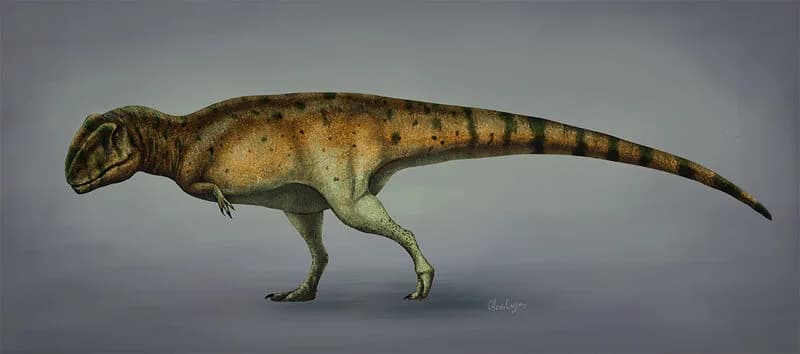
Mapusaurus roseae reconstruction
Mario Lanzas, CC BY-SA 4.0