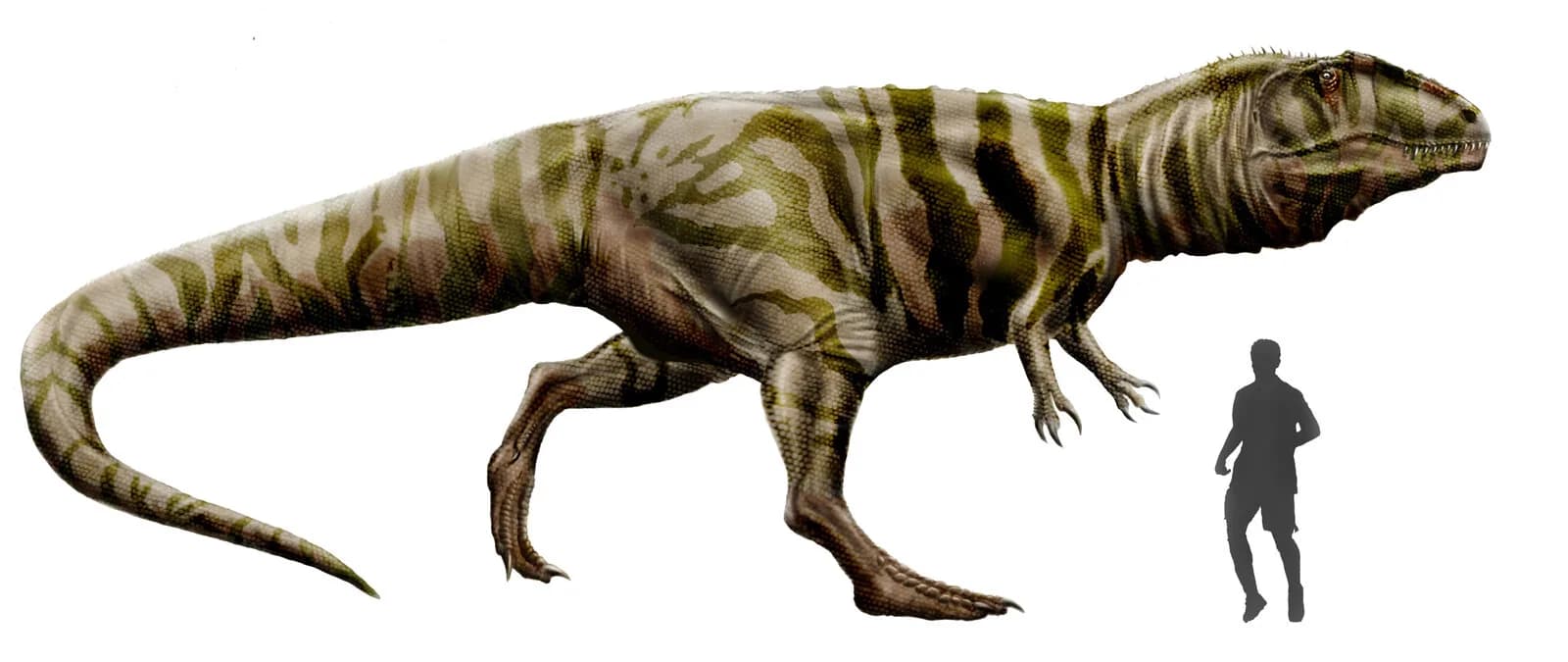
Giganotosaure
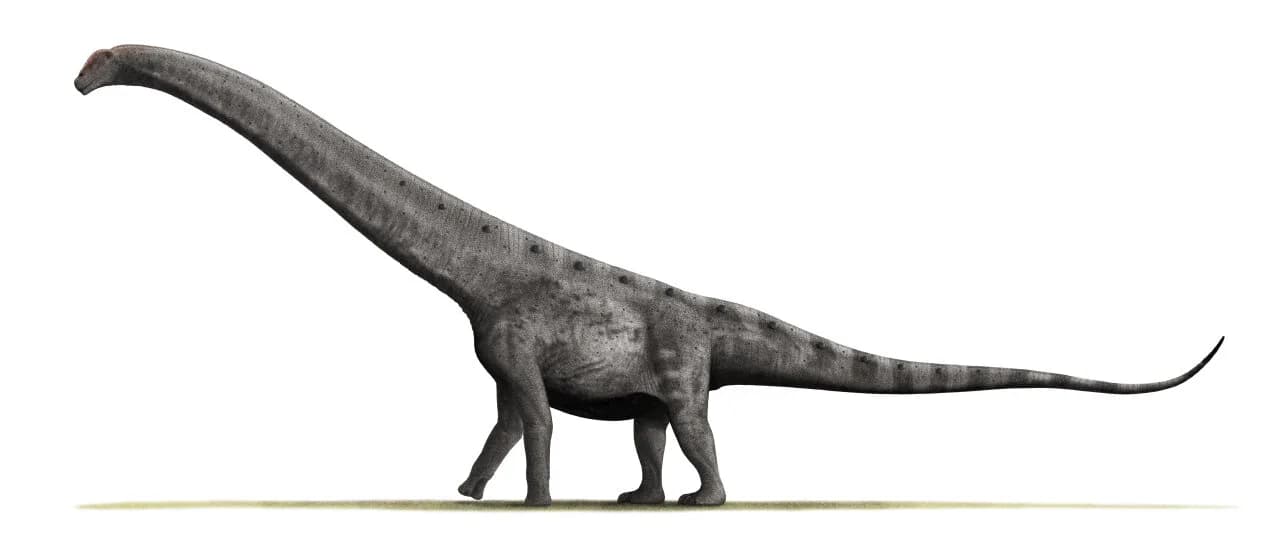
Giganotosaurus carolinii was a carnivorous theropod from Argentine Patagonia, discovered in 1993 and dated to 98 to 97 million years ago. At 12 to 13 metres and 6 to 8 tonnes it was slightly longer than Tyrannosaurus rex, though with a narrower skull and a weaker bite. Bone beds suggest it hunted in groups against sauropods such as Argentinosaurus.
Giganotosaurus lived during the Late Cretaceous period, approximately 99.6 to 95 million years ago, during the Cenomanian stage, in what is now Patagonia, Argentina. This period predates the reign of Tyrannosaurus rex by roughly 30 million years. The Cenomanian stage was characterized by high global temperatures and elevated sea levels, creating a greenhouse world with warm climates even at high latitudes. Giganotosaurus inhabited the Candeleros Formation, a region of river valleys, floodplains, and semi-arid landscapes. As the apex predator of its ecosystem, it represented the pinnacle of carcharodontosaurid evolution in South America.
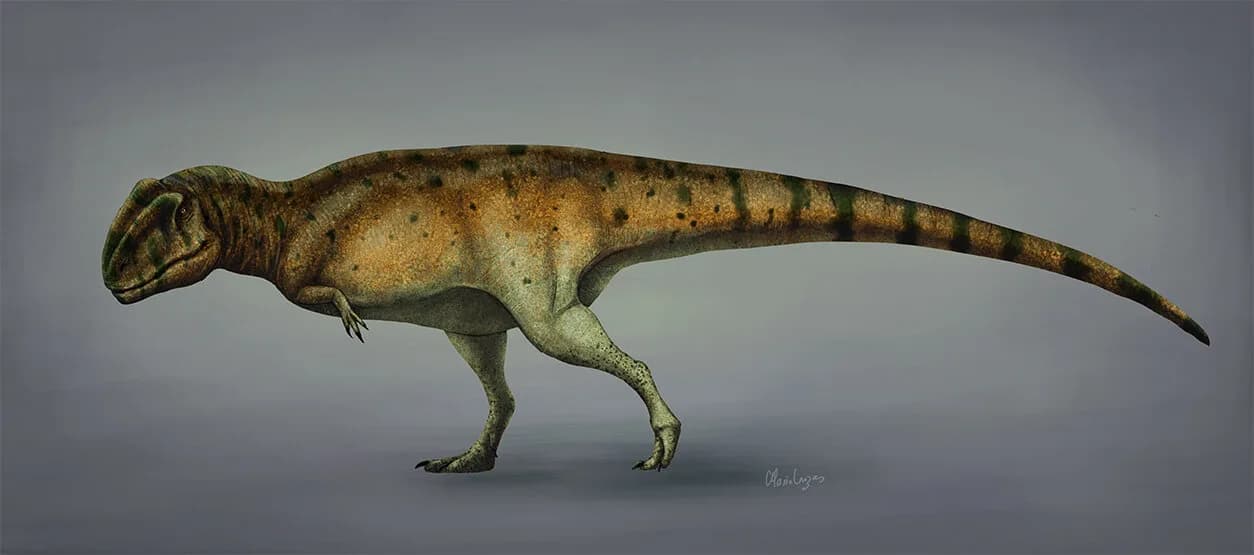
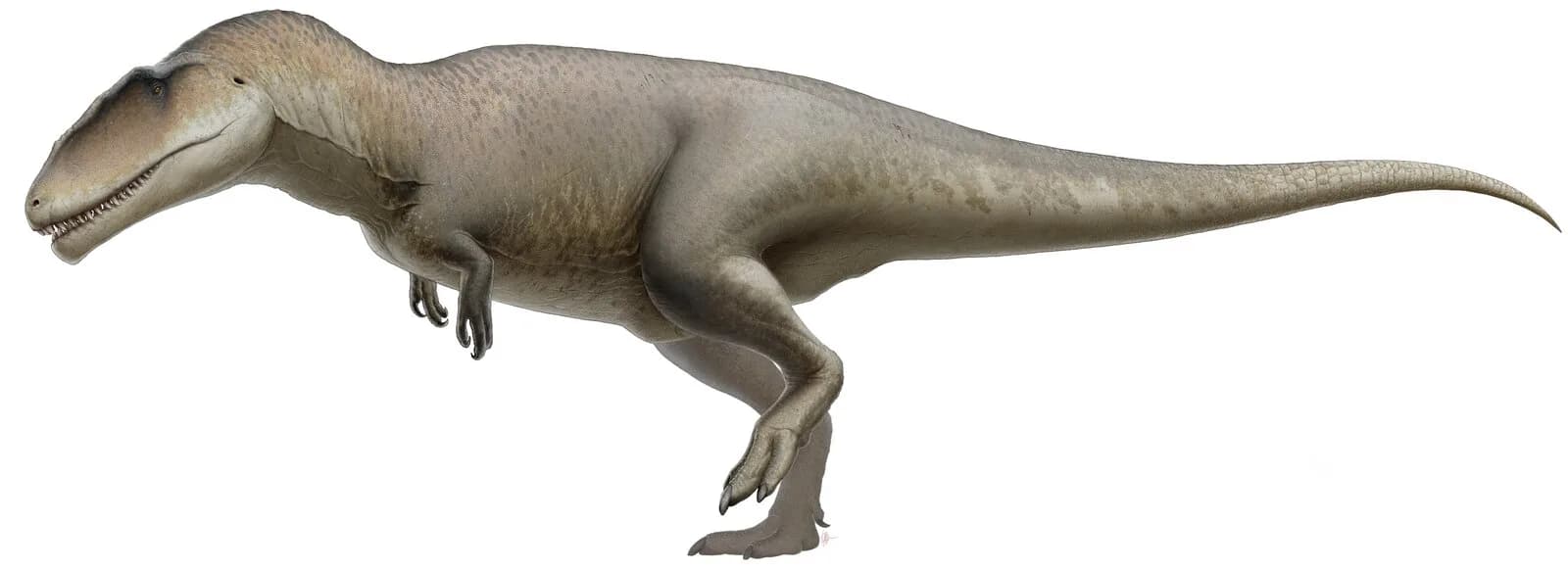
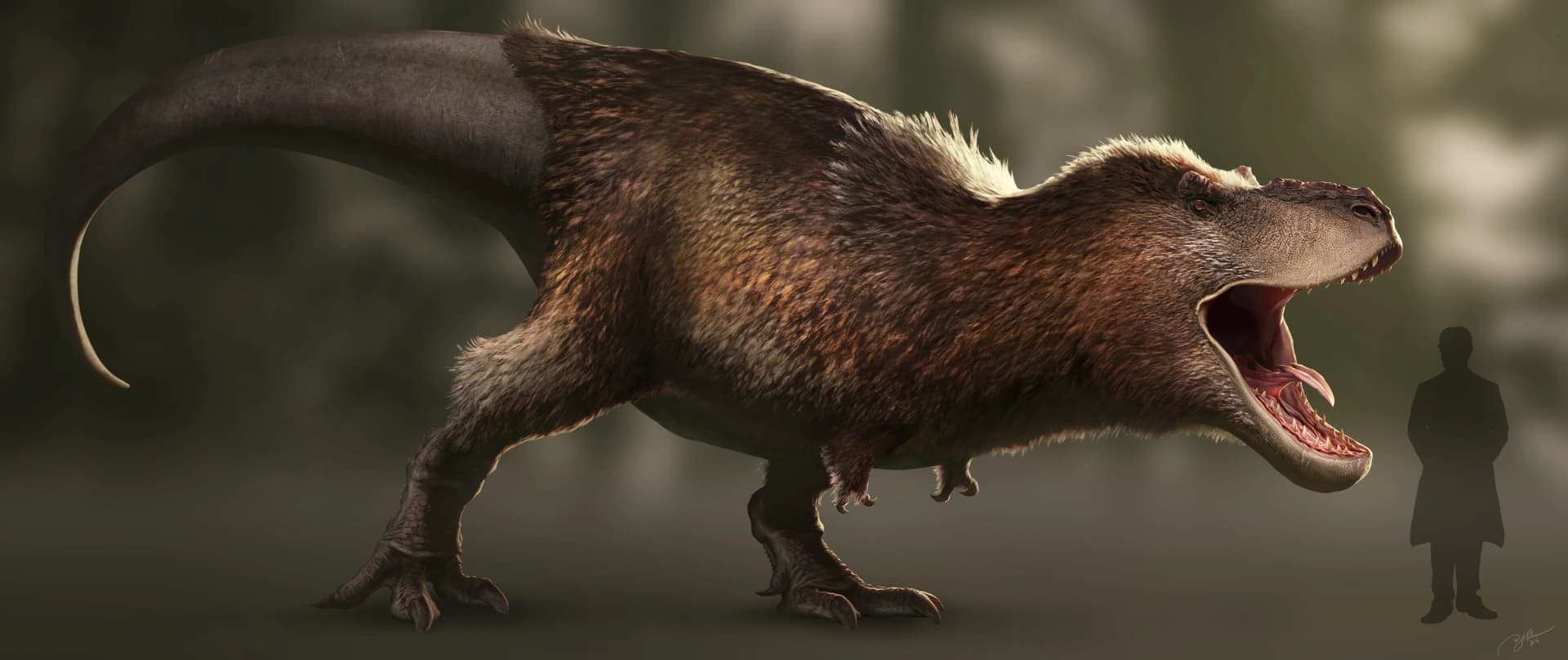
Giganotosaurus is one of the largest terrestrial theropods ever discovered, rivaling Tyrannosaurus rex in size. It measured between 12 and 13 meters long with an estimated weight of 6 to 8 tonnes. Its massive skull reached approximately 1.6 meters long, slightly larger than that of T. rex, although it was narrower and less robust. Standing, it reached about 4 meters tall at the hip. Its overall proportions made it one of the most imposing predators ever to walk the Earth.
Giganotosaurus was a carnivorous apex predator that hunted the large titanosaur sauropods of Patagonia, notably Andesaurus. Its teeth were laterally compressed and finely serrated, designed for slicing flesh rather than crushing bone like those of T. rex. This 'knife blade' dentition typical of carcharodontosaurids allowed it to inflict deep, hemorrhagic wounds on its prey. Its hunting strategy probably involved attacking with repeated bites and then waiting for its victim to weaken from blood loss, rather than killing with a single bite.
Giganotosaurus inhabited the Candeleros Formation in what is now Patagonia, Argentina, an environment characterized by broad river systems, expansive floodplains, and semi-arid conditions during the Cenomanian stage of the Late Cretaceous. The landscape featured scattered forests of conifers and early flowering plants along riverbanks, with more open terrain between waterways. This environment supported large herds of titanosaur sauropods like Andesaurus and Limaysaurus, which formed the primary prey base for Giganotosaurus. The warm climate with seasonal variations in rainfall created a dynamic ecosystem. The presence of other large predators in the formation suggests a complex food web with significant ecological competition.
Giganotosaurus anatomy reflects that of a predator built for pursuing large prey. Its elongated and relatively narrow skull was reinforced by bony crests above the eyes, giving it a fierce appearance. Its brain was proportionally smaller than that of T. rex, with an elongated rather than bulbous shape. Its hindlimbs were powerful and adapted for running, while its arms, though short, were proportionally longer than those of the tyrannosaur and equipped with three clawed fingers. Its long, muscular tail served as a counterweight for sharp turns during pursuit.
Giganotosaurus likely employed ambush and pursuit hunting strategies to take down the massive titanosaur sauropods that dominated its ecosystem. The discovery of multiple individuals at the same site has led some paleontologists to propose cooperative or pack hunting behavior, which would have been essential for tackling prey animals that could weigh over 50 tons. However, other researchers interpret these associations as coincidental gathering rather than evidence of social hunting. Its relatively narrow skull and slicing teeth suggest a strategy of inflicting deep, bleeding wounds rather than the bone-crushing bites used by tyrannosaurs. Giganotosaurus may have been territorial, defending hunting grounds against rival predators and competing conspecifics.
The Giganotosaurus holotype (MUCPv-CH-1) was discovered in 1993 by amateur fossil hunter Rubén Dario Carolini in the Candeleros Formation, near Villa El Chocón, in Neuquén Province, Argentina. The skeleton comprised approximately 70% of the bones, including the skull, much of the vertebral column, the pelvis, and hindlimbs. It was described in 1995 by Rodolfo Coria and Leonardo Salgado, who gave it the name meaning 'giant southern lizard.' A second specimen, including a jaw fragment larger than the holotype, was later found, suggesting some individuals could reach even more impressive sizes.
| Period | Crétacé supérieur / Late Cretaceous (Cénomanien) |
| Era | Mésozoïque / Mesozoic |
| Age | 98–97 Ma |
| Location | Amérique du Sud / South America (Argentine / Argentina) |
| Length | 12–13 m |
| Height | ~3.5 m |
| Weight | 6 000–8 000 kg |
| Diet | Carnivore |
| Discovery | 1993 |
Giganotosaurus carolinii measured between 12 and 13 meters long with an estimated weight of 6 to 8 tonnes, rivaling Tyrannosaurus rex in length. Its skull reached approximately 1.6 meters — slightly larger than T. rex's — but was narrower and less robust. T. rex retained the advantage in bite force and skull mass. The two species never coexisted: Giganotosaurus lived 99-97 million years ago, roughly 30 million years before T. rex.
The Giganotosaurus carolinii holotype (MUCPv-CH-1) was discovered in 1993 by amateur fossil hunter Rubén Dario Carolini in the Candeleros Formation, near Villa El Chocón, Neuquén Province, Argentina. It was described in 1995 by Rodolfo Coria and Leonardo Salgado. The skeleton represents approximately 70% of the bones, including the skull and hindlimbs.
Giganotosaurus carolinii hunted the large titanosaur sauropods of Patagonia, including Andesaurus. Its laterally compressed, finely serrated teeth — typical of carcharodontosaurids — sliced flesh inflicting deep hemorrhagic wounds. Its likely strategy: repeated attacks then waiting for the prey to weaken from blood loss. The discovery of grouped Mapusaurus remains (its close relative) suggests possible group hunting.
Information on this page is based on peer-reviewed scientific publications.
Life reconstruction of Giganotosaurus carolinii
Durbed, CC BY-SA 3.0, via Wikimedia Commons
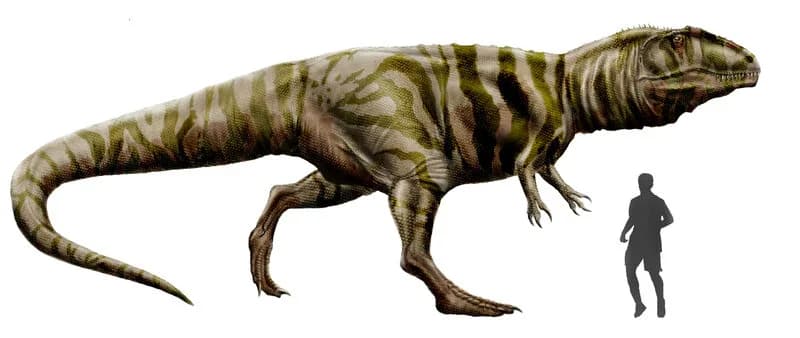
Giganotosaurus carolinii artistic reconstruction
Durbed, CC BY-SA 3.0