Lézard de Mamenchi
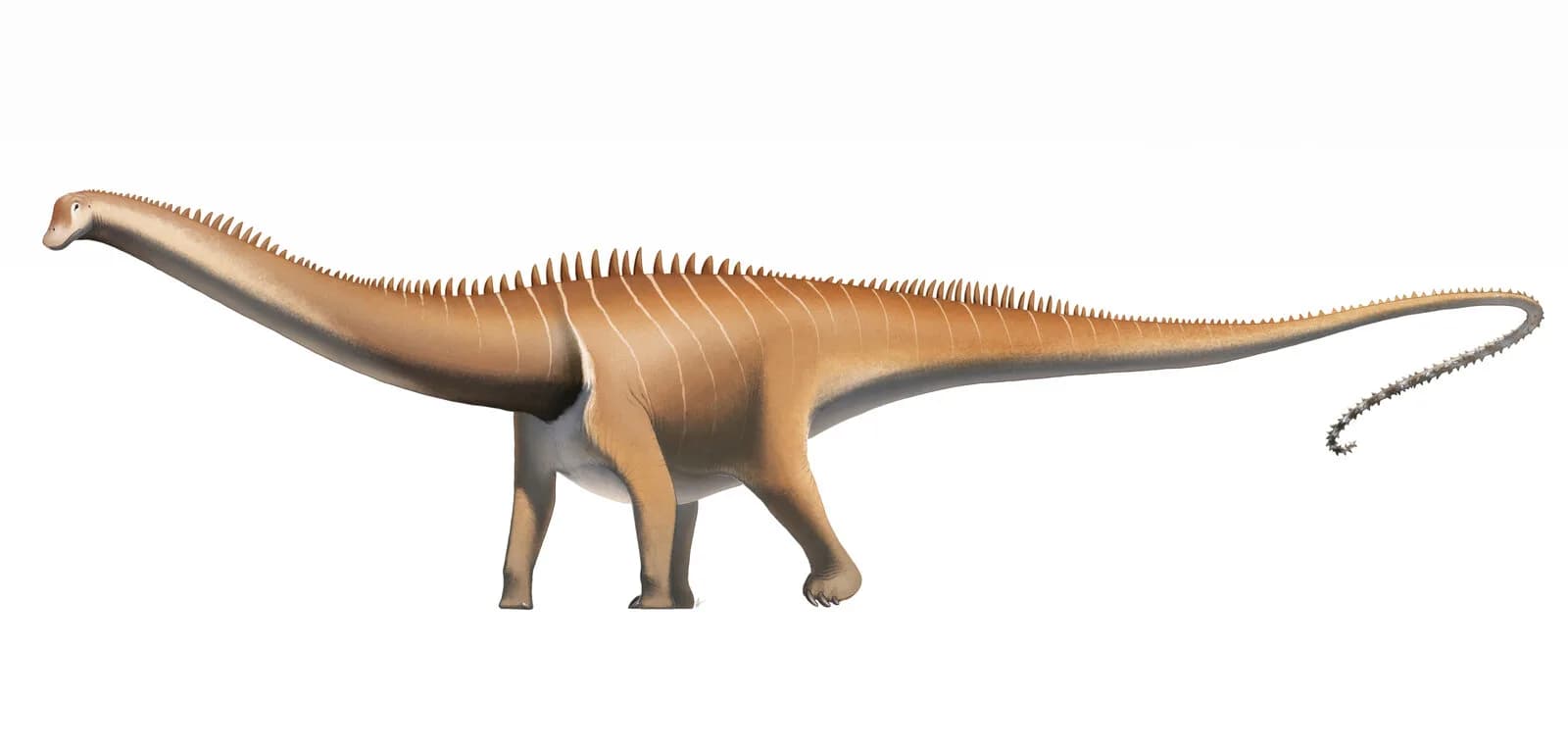
Mamenchisaurus hochuanensis has the longest neck of any known dinosaur: up to 15 metres, half its total length. It holds that record thanks to nineteen cervical vertebrae, the most of any sauropod. At 22 to 35 metres and 20 to 50 tonnes, described in 1954, it browsed Sichuan and Yunnan 160 to 145 million years ago.
Mamenchisaurus lived during the Late Jurassic, approximately 160 to 145 million years ago, spanning the Oxfordian to Tithonian stages. This Chinese sauropod coexisted with a rich fauna including other giant dinosaurs in what is now Sichuan Province. The Late Jurassic was a golden age for sauropods worldwide, and China was no exception. The warm, humid climate of eastern Asia during this period supported the development of vast conifer forests and tree fern woodlands, providing an abundance of food for these colossal herbivores. Mamenchisaurus is one of the most iconic sauropods of the Chinese Jurassic fauna, testifying to the extraordinary diversity of Asian dinosaurs.
Mamenchisaurus ranked among the largest dinosaurs of its era, reaching an estimated total length of 22 to 35 meters depending on the species. Its weight ranged between 20 and 50 tonnes, comparable to several school buses placed end to end. But its most spectacular feature was undoubtedly its phenomenal neck, which could measure up to 15 meters long — representing nearly half of its total body length. This is the longest neck ever documented in any land animal. Its maximum height reached approximately 10 meters when it raised its neck, allowing it to access the tops of the tallest trees in its Jurassic environment.
An exclusive herbivore, Mamenchisaurus fed primarily on the tall vegetation of Jurassic forests, including conifers, ginkgos, cycads, and tree ferns. Its extraordinarily long neck gave it a considerable competitive advantage by allowing it to reach food sources inaccessible to other herbivores. Rather than constantly moving to browse, Mamenchisaurus could remain stationary and sweep a vast area of vegetation simply by pivoting its neck laterally. This feeding strategy saved considerable energy for an animal of this mass. Its spatula-shaped teeth were adapted for stripping foliage rather than finely chewing it, suggesting food was swallowed in large pieces and processed in the digestive tract.
Mamenchisaurus inhabited the alluvial plains and wooded valleys of Late Jurassic China, primarily in what now corresponds to the provinces of Sichuan and Yunnan. The Sichuan Basin, a true cradle of Chinese dinosaur paleontology, offered a lush environment with winding rivers, shallow lakes, and dense conifer forests. The subtropical to tropical climate of this region supported abundant vegetation capable of sustaining these giant herbivores. The Shaximiao geological formations, where the majority of fossils were discovered, reveal a rich and diverse ecosystem harboring an exceptional dinosaur fauna including theropods, stegosaurs, and other sauropods.
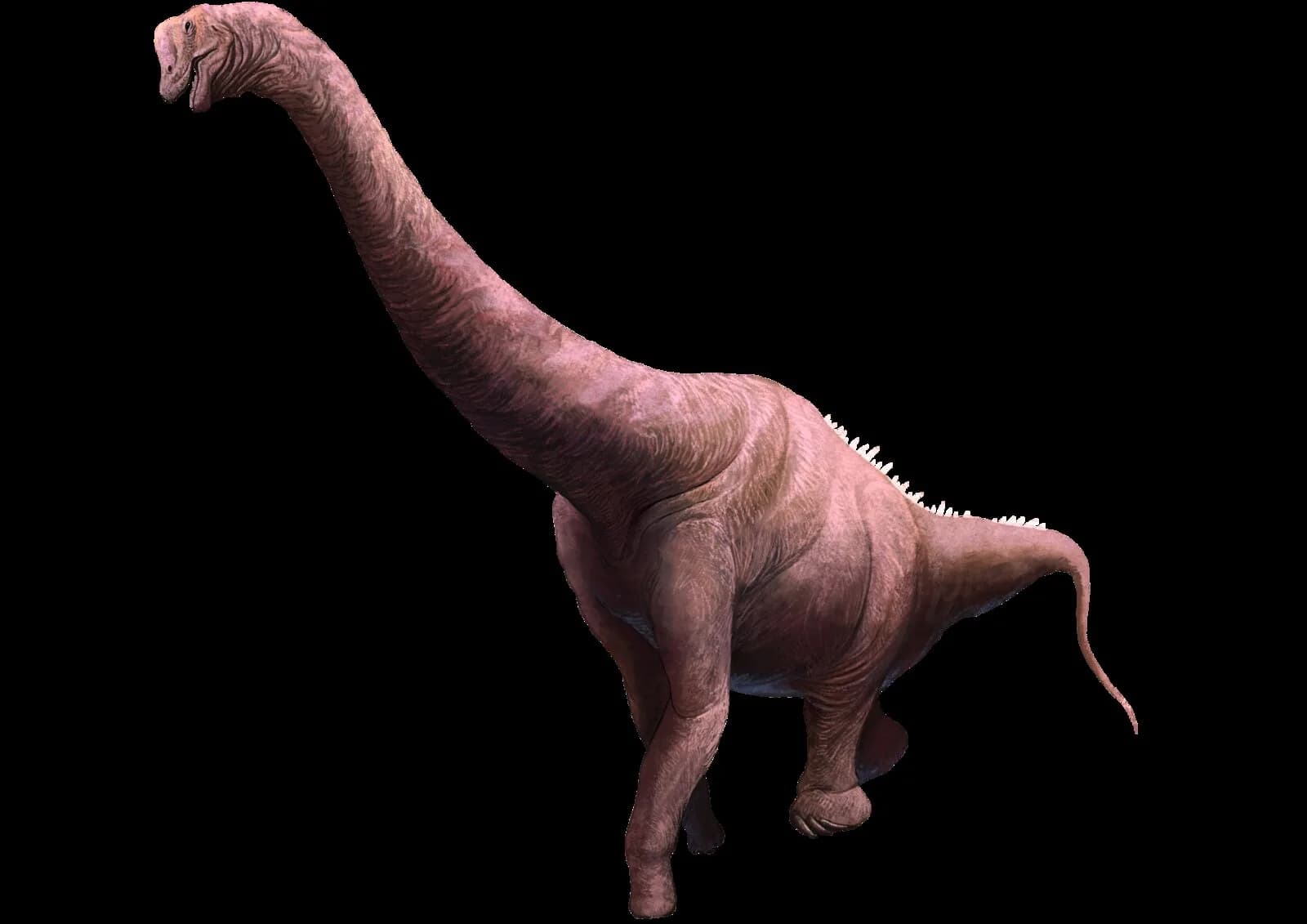
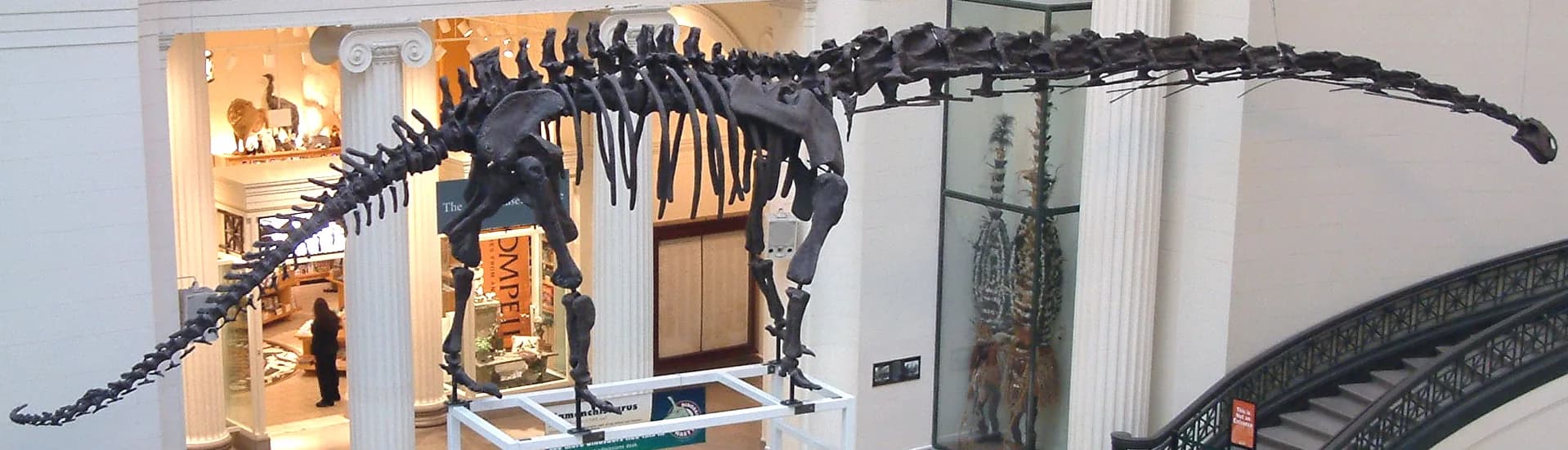
The anatomy of Mamenchisaurus is dominated by its spectacular neck, composed of 19 cervical vertebrae — the highest number known in any sauropod. These vertebrae were elongated and partially hollow, reducing their weight while maintaining structural rigidity through a complex system of internal bony struts. Extraordinarily long cervical ribs, overlapping across several vertebrae, reinforced the neck like natural scaffolding and limited its vertical flexibility. The skull, relatively small compared to the body, bore spatulate teeth adapted for stripping foliage. The tail, long and tapered, likely served as a counterbalance to the massive neck. The limbs were robust and columnar, designed to support considerable weight.
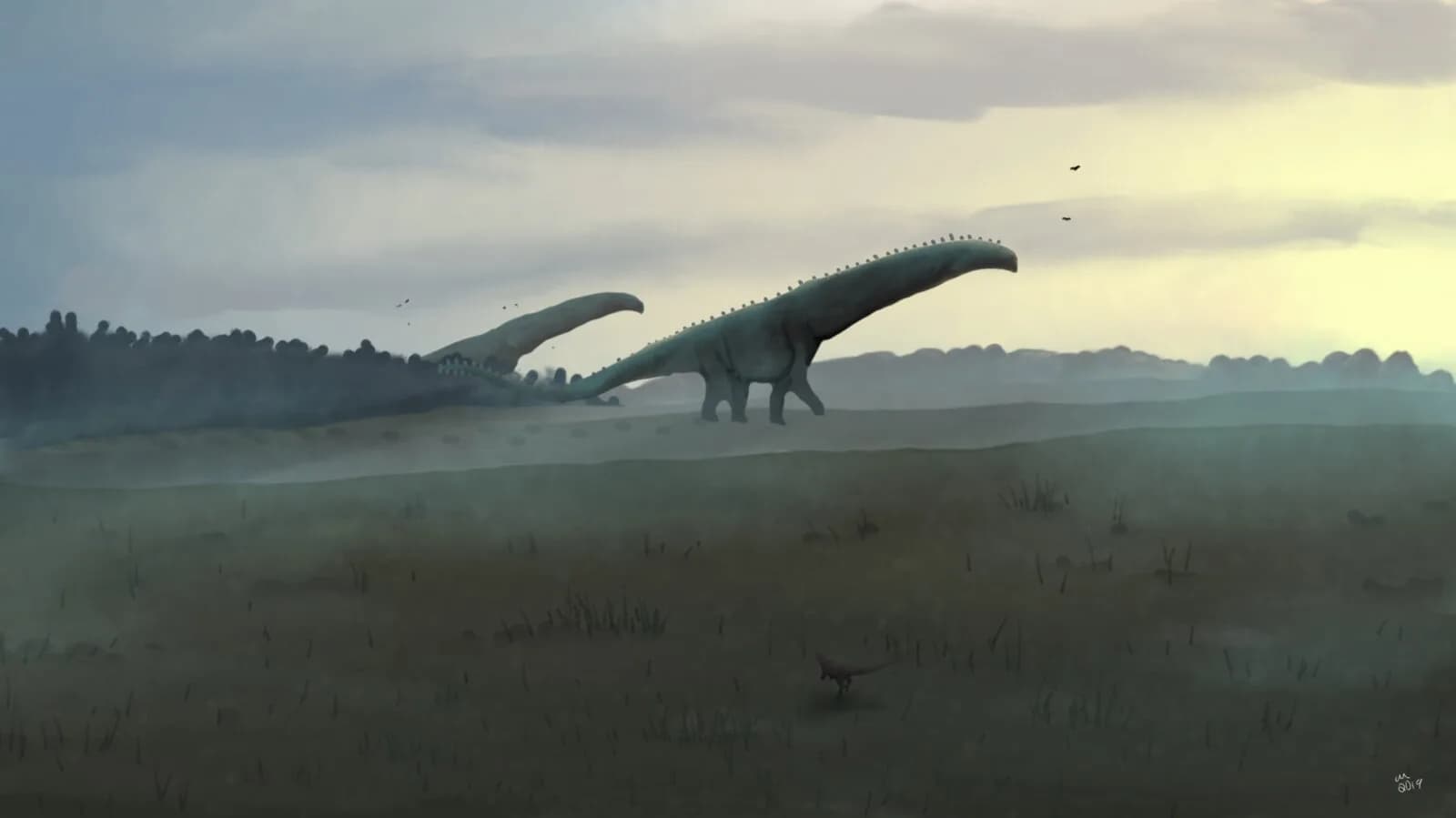
Mamenchisaurus was most likely a gregarious animal, moving in herds through the Jurassic forests of Sichuan. Its feeding strategy probably involved remaining relatively stationary and sweeping the surrounding canopy with its laterally flexible neck, thereby minimizing the energy expenditure associated with moving its colossal mass. Biomechanical studies suggest the neck was held in a relatively horizontal or slightly inclined position, rather than raised vertically like a giraffe. Herd living provided protection against the large theropod predators of the time. Juveniles, being more vulnerable, were likely sheltered at the center of the group by imposing adults whose sheer size alone was enough to deter most carnivores.
The first Mamenchisaurus fossil was discovered in 1952 during the construction of the Yitang Highway in Sichuan Province, China. The type species, Mamenchisaurus constructus, was described in 1954 by Chinese paleontologist Yang Zhongjian, a pioneer of vertebrate paleontology in China. The genus name refers to the Mamenchi site (now Mamingxi), a ferry crossing on the Jinsha River near which the first fossils were unearthed. Several species have been described since, including M. hochuanensis (1972), one of the best known thanks to relatively complete skeletons. The specimen of M. sinocanadorum, described in 1993, may represent one of the largest dinosaurs ever discovered, with a neck estimated at over 15 meters. Fossils come primarily from the Shaximiao formations of the Sichuan Basin.
| Period | Jurassique supérieur / Late Jurassic (Oxfordien-Tithonien) |
| Era | Mésozoïque / Mesozoic |
| Age | 160-145 Ma |
| Location | Chine (Sichuan, Yunnan) / China (Sichuan, Yunnan) |
| Length | 22-35 m |
| Height | ~10 m |
| Weight | 20-50 tonnes |
| Diet | Herbivore |
| Discovery | 1954 |
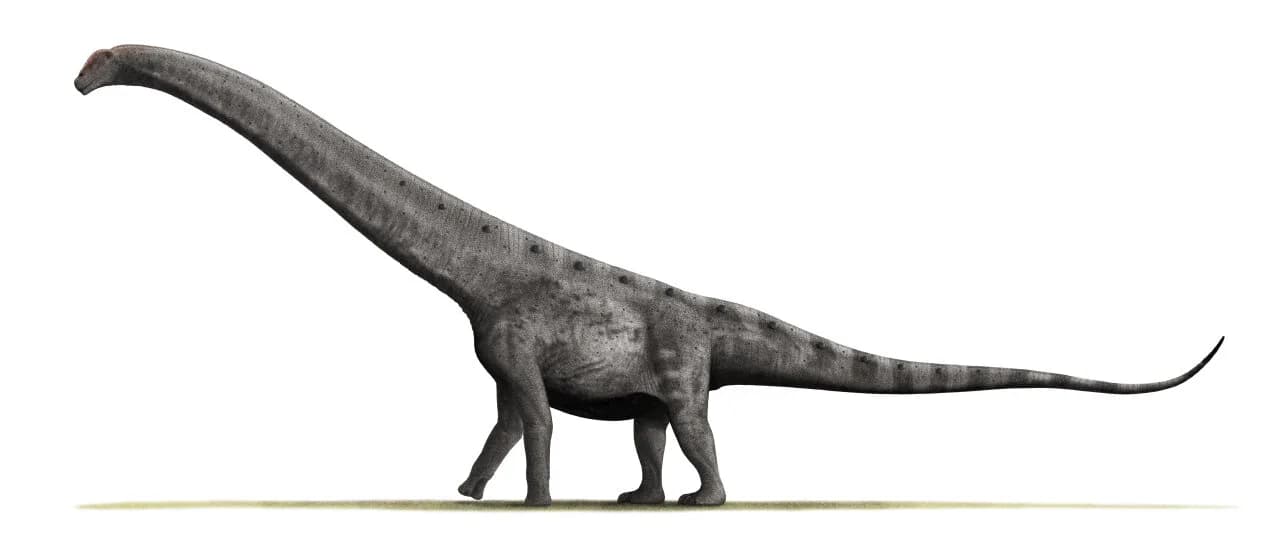
Mamenchisaurus hochuanensis and related species hold the record for the longest neck ever documented in any land animal — up to 15 meters, nearly half the total body length (22 to 35 m depending on species). This neck is supported by 19 cervical vertebrae, the most known in any sauropod. For comparison, giraffes have only 7 cervical vertebrae.
Biomechanical studies show Mamenchisaurus likely held its neck horizontally or slightly inclined rather than raised vertically. Its very long cervical ribs, overlapping across multiple vertebrae, limited vertical flexibility. The neck was adapted for lateral sweeping, allowing the animal to remain stationary and reach a vast area of vegetation without moving — saving the considerable energy required to mobilize its 20 to 50 tonnes.
The first Mamenchisaurus fossil was discovered in 1952 during construction of the Yitang Highway in Sichuan Province, China. The type species, Mamenchisaurus constructus, was described in 1954 by Yang Zhongjian, a pioneer of vertebrate paleontology in China. The name refers to the Mamenchi site (Mamingxi), a crossing point on the Jinsha River near which the first bones were unearthed.
Mounted skeleton of Mamenchisaurus hochuanensis at the Field Museum in Chicago
Zissoudisctrucker, CC BY-SA 4.0, via Wikimedia Commons
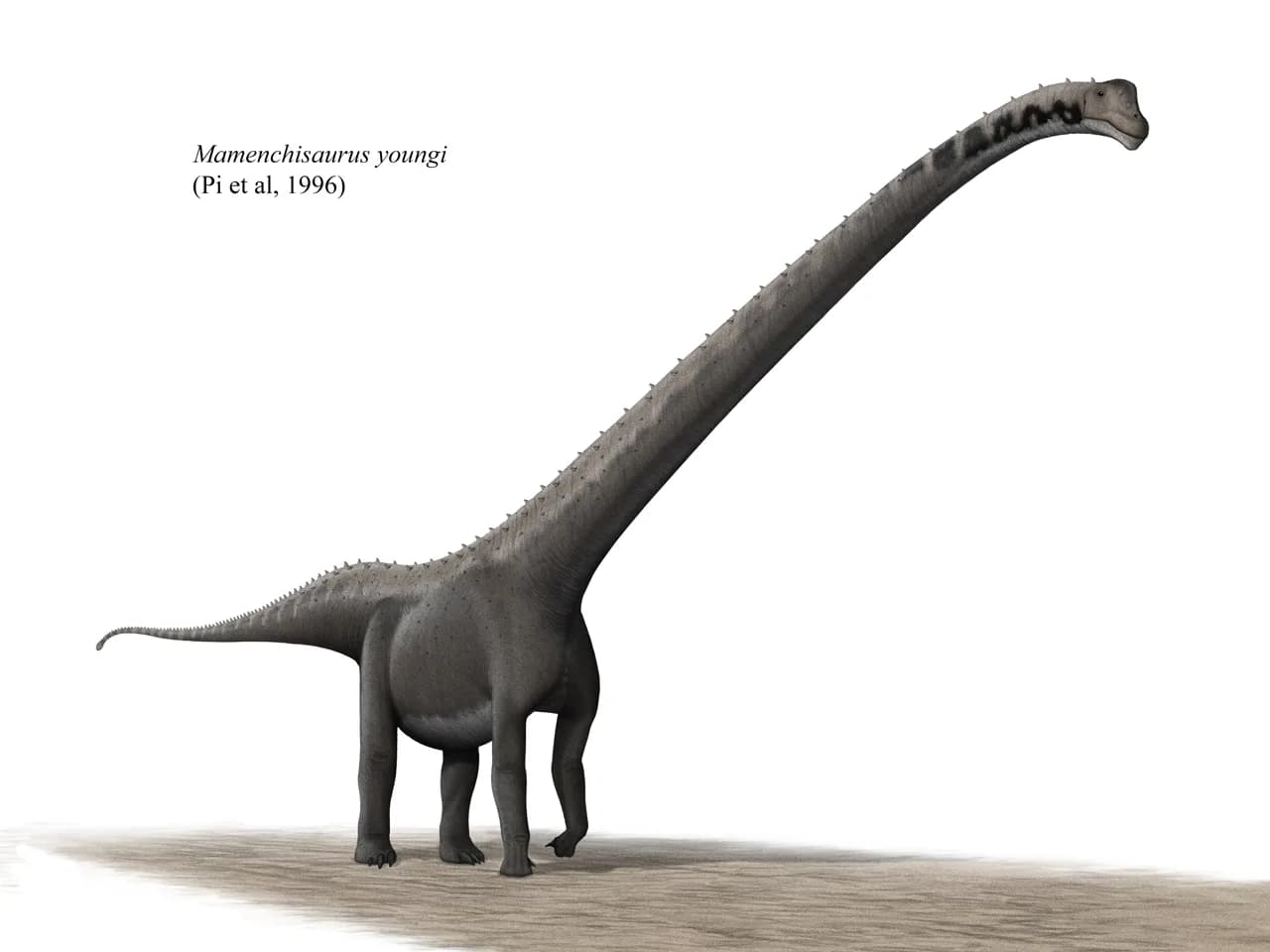
Artistic reconstruction of Mamenchisaurus youngi showing its exceptionally long neck
Steveoc 86, CC BY-SA 4.0, via Wikimedia Commons