Lystrosaurus
Lystrosaurus accounted for up to 95 % of all land vertebrates just after the Permian-Triassic extinction, the harshest in history. This dicynodont, 0.6 to 2.5 metres and 25 to 100 kilograms, lived 255 to 245 million years ago, spread across the whole of Pangaea. Its discovery in Antarctica in 1969 confirmed that the continents had once been joined.
Lystrosaurus lived from the Late Permian to the Early Triassic, approximately 255 to 245 million years ago, successfully surviving the greatest mass extinction in Earth's history — the Permian-Triassic extinction (252 Ma). After this catastrophe that annihilated over 90% of marine species and 70% of terrestrial species, Lystrosaurus became the most abundant terrestrial animal on the planet. It is estimated to have represented up to 95% of all terrestrial vertebrates during the Early Triassic — an unprecedented dominance in the history of life. This dicynodont (therapsid) became one of the most important fossils for continental drift theory, as its remains have been found in Africa, India, China, and Antarctica.
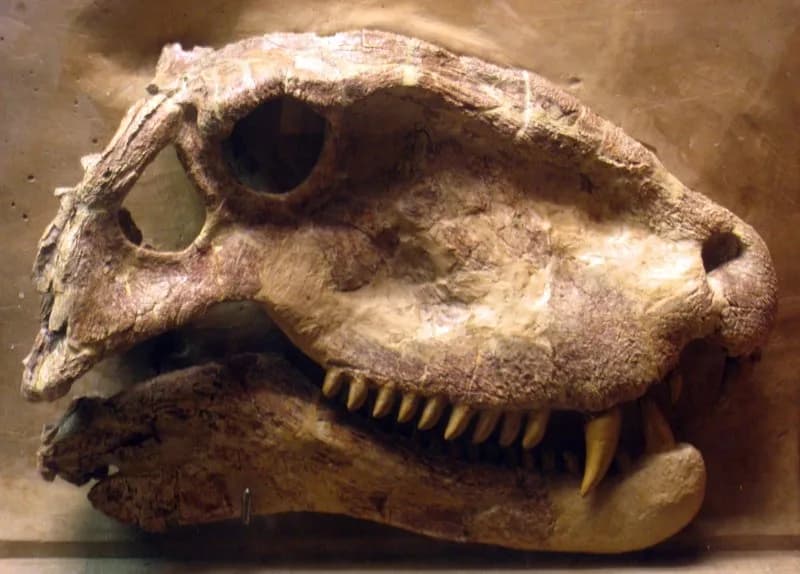
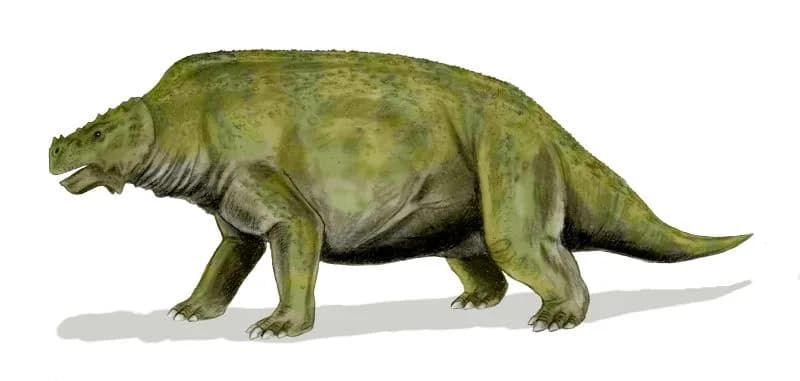
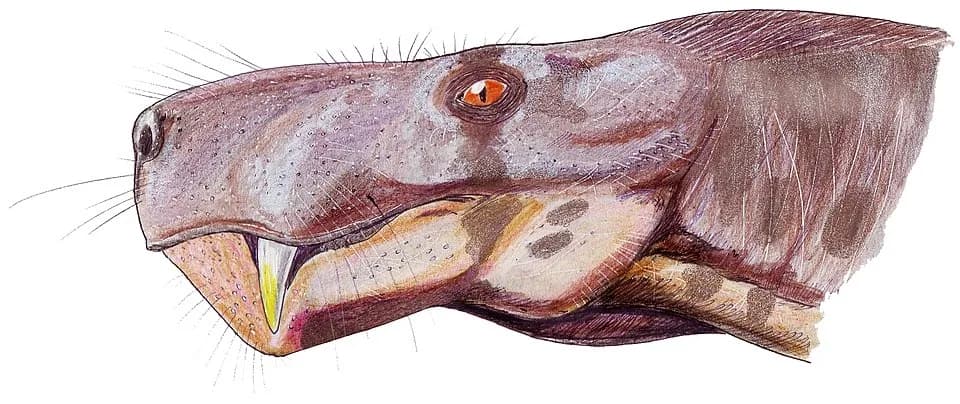
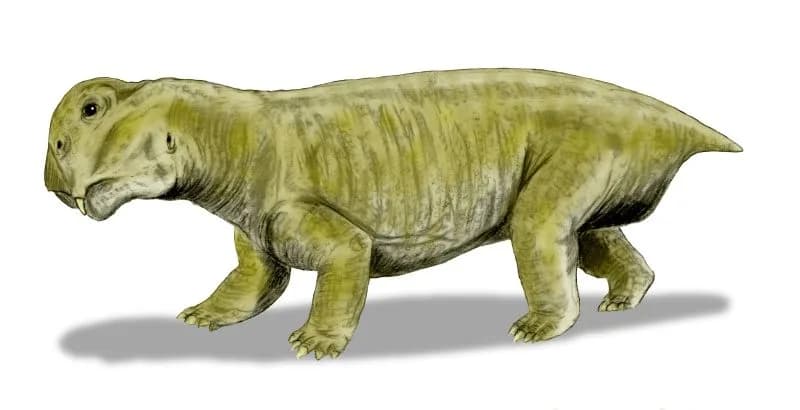
Lystrosaurus was a modestly sized animal, measuring between 60 centimeters and 2.5 meters depending on the species — roughly the size of a pig for the most common forms. Its body was stocky and barrel-shaped, with robust, short limbs. Its short, tall skull bore two tusks (prominent upper canines) and a horny beak, a characteristic combination of dicynodonts. Its eyes were positioned high on the skull, its nostrils were large, and its ears were simple. Despite its appearance as a 'prehistoric pig,' Lystrosaurus was not a mammal but a non-mammalian synapsid — a distant cousin of mammals.
Lystrosaurus was a strict herbivore, feeding on the low vegetation of the Late Permian and Early Triassic. Its horny beak, devoid of teeth except for two tusks, was adapted for cutting and tearing tough, fibrous vegetation. The tusks probably did not serve for feeding but rather for digging up roots, defense, or social interactions. Its diet included ferns, horsetails, lycopsids, and early seed plants. The post-extinction success of Lystrosaurus may have been linked to its ability to feed on low-quality vegetation that regrew after the environmental catastrophe devastated global ecosystems.
Lystrosaurus lived in varied environments across the supercontinent Pangaea, from floodplains to riverbanks. Its exceptionally wide distribution — South Africa, India, China, Russia, and Antarctica — was one of the most convincing pieces of evidence in favor of continental drift and the existence of Pangaea. During the Early Triassic, these regions were connected and shared a warm to temperate climate. After the Permian-Triassic extinction, terrestrial ecosystems were devastated, with sparse vegetation and an extremely impoverished fauna — Lystrosaurus thrived in these harsh conditions as a 'survivor par excellence'.
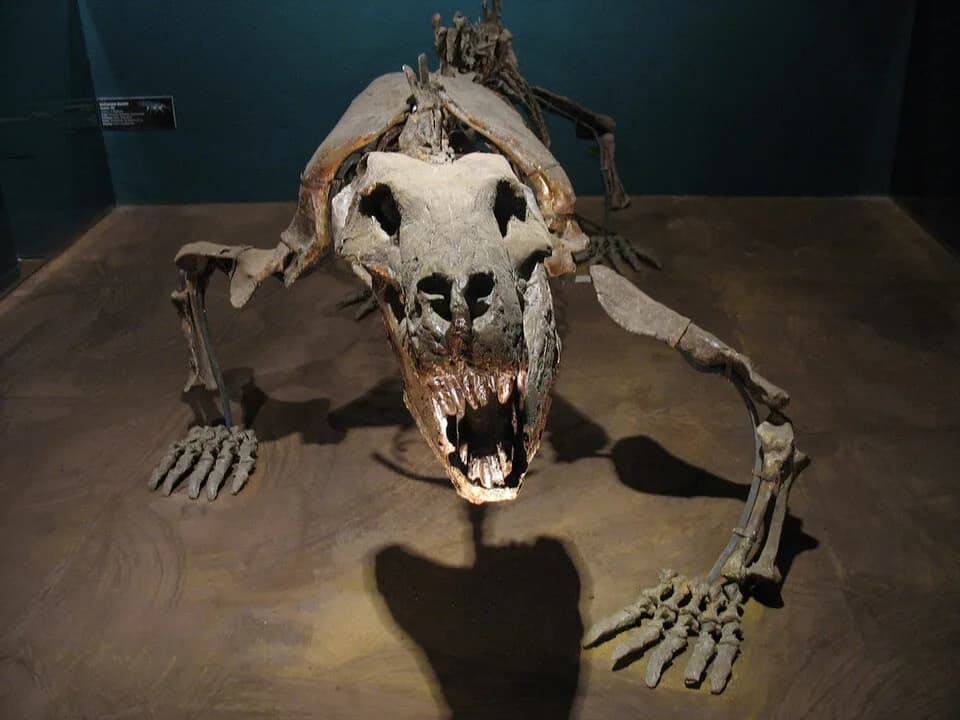
Lystrosaurus' anatomy combined unique characteristics among dicynodonts. Its short, tall, and rounded skull was dominated by a horny beak and two tusks (upper canines) that grew continuously. Its eye sockets were positioned high and oriented laterally, offering a wide field of vision to detect predators. Its nostrils were large and retracted, and its inner ears show adaptations that could indicate a semi-aquatic lifestyle — similar to hippopotamuses. Its barrel-shaped torso housed a voluminous digestive system for fermenting vegetation. Its short, robust limbs with broad feet were adapted for both terrestrial walking and swimming.
Lystrosaurus was probably a gregarious animal living in herds, much like modern hippopotamuses. Some researchers suggest a semi-aquatic lifestyle based on the position of nostrils and eyes high on the skull, high bone density (ballast for diving), and the depositional environments of its fossils (often associated with waterways). Others favor an entirely terrestrial lifestyle, comparable to that of a pig or wombat. Its ability to survive the Permian-Triassic extinction could be linked to several factors: its small size, flexible diet, a possible burrowing ability similar to wombats, and its therapsid physiology potentially capable of surviving in low-oxygen conditions.
Lystrosaurus was described in 1870 by Edward Drinker Cope, from fossils found in South Africa. The name means 'shovel lizard' (Greek: lystron 'shovel' + sauros 'lizard'). The discovery of Lystrosaurus fossils in Antarctica in 1969 was a pivotal moment in the acceptance of plate tectonics theory, as it proved that Antarctica, Africa, and India were once connected as part of Gondwana. Five species are recognized, distributed across Pangaea. During the Early Triassic, Lystrosaurus fossils are so abundant that a biostratigraphic zone bears its name (Lystrosaurus Assemblage Zone). Its post-extinction abundance has become a classic case study in modern conservation biology.
| Period | Permien sup. au Trias inf. / Late Permian to Early Triassic |
| Era | Paléozoïque-Mésozoïque / Paleozoic-Mesozoic |
| Age | 255-245 Ma |
| Location | Pangée (global) / Pangaea (global) |
| Length | 0.6-2.5 m |
| Height | 0.5 m |
| Weight | 25-100 kg |
| Diet | Herbivore |
| Discovery | 1870 |
Lystrosaurus georgi survived the Permian-Triassic extinction (252 Ma) — which wiped out over 90% of marine species and 70% of terrestrial species — thanks to several advantages: small size, a flexible herbivorous diet able to exploit poor-quality post-catastrophe vegetation, and possibly a burrowing ability like modern wombats. It then represented up to 95% of all terrestrial vertebrates of the Early Triassic.
Lystrosaurus georgi was neither a dinosaur nor a mammal. It was a dicynodont, a therapsid (non-mammalian synapsid) from the Late Permian to the Early Triassic. Despite its 'pig with tusks' appearance, it belongs to the synapsid lineage that would eventually give rise to mammals — but it is not yet a mammal. It predates the first dinosaurs by about 15 million years.
Lystrosaurus fossils have been found in South Africa, India, China, Russia, and Antarctica. The 1969 discovery of specimens in Antarctica provided decisive proof that these continents were once connected as part of Pangaea (the Gondwana supercontinent). No terrestrial animal could cross the ocean — its presence on multiple continents simultaneously confirmed their ancient connection.
Lystrosaurus reconstruction, the great extinction survivor
Nobu Tamura, CC BY-SA 3.0
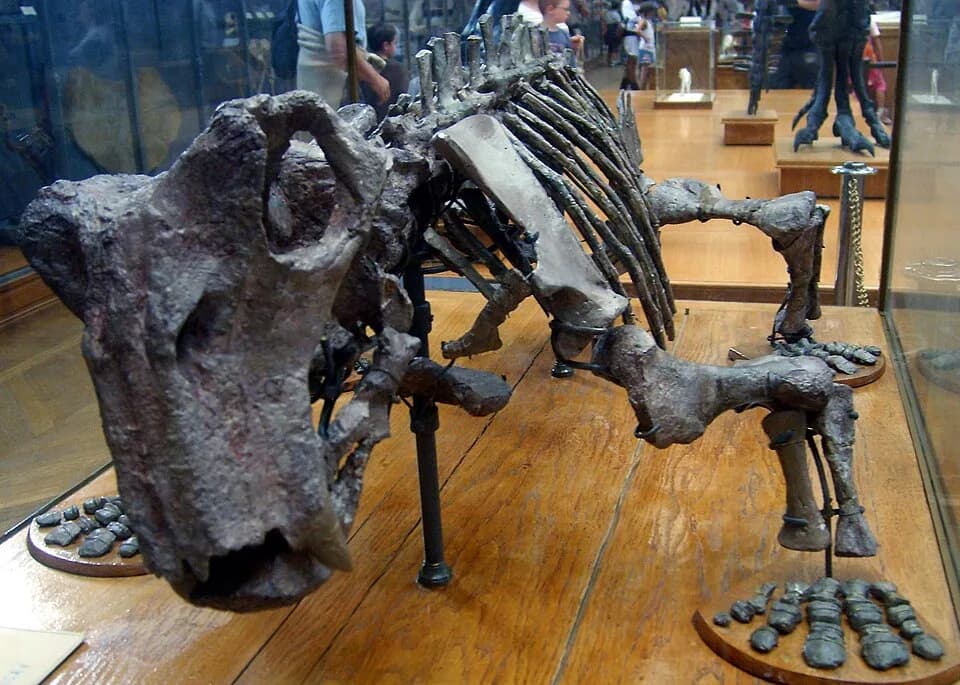
Lystrosaurus murrayi fossil skull showing beak and tusks
Wikipedia Commons