Inostrancevia
Inostrancevia alexandri carried sabre-like canines 12 centimetres long, some 250 million years before Smilodon. This gorgonopsian, 3 to 3.5 metres and 200 to 300 kilograms, dominated the Northern Dvina Basin in Russia between 259 and 252 million years ago. It died out with the Permian-Triassic extinction, the harshest ever recorded.
Inostrancevia lived during the Late Permian (Wuchiapingian), approximately 259 to 252 million years ago, in what is now northern Russia. It was the largest known gorgonopsian and the apex super-predator of Late Permian terrestrial ecosystems. Gorgonopsians were therapsids (advanced synapsids), part of the lineage that would eventually give rise to mammals. Inostrancevia reigned at the top of the food chain at a crucial time: just before the greatest mass extinction in Earth's history, the Permian-Triassic extinction (252 Ma), which annihilated over 90% of marine species and 70% of terrestrial species.
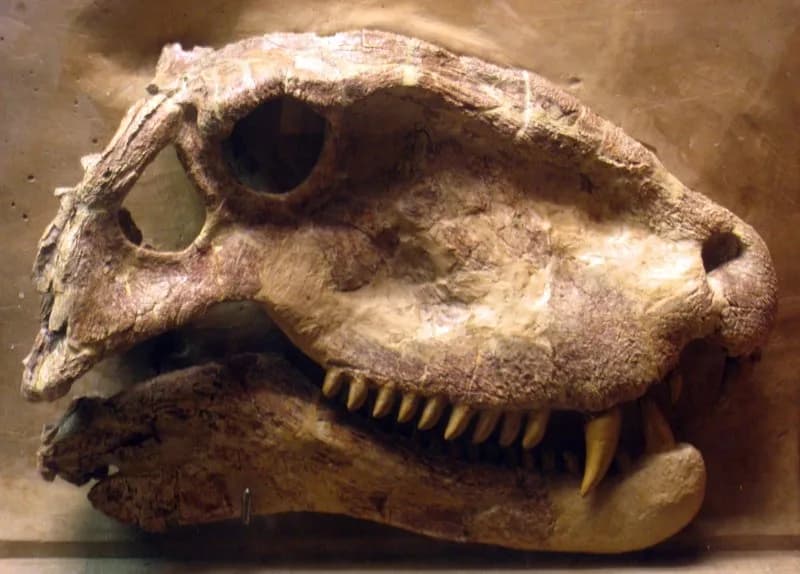
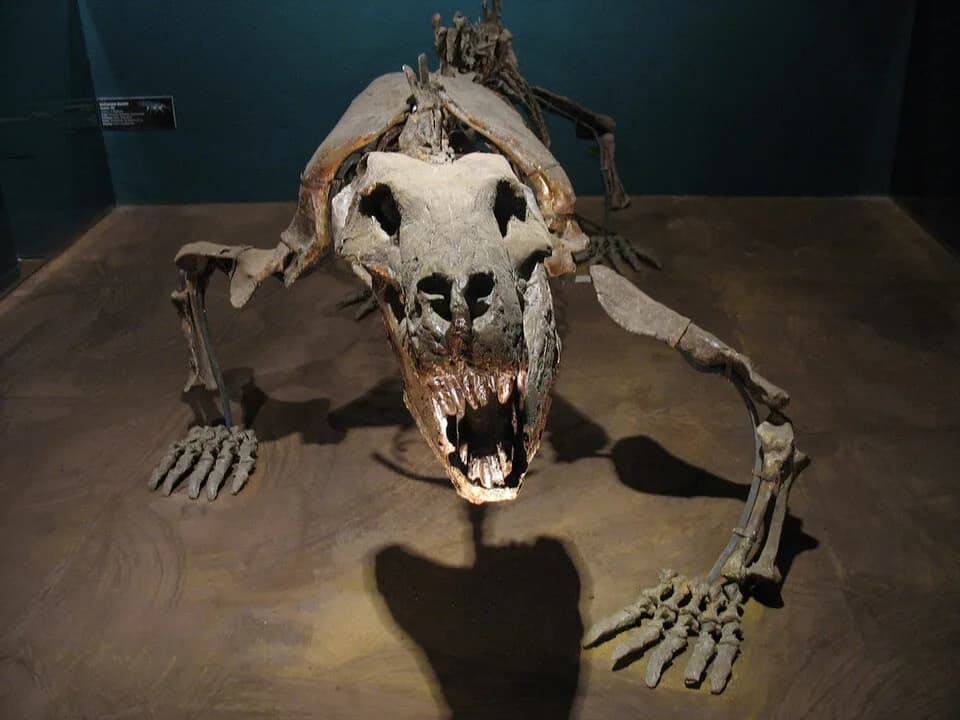
Inostrancevia was the largest known gorgonopsian, measuring about 3 to 3.5 meters in total length with an estimated weight of 200 to 300 kg. Its massive skull reached 60 centimeters in length, armed with enormous saber-shaped canines measuring over 12 centimeters — proportionally larger than those of Smilodon (the saber-toothed cat). Its body was robust and muscular, carried on limbs in a semi-erect posture more advanced than primitive synapsids. It was the largest terrestrial predator of its time, dominating Late Permian ecosystems without rival.
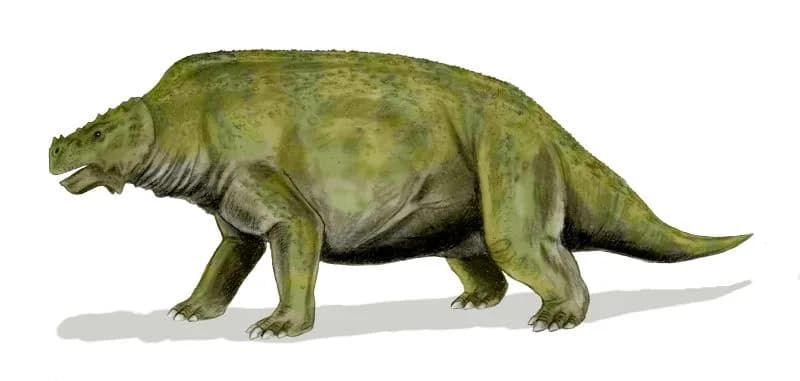
Inostrancevia was the undisputed apex super-predator of Late Permian terrestrial ecosystems, sitting firmly at the top of the food chain. Its giant saber-shaped canines were its main weapons, probably used to inflict deep, fatal wounds on large prey with devastating efficiency. Its diet mainly included pareiasaurs like Scutosaurus — massive, heavily armored herbivores weighing over 400 kilograms that roamed the same Late Permian landscapes. Inostrancevia's upper canines extended well beyond the lower jaw when the mouth was closed, exactly like the much later saber-toothed cats — a quite significant example of convergent evolution separated by approximately 250 million years of evolutionary history.
Inostrancevia lived in the floodplains and riparian forests of the supercontinent Pangaea, in regions at mid to high latitudes (present-day northern Russia, Northern Dvina basin). The Late Permian was a time of globally warm but contrasting climate, with marked seasons and extensive arid zones in Pangaea's interior. Late Permian Russian terrestrial ecosystems hosted diverse fauna including armored pareiasaurs (Scutosaurus), other therapsids, giant amphibians, and primitive reptiles. A recent discovery (2023) of gorgonopsians in South Africa from the same period showed these predators were globally distributed.
Inostrancevia's anatomy reflected a powerful, efficient terrestrial predator. Its 60 cm skull possessed well-developed temporal fenestrae (synapsid characteristic) allowing the anchoring of powerful jaw muscles. Its upper canines of over 12 cm were laterally compressed and slightly curved, while incisors and postcanines were smaller. Its semi-erect posture represented an evolutionary advance over primitive synapsids like Dimetrodon: limbs were more vertical under the body, allowing more efficient locomotion. Its body showed intermediate characteristics between 'reptiles' and mammals — a testament to the ongoing evolutionary transition.
Inostrancevia was probably a solitary, territorial predator that actively hunted large Late Permian herbivores. Its hunting technique likely involved a stealthy approach followed by an explosive attack, using its massive canines to inflict fatal wounds — similar to the strategy of Cenozoic saber-toothed cats. Its semi-erect posture allowed faster accelerations than the heavily armored pareiasaurs that constituted its main prey. In 2023, a remarkable study published in Current Biology revealed that gorgonopsians migrated to South Africa to replace other predators after a local extinction, demonstrating unexpected ecological flexibility.
Inostrancevia was described in 1922 by Russian paleontologist Pyotr Amalitsky, from remarkably complete skeletons discovered in Permian sediments of the Northern Dvina basin in northern Russia. The name honors Russian geologist Alexander Inostrantsev. Amalitsky's deposits, excavated in the late 19th and early 20th centuries, produced some of the best Late Permian fossils in the world, including articulated skeletons of Inostrancevia and its pareiasaur prey. Three species are recognized: I. alexandri, I. latifrons, and I. uralensis. In 2023, the discovery of giant gorgonopsians in South Africa's Karoo Basin showed these predators were the first large animals known to have crossed continents to colonize vacant ecological niches after an extinction.
| Period | Permien supérieur (Wuchiapingien) / Late Permian (Wuchiapingian) |
| Era | Paléozoïque / Paleozoic |
| Age | 259-252 Ma |
| Location | Bassin de la Dvina du Nord, Russie / Northern Dvina Basin, Russia |
| Length | 3-3.5 m |
| Height | 1.2 m |
| Weight | 200-300 kg |
| Diet | Carnivore |
| Discovery | 1922 |
No. Inostrancevia alexandri was a gorgonopsian, a therapsid from the Late Permian (259 to 252 million years ago). Therapsids are synapsids — the lineage that would give rise to mammals. Inostrancevia predates dinosaurs by 20 million years and is actually more closely related to modern mammals than to any dinosaur.
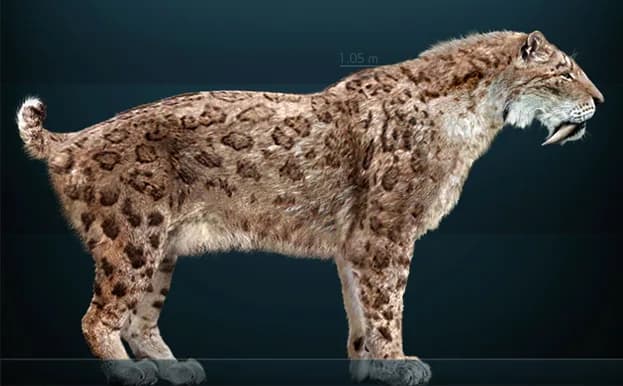
The upper canines of Inostrancevia alexandri could measure over 12 cm long, laterally compressed and slightly curved. These dimensions are proportionally larger than those of Smilodon, the Cenozoic saber-toothed cat, despite 250 million years separating the two animals — a remarkable example of convergent evolution.
Inostrancevia alexandri and all gorgonopsians vanished during the Permian-Triassic extinction 252 million years ago — the largest mass extinction in Earth's history. This event wiped out over 90% of marine species and 70% of terrestrial species. A 2023 study in Current Biology showed that some gorgonopsians had migrated to South Africa just before this extinction.
Inostrancevia alexandri skull showing its saber canines
Wikipedia Commons
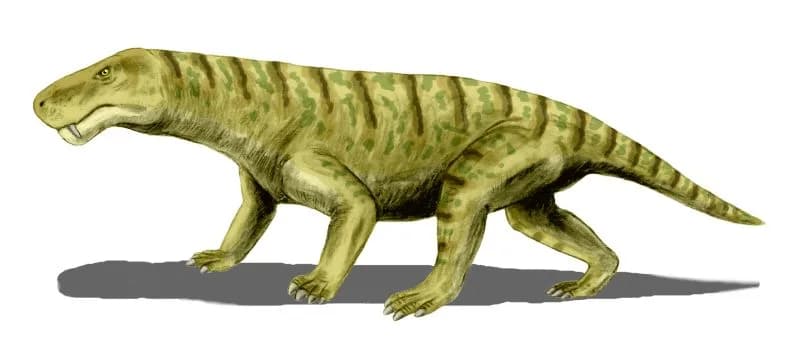
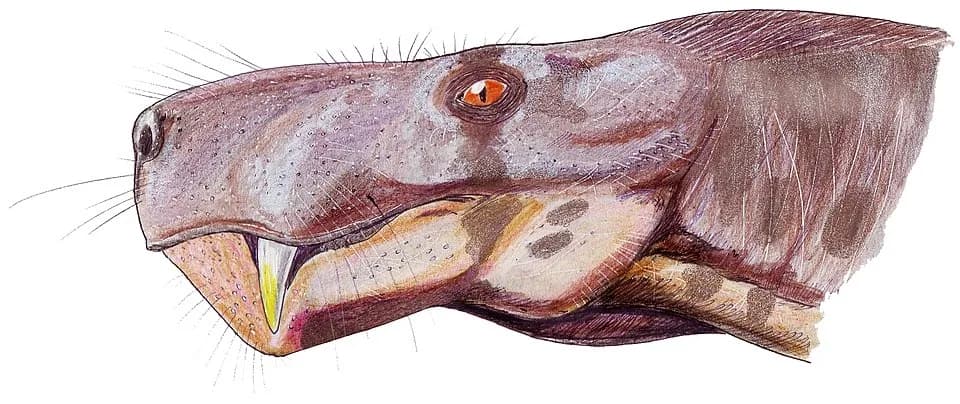
Inostrancevia reconstruction, the largest gorgonopsian
Nobu Tamura, CC BY-SA 3.0