Liaoningosaure
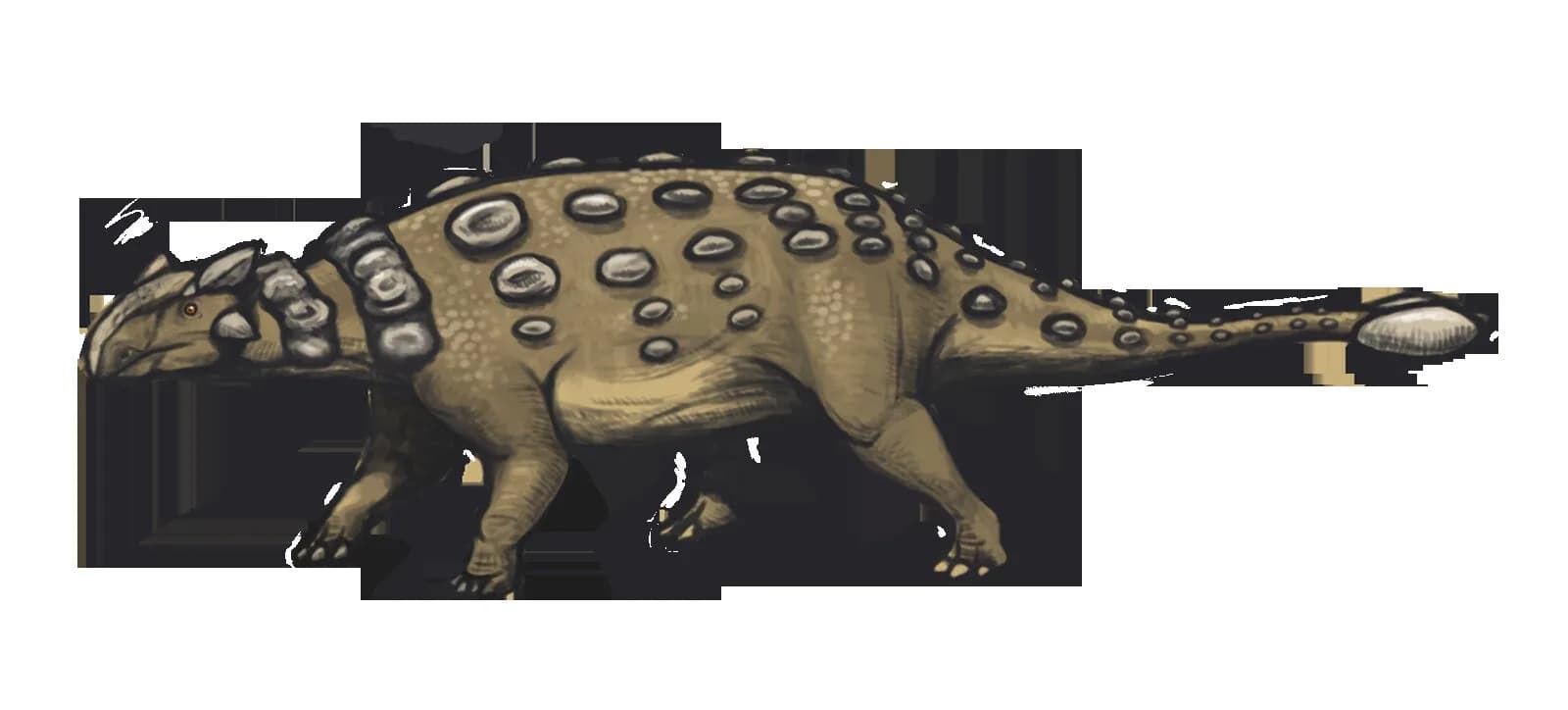
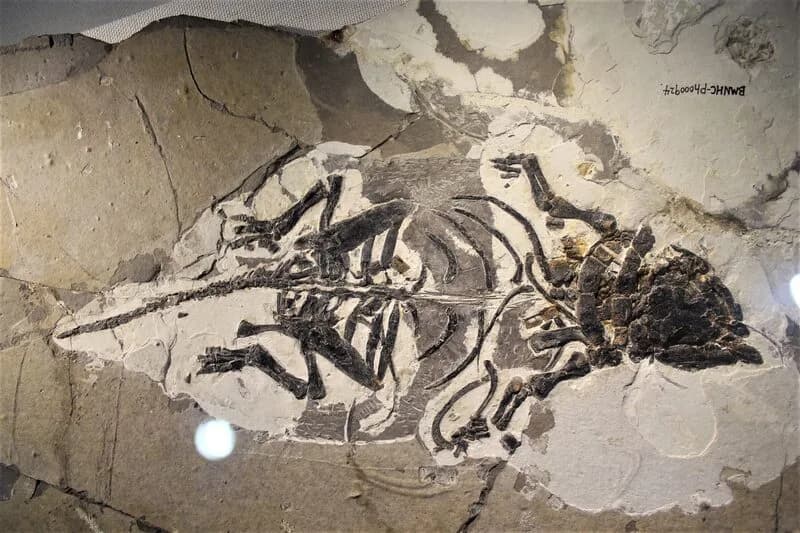
Liaoningosaurus paradoxus is the smallest ankylosaur ever described: the known juvenile specimen is just 34 centimetres, less than a house cat. Described in 2001 in Liaoning province, it lived around 122 million years ago. Fish remains were found in its abdomen, and its flat belly plate suggests an aquatic lifestyle unheard of among ankylosaurs.
Liaoningosaurus lived in the Early Cretaceous, approximately 122 million years ago, during the Aptian stage. It comes from the famous Yixian Formation in Liaoning Province, China — an exceptional deposit known as the 'Cretaceous Pompeii' for the extraordinary quality of its fossil preservation due to rapid volcanic ash burial. This formation has yielded dozens of feathered dinosaur species and primitive birds. Liaoningosaurus is the smallest known ankylosaur in the world, a status that raises remarkable questions about the ecological diversity of this group.
The only known specimen of Liaoningosaurus measures barely 34 centimeters in total length, making it the smallest ankylosaur ever discovered. Although this specimen is probably a juvenile, even adult size estimates suggest a remarkably small animal, perhaps not exceeding 1 meter in length and weighing under 10 kilograms. Its weight as a juvenile is estimated at only a few kilograms. For comparison, an adult Ankylosaurus could measure 9 meters and weigh 6 tonnes — a size ratio of 1 to 26, illustrating the extraordinary range of body sizes within the ankylosaur clade across different ecosystems and time periods.
The most controversial aspect of Liaoningosaurus is its diet. Analysis of its fossilized stomach contents revealed the presence of fish remains — a stunning discovery for an ankylosaur, a group traditionally considered strictly herbivorous. Its small pointed teeth, different from typical leaf-shaped ankylosaur teeth, seem to confirm an omnivorous or partially piscivorous diet. Other scientists remain skeptical, suggesting accidental ingestion or that the fish bones belonged to a separate organism trapped in the same fine-grained lacustrine sediments. If confirmed, this dietary adaptation would represent a unique ecological niche among all known thyreophoran dinosaurs.
Liaoningosaurus inhabited the lacustrine zones and forests bordering the volcanic lakes of Liaoning Province in northeastern China. The Yixian Formation environment was dominated by freshwater lakes surrounded by forests of conifers, ginkgos, and ferns, with frequent volcanic activity that periodically buried the fauna under layers of fine ash, creating exceptional preservation conditions. The climate was temperate to subtropical with distinct wet and dry seasons. Liaoningosaurus shared its habitat with the four-winged Microraptor, the early bird Confuciusornis, and the ceratopsian Psittacosaurus, forming one of the most diverse Cretaceous ecosystems known.
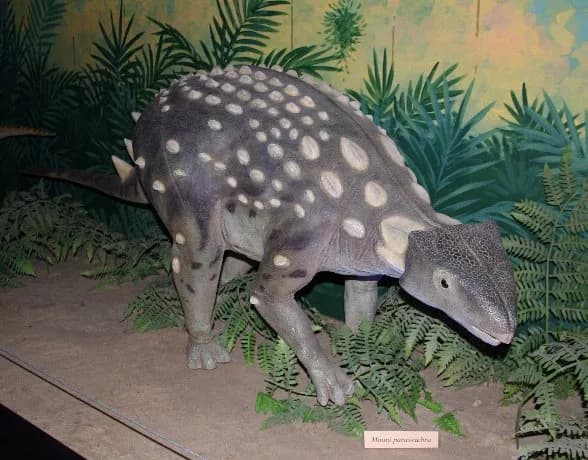
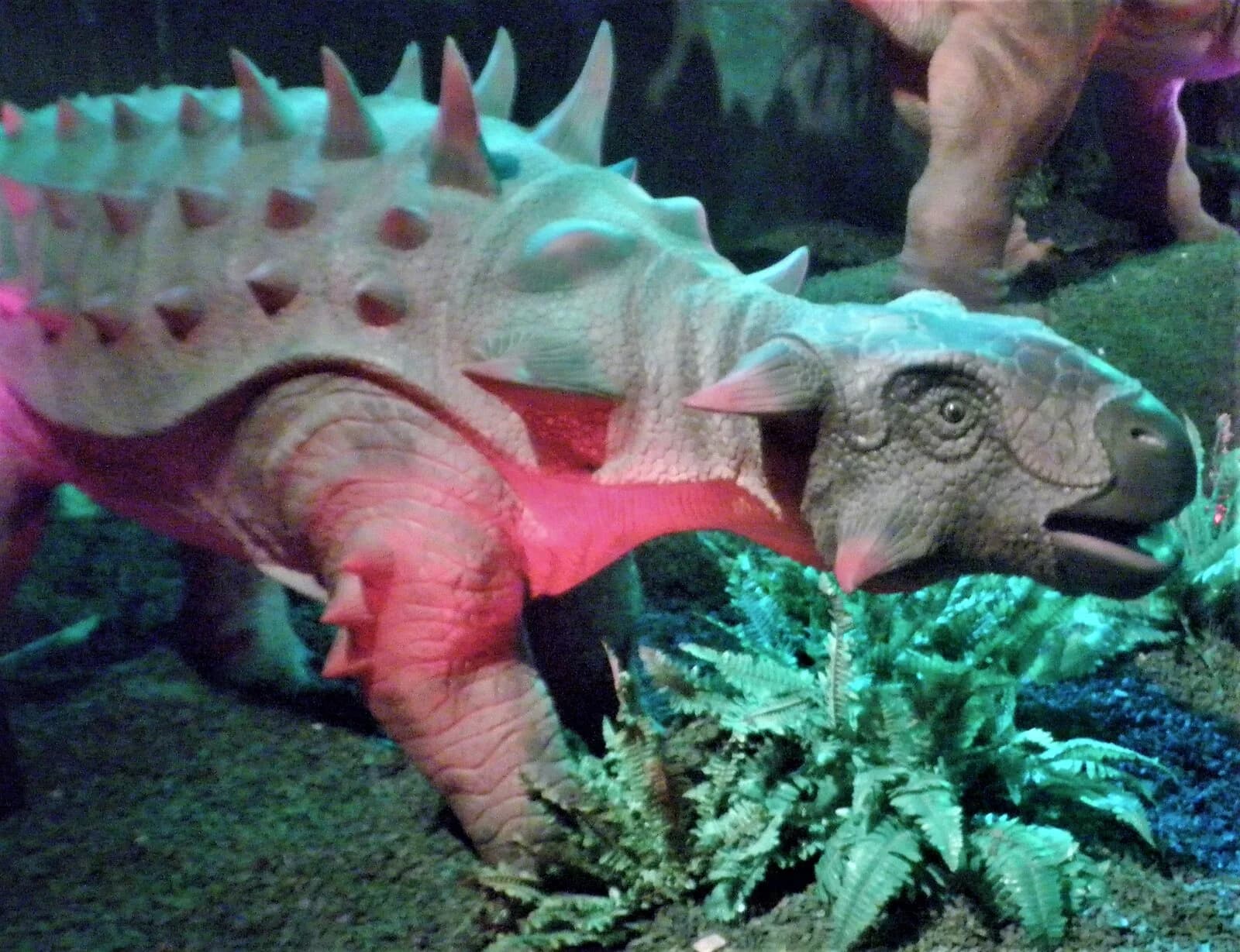
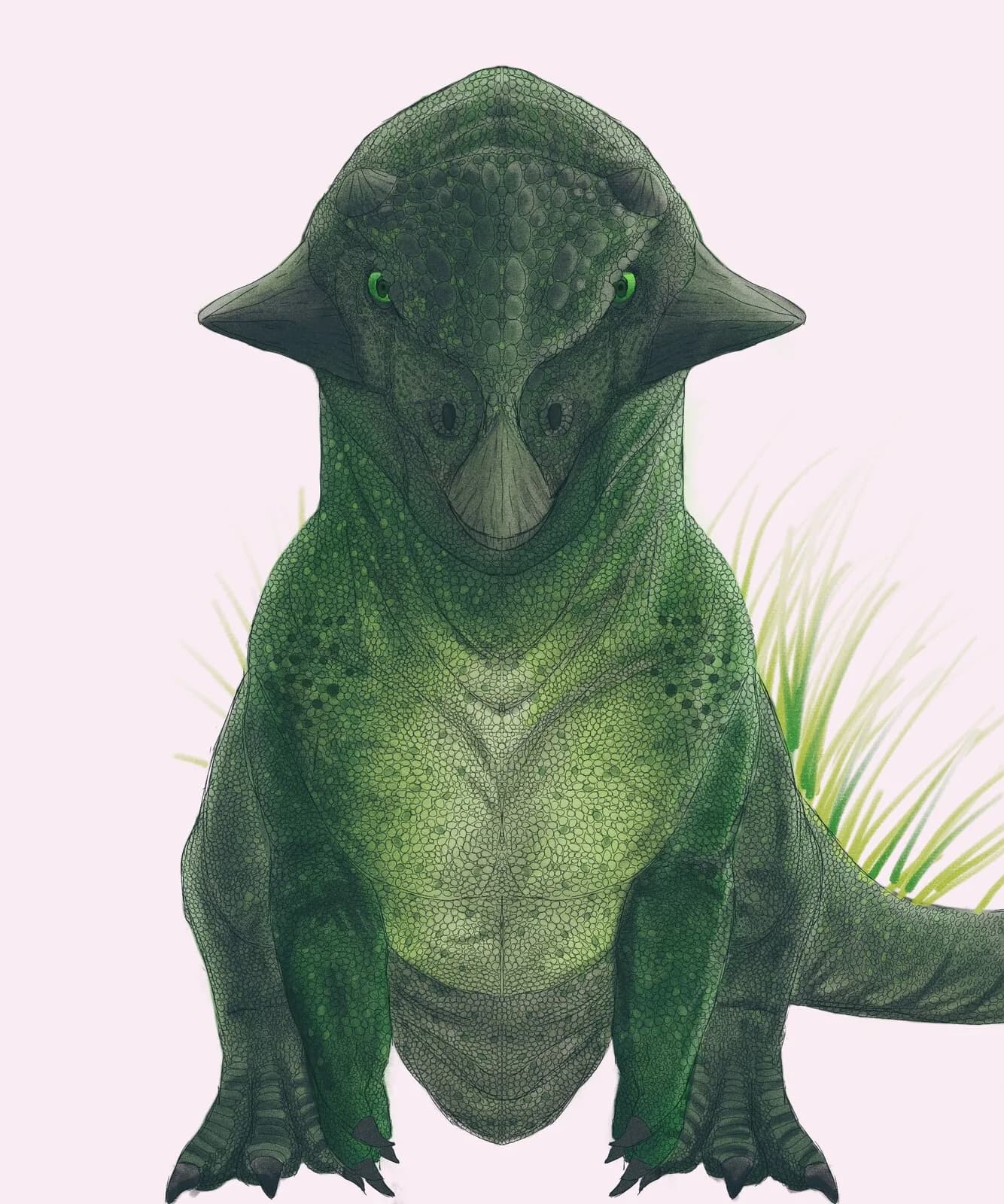
Liaoningosaurus anatomy is paradoxical — hence its species name 'paradoxus.' Its body presents the typical characteristics of ankylosaurs in miniature: dorsal osteoderms, stocky body, and short limbs. However, its flat ventral plastron, reminiscent of a turtle's, is unique among ankylosaurs and suggests a possible semi-aquatic adaptation to protect its belly from underwater predators. Its teeth are more pointed than those of typical herbivorous ankylosaurs, better suited for grasping slippery prey. Its limbs appear proportionally longer than those of other ankylosaurs, with possible swimming adaptations including broader digit bones that may have supported webbed feet.
Liaoningosaurus behavior remains largely speculative due to the limited number of specimens. If the semi-aquatic hypothesis is correct, it spent part of its time in shallow lakes, hunting small fish and feeding on aquatic plants — a lifestyle with no equivalent among other ankylosaurs. Its flat ventral plastron would have protected its belly during swimming and while resting on lake bottoms. Its small size made it vulnerable to terrestrial predators such as dromaeosaurids, and water would have provided a natural refuge. This amphibious lifestyle would parallel modern semi-aquatic reptiles like certain freshwater turtles and caimans.
Liaoningosaurus paradoxus was described in 2001 by Xu Xing and colleagues from a remarkably well-preserved juvenile specimen from the Yixian Formation in Liaoning Province, China. The holotype (IVPP V12560) is a nearly complete skeleton with its armor in place, preserved in fine-grained lacustrine sediments deposited by volcanic ashfall. The genus name honors Liaoning Province, one of the most prolific fossil-bearing regions in the world. In 2016, a controversial study by Ji and colleagues reported the presence of fish remains in the abdominal region, reigniting the scientific debate about its diet and ecological niche among armored dinosaurs.
| Period | Crétacé inférieur / Early Cretaceous |
| Era | Mésozoïque / Mesozoic |
| Age | ~122 Ma |
| Location | Asie (Chine, Liaoning) / Asia (China, Liaoning) |
| Length | ~0.34 m (juvénile) |
| Height | ~0.15 m |
| Weight | ~2-3 kg |
| Diet | Piscivore |
| Discovery | 2001 |
Liaoningosaurus paradoxus is the smallest known ankylosaur (34 cm specimen, probably juvenile) and the only one with a suggested piscivorous diet: fish remains were found in its stomach region. Its flat ventral plastron, reminiscent of a turtle, and its pointed teeth contradict the classic model of herbivorous ankylosaurs.
Liaoningosaurus paradoxus was described in 2001 by Xu Xing from a nearly complete specimen from the Yixian Formation (Liaoning Province, China, ~122 Ma, Aptian). This deposit, nicknamed the "Cretaceous Pompeii", has yielded dozens of feathered dinosaur species and primitive birds.
The semi-aquatic hypothesis for Liaoningosaurus paradoxus is debated. Its flat ventral plastron and proportionally longer limbs than other ankylosaurs suggest adaptation to swimming in Liaoning's volcanic lakes, but some researchers attribute the fish remains to accidental ingestion or a separate organism fossilised in the same sediment.
Liaoningosaurus at Beijing Museum of Natural History
Wikimedia Commons, CC BY-SA
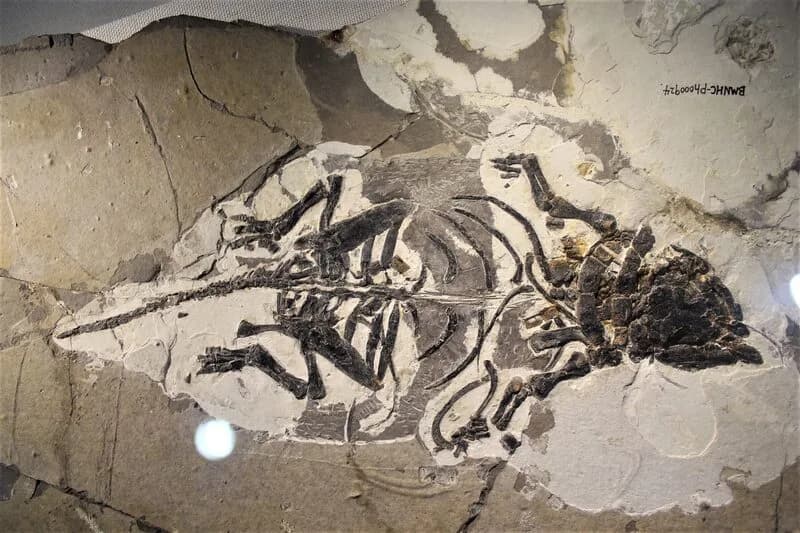
Liaoningosaurus paradoxus specimen
Wikimedia Commons, CC BY-SA