Argentavis
Argentavis magnificens is the heaviest flying bird ever found: 70 to 72 kilograms with a wingspan of 5 to 6 metres. Its fossils, unearthed in Argentina from 1980 onward, date to 9 to 6.8 million years ago. The runner-up, Pelagornis sandersi, tops out at 21-40 kilograms, less than half. Its Latin name means « silver bird », a nod to the country that yielded it.
Argentavis magnificens soared above the plains of Argentina during the Late Miocene, approximately 9 to 6.8 million years ago. This colossal bird belonged to the extinct family Teratornithidae, a group of giant birds related to modern vultures and condors. With an estimated weight of 70 to 72 kilograms, Argentavis holds the absolute record for the heaviest flying bird ever to have existed on Earth. Its name, literally meaning 'silver bird' in Latin, pays tribute to Argentina, a country that itself derives its name from the precious metal. Argentavis thrived in the Andean foothills of the Miocene, taking advantage of a warmer and drier climate that generated powerful thermal updrafts essential to its soaring flight.
Argentavis had an estimated wingspan of 5 to 6 meters according to the most recent regression analyses, though earlier estimates reached up to 8 meters. Its body weight reached 70 to 72 kilograms, twice that of the modern Andean condor and over three times that of the wandering albatross. Its wing area was approximately 8.11 square meters, with a wing loading of 8.64 kg/m². Standing, the animal probably reached 1.2 to 1.5 meters at the shoulder, comparable to a short adult human. Its primary feathers must have been exceptionally long to support such weight in flight.
Argentavis was primarily a scavenger and kleptoparasite, meaning it regularly stole food from other predators using its intimidating and imposing size to drive them away from their kills. It soared effortlessly over immense territories exceeding 500 square kilometers in search of carcasses on the ground below, using its imposing stature to intimidate metatherian mammals and small terror birds (phorusrhacids) that inhabited the vast Argentine plains during the Miocene. A comprehensive 2024 study based on detailed endocast reconstruction confirmed an open-habitat lifestyle, fully consistent with scavenging behavior over the expansive Miocene pampas grasslands.
Argentavis inhabited the Andean foothills and the vast open plains of central Argentina during the Late Miocene, between approximately 9 and 6.8 million years ago. The climate of this region was then significantly warmer and drier than today, strongly favoring the formation of powerful thermal updraft columns that the bird absolutely depended on for sustained flight given its enormous mass and wingspan. All fossils come exclusively from Argentina, distributed across the provinces of La Pampa (site of the holotype near Hidalgo), Buenos Aires (an ungual phalanx found near Carhue), Tucuman, and Catamarca (coracoid and tibiotarsus), within the Cerro Azul and Andahuala geological formations.
Argentavis was exclusively adapted for thermal soaring flight, rising on warm updrafts like a gigantic biological glider. Its pectoral muscles were not powerful enough for sustained flapping flight, and its wings were too long for effective flapping near the ground. To take off, it absolutely required headwinds or hillside slopes, running or jumping to reach the minimum flight speed of 40 km/h. Its relatively modest wing loading (8.64 kg/m²) remained well below the theoretical threshold of 25 kg/m² for avian flight.
Each individual patrolled an immense territory exceeding 500 square kilometers — an area larger than the entire city of Los Angeles — to find enough food to sustain its enormous body mass. Its flight patterns were probably oriented along a north-south axis to exploit prevailing winds and carefully avoid energy-sapping headwinds. Its reproduction must have been extraordinarily slow, comparable to that of modern large condors: probably only one to two eggs of approximately one kilogram each every two years, with young birds not reaching full sexual maturity until approximately 12 years of age, making population recovery from any decline extremely difficult.
The first Argentavis fossils were discovered in the 1960s by Rosendo Pascual and Eduardo Tonni during an expedition from the Museo de La Plata, near Hidalgo in La Pampa province. The holotype specimen, a partial skeleton including a fragmentary skull and limb portions, was formally described in 1980 by Kenneth E. Campbell Jr. and Eduardo P. Tonni. It was the third genus of Teratornithidae described and the first found outside North America. In 2014, the discovery of Pelagornis sandersi dethroned Argentavis from the wingspan record, but it retains the undisputed title of heaviest flying bird of all time.
| Period | Miocène tardif / Late Miocene |
| Era | Cénozoïque / Cenozoic |
| Age | 9-6,8 Ma |
| Location | Argentine (La Pampa, Buenos Aires, Tucumán, Catamarca) / Argentina |
| Length | 1.5 m (corps / body) |
| Height | 1.2-1.5 m |
| Weight | 70-72 kg |
| Diet | Carnivore |
| Discovery | 1980 |
Argentavis magnificens holds the record for heaviest flying bird of all time, at 70 to 72 kg. In 2014, Pelagornis sandersi dethroned it for the wingspan record (6.4 meters versus 5 to 6 meters for Argentavis). Pelagornis weighed only 21 to 40 kg — less than half. Argentavis therefore retains the undisputed title for body mass, far exceeding the modern Andean condor (max 15 kg) and wandering albatross (max 11 kg).
Argentavis magnificens could not take off from flat, calm ground: its mass of 70 to 72 kg and pectoral muscles insufficient for sustained flapping flight forced it to use a hillside slope or headwind to reach the minimum speed of 40 km/h. Its extremely pneumatized (hollow) bones and wing area of 8.11 m² then allowed it to soar indefinitely on thermal updrafts above the Andean foothills.
The first Argentavis magnificens fossils were discovered in the 1960s by Rosendo Pascual and Eduardo Tonni during an expedition from the Museo de La Plata, near Hidalgo in La Pampa province, Argentina. The species was formally described in 1980 by Kenneth E. Campbell Jr. and Eduardo P. Tonni. All known fossils come exclusively from Argentina, from the Cerro Azul and Andahuala geological formations.
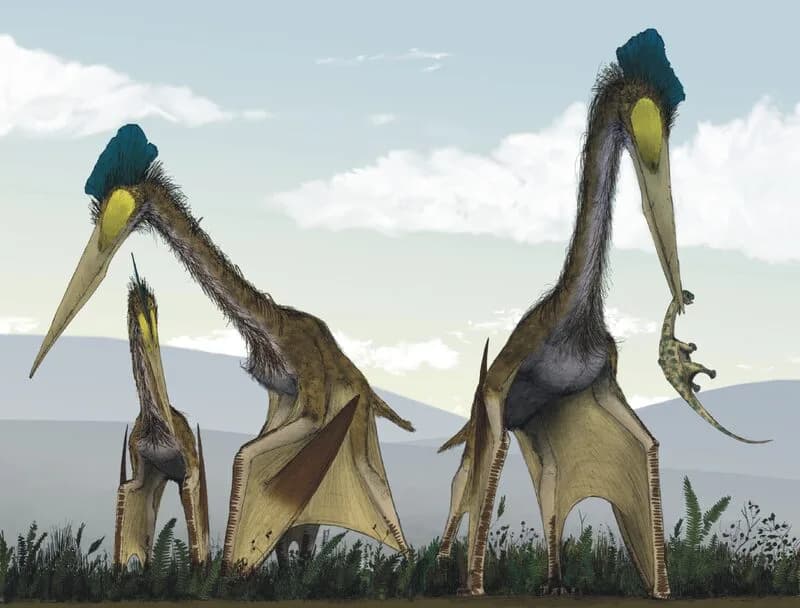
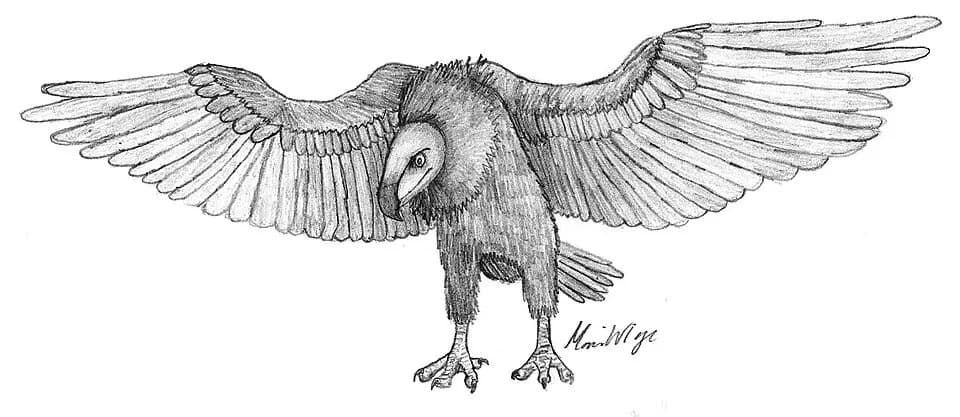
Reconstruction of Argentavis magnificens in flight
Wikimedia Commons, CC BY-SA
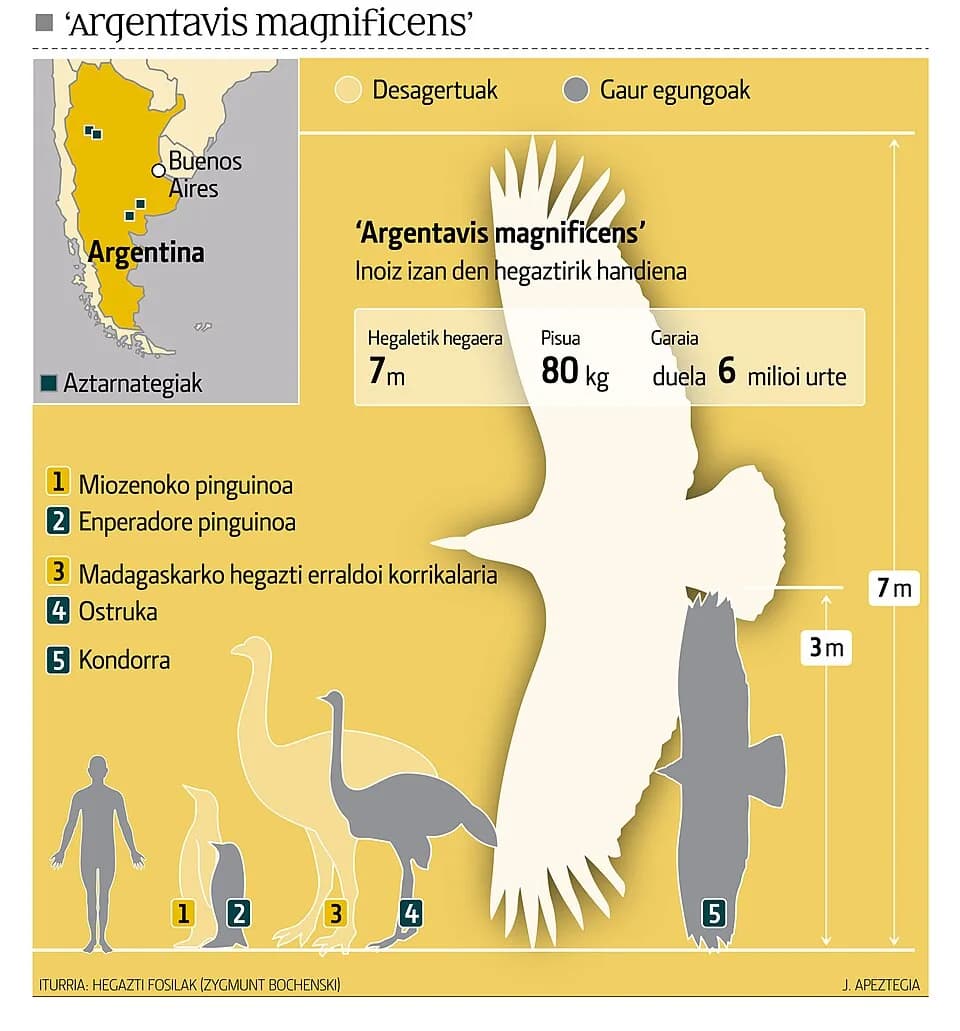
Size comparison between Argentavis and a human
Wikimedia Commons, CC BY-SA
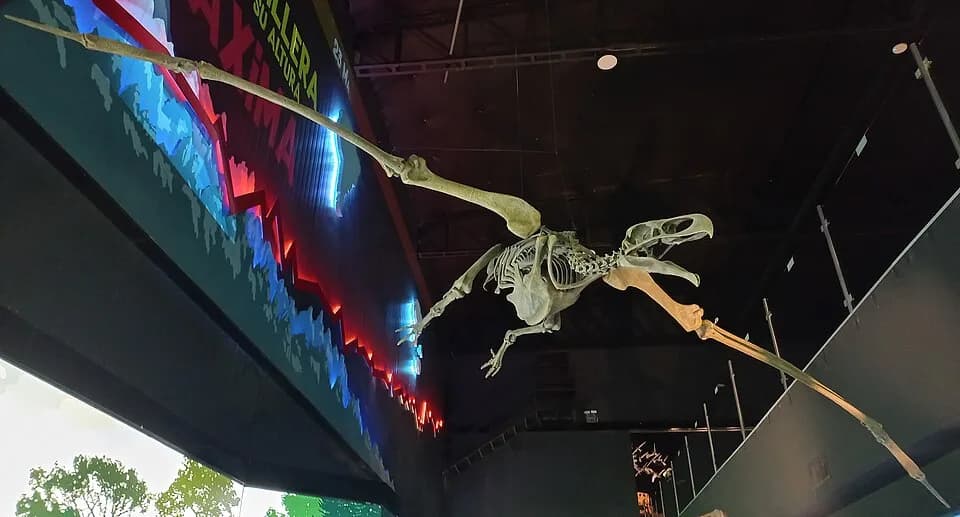
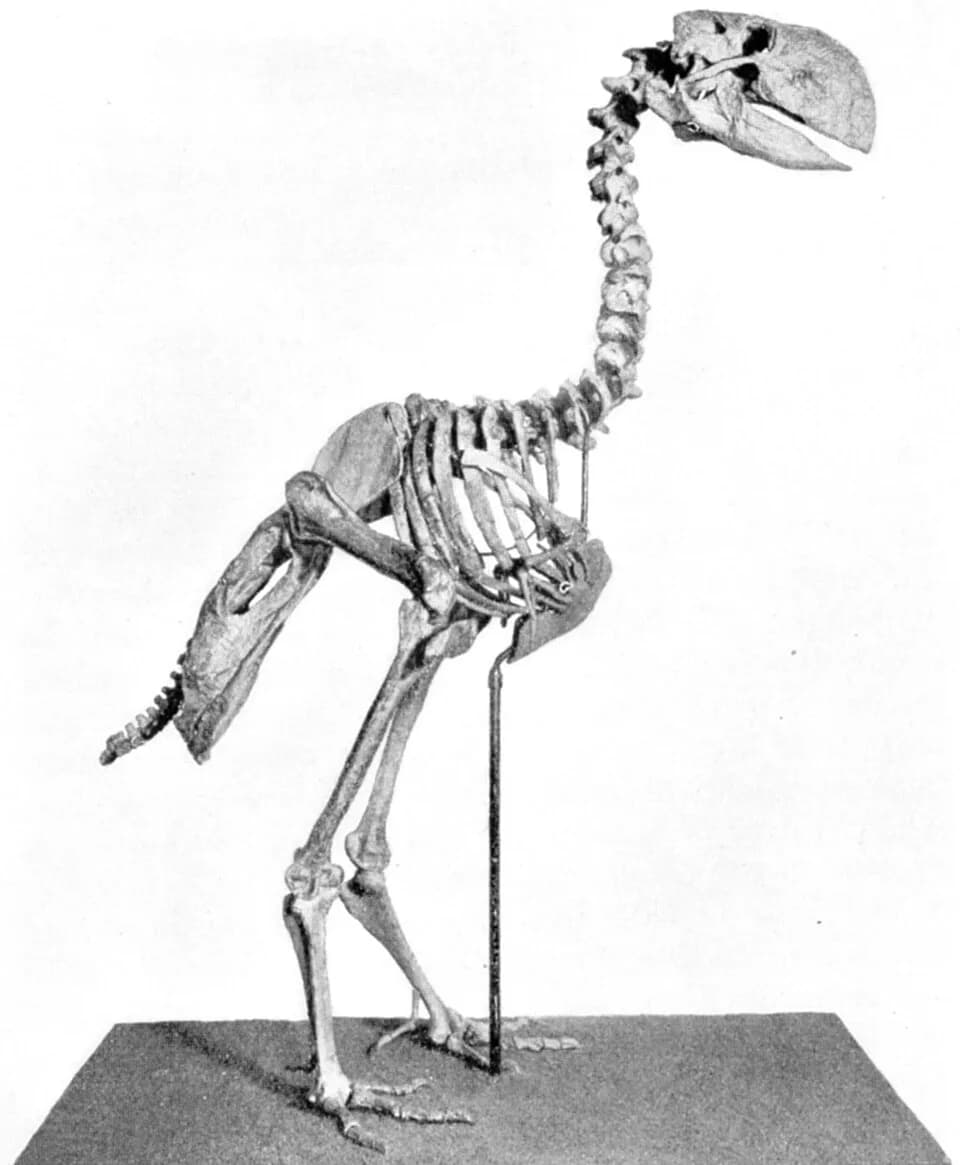
Reconstructed skeleton at Museo Paleontológico Egidio Feruglio, Argentina
Wikimedia Commons, CC BY-SA