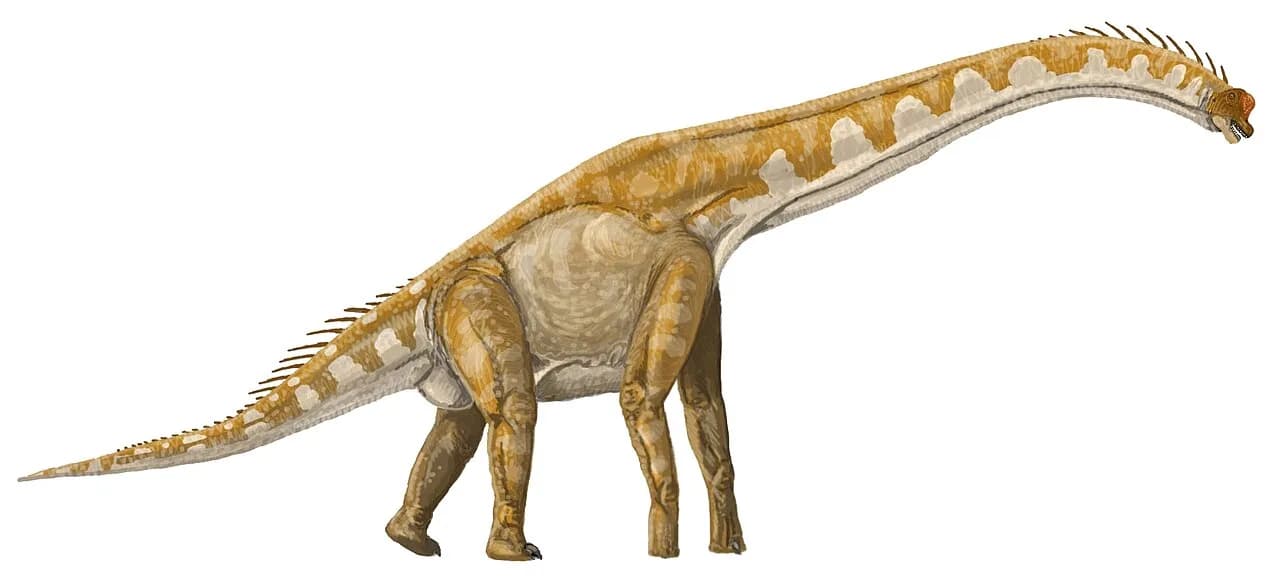
Giraffatitan
Giraffatitan brancai was a herbivorous sauropod from East Africa, described in 1909 from fossils found in Tanzania and dated to 150 to 145 million years ago. Around 22 metres long and 30 to 40 tonnes, it is mounted at the Museum für Naturkunde in Berlin, where the skeleton stands 13.27 metres tall — the tallest mounted dinosaur skeleton in the world according to Guinness.
Giraffatitan lived in the Late Jurassic, approximately 150 to 145 million years ago, during the Tithonian stage. It thrived in what is now Tanzania, East Africa, at a time when the continent was still part of Gondwana. The Tendaguru Formation, where its fossils were discovered, is one of the richest Jurassic deposits in Africa, rivaling the famous Morrison Formation of North America. This period corresponds to the peak of sauropod diversity in the southern hemisphere, with a thriving ecosystem of herbivorous and carnivorous dinosaurs. Long classified as an African species of Brachiosaurus, Giraffatitan was recognized as a distinct genus in 2009 by paleontologist Michael Taylor, based on significant anatomical differences in the skull and trunk.
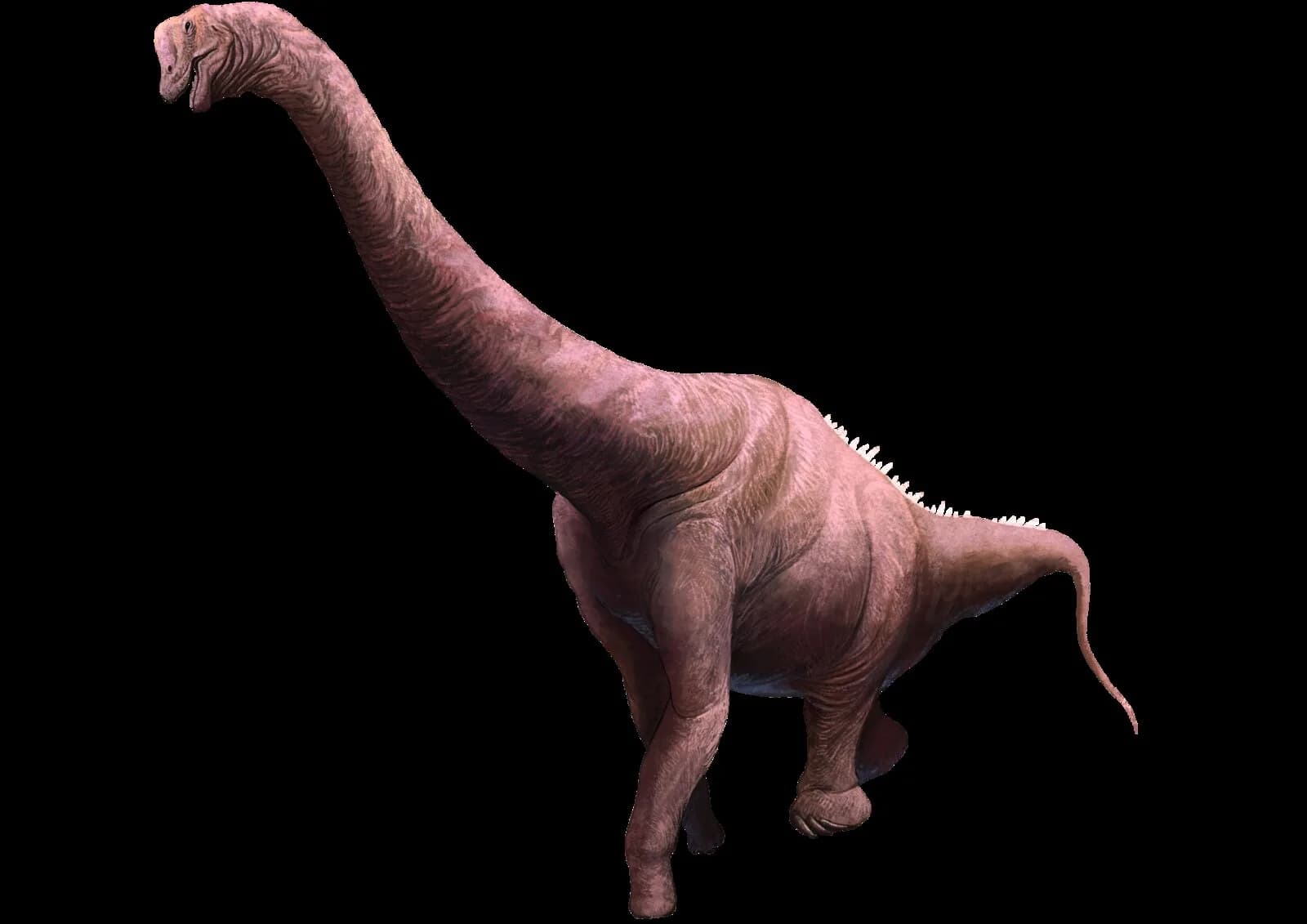
Giraffatitan was one of the largest dinosaurs of its time, reaching approximately 22 meters in length and 12 meters tall at the top of the head — the height of a four-story building. Its weight is estimated between 30 and 40 tonnes, equivalent to six adult African elephants. Like its cousin Brachiosaurus, its forelimbs were notably longer than its hind limbs, giving it a tall, rearward-sloping silhouette reminiscent of a giant giraffe. This exceptional morphology allowed it to reach the tops of the tallest conifers without even raising its head. Its skull was relatively small compared to its body, measuring about 75 centimeters, topped by a prominent nasal arch that remains a subject of debate among paleontologists.
A strict herbivore, Giraffatitan fed primarily on the tall vegetation of Jurassic forests: araucaria conifers, tree ferns, cycads, and ginkgoes. Its robust spatulate dentition was perfectly adapted for stripping and crushing the tough leaves of the highest branches, where no other herbivore could feed. An adult is estimated to have consumed between 200 and 400 kilograms of plant matter each day to sustain its metabolism. Its long neck, composed of vertebrae lightened by air pockets, functioned as a natural crane to sweep the canopy. This treetop browsing strategy considerably reduced competition with other Tendaguru sauropods that fed at lower heights.
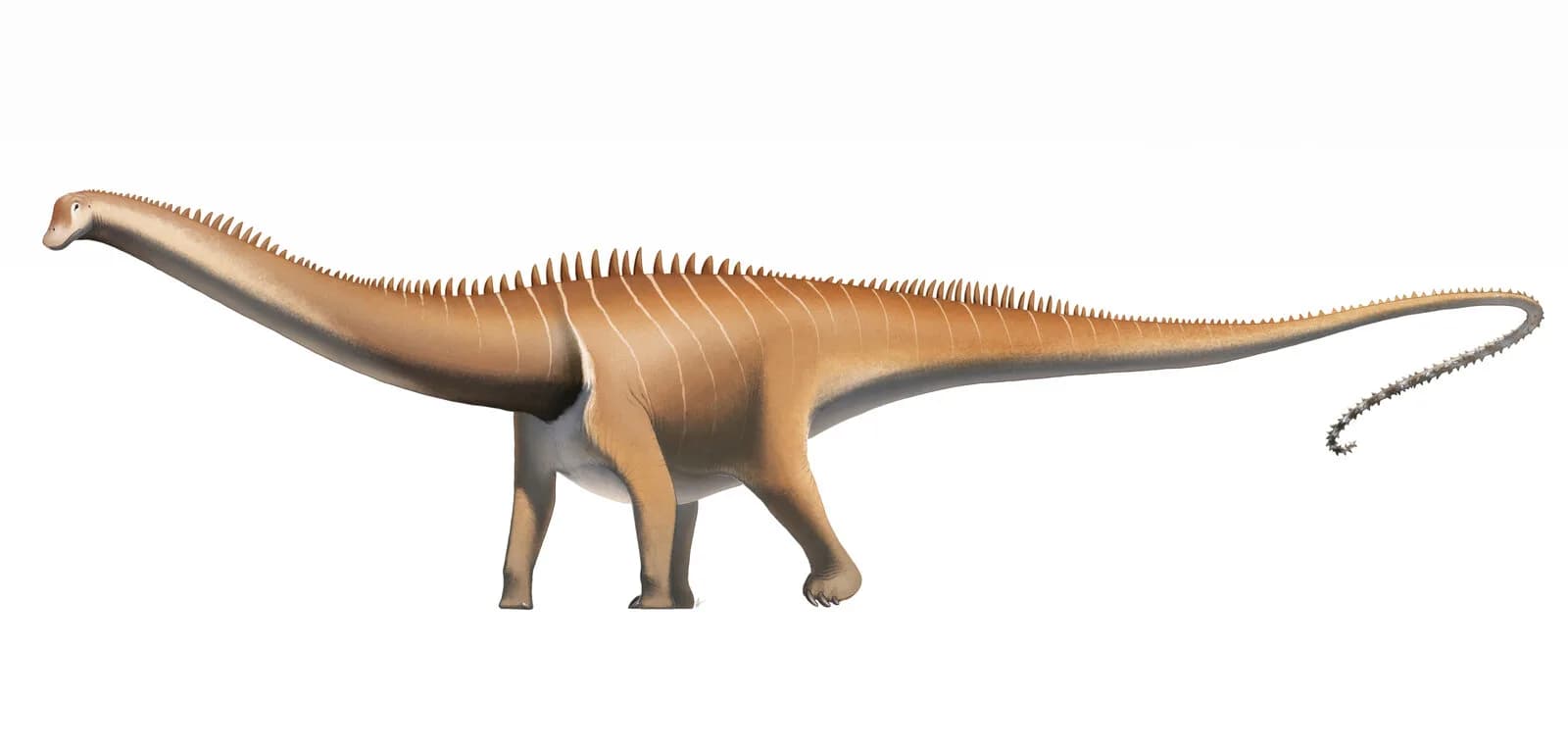
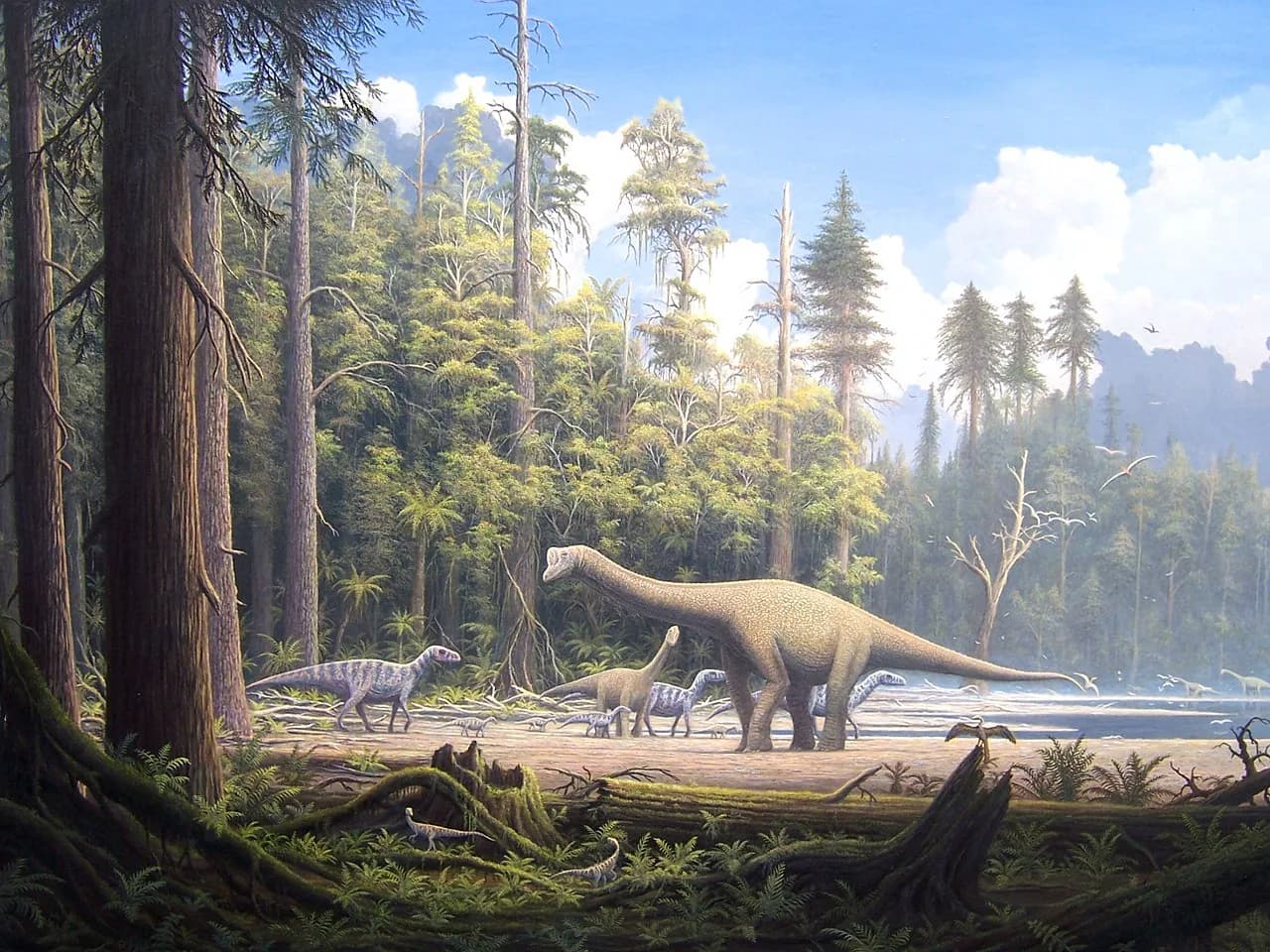
Giraffatitan inhabited the coastal plains and forests of the Tendaguru Formation in present-day Tanzania, East Africa. The Late Jurassic African landscape was a mix of coniferous woodlands, semi-arid plains, and coastal lagoons bordering the Tethys Ocean. The climate was warm and seasonal, with dry periods alternating with wet seasons that promoted dense vegetation along waterways. The Tendaguru ecosystem harbored a diverse fauna including other sauropods such as Dicraeosaurus and Tornieria, predatory theropods, and numerous marine invertebrates in adjacent sediments. The richness of this ecosystem testifies to an environment capable of supporting multiple giant herbivore species simultaneously.
Giraffatitan's anatomy is distinguished by several unique characteristics among brachiosaurids. Its elevated cranial vault, forming a bony arch above the snout, is one of the most distinctive traits separating it from Brachiosaurus. Its cervical vertebrae were extraordinarily pneumatized — hollowed out with air cavities connected to the pulmonary air sacs, considerably reducing the neck's weight while maintaining structural strength. Its forelimbs, longer than the hind limbs, were topped by a massive humerus exceeding two meters in length. Its deep thoracic cage likely housed an air sac respiratory system similar to modern birds, enabling efficient oxygenation despite its colossal size. Its heart must have weighed approximately 200 kilograms and maintained sufficient blood pressure to supply a brain situated 12 meters above the ground.
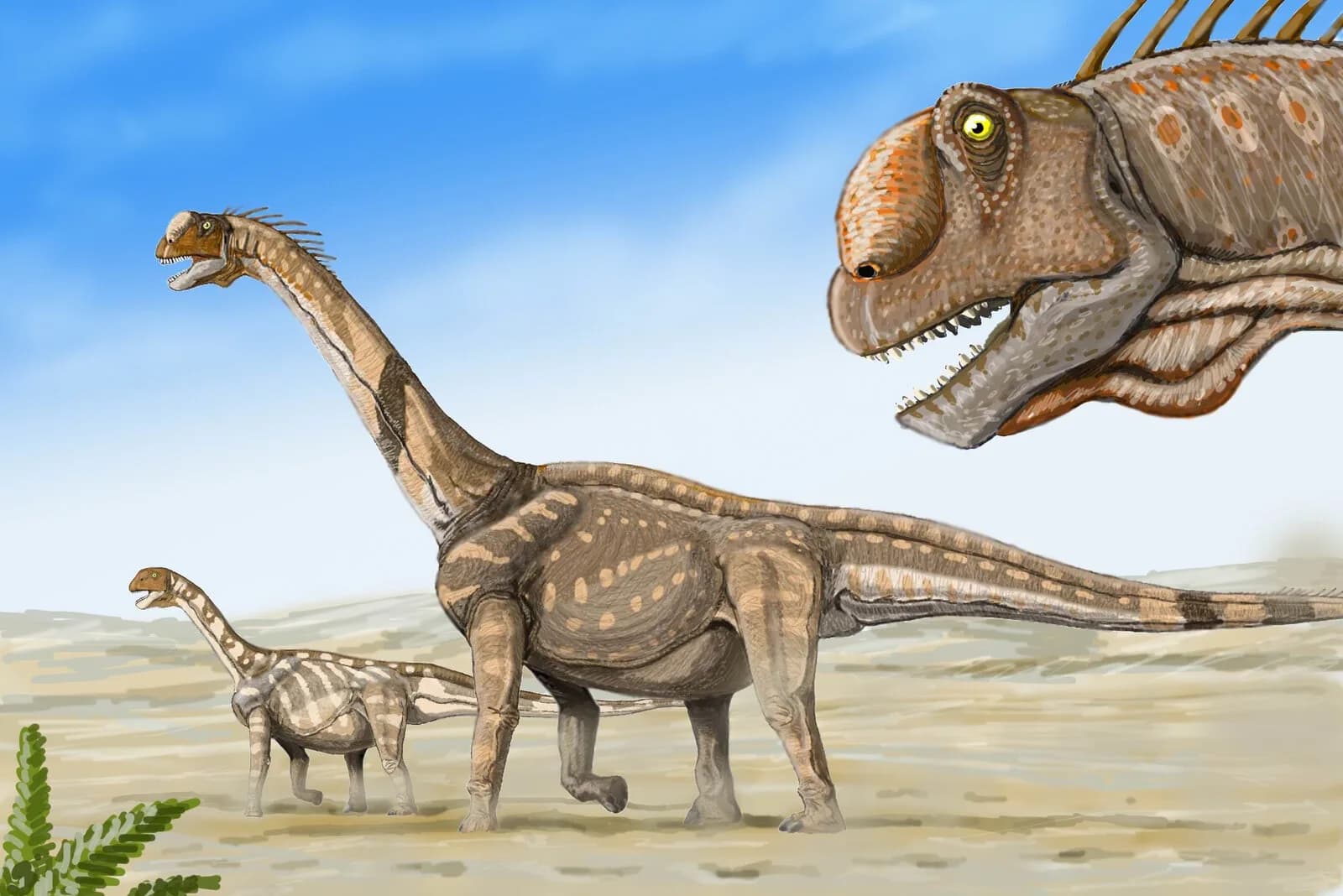
Giraffatitan was probably a semi-gregarious animal, moving in small family groups through the Tendaguru forests in search of food. Its maximum travel speed was estimated at about 10 to 15 km/h, constrained by its enormous mass and quadrupedal biomechanics. Juveniles, notably more vulnerable than massive adults, likely stayed close to the herd for protection from large predatory theropods in the ecosystem. Its growth was rapid: bone histological studies suggest it reached adult size in 15 to 20 years, with a growth rate of several tonnes per year during adolescence. Its exceptional stature gave it a considerable defensive advantage — a healthy adult was practically invulnerable to predators. Its long neck also served as a watchtower, allowing it to spot threats from great distances.
Giraffatitan fossils come from the famous Tendaguru Formation in Tanzania, excavated during spectacular German expeditions between 1909 and 1913, led by paleontologist Werner Janensch of the Museum für Naturkunde in Berlin. These expeditions mobilized hundreds of local workers and unearthed dozens of tonnes of dinosaur bones. The most famous specimen, a composite skeleton mounted at the Museum für Naturkunde in Berlin, holds the Guinness record for the tallest mounted dinosaur skeleton in the world, reaching 13.27 meters in height. Initially described in 1914 as Brachiosaurus brancai, it was reclassified in the genus Giraffatitan in 1988 by Gregory Paul, then formally recognized as a distinct genus in 2009 by Michael Taylor. The fossils include several partial individuals, allowing a detailed reconstruction of the anatomy of this African giant.
| Period | Jurassique supérieur / Late Jurassic (Tithonien) |
| Era | Mésozoïque / Mesozoic |
| Age | ~150–145 Ma |
| Location | Afrique de l'Est (Tanzanie) / East Africa (Tanzania) |
| Length | ~22 m |
| Height | ~12 m |
| Weight | 30 000–40 000 kg |
| Diet | Herbivore |
| Discovery | 1909 |
Giraffatitan brancai reached about 22 meters in length and 12 meters in head height, with an estimated weight of 30,000 to 40,000 kg. Long classified as an African species of Brachiosaurus, it was recognized as a distinct genus in 2009 by Michael Taylor based on anatomical differences in the skull — notably its prominent nasal arch — and the dorsal trunk region.
Fossils of Giraffatitan brancai come from the Tendaguru Formation in Tanzania, excavated during spectacular German expeditions between 1909 and 1913 led by Werner Janensch. These expeditions mobilized up to 500 local workers and required transporting dozens of tonnes of bones over 60 km to the port of Lindi. The composite skeleton mounted at the Museum für Naturkunde in Berlin holds the Guinness record for the tallest mounted dinosaur skeleton at 13.27 meters.
The long neck of Giraffatitan brancai functioned as a natural crane to sweep the canopy of Late Jurassic araucaria conifers and cycads. Its cervical vertebrae were pneumatized — hollowed with air cavities connected to pulmonary air sacs — considerably reducing neck weight. An adult needed to consume between 200 and 400 kg of vegetation per day. Its forelimbs, longer than its hindlimbs, allowed it to reach treetops without even raising its head.
Illustration of Giraffatitan brancai
DiBgd, CC BY-SA 4.0
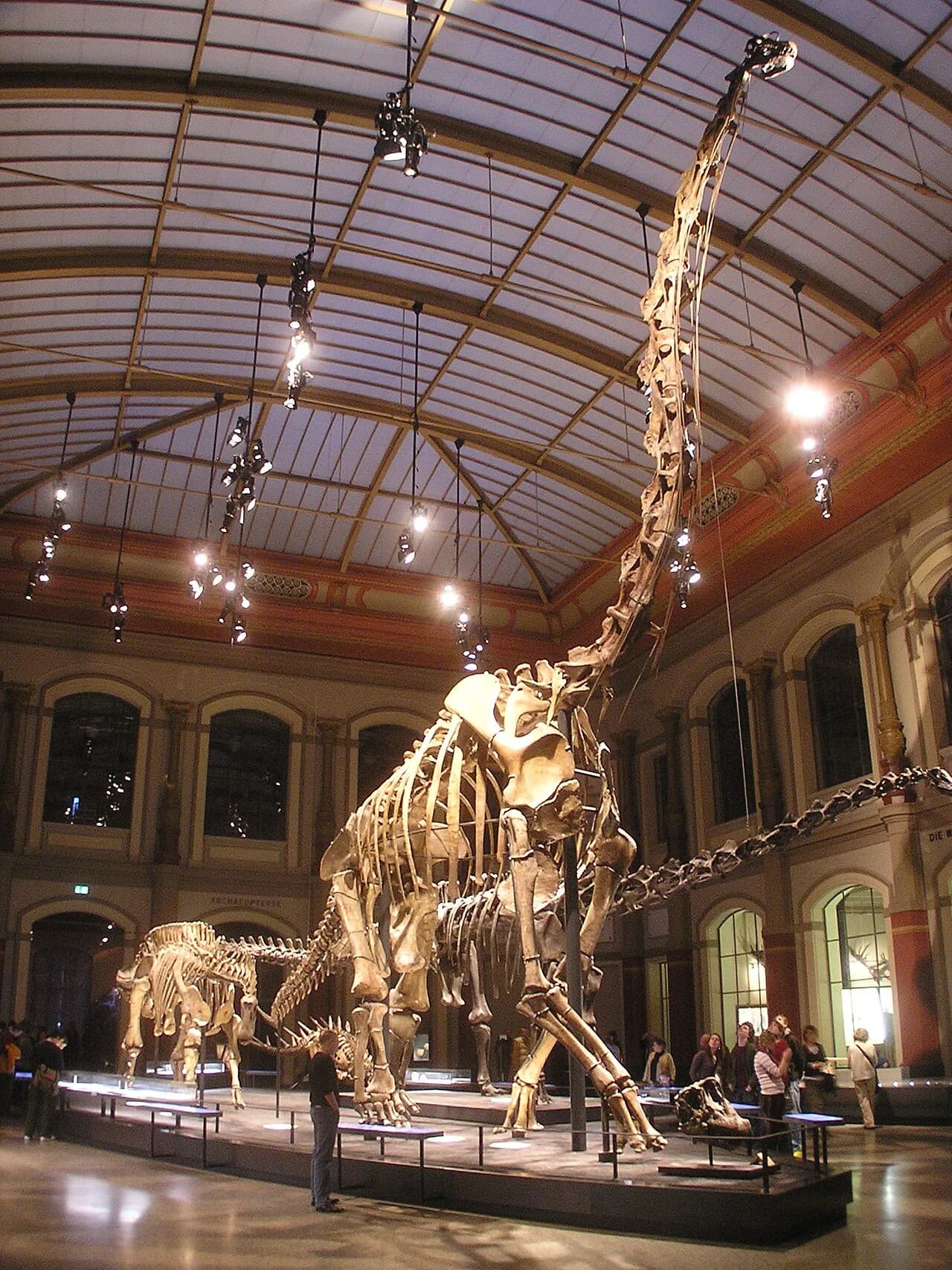
Mounted skeleton of Giraffatitan at the Naturkundemuseum Berlin
Wikimedia Commons