Camarasaure
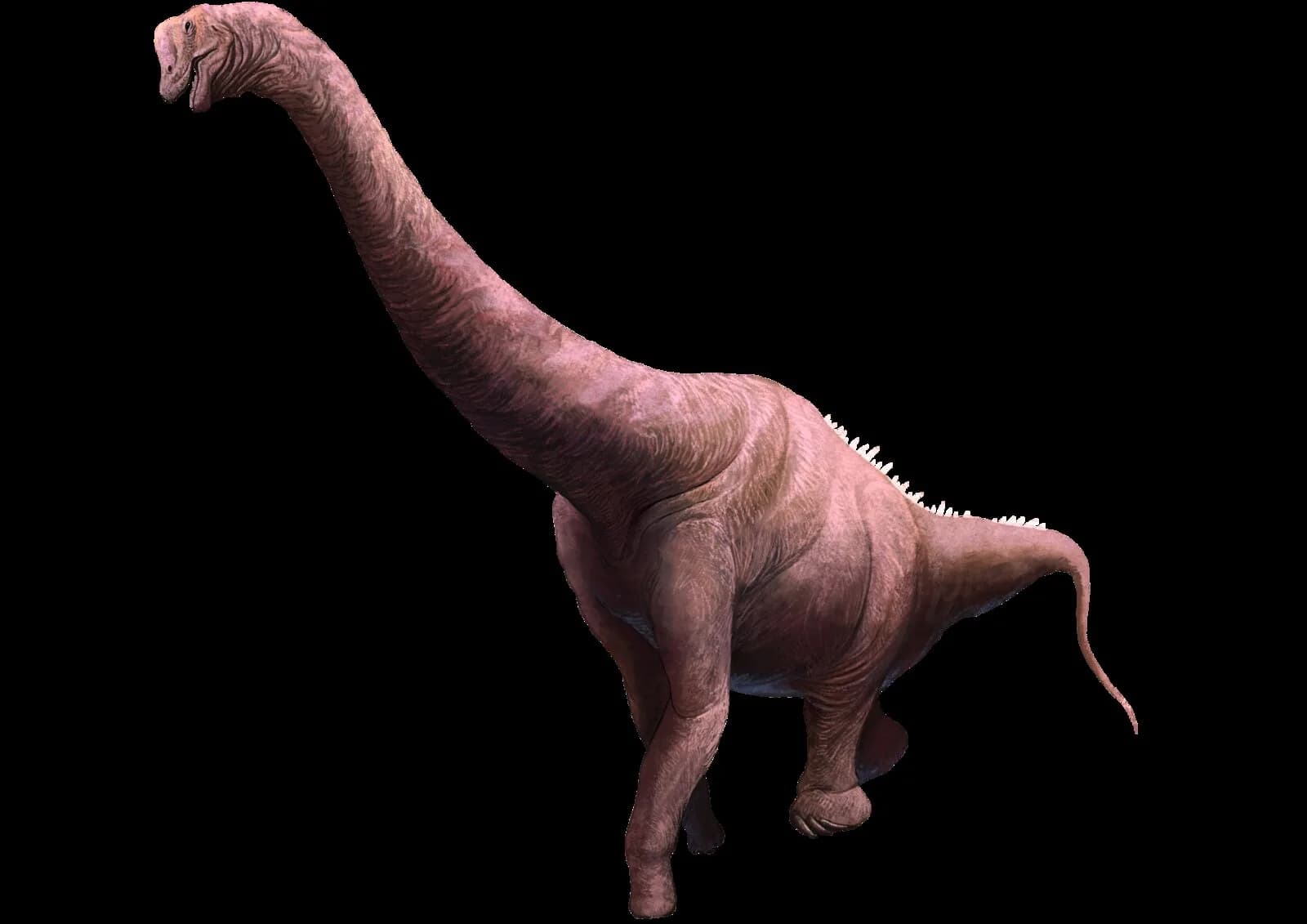
Camarasaurus supremus is the most abundant sauropod of the Morrison Formation: its fossils there outnumber those of Diplodocus and Brachiosaurus combined. At 15 to 18 metres and 15 to 47 tonnes, it browsed Colorado, Utah, Wyoming and New Mexico 155 to 145 million years ago. Its spatula-shaped teeth, the sturdiest of any sauropod, opened up tougher plants to it.
Camarasaurus lived during the Late Jurassic, approximately 155 to 145 million years ago, during the Kimmeridgian and Tithonian stages. This period corresponded to the peak of sauropod diversity in North America, an era often considered the golden age of sauropods. The climate was warm and semi-arid, with marked seasons alternating between wet and dry periods that influenced vegetation distribution and animal migration patterns. Camarasaurus shared its world with other giants like Apatosaurus, Diplodocus, and Brachiosaurus, forming one of the richest large herbivore ecosystems in Earth's history.
Camarasaurus measured between 15 and 23 meters long depending on the species, with an estimated weight of 15 to 25 tonnes. It was a moderately sized sauropod compared to its neighbors like Diplodocus or Brachiosaurus. Its skull measured about 60 centimeters long, with broad nostrils situated atop the skull and robust jaws equipped with spatula-shaped teeth. Its neck was relatively short for a sauropod, but thick and powerful, supported by massive cervical vertebrae. Its overall build was stockier and more robust than the slender diplodocids, giving it a distinctive silhouette among the Morrison Formation sauropods.
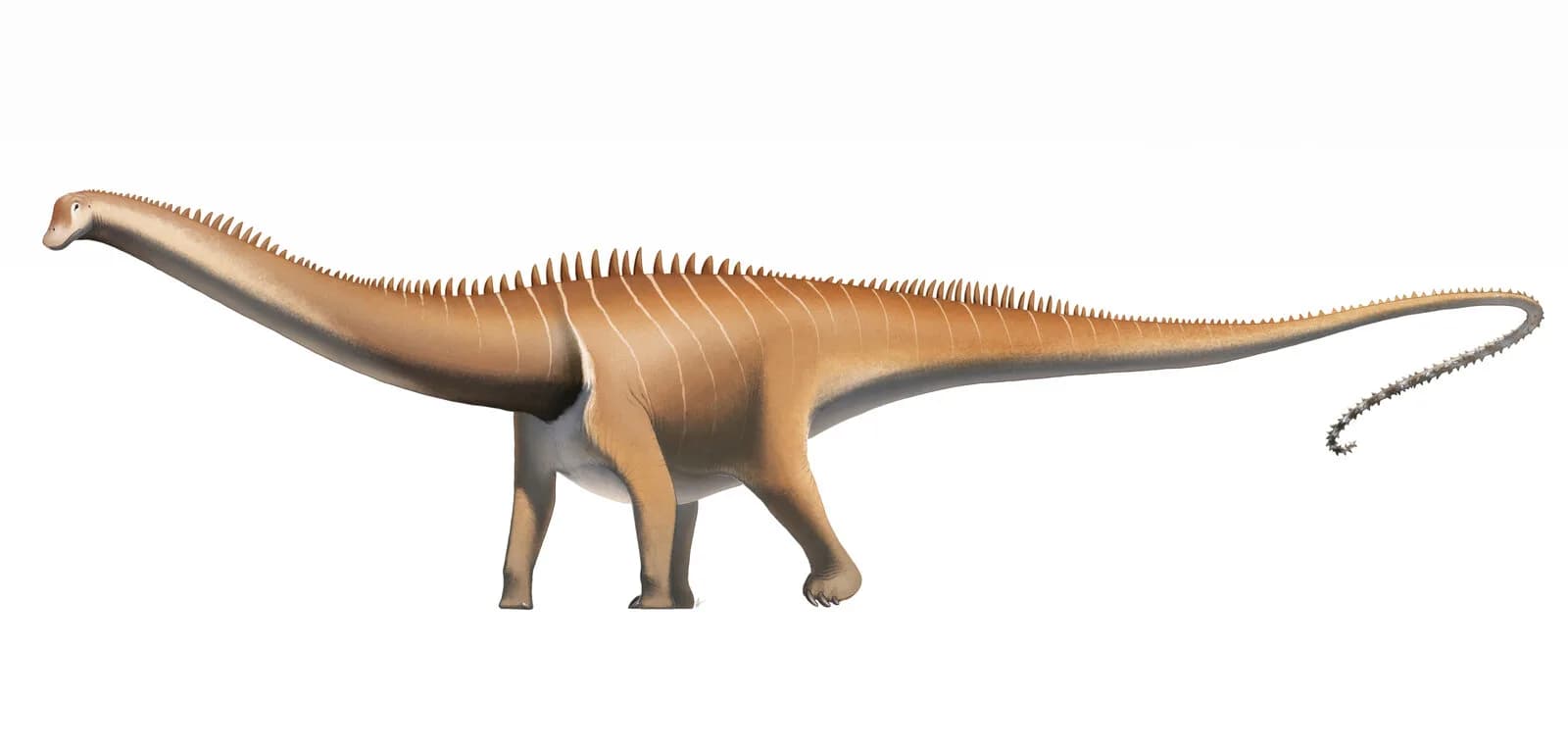
Camarasaurus was a herbivore whose robust dentition allowed it to consume tougher vegetation than that eaten by the delicate-snouted diplodocids. Its large spatulate teeth, measuring up to 19 centimeters, could cut and grind thick conifer leaves, cycads, and tree ferns. Unlike Diplodocus, which stripped leaves with its comb-like teeth, Camarasaurus could chew its food more effectively, processing harder plant material before swallowing. This dietary difference allowed these two sauropods to coexist by exploiting distinct ecological niches, reducing direct competition for food resources in their shared Morrison Formation habitat.
Camarasaurus was the most common sauropod of the Morrison Formation, which extended across the western United States, from Montana to New Mexico. This environment included alluvial plains, seasonal rivers, and forests of conifers and ferns. Camarasaurus probably preferred denser, taller vegetation areas, using its powerful neck to feed at moderate heights. Its great abundance in the fossil record suggests it was perfectly adapted to the semi-arid conditions of Jurassic western North America. The seasonal nature of the climate may have prompted herds to undertake migrations between regions with available water and vegetation throughout the year.
The name Camarasaurus means 'chambered lizard,' referring to the hollow cavities (pleurocoels) in its vertebrae that considerably lightened its skeleton. Its skull was shorter and more robust than those of diplodocids, with characteristically large nasal openings. Its cervical vertebrae were broad and solid, supporting a less flexible but more powerful neck. Its forelimbs and hindlimbs were of relatively similar length, giving it a more horizontal dorsal profile than Brachiosaurus. Its tail was shorter than that of Diplodocus and did not form a whip.
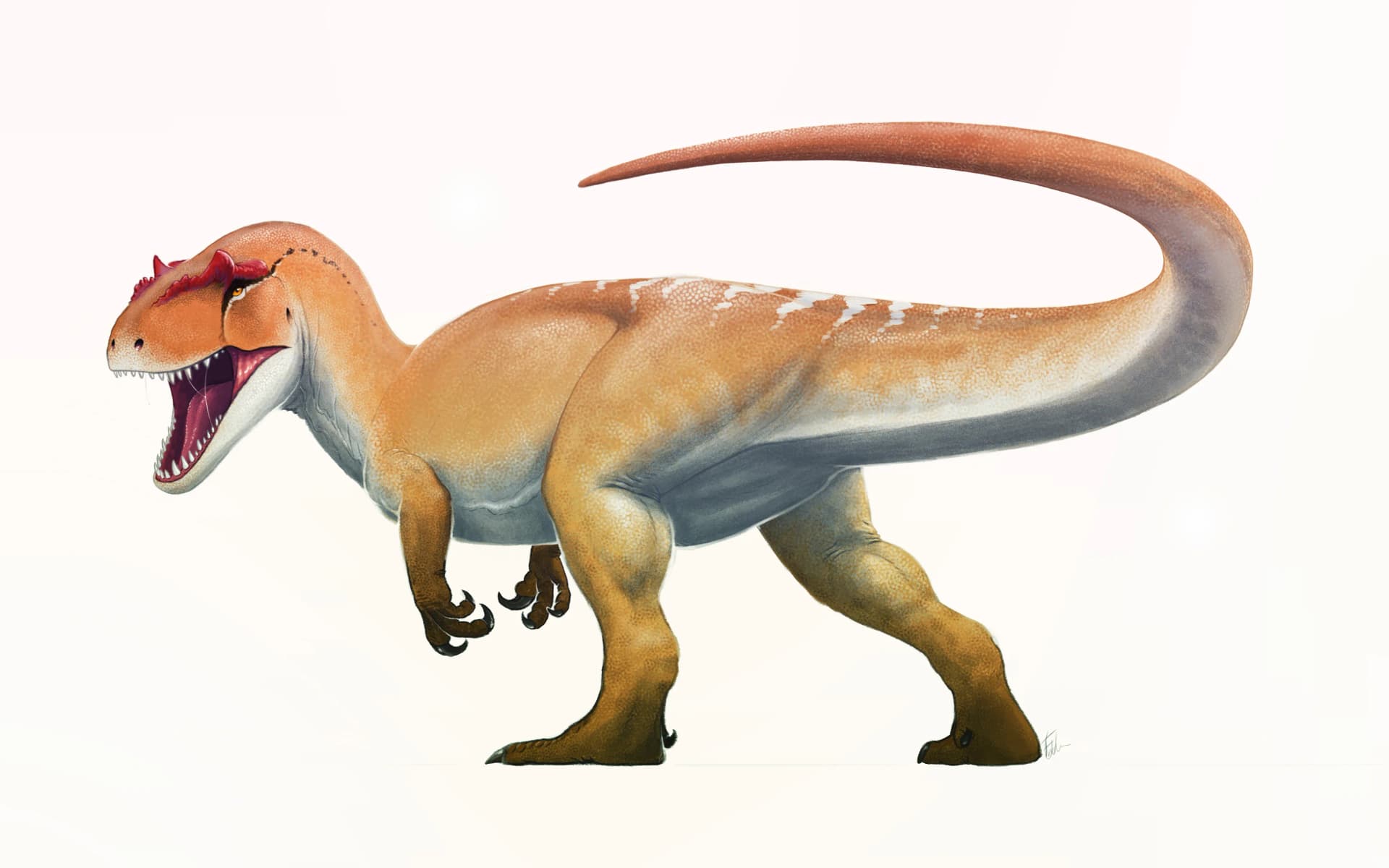
Camarasaurus lived in herds of varying sizes, as suggested by numerous fossil sites containing multiple individuals of different ages. Evidence of colonial nesting has been found, indicating that females gathered to lay their eggs in common areas. Juveniles grew rapidly and probably stayed with the herd for protection from predators like Allosaurus. Its locomotion was slow but steady, with the herd moving between grazing areas according to seasons and vegetation availability. Isotopic analyses of its teeth suggest seasonal migrations between lowland and highland areas in search of fresh forage and water sources.
Camarasaurus was first described in 1877 by Edward Drinker Cope, based on isolated vertebrae found in Colorado during the famous 'Bone Wars' against Othniel Charles Marsh. It is the best-represented sauropod in the North American fossil record, with dozens of specimens ranging from juvenile to adult. The most notable specimen is a nearly complete juvenile skeleton (CM 11338) displayed at the Carnegie Museum of Natural History. Four species are recognized: C. supremus, C. grandis, C. lentus, and C. lewisi, testifying to the diversity of this widespread genus in the Morrison Formation.
| Period | Jurassique supérieur / Late Jurassic |
| Era | Mésozoïque / Mesozoic |
| Age | 155–145 Ma |
| Location | Amérique du Nord / North America (Colorado, Utah, Wyoming, New Mexico) |
| Length | 15–18 m |
| Height | ~5 m |
| Weight | 15 000–47 000 kg |
| Diet | Herbivore |
| Discovery | 1877 |
Camarasaurus supremus measured 15 to 18 meters long and weighed 15,000 to 47,000 kg. Its robust 60 cm skull with 19 cm spatulate teeth allowed it to grind tough vegetation that the delicate-snouted Diplodocus could not consume. Both sauropods coexisted in the Morrison Formation by exploiting distinct feeding niches.
Camarasaurus lived during the Late Jurassic, 155 to 145 million years ago, across the western United States (Colorado, Utah, Wyoming, New Mexico). Edward Drinker Cope first described it in 1877 from vertebrae found in Colorado during the famous Bone Wars against Othniel Charles Marsh. It is the best-represented sauropod in the North American fossil record.
The name Camarasaurus means 'chambered lizard,' referring to the hollow cavities (pleurocoels) in its vertebrae. These chambers considerably reduced skeletal mass while maintaining structural strength, an essential adaptation for an animal of 15 to 47 tonnes. This vertebral pneumatization system is shared with modern birds and represents a key anatomical innovation among sauropods.
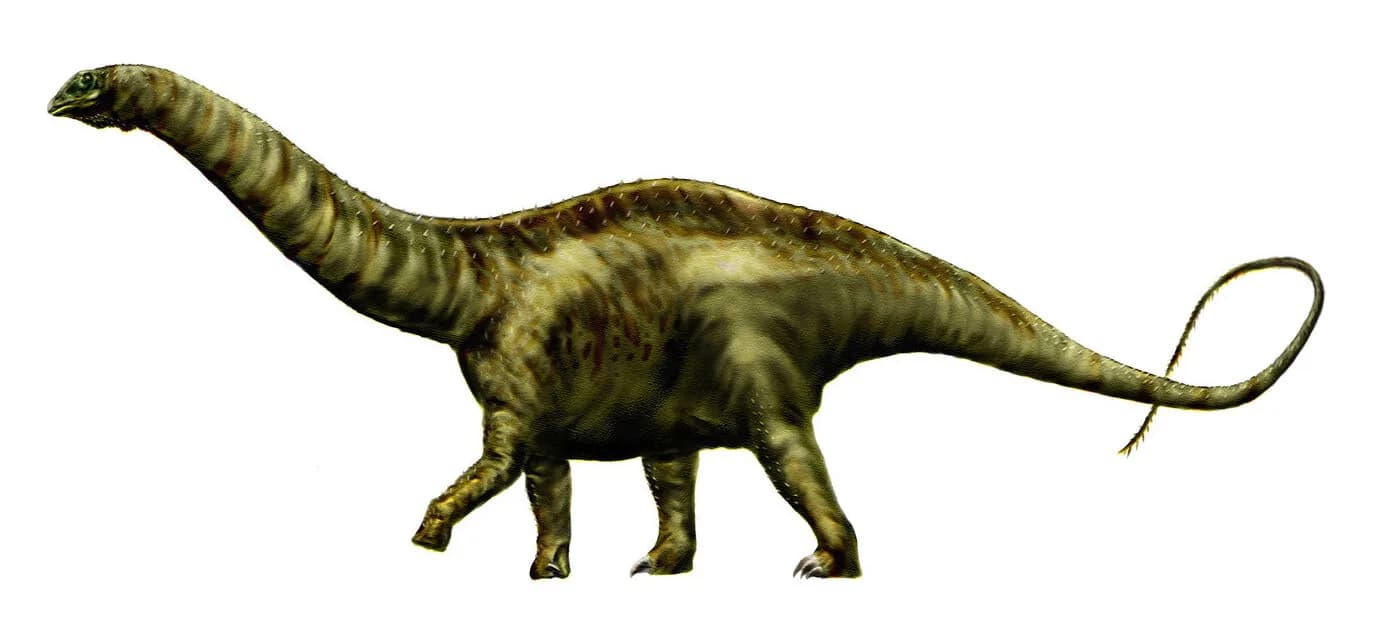
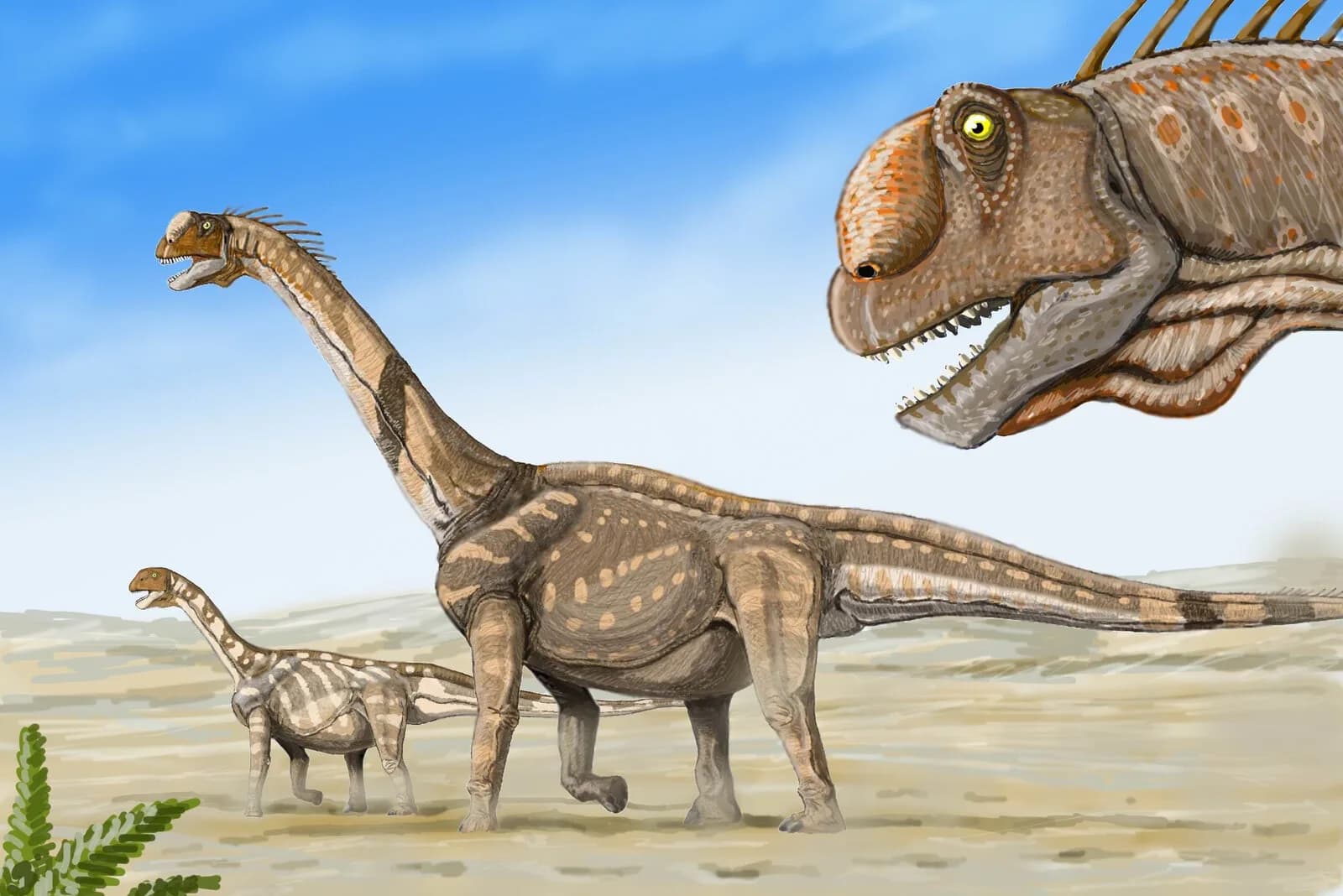
Life reconstruction of Camarasaurus supremus
Dmitry Bogdanov, CC BY 3.0, via Wikimedia Commons
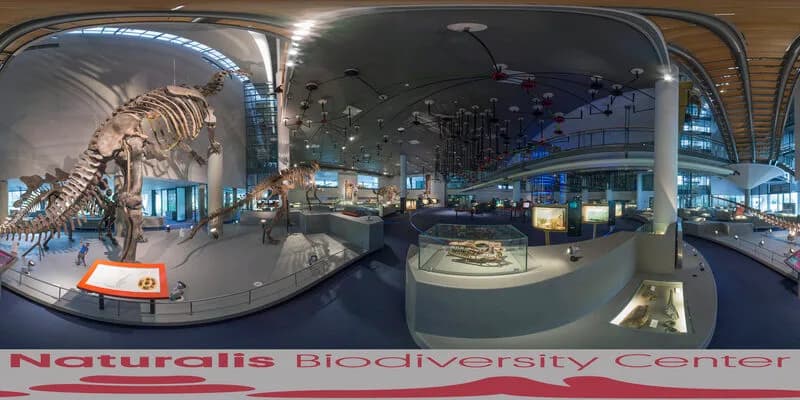
Camarasaurus skeleton at Naturalis Biodiversity Center
Henk Caspers/Naturalis, CC BY-SA 3.0