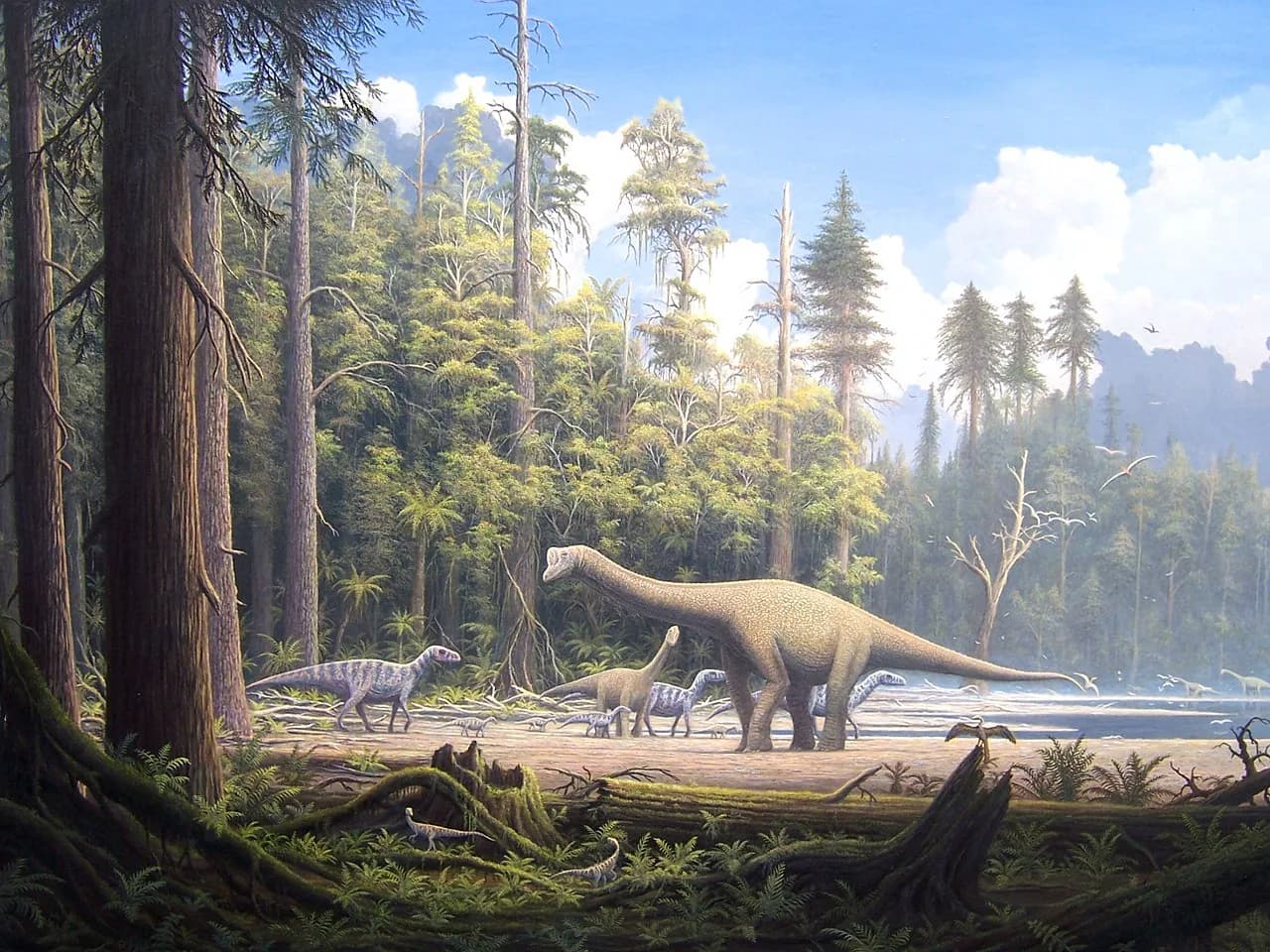
Europasaurus
Europasaurus holgeri did not exceed 6 metres, making it one of the smallest known sauropods: ten times lighter than its cousin Camarasaurus. Described in 1998 in Lower Saxony, it lived around 154 million years ago on an island of the European Jurassic archipelago. It is one of the best established cases of insular dwarfism among dinosaurs.
Europasaurus lived in the Late Jurassic, approximately 154 million years ago, during the Kimmeridgian stage. It inhabited what is now northern Germany, a region that at the time formed a tropical archipelago of islands in the shallow sea covering much of central Europe. This period corresponds to the global heyday of sauropods, with giants like Brachiosaurus and Diplodocus dominating the continents. Yet Europasaurus took a radically different evolutionary path: isolated on an island, it became a dwarf sauropod, a noteworthy phenomenon of insular adaptation. The Kimmeridgian European climate was warm and humid, with islands covered in lush conifer and fern vegetation.
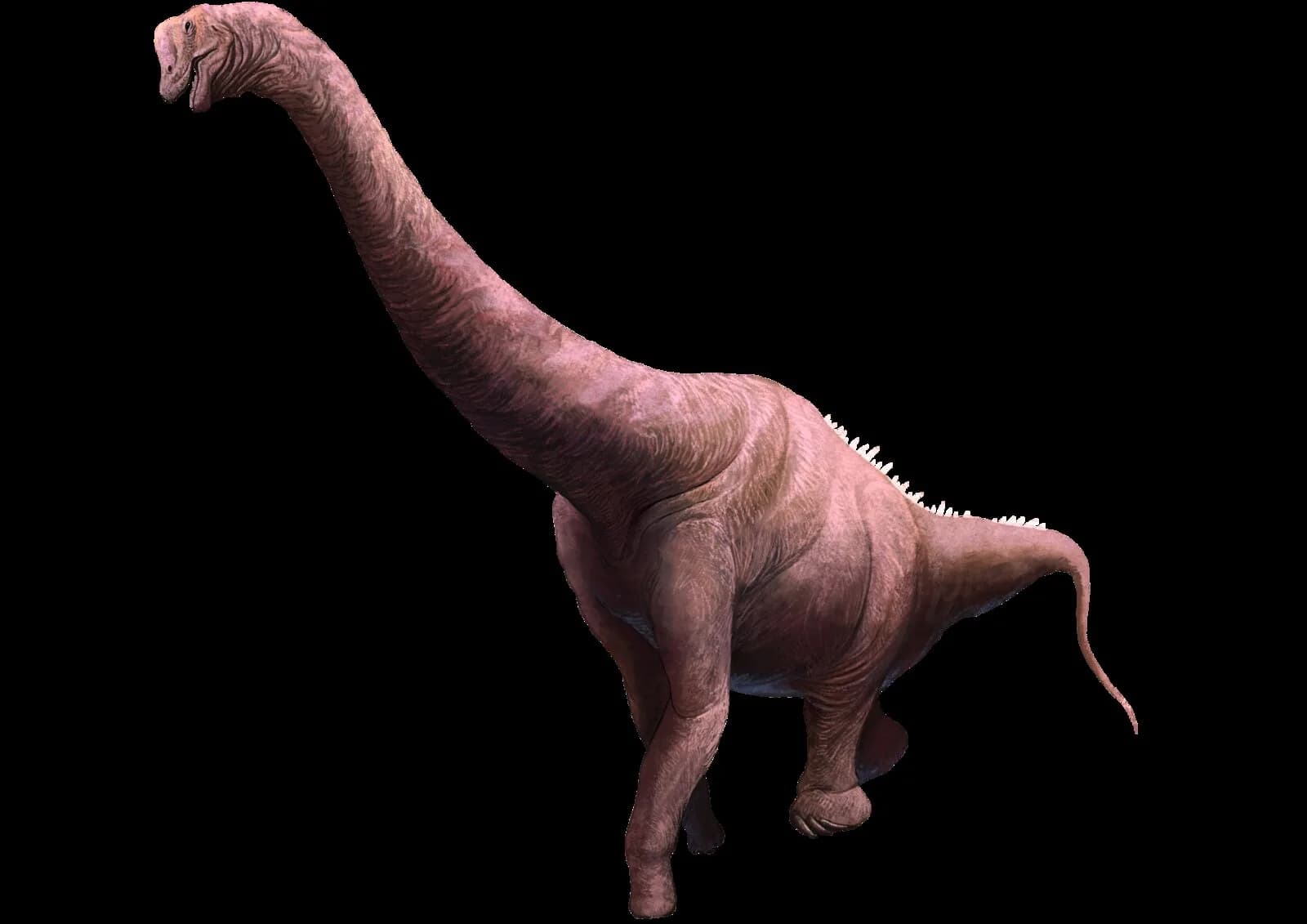
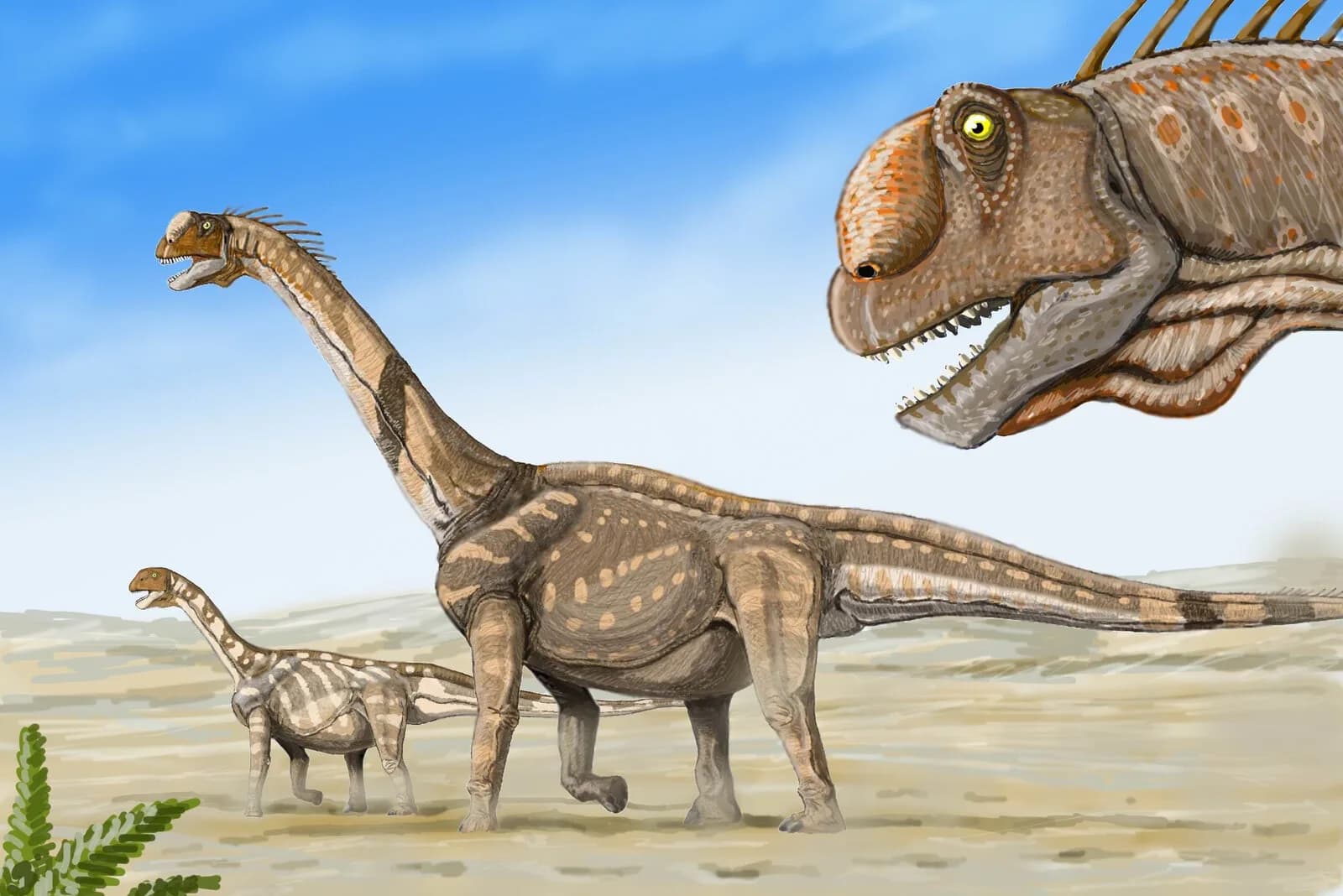
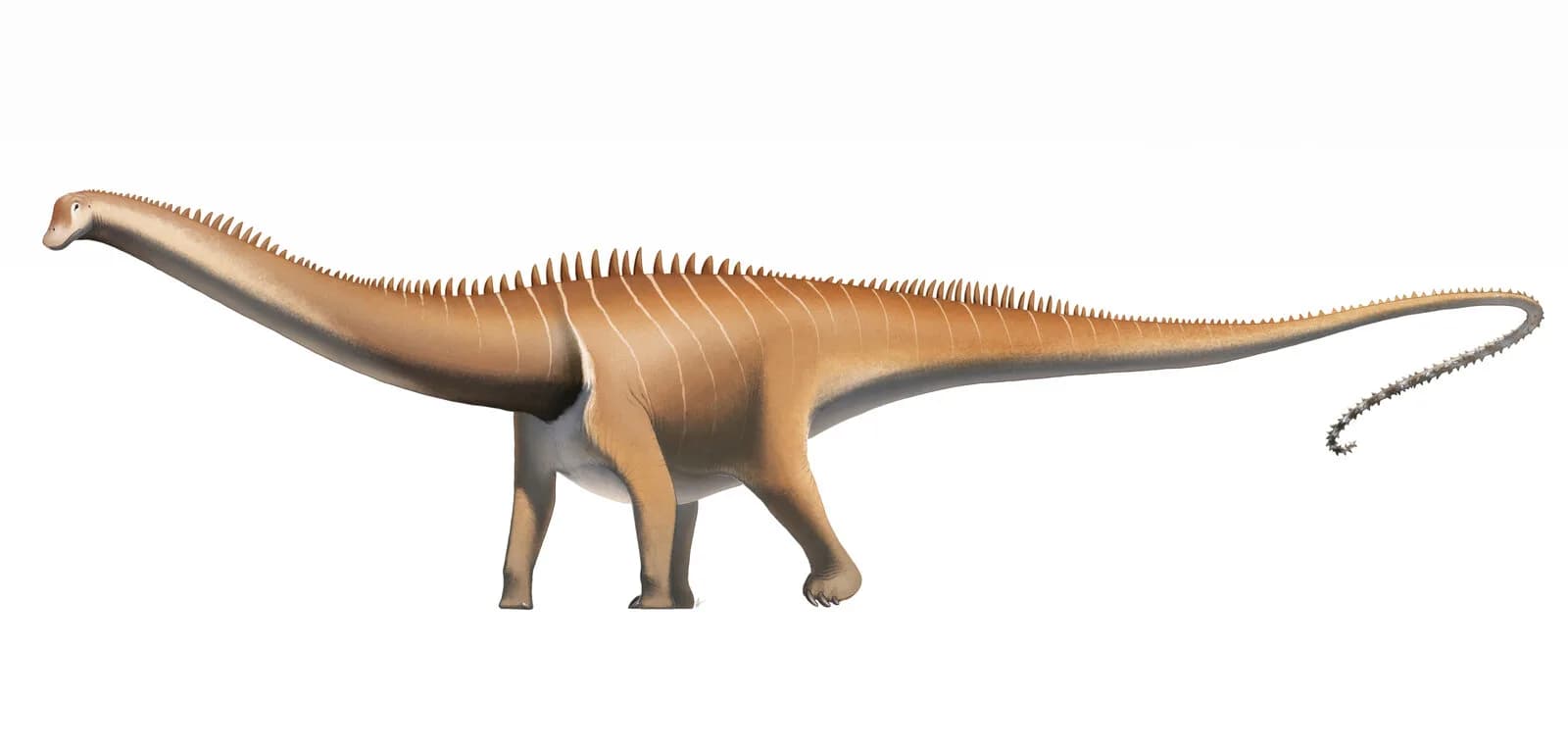
Europasaurus is remarkable for its small size for a sauropod: only 6 meters long as an adult and an estimated weight of 800 to 1,000 kilograms. It is one of the smallest sauropods ever discovered, a true dwarf among giants. For comparison, its close relative Camarasaurus reached 15 to 23 meters long and weighed over 20 tonnes. This spectacular size reduction, by a factor of ten in body mass, is the result of insular dwarfism, an evolutionary phenomenon well documented in mammals but rarely observed in dinosaurs. Juveniles measured barely 1 to 2 meters long, about the size of a large dog. The shoulder height did not exceed 1.5 meters in adults, a modest stature that contrasts sharply with the classic image of titanic sauropods.
A strict herbivore, Europasaurus fed on the vegetation available on its island, mainly low conifers, ferns, horsetails, and cycads. Its spatulate teeth, similar to those of Camarasaurus but proportionally reduced, were adapted for stripping and grinding tough leaves. The limited availability of plant resources on a relatively small island is precisely the evolutionary factor that led to its size reduction: a smaller animal requires less daily food. It is estimated that an adult Europasaurus consumed about 15 to 30 kilograms of plant matter per day, a fraction of what a large continental sauropod required. Its moderately long neck nevertheless allowed it to sweep an efficient zone of vegetation without moving its entire body.
Europasaurus lived on an island in the archipelago that dotted the shallow sea covering much of Europe during the Late Jurassic. This island, located in what is now Lower Saxony in Germany, was part of a chain of tropical islands surrounded by warm, shallow waters. The insular environment was characterized by conifer and fern forests, with rivers and wetlands fed by abundant tropical rainfall. The geographic isolation of this island created ideal conditions for insular dwarfism, a phenomenon where large animals evolve toward smaller sizes in response to limited resources. The Langenberg quarry near Goslar, where the fossils were discovered, preserves a complete insular ecosystem with several endemic dwarf species.
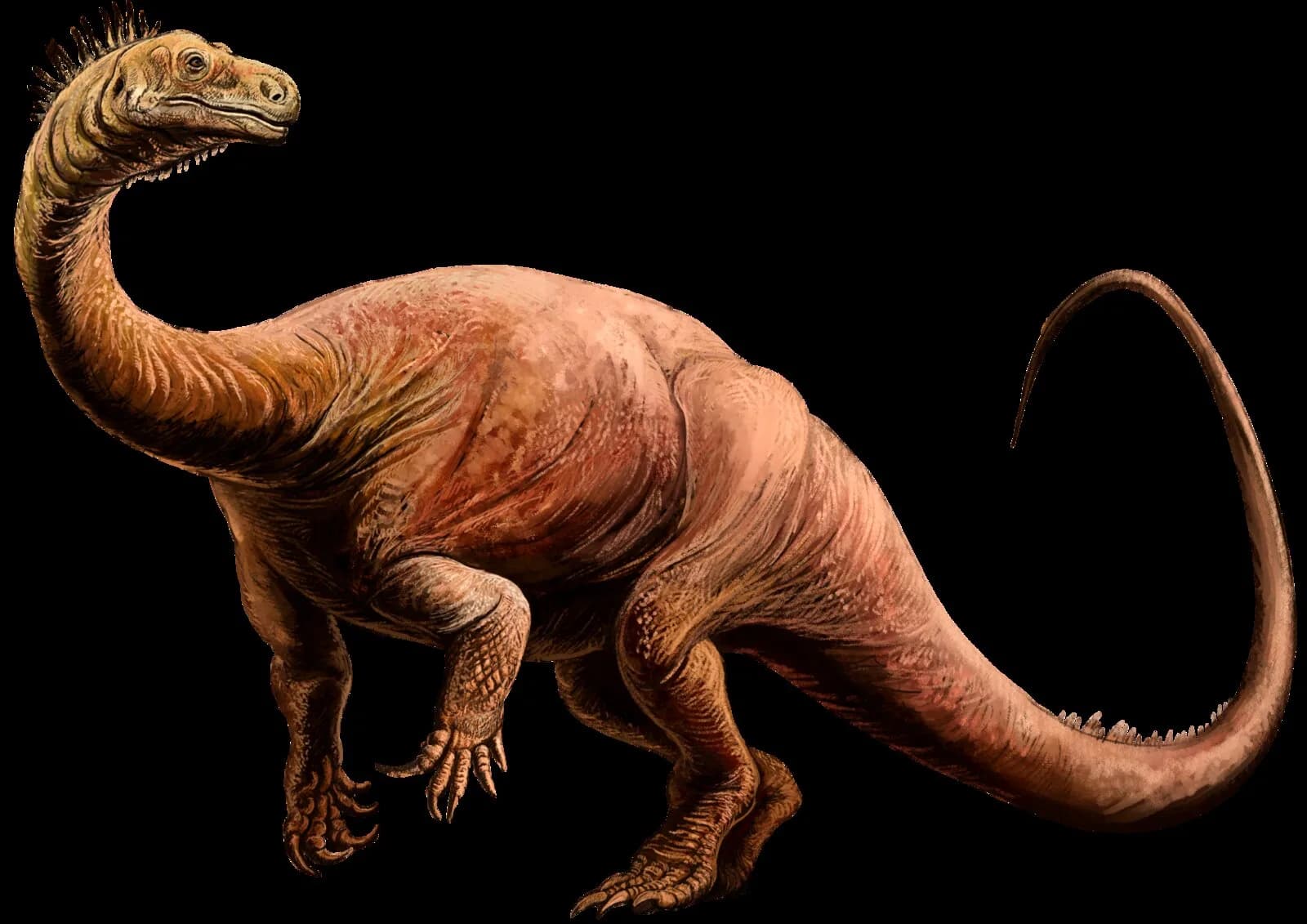
Europasaurus exhibited the typical morphology of a basal macronarian, with a robust body, four columnar limbs, a moderately long neck, and a tail serving as a counterbalance. Its skull, proportionally larger than that of giant sauropods relative to its body, contained broad nostrils and well-developed orbits. Histological analyses of its bones were crucial in proving that these were indeed dwarf adults and not juveniles of larger species: lines of arrested growth in the long bones demonstrate that these individuals had reached their final size. Its vertebrae showed moderate pneumatization, with air-filled cavities that lightened the skeleton. The structure of its limbs indicates obligate quadrupedal locomotion, with proportions similar to those of Camarasaurus but at a reduced scale.
Europasaurus probably lived in small herds, as suggested by the discovery of multiple individuals of different ages at the same Langenberg deposit. The presence of juveniles, sub-adults, and adults together indicates gregarious behavior with a social structure including multiple generations. On an island with limited resources, group living offered protection against local predators, notably small theropods that shared the insular ecosystem. Growth analyses reveal that juveniles grew relatively quickly during their first years before slowing considerably, reaching maturity in about eight to ten years. This pattern of accelerated then slowed growth is typical of insular animals that must quickly reach a viable size in a resource-constrained environment.
The fossils of Europasaurus were discovered in 1998 at the Langenberg quarry, near Goslar in Lower Saxony, northern Germany. The site has yielded the remains of at least 11 individuals, ranging from 1-meter juveniles to 6-meter adults, providing an exceptional view of this species' growth. The genus was officially described in 2006 by P. Martin Sander and colleagues, who demonstrated through histological analyses that the small specimens were indeed dwarf adults and not juveniles. The species name 'holgeri' honors Holger Lüdtke, an amateur paleontologist who discovered the first bones. The Langenberg quarry continues to yield exceptional fossil material, including cranial, vertebral, and appendicular elements that make Europasaurus one of the best-documented dwarf sauropods in the world.
| Period | Jurassique supérieur / Late Jurassic (Kimméridgien) |
| Era | Mésozoïque / Mesozoic |
| Age | ~154 Ma |
| Location | Europe (Basse-Saxe, Allemagne) / Europe (Lower Saxony, Germany) |
| Diet | Herbivore |
| Discovery | 1998 |
Europasaurus holgeri measured only 6 meters long and weighed between 800 and 1,000 kilograms — tiny compared to its sauropod cousins. This reduced size results from island dwarfism: the animal lived on a Tethys island (Late Jurassic Europe, ~154 Ma) with limited resources. Natural selection favored smaller individuals in this restricted space.
Europasaurus holgeri fossils were found in 1998 at the Langenberg quarry near Goslar, Lower Saxony, Germany. The site yielded remains of at least 11 individuals of different ages in the same layers. The species name honors Holger Lüdtke, the amateur who first recognized the bones. The official scientific description dates to 2006.
Europasaurus holgeri was a strict herbivore that fed on available island vegetation: low conifers, ferns, horsetails, and cycads. Its spatulate teeth, similar to those of Brachiosauridae, served for browsing and shearing vegetation. Its small size compared to large continental sauropods reflects adaptation to a more limited food supply on the Tethys island.
Life reconstruction of Europasaurus holgeri, a dwarf sauropod from the Late Jurassic
Gerhard Boeggemann, CC BY-SA 2.5
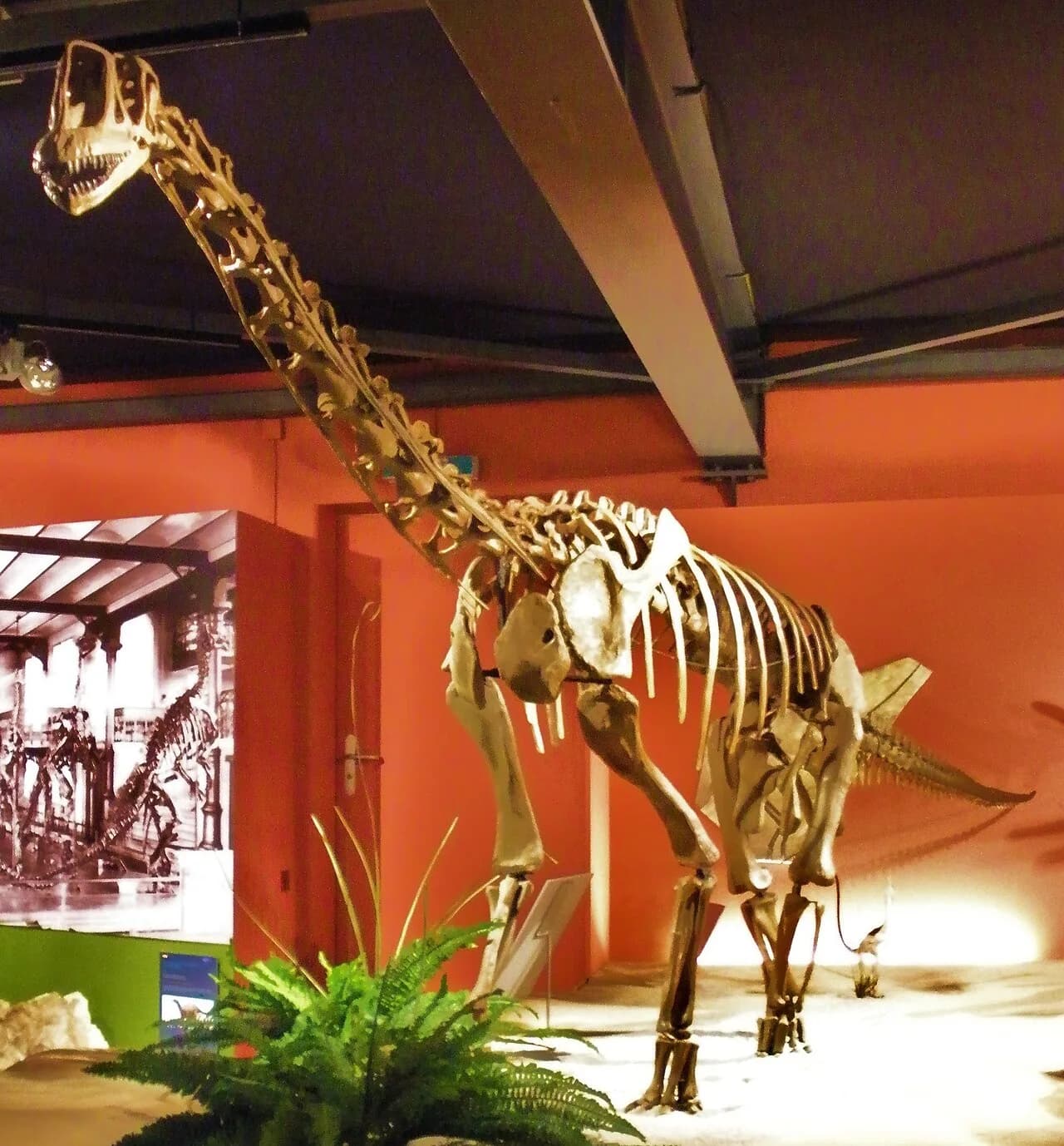
Reconstructed skeleton of Europasaurus holgeri at the Goslar museum
Wikimedia Commons