Lézard à épines géantes
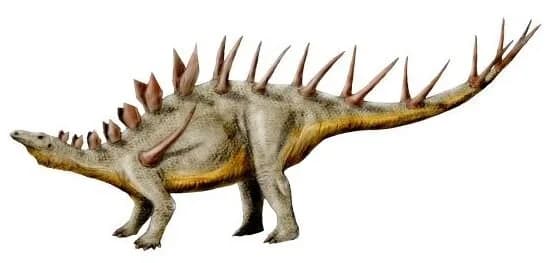
Gigantspinosaurus sichuanensis carried shoulder spikes longer than its own shoulder blade, a proportion unknown in other stegosaurs. Four to 5 metres long and 700 kilograms to a tonne, described in 1985 in Sichuan, it lived 160 to 155 million years ago. Unlike Stegosaurus its back plates were tiny: its defence started at the shoulders.
Gigantspinosaurus lived during the Late Jurassic, approximately 160 to 155 million years ago, in what is now Sichuan Province, China. This stegosaurian was distinguished from all its relatives by its immense shoulder spines, proportionally the largest of any known stegosaur. It lived in the lush environments of the Shaximiao Formation, a rich ecosystem that housed an extraordinary diversity of dinosaurs. Gigantspinosaurus was contemporary with other Chinese stegosaurs like Tuojiangosaurus and Chungkingosaurus, illustrating the spectacular diversification of this group in Asia during the Late Jurassic, a period often considered the golden age of stegosaurs.
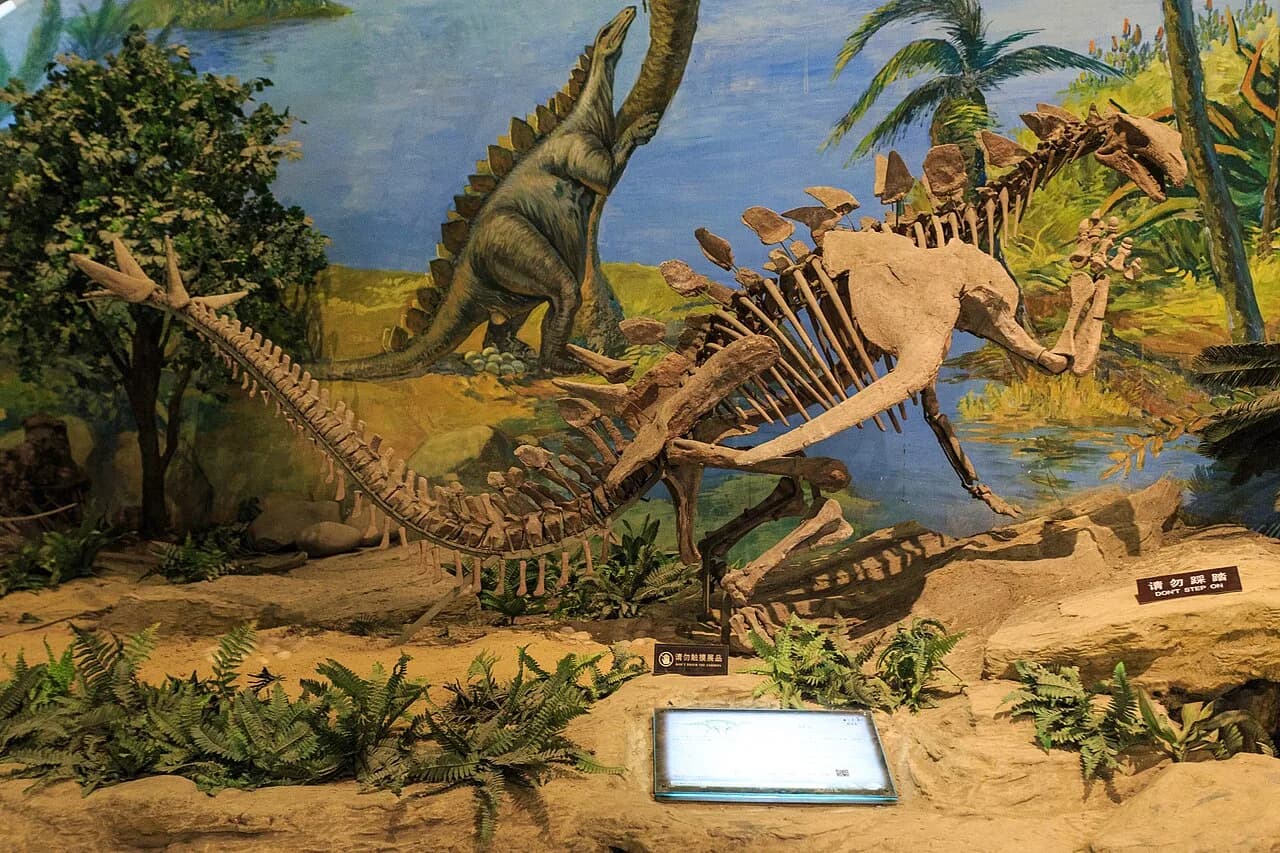
Gigantspinosaurus was a medium-sized stegosaurian, measuring approximately 4 to 5 meters long with an estimated weight between 700 kilograms and one tonne. Its height at the back, including the small dorsal plates, reached approximately 2 meters. Despite its relatively modest size compared to larger stegosaurs like Stegosaurus stenops which could reach 9 meters, Gigantspinosaurus more than compensated with its spectacular defensive armament. Its shoulder spines, veritable bony sabers, could measure up to 65 centimeters each, exceeding the length of the shoulder blade itself, a size ratio unique among all known armored dinosaurs.
Gigantspinosaurus was an exclusive herbivore whose diet consisted of the low-growing vegetation of Jurassic China. Its small, narrow head, positioned close to the ground due to its natural body posture, was perfectly adapted for grazing on ferns, horsetails, mosses, and small cycads that formed the understory of Jurassic Sichuan forests. Its small, leaf-shaped teeth were adapted for shearing tender plant material but not for extensive grinding, indicating dietary selection toward the tenderest and most nutritious plants. Like most stegosaurs, it could not raise its head very high and was limited to ground-level vegetation.
Gigantspinosaurus inhabited the alluvial plains and riverine forests of the Upper Shaximiao Formation in the Sichuan Basin of central China. This environment was characterized by meandering rivers bordered by conifer forests, ginkgos, and tree ferns, under a warm, seasonal climate alternating between wet and dry periods. The richness of this ecosystem is attested by the extraordinary diversity of dinosaurs found in the same formation, including the sauropods Mamenchisaurus and Omeisaurus, the theropod Yangchuanosaurus, and several other stegosaurs. The Zigong Dinosaur Museum, built on the very site of these discoveries, testifies to the exceptional fossil productivity of this region.
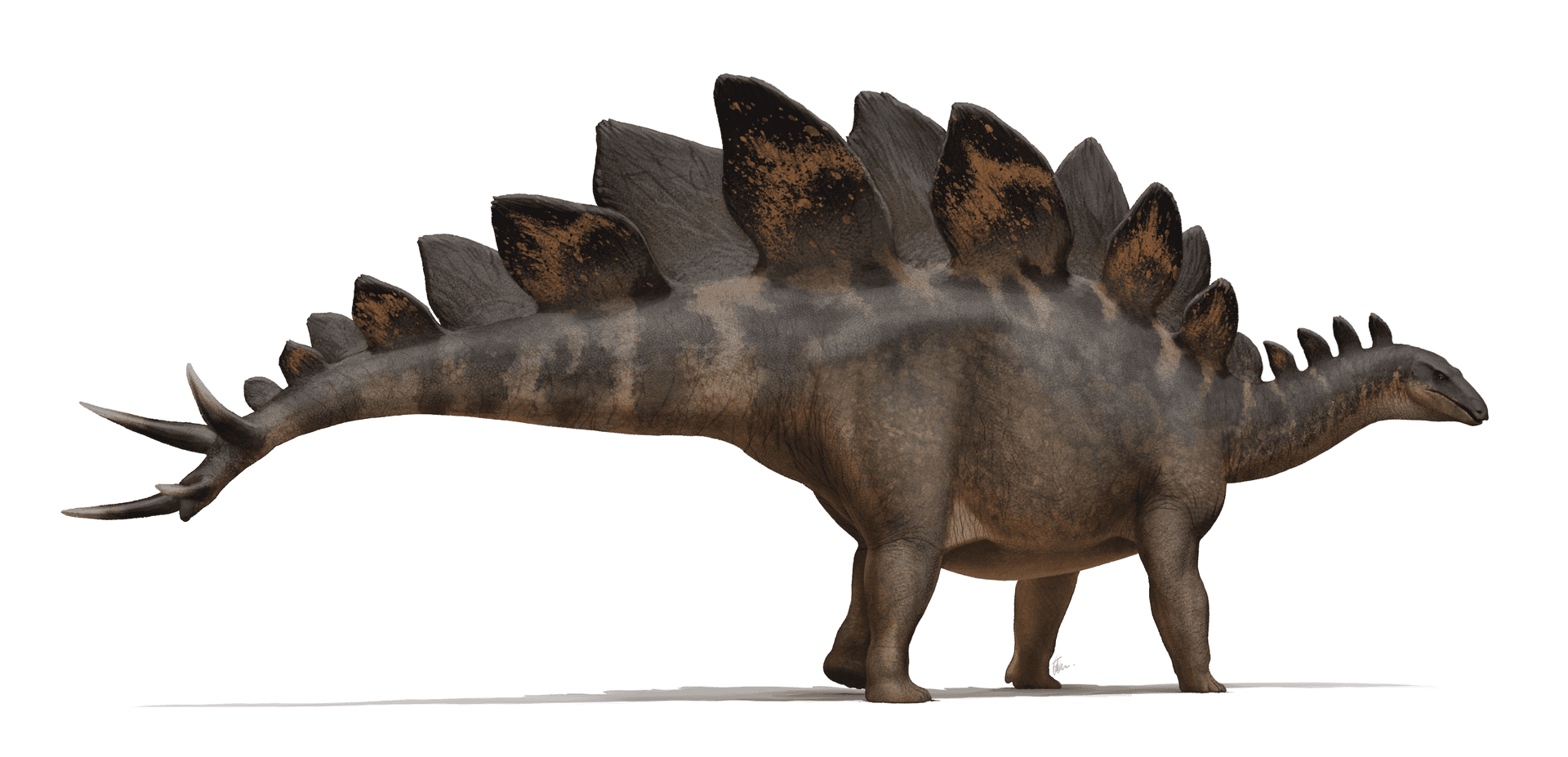
The anatomy of Gigantspinosaurus is dominated by its spectacular defensive structures, among the most impressive of all ornithischian dinosaurs. Its parascapular shoulder spines, by far its most remarkable feature, were flattened, pointed osteoderms that rose laterally from the scapular region, forming formidable defensive weapons. Unlike Stegosaurus which bore large dorsal plates and caudal spikes, Gigantspinosaurus possessed relatively small dorsal plates but compensated with considerably oversized shoulder spines. Its tail ended with the classic stegosaur thagomizer — two pairs of caudal spikes. Its skull was small and narrow, with a toothless beak at the front followed by small foliate teeth.
The behavior of Gigantspinosaurus was likely centered on two imperatives: feeding on low vegetation and defending against the large predatory theropods of its ecosystem. Its giant shoulder spines constituted a formidable defensive system that complemented the classic caudal spikes of stegosaurs. Facing a predator like Yangchuanosaurus, it could present its lateral profile to maximize the visual deterrent effect of its spines, then use its spike-armed tail to repel any persistent aggressor. The spines probably also served as intraspecific visual signals, perhaps covered in colored keratin for displays or recognition. It grazed slowly while moving through the understory, possibly in small herds.
The first fossils of Gigantspinosaurus were discovered in 1985 in the Upper Shaximiao Formation near Zigong in Sichuan Province, China. The species was initially briefly described by Ouyang Hui in 1992 but remained long obscure and viewed with skepticism by some Western paleontologists who doubted the existence of such oversized spines. It was not until 2006, with a detailed redescription and publication of convincing photographs, that Gigantspinosaurus was fully accepted by the international scientific community. The holotype specimen, comprising a partial skeleton with the spectacular scapular spines, is displayed at the Zigong Dinosaur Museum. Recent phylogenetic studies place it among the most basal stegosaurians.
| Period | Jurassique supérieur / Late Jurassic (Oxfordien) |
| Era | Mésozoïque / Mesozoic |
| Age | 160–155 millions d'années / 160–155 million years ago |
| Location | Chine (Sichuan, Zigong) / China (Sichuan, Zigong) |
| Length | 4–5 m |
| Height | ~2 m |
| Weight | 700 kg – 1 tonne |
| Diet | Herbivore |
| Discovery | 1985 |
Gigantspinosaurus sichuanensis bore parascapular spines — flattened osteoderms rising laterally from the shoulders — measuring up to 65 cm, exceeding the length of the shoulder blade itself. This ratio is unique among all known stegosaurs. Unlike Stegosaurus stenops, which relied on large dorsal plates, Gigantspinosaurus compensated with oversized shoulder spines and relatively small dorsal plates — a radically different defensive strategy within the group.
Gigantspinosaurus sichuanensis was briefly described by Ouyang Hui in 1992 from fossils found in 1985 in the Upper Shaximiao Formation at Zigong (Sichuan, China). Its shoulder spines were so oversized that many Western paleontologists suspected a fossil misidentification. It was not until 2006, with a detailed redescription accompanied by convincing photographs, that the international scientific community fully accepted the animal. Validation thus took 14 years.
Gigantspinosaurus sichuanensis inhabited alluvial plains and riverine forests of the Upper Shaximiao Formation in the Sichuan Basin (China), 160 to 155 million years ago. It coexisted with sauropods Mamenchisaurus and Omeisaurus, as well as Yangchuanosaurus — a large 10-meter theropod and dominant predator of this Jurassic ecosystem. Its giant parascapular spines were likely its best defensive system against this apex predator, complemented by the classic thagomizer tail spikes.
Mounted skeleton of Gigantspinosaurus at the Zigong Dinosaur Museum
Wikimedia Commons
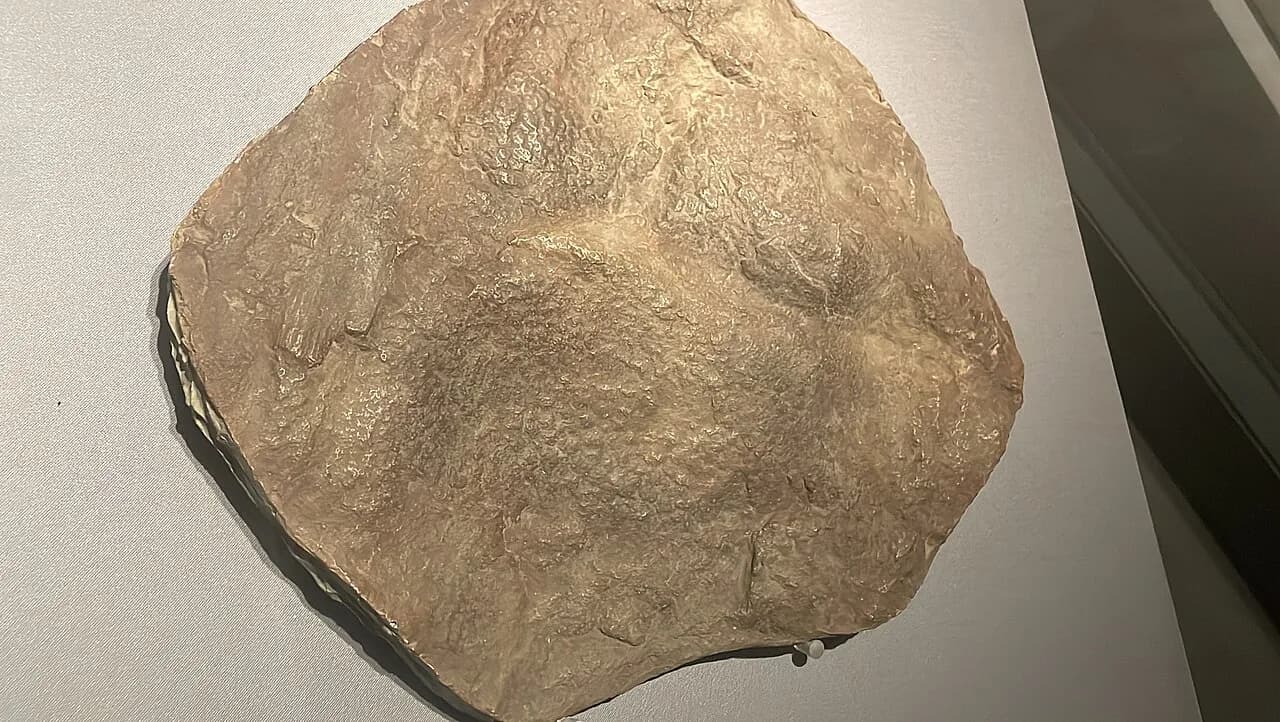
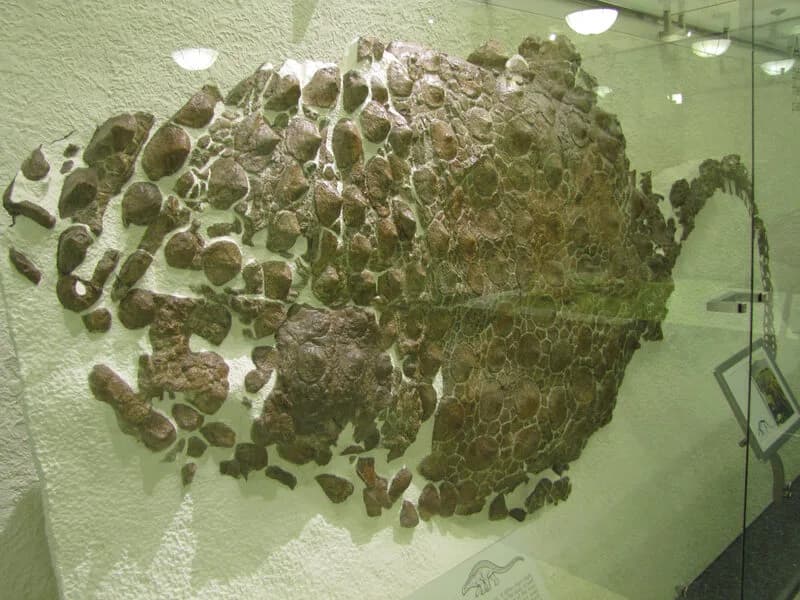
Fossil skin impression of Gigantspinosaurus sichuanensis
Wikimedia Commons