Scelidosaurus
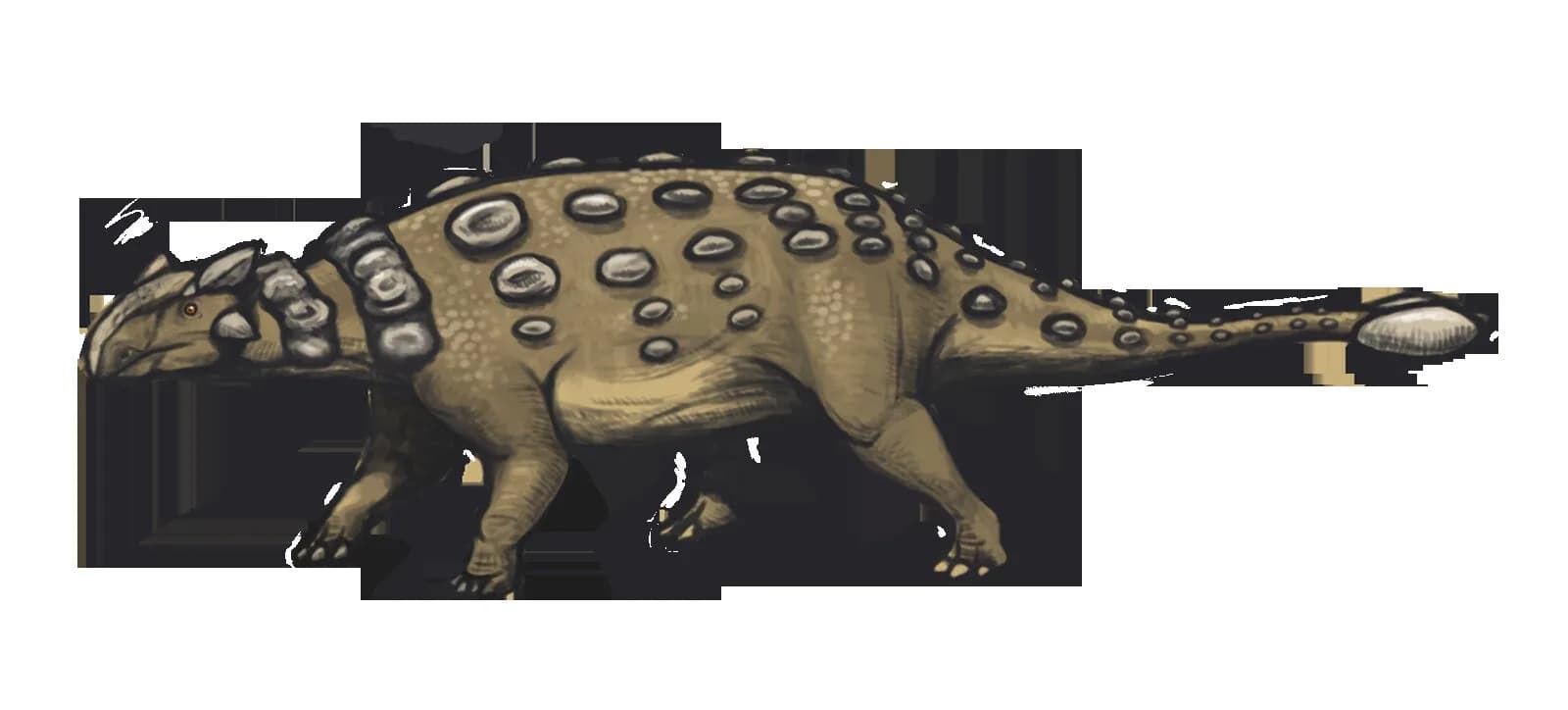
Scelidosaurus harrisonii is among the very first armoured dinosaurs: its osteoderm armour foreshadows that of the ankylosaurs and stegosaurs, which would appear only tens of millions of years later. It browsed Dorset, in England, around 191 million years ago, and may represent a stock common to both major lineages.
Scelidosaurus lived during the Early Jurassic period, approximately 191 million years ago (Sinemurian stage), making it one of the oldest known armored dinosaurs in the world. It belongs to the Thyreophora, the large group that would eventually give rise to the ankylosaurs and stegosaurs millions of years later. At this remote time, the continents were still grouped together in a fragmenting supercontinent, as Pangaea slowly began to break apart. Scelidosaurus coexisted with the first large theropod dinosaurs and herbivorous prosauropods in a world undergoing profound ecological transformation. Its basal phylogenetic position makes it a crucial witness to the early evolution of armored dinosaurs.
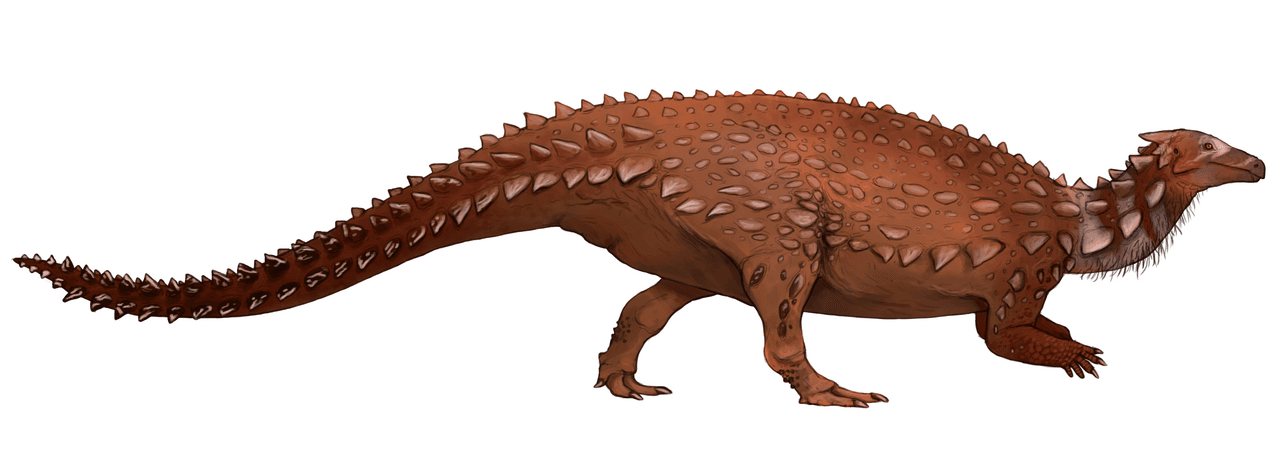
Scelidosaurus was a medium-sized dinosaur, reaching approximately 4 meters in length with an estimated weight of 270 kilograms, making it comparable in size to a large wild boar or small ox. Its silhouette was stocky and robust, with a broad body set low on sturdy legs, perfectly adapted for stable quadrupedal locomotion. The hind limbs were slightly longer than the forelimbs, giving the animal a slight forward-tilting posture. The skull was relatively small compared to the body, with a short and solid jaw. Its overall build reflected that of a peaceful browser, favoring sturdiness and passive defense over speed or agility in its daily movements through the Jurassic landscape.
An exclusive herbivore, Scelidosaurus fed on the low-growing vegetation of the Early Jurassic, primarily consisting of ferns, horsetails, cycads, and small conifers. Its horny beak at the front of the jaw allowed it to efficiently cut stems and plant fronds, while its small leaf-shaped teeth at the back provided rudimentary grinding of plant material before swallowing. The low position of its head, a consequence of its quadrupedal posture, naturally predisposed it to graze at ground level rather than reaching for taller vegetation. It is likely that Scelidosaurus used gastroliths to aid in the digestion of tough plant fibers within its digestive system, similar to many other herbivorous dinosaurs of the era.
Scelidosaurus inhabited the southern coast of present-day England, specifically in the Dorset region, along what is now the famous Jurassic Coast. During the Early Jurassic, this area was a subtropical coastal environment bordered by warm shallow seas, featuring beaches, lagoons, and littoral forest zones. The climate was significantly warmer and more humid than today, with no polar ice caps present anywhere on Earth. Coastal vegetation included conifer forests, cycad groves, and fern carpets that provided abundant food for herbivores like Scelidosaurus. Tidal currents and coastal processes likely contributed to the exceptional fossilization of its remains, washing carcasses into marine sediments where they were rapidly buried and preserved.
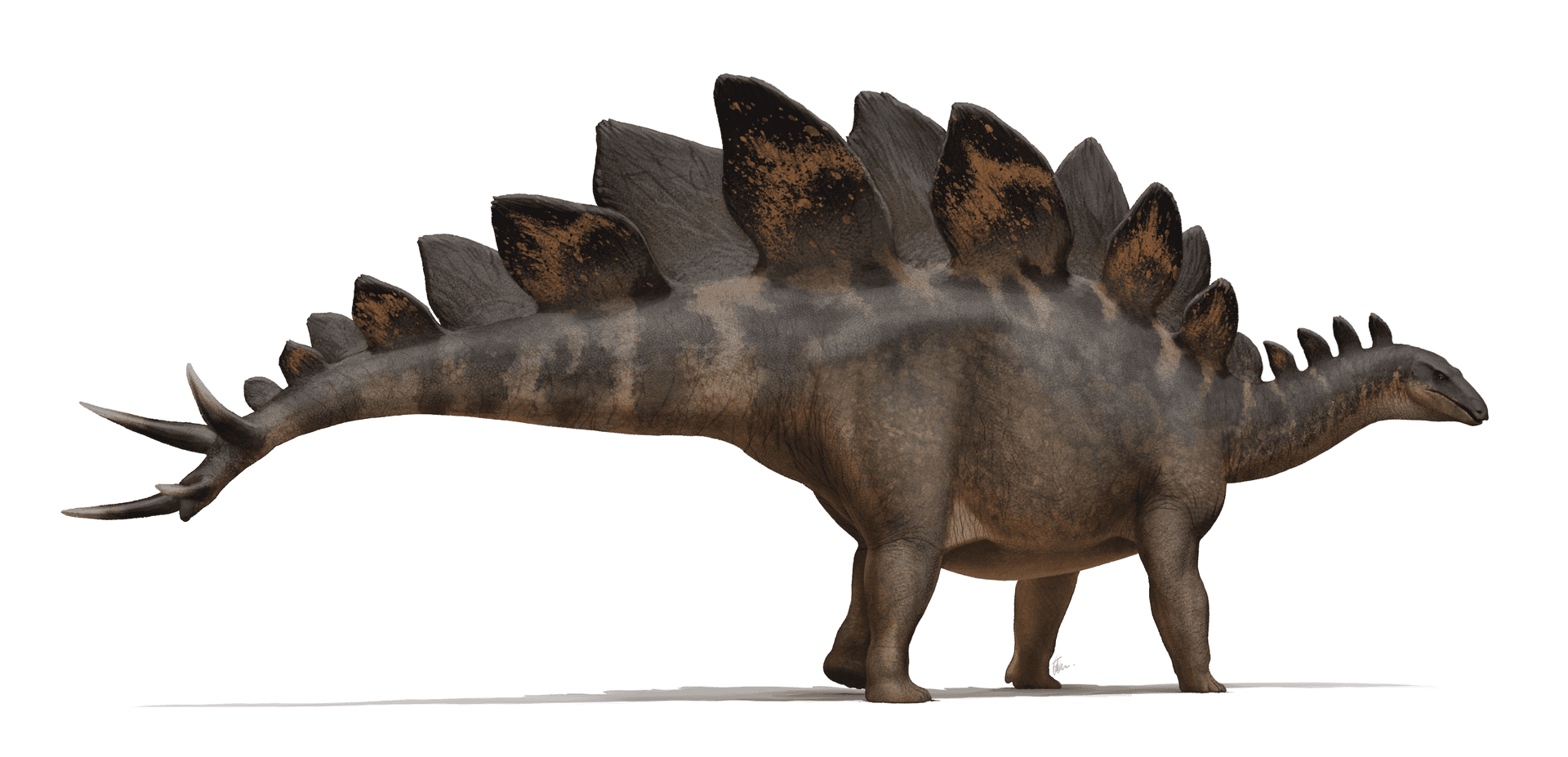
The most distinctive anatomical feature of Scelidosaurus is the presence of longitudinal rows of osteoderms (bony scutes) arranged along its body, from the neck all the way down to the tail. These bony plates embedded in the skin formed a remarkably well-developed natural protective armor for such an ancient dinosaur. This primitive armor foreshadows the more sophisticated defenses that its descendants would develop: the plates and tail clubs of ankylosaurs and the dorsal plates and thagomizers of stegosaurs. Scelidosaurus occupies a notable phylogenetic position as a potential ancestor of both these major thyreophoran groups, representing the ancestral body plan from which these lineages would diverge during the Middle and Late Jurassic periods.
Scelidosaurus was most likely a slow and methodical browser, moving at a leisurely pace through the coastal forests and fern meadows of the Early Jurassic. Its obligate quadrupedal locomotion gave it a stable but relatively slow gait, comparable to modern giant land tortoises in terms of defensive strategy. When confronted by theropod predators of its era, Scelidosaurus relied primarily on its osteoderm armor for protection, probably crouching low to the ground to present a maximum armored surface to the aggressor. This passive defensive behavior would be perfected by its ankylosaur descendants, which would develop even more elaborate armor systems accompanied by offensive tail clubs capable of breaking predator bones.
Scelidosaurus holds the remarkable distinction of being one of the very first dinosaurs ever scientifically described. Discovered in the cliffs of Dorset in England, it was named by the famous paleontologist Sir Richard Owen in 1859, only seventeen years after Owen himself coined the term Dinosauria in 1842. Despite this early description, Scelidosaurus remained surprisingly poorly understood for over 160 years, as the original specimens were never fully studied or described in proper detail. It was not until 2020 that paleontologist David Norman of the University of Cambridge finally published a complete and exhaustive redescription of the animal, revealing its true anatomy and confirming its position as a basal thyreophoran. This wait of over a century and a half makes Scelidosaurus one of the dinosaurs that waited the longest for a proper scientific description worthy of its significance.
| Period | Jurassique inférieur / Early Jurassic |
| Era | Mésozoïque / Mesozoic |
| Age | 191 Ma |
| Location | Dorset, Angleterre / Dorset, England |
| Diet | Herbivore |
Scelidosaurus harrisonii, dating to approximately 191 million years ago (Sinemurian), is one of the oldest known thyreophorans. Its longitudinal rows of osteoderms foreshadow the two major lineages that would follow: ankylosaurs (tail clubs) and stegosaurs (dorsal plates). Its basal phylogenetic position makes it a direct witness to the ancestral body plan of armored dinosaurs, before the two groups diverged.
Scelidosaurus harrisonii measured approximately 4 meters long with an estimated weight of 270 kilograms — comparable to a large wild boar or small ox. It lived on the southern coast of present-day England in the Dorset region along the Jurassic Coast, in a subtropical coastal environment with warm shallow seas, 191 million years ago.
Although Scelidosaurus harrisonii was named by Sir Richard Owen in 1859 — only 17 years after Owen himself coined the term 'Dinosauria' — the original specimens were never subject to a complete and detailed study. It was not until 2020 that paleontologist David Norman of the University of Cambridge published an exhaustive redescription, revealing the animal's true anatomy and confirming its position as a basal thyreophoran.
Scelidosaurus harrisonii reconstruction
Wikimedia Commons
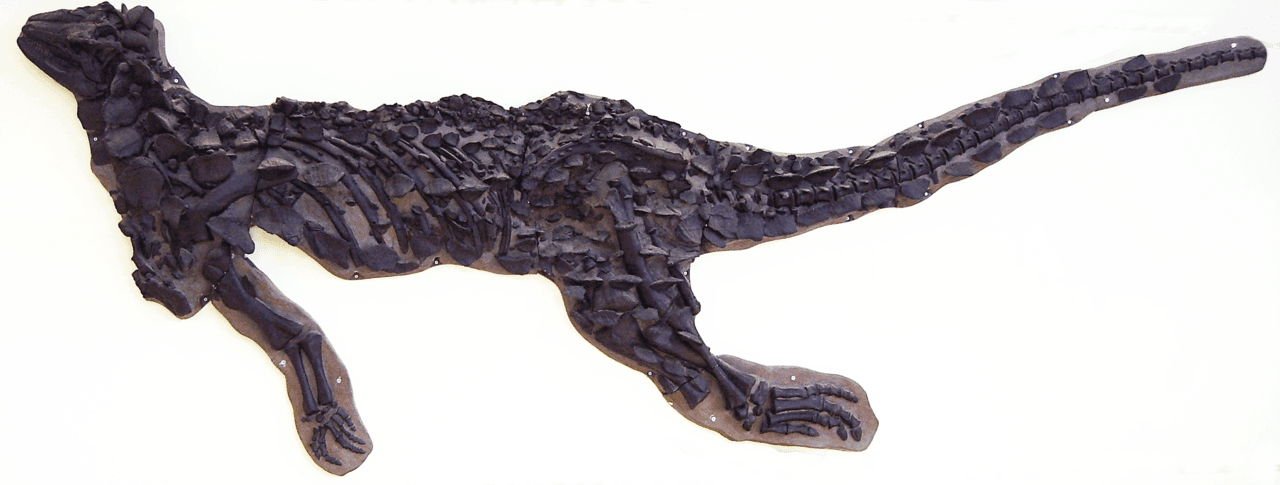
Scelidosaurus skeleton
Wikimedia Commons