Gigantophis
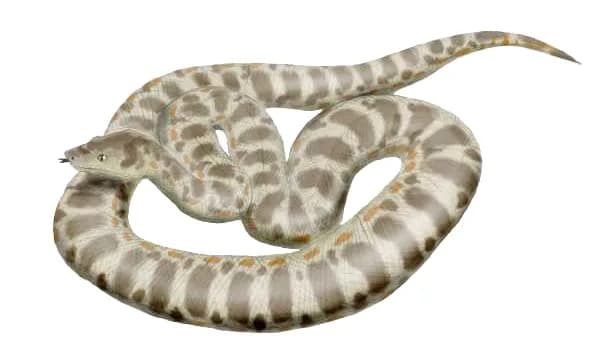
Gigantophis garstini held the title of largest known snake for over a century, from its description in 1901 until Titanoboa was found in 2009. Nine to 10 metres long, it hunted the Fayum region of Egypt around 40 million years ago. Its size let it swallow proto-elephants such as Moeritherium.
Gigantophis lived during the Eocene, approximately 40 million years ago, in a warm and humid tropical world. At that time, North Africa was covered with dense forests and vast marshy areas, far removed from the Sahara Desert we know today. Global average temperatures were significantly higher than present levels, allowing large ectothermic reptiles to thrive at these latitudes. The Eocene represented a climatic optimum favorable to giant snakes, with abundant rainfall feeding extensive river systems and biodiversity-rich swamplands. Gigantophis belonged to the archaic family Madtsoiidae, a group of Gondwanan snakes whose origins trace back to the Late Cretaceous period, making it part of one of the oldest known lineages of large constricting snakes.
Gigantophis garstini measured between 9 and 10 meters in total length, making it the largest known snake in the world for over a century, from its description in 1901 until Titanoboa's discovery in 2009. To put this size in perspective, Gigantophis greatly exceeded the largest modern anacondas and reticulated pythons, which rarely surpass 7 meters. Its body mass must have been considerable, probably between 200 and 400 kilograms based on estimates from vertebral proportions. Although Titanoboa eventually dethroned it with its 13-meter length, Gigantophis remains one of the most imposing snakes that ever existed, demonstrating the capacity of reptiles to achieve extraordinary dimensions during the warm periods of the Cenozoic era.
Gigantophis was a powerful constricting snake that killed its prey by suffocating them within its muscular coils. Its diet likely included large Eocene mammals, including early proboscideans such as Moeritherium, a primitive elephant ancestor weighing approximately 200 kilograms that frequented the same North African swamps. The ability of Gigantophis to tackle such animals testifies to its formidable power — imagine a snake capable of constricting a proto-elephant to death. Freshwater turtles, crocodilians, and other medium-sized mammals likely supplemented its diet. Like large modern constrictors, it swallowed its prey whole thanks to the remarkable flexibility of its jaw structure and kinetic skull bones.
Gigantophis inhabited the tropical swamps of Eocene North Africa, in what is now Egypt and Algeria. The Fayum region of Egypt, where the first fossils were discovered, was then a lush environment of humid tropical forests traversed by broad waterways and dotted with lakes and marshes. This verdant aquatic landscape resembled the modern Amazon basin far more than the Sahara Desert it would become. Warm temperatures and constant humidity provided ideal conditions for a giant ectothermic snake requiring a warm environment to maintain its metabolism. The richness of the aquatic and terrestrial fauna of the Eocene Fayum provided an abundance of prey for this apex predator.
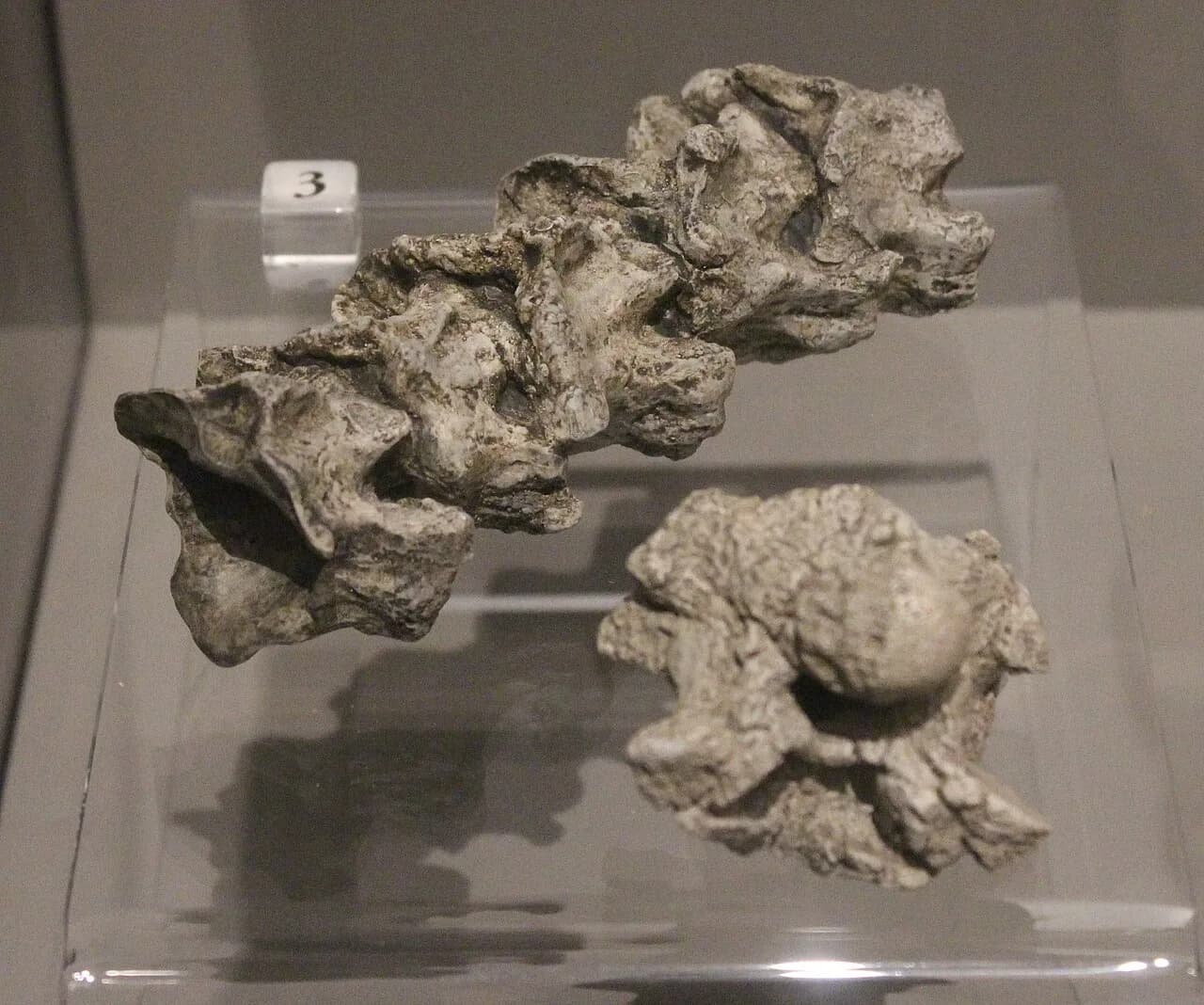
Gigantophis anatomy is known primarily from its massive fossil vertebrae, which rank among the largest snake vertebrae ever discovered. Each thoracic vertebra is remarkably wide and robust, indicating a thick and extremely muscular body adapted for constricting large prey. Vertebral morphology places Gigantophis within the family Madtsoiidae, a primitive group of Gondwanan constricting snakes. Like its madtsoiid relatives, it probably possessed a tooth-bearing premaxillary bone, an archaic trait lost in modern snakes. Its cylindrical and powerful body allowed it to exert sufficient constriction pressure to subdue large mammals, including the proto-elephants of its ecosystem, making it an apex predator of remarkable physical capability.
Gigantophis most likely adopted ambush predator behavior, similar to modern anacondas and large pythons. Lurking in the murky waters of swamps or concealed within dense bankside vegetation, it patiently waited for prey to approach to drink or cross waterways. Its hunting technique relied on constriction: after a rapid strike, it wrapped its powerful coils around the victim, applying increasing pressure that prevented breathing and blood circulation. This predation method, identical to that of modern anacondas, was devastatingly effective against the large Eocene mammals that shared its habitat. Its semi-aquatic lifestyle allowed it to move with agility through water despite its imposing mass.
Gigantophis was first described in 1901 by British paleontologist Charles William Andrews from fossil vertebrae discovered in Eocene deposits of the Fayum, Egypt. Andrews named the species Gigantophis garstini, with the generic name meaning 'giant snake' in Greek. Additional remains have been discovered in Algeria, extending the known geographic range of the species across North Africa. For over one hundred years, from 1901 to 2009, Gigantophis held the record as the largest snake ever discovered. This record was finally broken by Titanoboa cerrejonensis, described in 2009 from Colombian fossils measuring approximately 13 meters. Despite being dethroned, Gigantophis remains an iconic fossil in snake paleontology and a valuable witness to the diversity of Cenozoic madtsoiids.
| Period | Éocène / Eocene |
| Era | Cénozoïque / Cenozoic |
| Age | 40 Ma |
| Location | Fayoum, Égypte / Fayum, Egypt |
| Length | 9-10 m |
| Height | 35 cm |
| Diet | Carnivore |
| Discovery | 1901 |
Gigantophis garstini, measuring 9 to 10 meters long with an estimated weight of 200 to 400 kg, held the record for the largest known snake for over a century, from 1901 until the description of Titanoboa cerrejonensis in 2009. Titanoboa, discovered in Colombia in Paleocene deposits, measured about 13 meters and weighed up to one tonne, definitively dethroning Gigantophis.
Gigantophis garstini inhabited the tropical swamps of Eocene North Africa, primarily in the Fayum region of Egypt and in Algeria. At that time, the present-day Sahara was covered with humid tropical forests and vast marshy zones, with global temperatures well above modern levels. These conditions favored the growth of giant ectothermic reptiles requiring a warm environment.
Gigantophis garstini belonged to Madtsoiidae, an archaic family of Gondwanan snakes whose origins trace back to the Late Cretaceous. This primitive group of constrictors is linked to some fossil Australian snakes, reflecting the ancient land connections of Gondwana. The British Museum holds the first fossils described by Charles William Andrews in 1901 from the Fayum Eocene deposits.
Gigantophis fossil vertebra
Wikimedia Commons
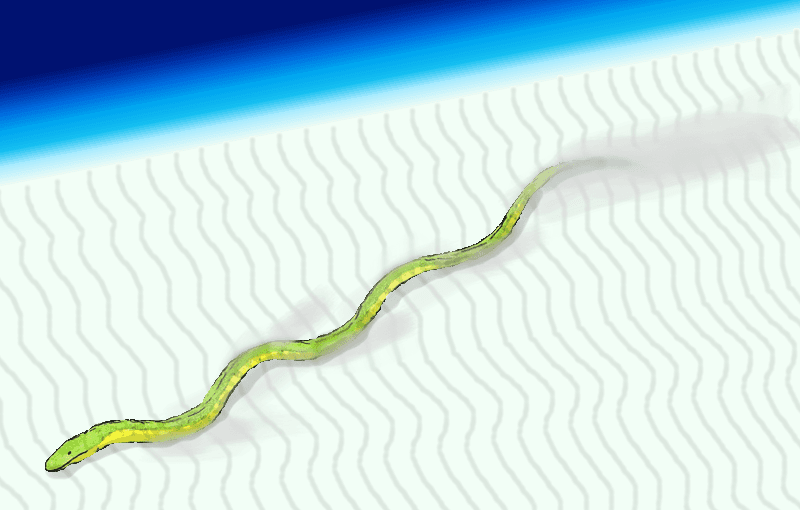
Gigantophis garstini reconstruction
Wikimedia Commons