Gastonia
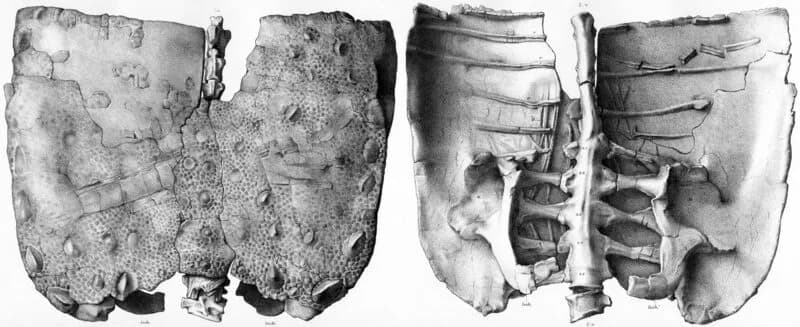
Gastonia burgei is an ankylosaur about 5 metres long and 1 to 2 tonnes, described in 1998 in Utah and dated to some 126 million years ago. Its remains were found mixed with those of Utahraptor at the same site. More than a thousand osteoderms were recovered, making it one of the ankylosaurs whose full armour is best known.
Gastonia lived in the Early Cretaceous, approximately 126 million years ago, during the Barremian stage. This period corresponds to an era of great diversity among primitive ankylosaurs in North America, well before the appearance of the giant forms of the Late Cretaceous. Gastonia belongs to the family Nodosauridae, characterized by the absence of a tail club and the presence of prominent lateral spines. It coexisted with the formidable theropod Utahraptor, one of the largest known dromaeosaurids, in a rich ecosystem where armored prey and apex predators interacted daily.
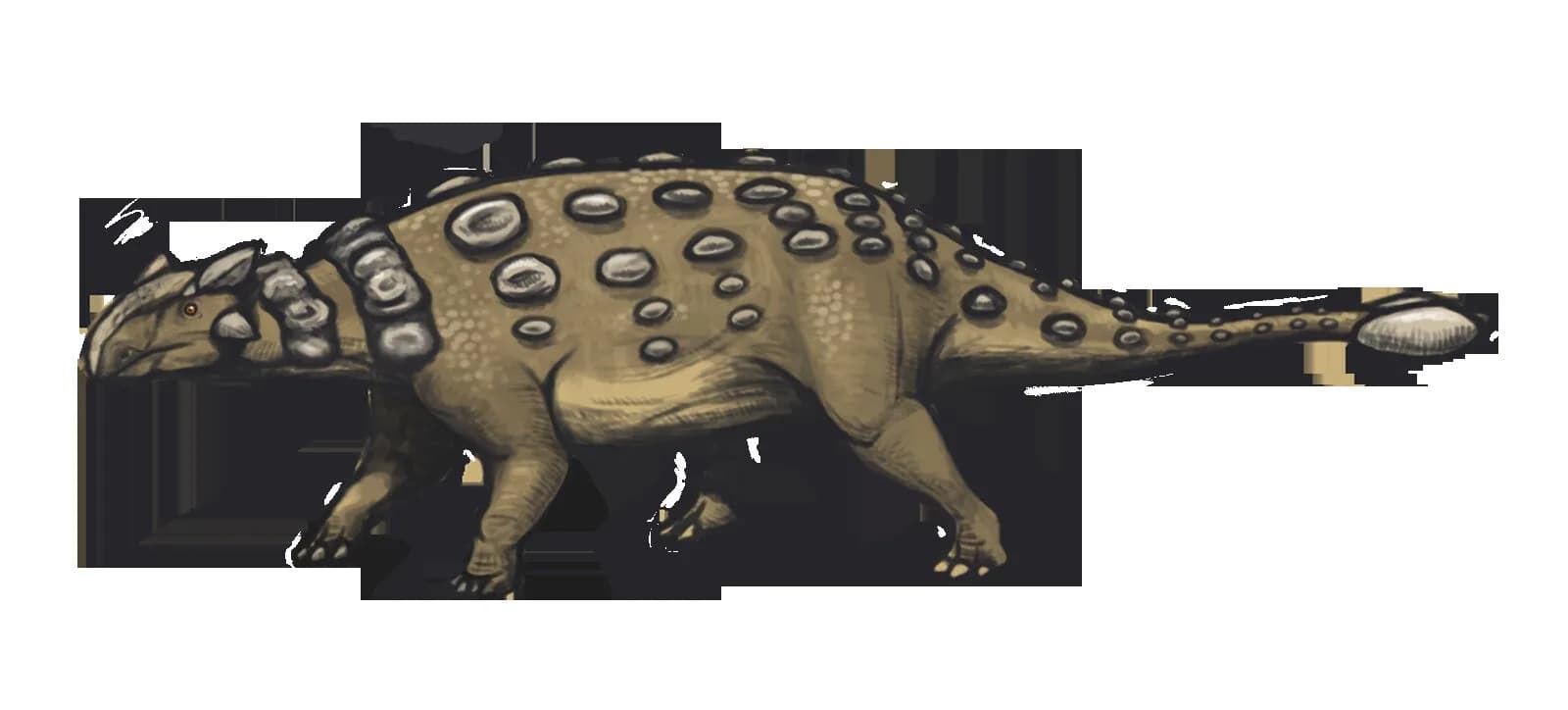
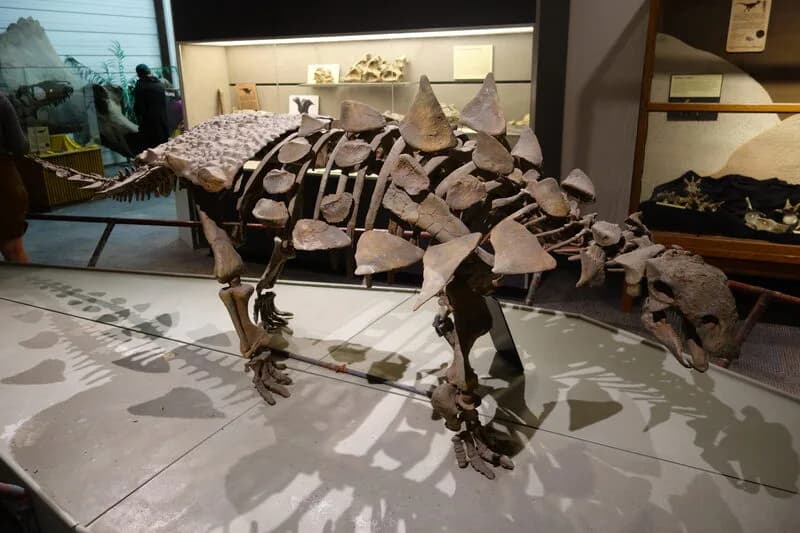
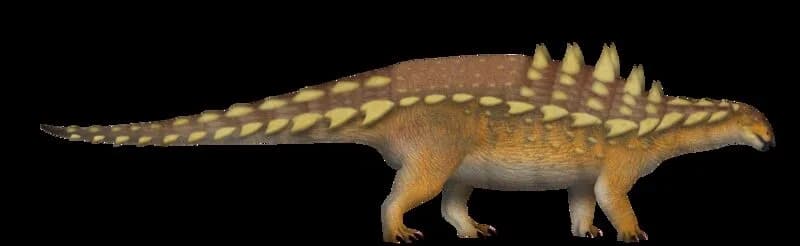
Gastonia measured approximately 5 meters in length, about 1.5 meters tall at the back, with an estimated weight between 1 and 2 tonnes. Its build was comparable to that of a large modern water buffalo. Its wide, flattened body was entirely covered in armor composed of hundreds of variously shaped osteoderms, ranging from small round nodules to large triangular plates. The most spectacular lateral spines, located at the shoulders, could reach up to 40 centimeters in length and were flattened into blade shapes.
A strict herbivore, Gastonia fed on the low vegetation of the semi-arid Early Cretaceous environments of Utah. Its narrow horny beak cut ferns, horsetails, and cycads that grew in humid areas near waterways and seasonal floodplains. Its small, simple leaf-shaped teeth indicate minimal chewing — digestion was primarily accomplished through prolonged fermentation in a large intestine, similar to modern giant tortoises. Its slow metabolism allowed it to survive on relatively nutrient-poor vegetation during prolonged dry seasons when plant life became scarce, making it well adapted to the cyclical droughts of its semi-arid homeland.
Gastonia inhabited the semi-arid alluvial plains of what is now eastern Utah, United States. The Cedar Mountain Formation, where all specimens have been discovered, represents an environment of seasonally flooded plains with intermittent rivers and vegetation concentrated along water sources and riparian corridors. This landscape resembled a modern savanna but dominated by conifers and tree ferns rather than grasses, with cycads dotting the drier upland areas. Pronounced seasonal variations created periods of plant abundance alternating with prolonged droughts that shaped the behavior and distribution patterns of the local fauna, including both herbivores and their predators.
Gastonia's anatomy is remarkable for the diversity and complexity of its defensive armor. The back was covered with rows of flat, oval osteoderms forming a tight pavement that protected the spine and internal organs from predator bites. The flanks bore large, flattened spines curved outward, particularly developed at the shoulders and hips, where they formed blade-like projections. The tail was bordered by pairs of small triangular plates arranged symmetrically. Unlike club-tailed ankylosaurs, Gastonia possessed no offensive caudal structure, relying entirely on its extensive passive armor and intimidating lateral spines for protection against predators like Utahraptor.
Gastonia probably lived in small groups, as suggested by the discovery of bone beds containing multiple individuals in the Cedar Mountain Formation. Facing a predator as formidable as Utahraptor, its defensive strategy consisted of crouching low to the ground and presenting its lateral spines in a fan shape, creating a virtually impassable barrier of sharp bony blades. The flattened shoulder spines could also serve as weapons during intraspecific combat between males competing for access to mates or defense of preferred grazing territories during the harsh dry seasons that characterized its semi-arid environment.
Gastonia was discovered in the Cedar Mountain Formation near Moab, Utah, and described in 1998 by paleontologist James Kirkland. The genus name honors Robert Gaston, an amateur collector who participated in the excavations. The type species, G. burgei, was named after Don Burge, director of the College of Eastern Utah Prehistoric Museum. The discovery site, known as Gaston Quarry, yielded the remains of several individuals mixed with Utahraptor bones, suggesting a predator-prey interaction preserved in the fossil record. Over 1,000 osteoderms were recovered from the site.
| Period | Crétacé inférieur / Early Cretaceous |
| Era | Mésozoïque / Mesozoic |
| Age | ~126 Ma |
| Location | Amérique du Nord (Utah) / North America (Utah) |
| Length | ~5 m |
| Height | ~1.5 m |
| Weight | 1-2 tonnes |
| Diet | Herbivore |
| Discovery | 1998 |
Gastonia burgei measured about 5 meters long, 1.5 meters tall at the back, and weighed an estimated 1 to 2 tonnes — comparable to a large modern water buffalo. It was discovered in the Cedar Mountain Formation near Moab, Utah, and described in 1998 by paleontologist James Kirkland. The site, known as Gaston Quarry, yielded over 1,000 isolated osteoderms.
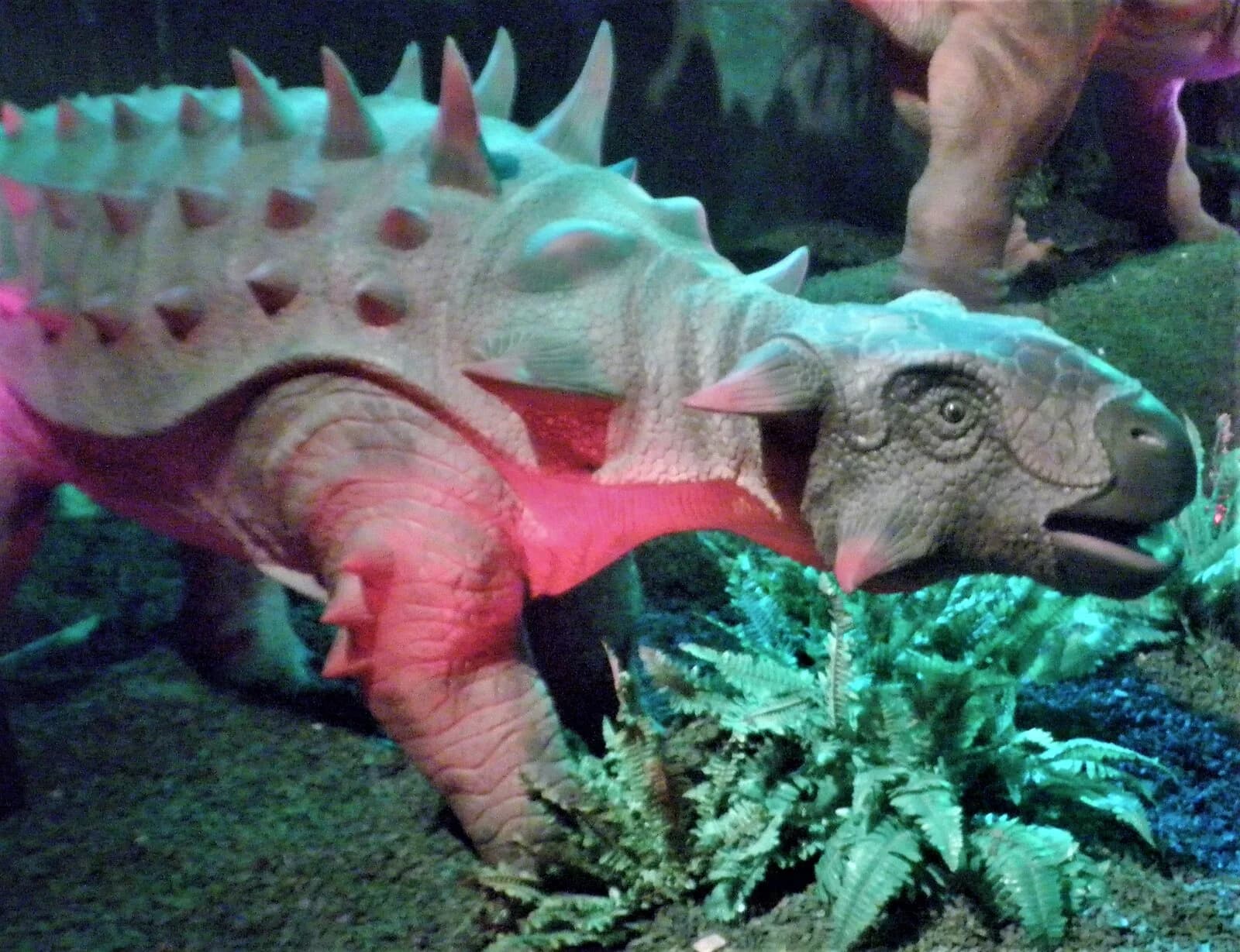
Gastonia burgei had blade-shaped flattened lateral spines, particularly developed at the shoulders, reaching up to 40 centimeters. Unlike club-tailed ankylosaurs such as Ankylosaurus, it had no caudal weapon. Its defense relied entirely on its passive armor and these fan-like spines, creating a nearly impassable barrier for predators like Utahraptor that coexisted alongside it.
Fossils of Gastonia burgei and Utahraptor were found intermixed at the same Cedar Mountain Formation site (approximately 126 million years ago), illustrating a prey-predator interaction preserved in the fossil record. Facing Utahraptor — one of the largest known dromaeosaurids — Gastonia likely crouched and fanned its lateral spines to prevent any access to its vulnerable underbelly.
Gastonia burgei fossil
Wikimedia Commons, CC BY-SA
Gastonia skull
Wikimedia Commons, CC BY-SA