Polacanthus
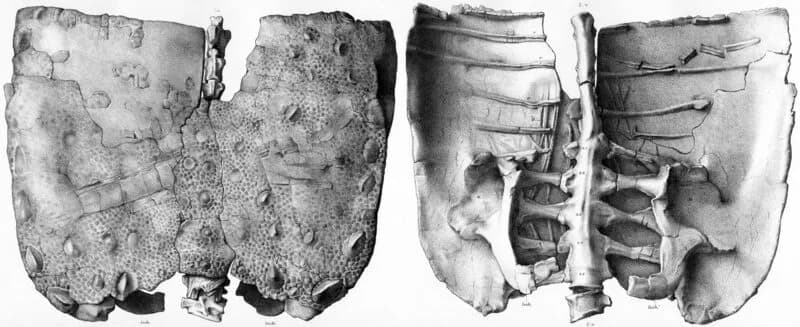
Polacanthus foxii carried a fused sacral shield, a welded bony plate covering the whole rear of the back like a carapace: no other ankylosaur has anything like it. About 5 metres long and 1 to 2 tonnes, it lived 130 to 125 million years ago on the Isle of Wight. It bears the name of Reverend William Fox, collector of over five hundred specimens.
Polacanthus lived in the Early Cretaceous, approximately 130 to 125 million years ago, during the Barremian and Aptian stages. This period precedes the appearance of the great tail-clubbed ankylosaurs of the Late Cretaceous. Polacanthus is one of the earliest well-documented European ankylosaurs, testifying to the early diversity of this group of armored dinosaurs. It coexisted with Iguanodon, Hypsilophodon, and the theropod Neovenator on the Isle of Wight, then a subtropical coastal region connected to the European continent. This era saw the rapid radiation of flowering plants that would gradually reshape terrestrial ecosystems.
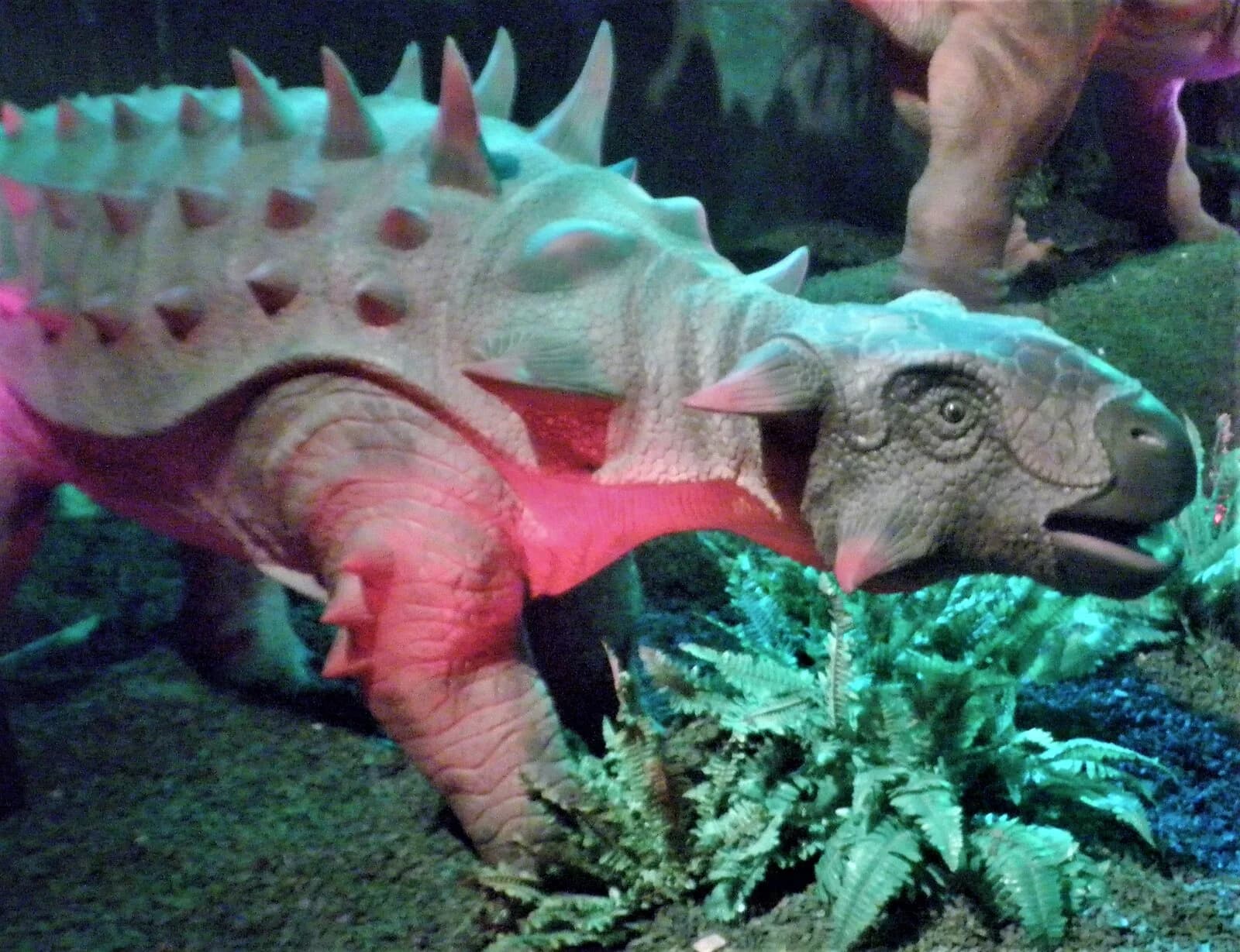
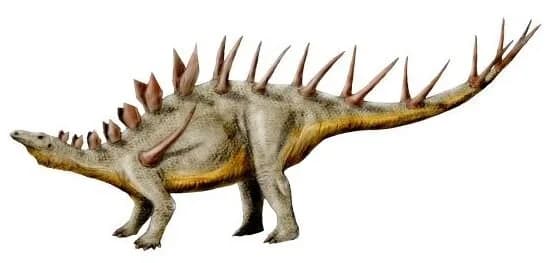
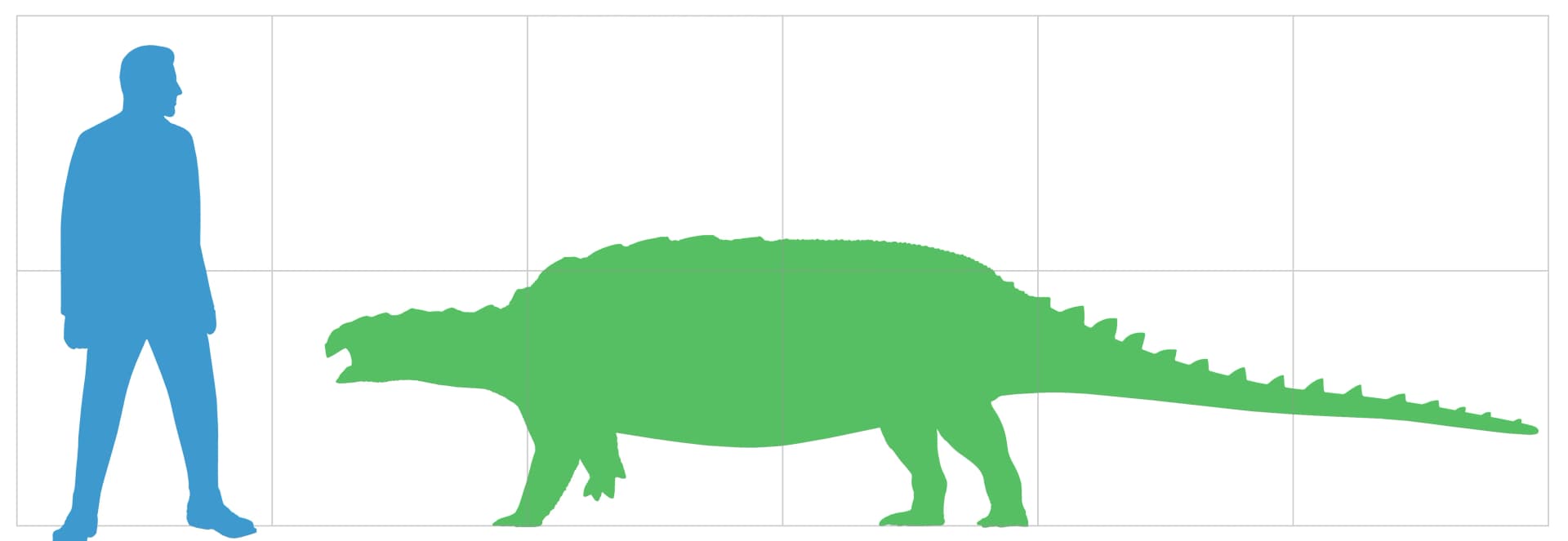
Polacanthus measured approximately 5 meters in length, about 1.5 meters tall, with an estimated weight between 1 and 2 tonnes. Its size was modest compared to later ankylosaurs like Ankylosaurus, but its defensive armor was impressive and well-developed for its era. Its stocky, low-slung body gave it a very low center of gravity, making it extremely difficult for a predator to flip over. The longest dorsal spines could reach 30 centimeters, forming an intimidating row along its flanks and back.
A strict herbivore, Polacanthus browsed on the low undergrowth vegetation of the Early Cretaceous forests and floodplains. Its narrow horny beak was adapted for selecting tender young shoots among ferns, horsetails, and cycads growing near the ground. Unlike hadrosaurs with their complex dental batteries, Polacanthus had simple leaf-shaped teeth, suggesting limited chewing and fermentative digestion in a voluminous gut, similar to modern land iguanas. Its low browsing position allowed it to access ground-level vegetation that taller herbivores could not efficiently reach, occupying a distinct ecological niche in the Early Cretaceous ecosystem of the Isle of Wight.
Polacanthus inhabited the coastal plains and wooded areas of present-day southern England, primarily on the Isle of Wight. During the Early Cretaceous, this region was part of a vast alluvial plain bordering the Tethys Sea, with a warm and humid subtropical climate supporting dense vegetation. The Wessex Formation, where most fossils have been discovered, represents a fluvial environment with meandering waterways, seasonal floodplains, and conifer forests interspersed with fern-dominated clearings. Abundant marshlands supported rich and diverse plant communities that sustained this armored browser alongside other herbivorous dinosaurs such as Iguanodon and Hypsilophodon.
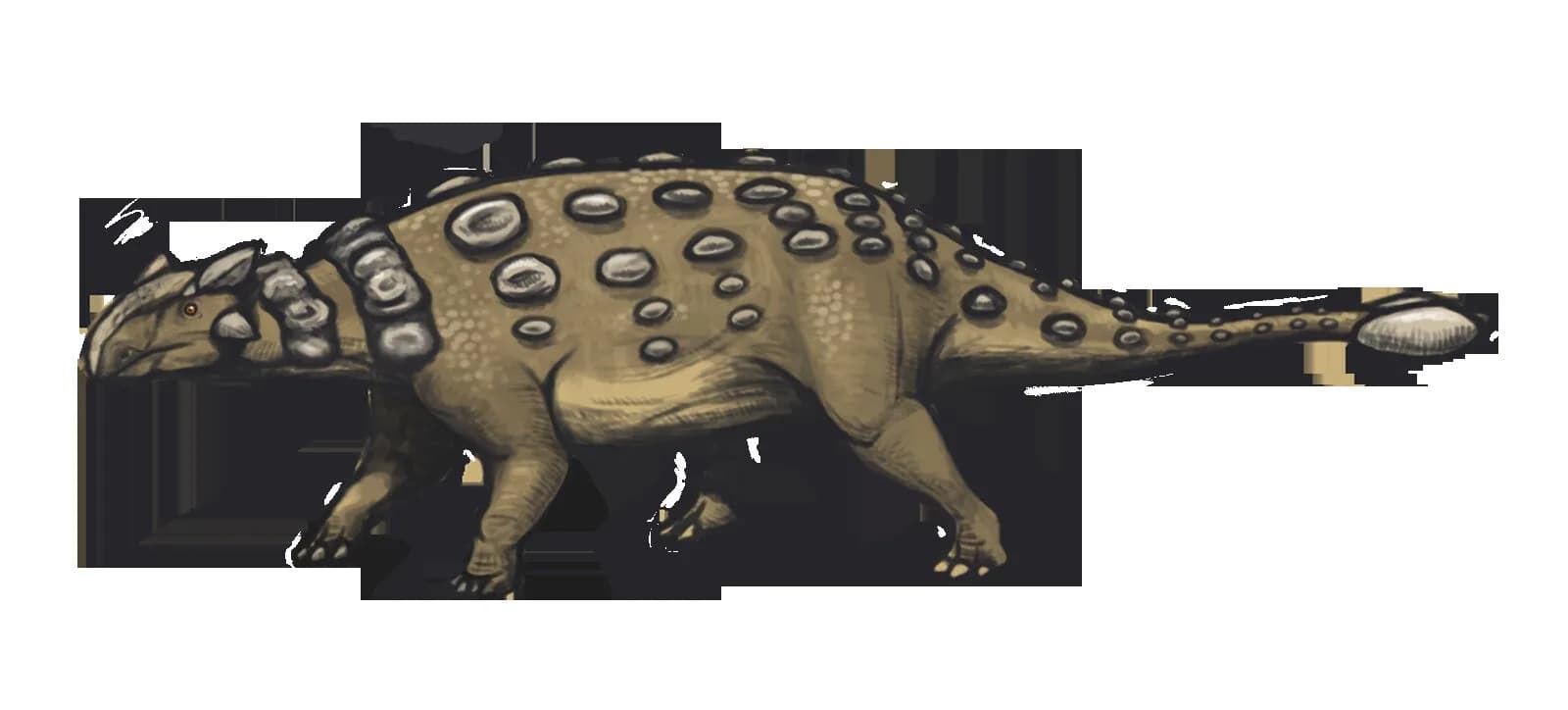
Polacanthus anatomy is dominated by its spectacular defensive armor. Rows of conical spines lined its flanks from neck to hips, with the largest positioned at the shoulders. The posterior back was protected by a unique sacral shield — a fused bony plate composed of numerous welded osteoderms, forming a rigid carapace above the hips. The tail bore pairs of small vertical plates. The skull remains poorly known as no complete specimen has been discovered, making cranial reconstructions largely hypothetical and based on related nodosaurid genera.
Polacanthus was probably a solitary animal or lived in small groups, moving slowly through undergrowth in search of tender vegetation. Its defensive strategy relied entirely on its passive armor: when facing a predator like Neovenator, it simply needed to crouch to the ground to present a virtually impenetrable fortress of spines and bony plates. The lateral spines also likely served during ritualized jousting between males for access to females, a behavior observed in many modern armored vertebrates such as armadillos.
Polacanthus foxii was discovered in 1865 by Reverend William Fox on the southwest coast of the Isle of Wight, England. The original specimen, composed of the posterior part of the skeleton with its armor, was described by Richard Owen and later by Thomas Huxley. The generic name means 'many spines' in Greek (poly + akantha). The species honors its discoverer, Reverend Fox. Unfortunately, no complete skull has ever been found in over 160 years of searching, complicating the precise taxonomic classification of this enigmatic armored dinosaur.
| Period | Crétacé inférieur / Early Cretaceous |
| Era | Mésozoïque / Mesozoic |
| Age | 130-125 Ma |
| Location | Europe (Angleterre, île de Wight) / Europe (England, Isle of Wight) |
| Length | ~5 m |
| Height | ~1.5 m |
| Weight | 1-2 tonnes |
| Diet | Herbivore |
| Discovery | 1865 |
Polacanthus foxii possessed a unique sacral shield among ankylosaurs: a fused bony plate covering the entire rear back above the hips, formed by welded osteoderms. Rows of 30-centimeter conical spines lined its flanks from neck to hips. No complete skull has been found in over 160 years, which still complicates its precise classification.
Polacanthus foxii measured approximately 5 meters long with an estimated weight of 1 to 2 tonnes, during the Early Cretaceous (130–125 Ma, Barremian–Aptian). It coexisted on the Isle of Wight with Iguanodon and the theropod Neovenator. Its very low center of gravity made it extremely difficult for a predator to flip over.
Polacanthus foxii was discovered in 1865 by Reverend William Fox on the southwest coast of the Isle of Wight, England. The original specimen comprised the posterior skeleton with its armor. The species name honors its discoverer. Richard Owen and later Thomas Huxley described the animal. The genus name means 'many spines' in Greek.
Polacanthus foxii reconstruction
Wikimedia Commons, CC BY-SA
Polacanthus fossils
Wikimedia Commons, CC BY-SA