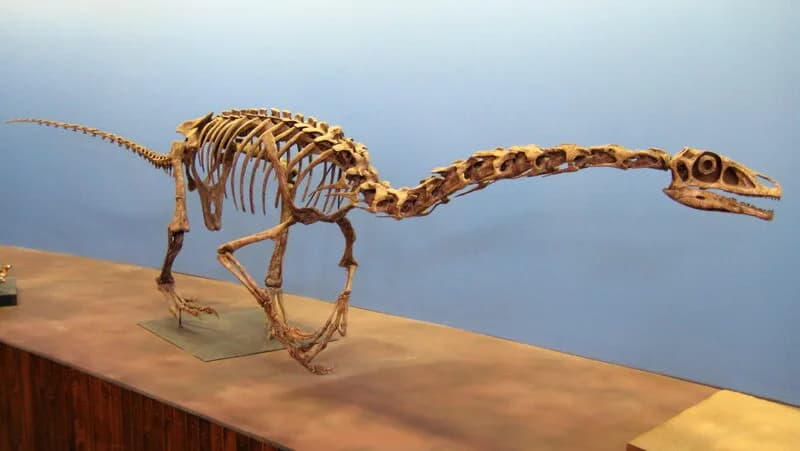
Falcarius
Falcarius utahensis documents the shift from carnivorous theropods to herbivorous therizinosaurs: 4 metres and 80 to 100 kilograms, with a dentition already suited to plants. Described in 1999 in Utah, it lived 139 to 134 million years ago. More than three hundred individuals were excavated from a single bed, apparently poisoned together at a watering hole.
Falcarius lived in the Early Cretaceous, approximately 139 to 134 million years ago (Berriasian-Valanginian), in what is now Utah, United States. Discovered in 1999 in the Cedar Mountain Formation, it was formally described in 2005 by James Kirkland and colleagues. Its name means 'sickle cutter from Utah,' referencing its sickle-shaped claws. Falcarius occupies a crucial phylogenetic position as it represents one of the most primitive known therizinosaurs, documenting the remarkable evolutionary transition from a carnivorous lifestyle to an herbivorous diet among theropod dinosaurs.
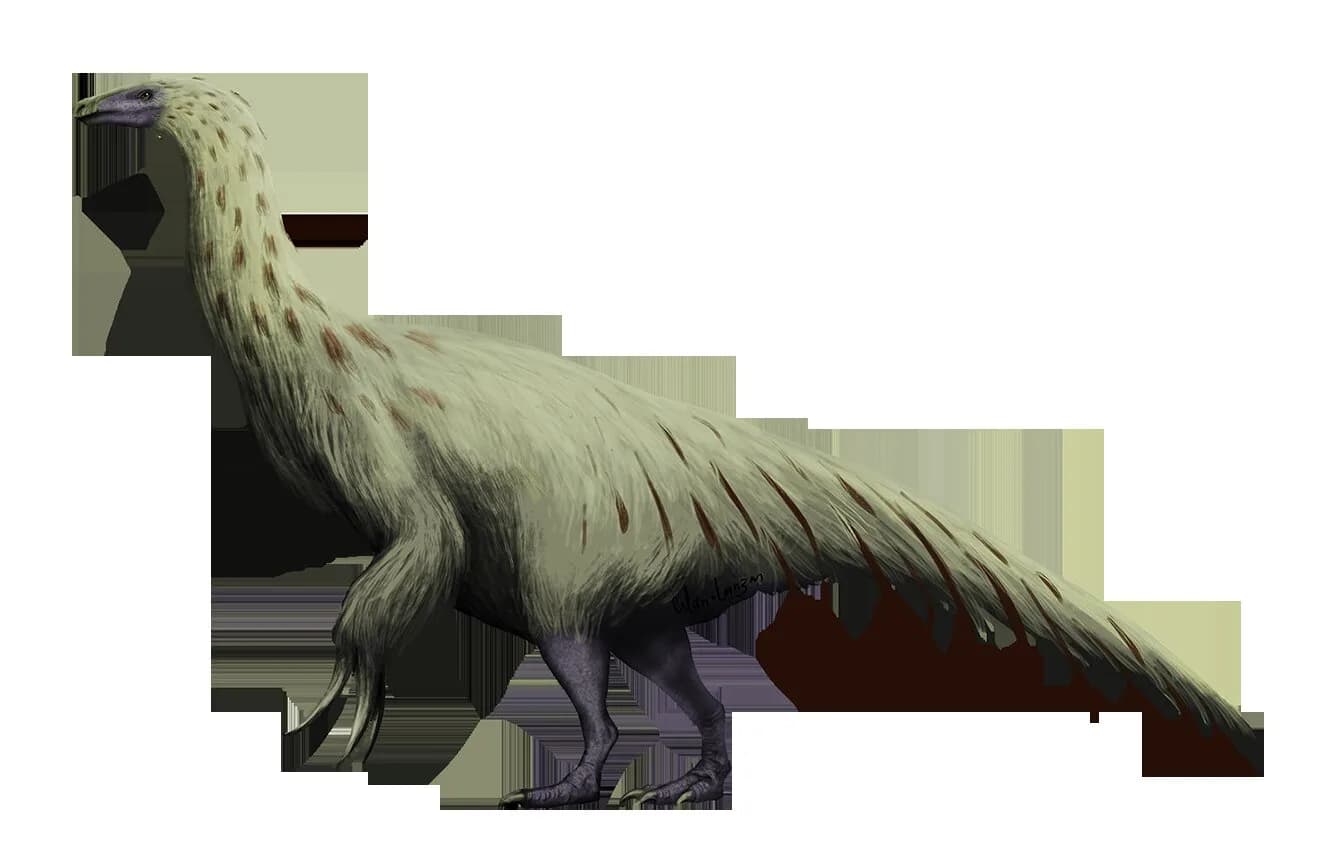
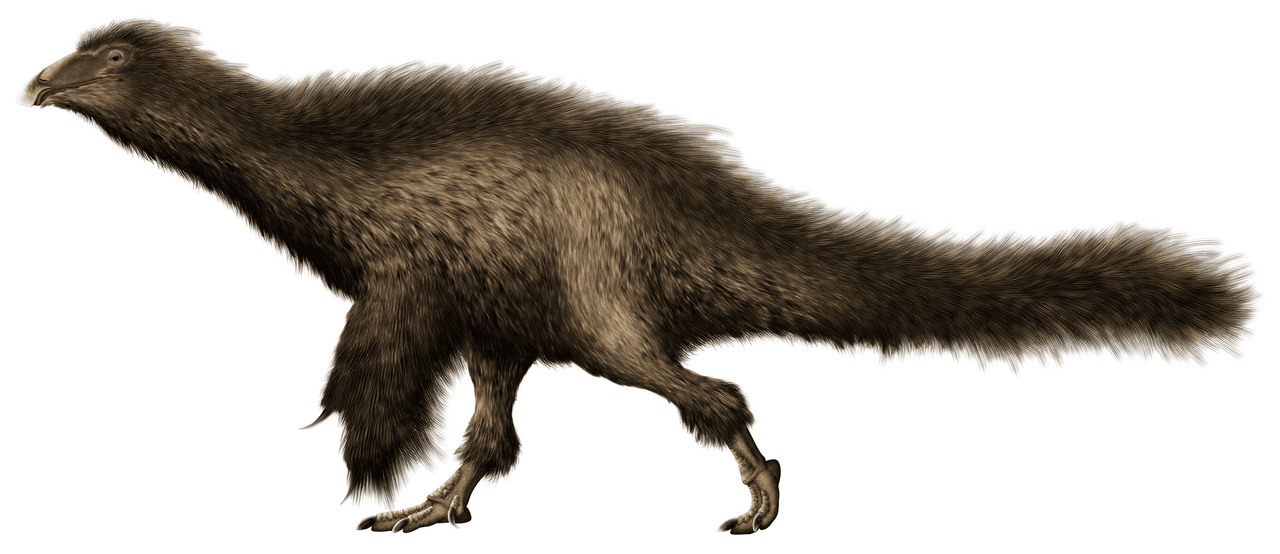
Falcarius measured approximately 4 meters in total length and reached a height of about 1.2 meters at the hip, with an estimated weight between 80 and 100 kilograms. Its silhouette was unusual for a theropod: a relatively stocky body with an enlarged abdomen to accommodate a voluminous digestive system necessary for processing plant material. Its elongated, flexible neck allowed it to reach higher vegetation. The forelimbs bore long curved claws characteristic of therizinosaurs, though less developed than in its later descendants such as the mighty Therizinosaurus.
Falcarius represents a noteworthy case of dietary transition among theropod dinosaurs. Unlike its strictly carnivorous ancestors, it had evolved toward a probably omnivorous diet with a strong herbivorous tendency. Its leaf-shaped teeth, similar to those of an iguana, were adapted for shearing plant material rather than cutting flesh. Its enlarged abdomen suggests a voluminous gut necessary for fermenting plant fibers, as in modern herbivores. It probably consumed leaves, shoots, fruits, and occasionally insects and small animals as supplementary protein sources.
Falcarius inhabited the semi-arid to temperate environments of the Early Cretaceous in western North America, in what is now eastern Utah. The Cedar Mountain Formation, where its fossils were discovered, represents an alluvial plain environment with seasonal watercourses, sparse woodlands, and primitive grasslands. The climate of the time was warmer and more humid than today in this region, with marked seasons. The vegetation included conifers, tree ferns, and primitive seed plants that constituted its primary food resources throughout the year.
The anatomy of Falcarius reveals a remarkable blend of primitive theropod characteristics and derived herbivorous specializations. Its relatively small skull bore leaf-shaped teeth with coarse serrations, ideal for cutting vegetation. The pelvis showed an incipient backward rotation of the pubis, a trend that would become more pronounced in more derived therizinosaurs like Therizinosaurus. The forelimbs were proportionally long and bore three fingers armed with curved claws measuring up to 10 centimeters. The four functionally-toed feet differed from the three toes typical of cursorial theropods.
The discovery site of Falcarius, called 'Crystal Geyser Quarry,' has yielded the remains of at least 300 individuals, strongly suggesting gregarious behavior and the formation of significant herds or social groups. This massive accumulation could result from a natural catastrophe that trapped an entire herd, such as poisoning at a water source or a sudden flood. As a medium-sized herbivore or omnivore, group living provided increased protection against larger theropod predators. Its long claws could serve both for grasping branches and for defensive purposes.
The Crystal Geyser Quarry site, in Emery County, Utah, is one of the most prolific Early Cretaceous dinosaur deposits in North America. Discovered in 1999, it has yielded the fragmentary but abundant remains of over 300 Falcarius individuals, including both juveniles and adults. The formal description by James Kirkland in 2005 revolutionized understanding of therizinosaur evolution. The site shows signs of a mass death event, possibly due to natural poisoning. Specimens are housed at the Utah Museum of Natural History and have been the subject of numerous scientific publications.
| Period | Crétacé inférieur / Early Cretaceous |
| Era | Mésozoïque / Mesozoic |
| Age | 139-134 Ma |
| Location | Utah, États-Unis / Utah, USA |
| Length | 4 m |
| Height | 1.2 m |
| Weight | 80-100 kg |
| Diet | Omnivore / Herbivore |
| Discovery | 1999 |
Falcarius utahensis occupies a crucial phylogenetic position as one of the most primitive known therizinosaurs. It documents the transition from a carnivorous lifestyle to an herbivorous diet among theropods: its leaf-shaped teeth and enlarged abdomen already indicate herbivory, while its curved claws still recall its carnivorous ancestors. Described in 2005 by James Kirkland, it transformed understanding of therizinosaur evolution.
Falcarius utahensis measured about 4 meters long, 1.2 meters at the hips, and weighed an estimated 80 to 100 kilograms. Its diet was likely omnivorous with a strong herbivorous tendency: its iguana-like leaf-shaped teeth cut plant material, while its enlarged abdomen housed a large gut for fermenting plant fibers.
Crystal Geyser Quarry in Emery County, Utah, yielded the remains of at least 300 Falcarius utahensis individuals, both juveniles and adults. This massive accumulation is most likely explained by a catastrophic death event — natural poisoning of a water source or sudden flooding that trapped an entire herd. This gregarious behavior is consistent with its medium-sized herbivore morphology.
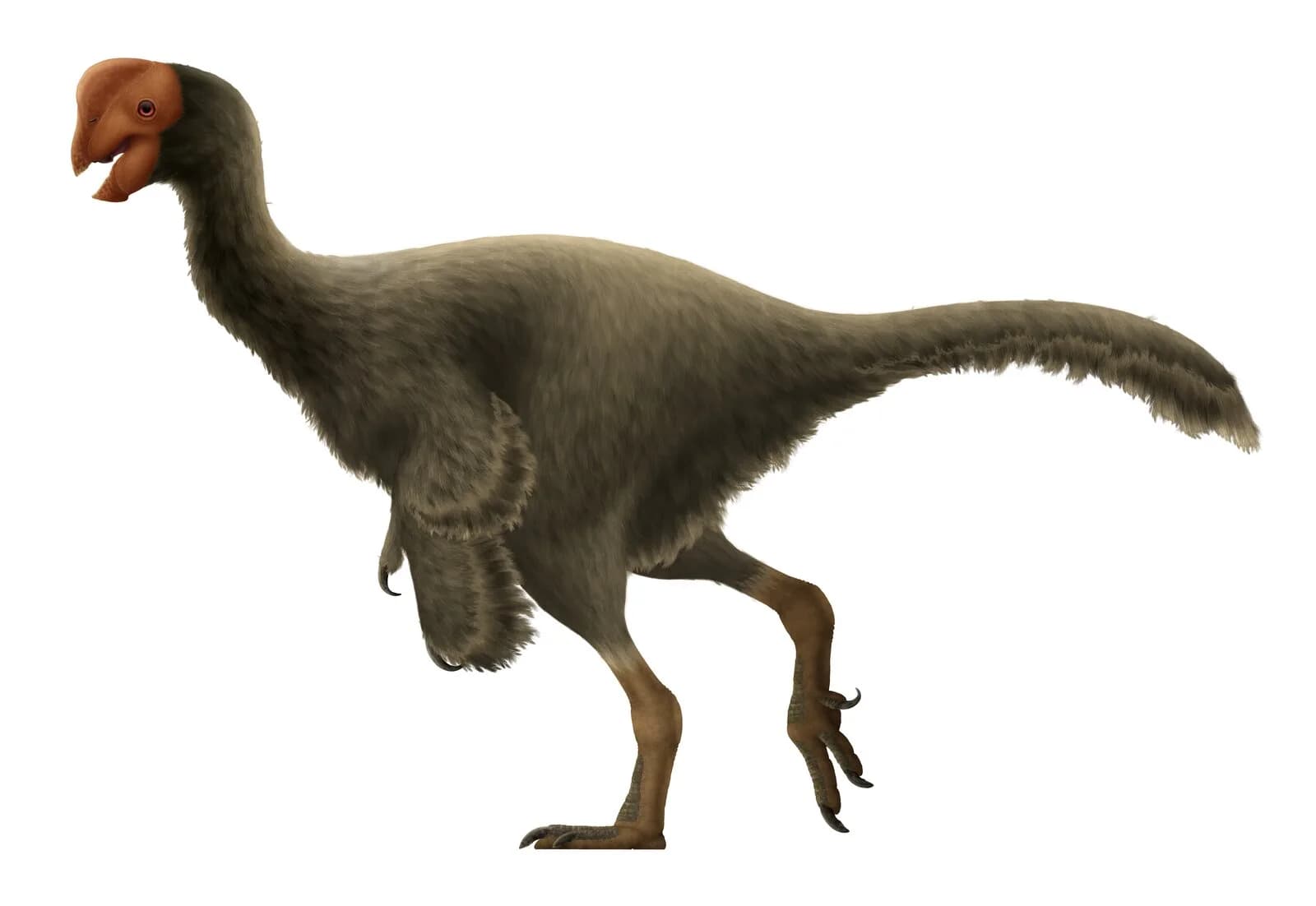
Reconstruction of Falcarius utahensis
Wikimedia Commons, CC BY-SA
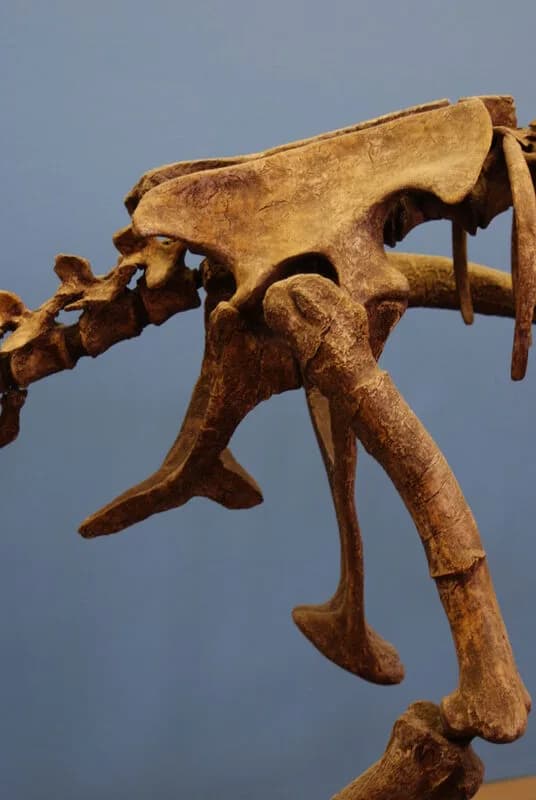
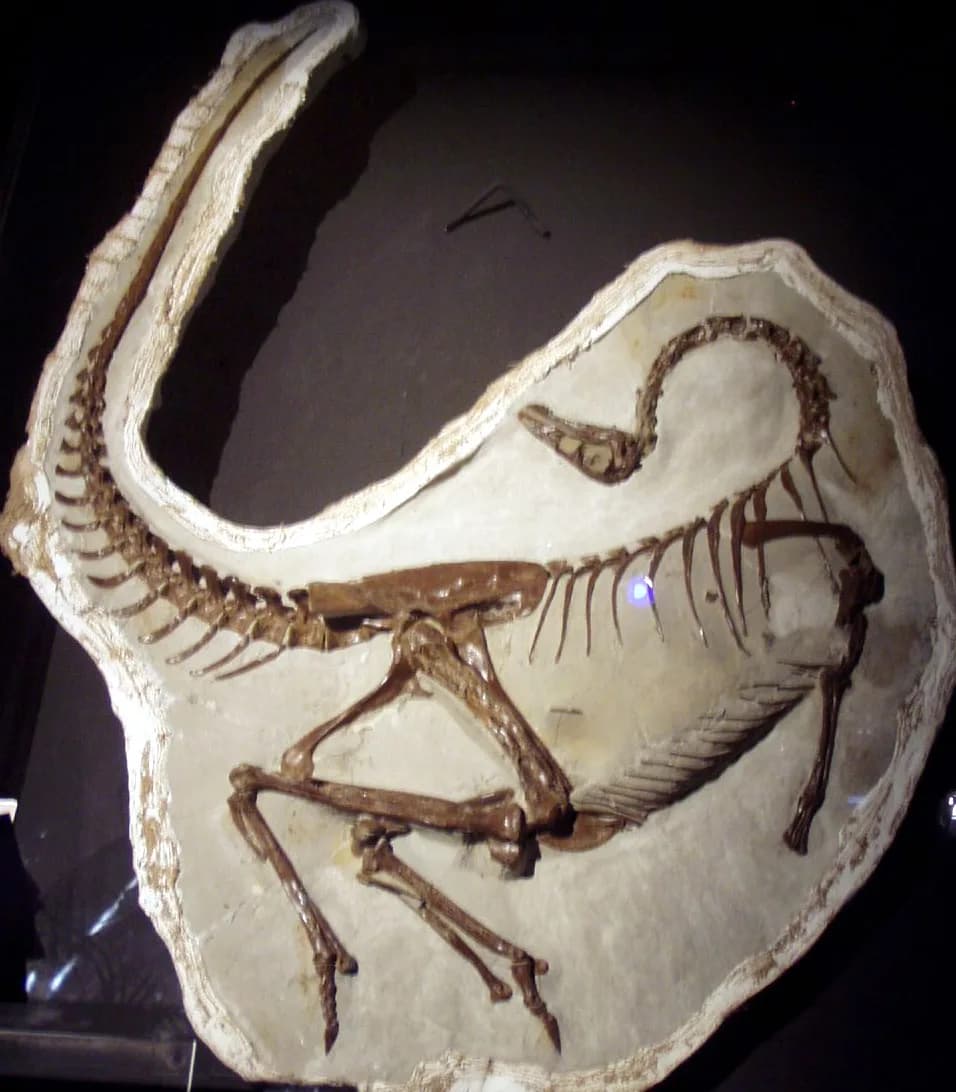
Fossil pelvis of Falcarius showing anatomical transition
Wikimedia Commons, CC BY-SA