Lézard couronné
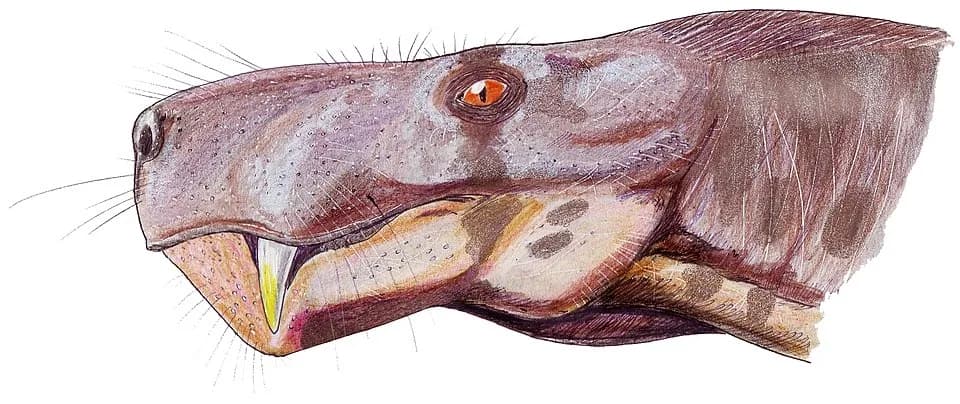
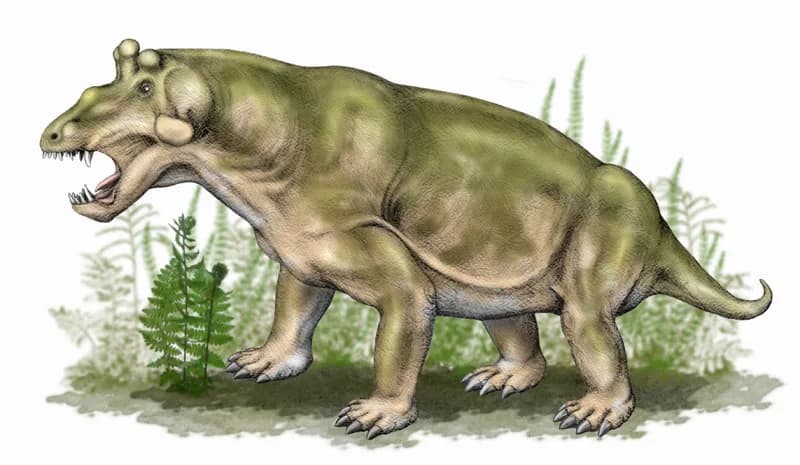
Estemmenosuchus uralensis was a therapsid from the Urals, described in 1960 and dated to 267 to 260 million years ago. At 3 to 4 metres and 300 to 500 kilograms, it carried massive bony outgrowths on its skull that looked like antlers but were solid bone. Fossilised skin impressions show it was smooth and scaleless, closer to a hippopotamus.
Estemmenosuchus lived during the Middle Permian (Wordian), approximately 267 to 260 million years ago, long before the first dinosaurs appeared. This dinocephalian — a subgroup of primitive therapsids — inhabited the vast swampy plains of what is now the Ural region of Russia. Its name means 'crowned crocodile' in Greek, a direct reference to the spectacular bony protuberances that adorned its massive skull. Estemmenosuchus was among the largest terrestrial animals of its time, during a period when synapsids dominated the continental ecosystems of Pangaea. It disappeared before the Great Permian-Triassic Extinction, swept away by environmental changes that preceded this planetary catastrophe.
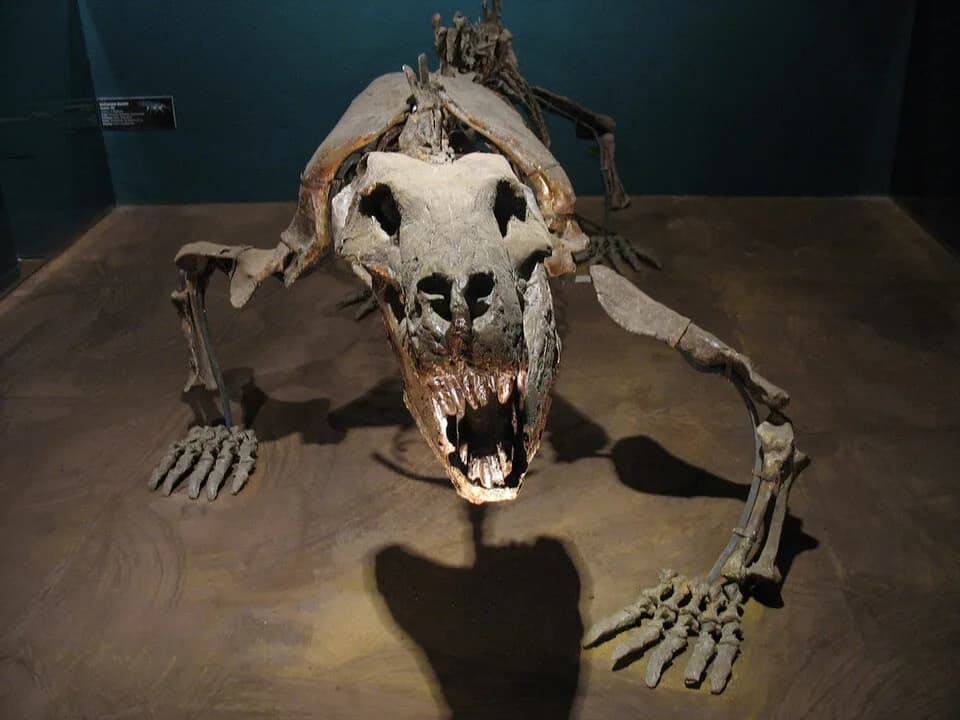
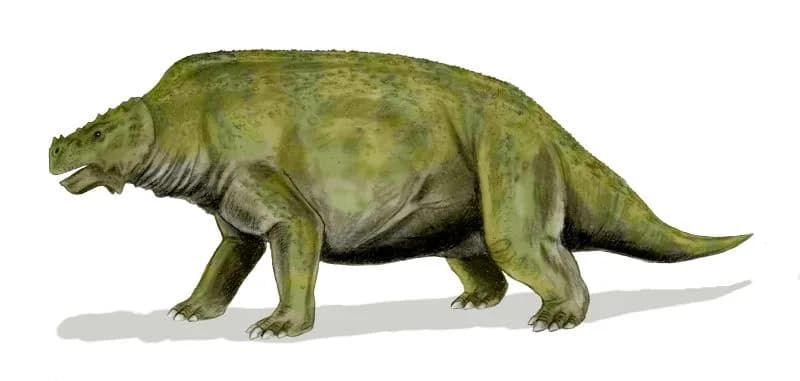
Estemmenosuchus was an imposing animal for its time, reaching 3 to 4 meters in total length and a height of approximately 1.5 meters at the top of its cranial protuberances. Its weight is estimated between 300 and 500 kilograms, making it one of the largest terrestrial animals of the Middle Permian. Its massive, stocky body was supported by robust, short limbs with a semi-erect posture typical of primitive therapsids. The skull alone measured approximately 50 to 65 centimeters in length, a considerable size even compared to the largest predators of the era. Its overall silhouette evoked that of a prehistoric rhinoceros, with a wide and powerful build.
The diet of Estemmenosuchus is a matter of debate among paleontologists. Its mixed dentition — with broad, spatulate incisors at the front and smaller teeth at the back — suggests an herbivorous or omnivorous feeding mode. Some researchers believe it fed primarily on low vegetation, ferns, and horsetails that bordered the waterways of the Permian Urals. Others suggest it supplemented its plant diet with invertebrates, carrion, or small animals opportunistically captured. Analyses of cranial morphology reveal a masticatory apparatus adapted for grinding rather than slicing, which favors the hypothesis of a predominantly herbivorous diet.
Estemmenosuchus lived in the fluvial and lacustrine environments of the Ural region, in present-day central Russia. During the Middle Permian, this area was located at northern temperate latitudes on the supercontinent Pangaea, with a relatively humid climate and well-defined seasons. The landscape consisted of vast alluvial plains crossed by meandering rivers, bordered by forests of primitive conifers and tree ferns. The Ochyor fossil deposits in the Perm region yielded the most complete specimens, preserved in reddish fluviatile sediments. Estemmenosuchus shared its habitat with other dinocephalians, giant amphibians, and various species of herbivorous and carnivorous therapsids.
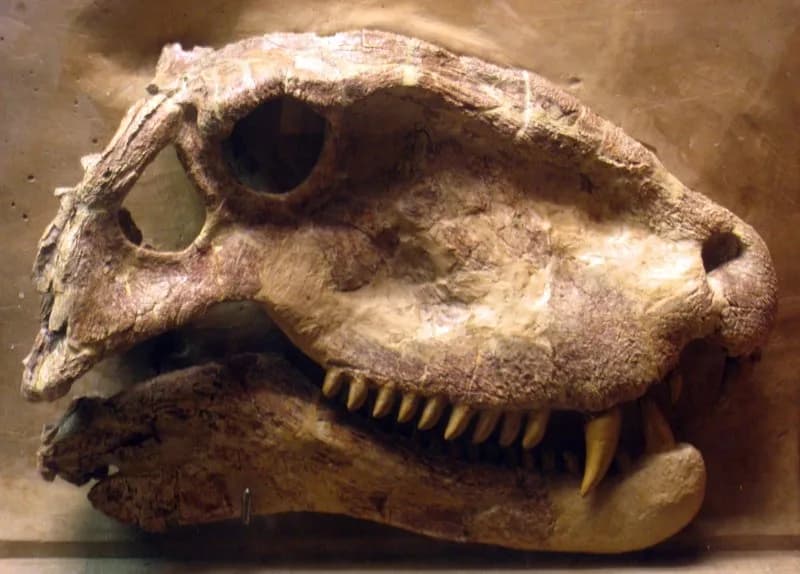
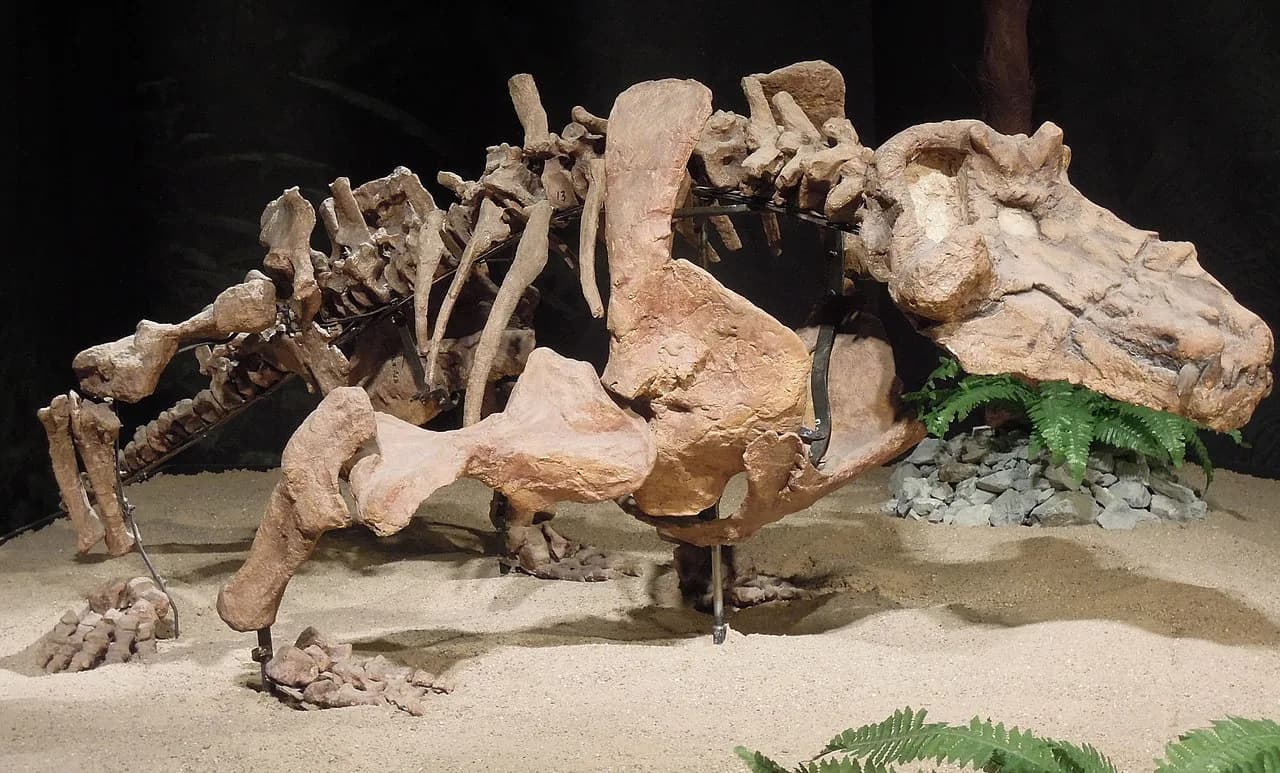
Estemmenosuchus's anatomy is dominated by its extraordinary skull, adorned with spectacular bony protuberances that give it a unique appearance among all animals that have ever existed. Two large horns or bony bosses rise above the orbits, while other lateral outgrowths considerably widen the posterior part of the skull, giving it a bizarre 'crown' appearance. These structures are composed of solid bone that was covered in keratin during the animal's life. The exact function of these ornaments remains debated: sexual display, intraspecific recognition, or thermoregulation. Its body featured a wide, deep ribcage adapted for digesting large quantities of plant matter. Exceptional fossil skin impressions reveal hairless, smooth skin.
Estemmenosuchus's behavior can be partially reconstructed thanks to the exceptional quality of certain fossils and comparisons with modern large herbivores. The spectacular cranial protuberances likely played a central role in social interactions: ritualized combat between males for access to females, long-distance recognition between individuals of the same species, and intimidation of potential predators. Its large size protected it from most predators of the era. Estemmenosuchus likely lived in loose groups near water sources, browsing on riverside vegetation. Its metabolism was probably intermediate between that of ectothermic reptiles and modern endothermic mammals, a characteristic trait of primitive therapsids.
Estemmenosuchus was discovered and described in 1960 by Soviet paleontologist Pyotr Chudinov, from remarkably complete fossils found in the Permian deposits of Ochyor, near the city of Perm in Russia's Ural region. Two species are recognized: E. uralensis (the type species, the largest) and E. mirabilis (slightly smaller, with different cranial ornaments). The Ochyor fossils are exceptional because they include not only near-complete skeletons but also rare skin impressions showing that the skin was smooth and devoid of scales — a revolutionary discovery for understanding tegument evolution in mammal ancestors. These specimens are housed at the Paleontological Museum of Moscow and rank among the finest therapsid fossils in the world.
| Period | Permien moyen / Middle Permian (Wordien) |
| Era | Paléozoïque / Paleozoic |
| Age | 267-260 Ma |
| Location | Russie (Oural) / Russia (Urals) |
| Length | 3-4 m |
| Height | 1.5 m |
| Weight | 300-500 kg |
| Diet | Omnivore |
| Discovery | 1960 |
Estemmenosuchus measured between 3 and 4 meters long, weighing an estimated 300 to 500 kilograms. This Middle Permian therapsid (Wordian, ~267 Ma) lived in the present-day Ural region of Russia. It was one of the largest terrestrial tetrapods of its era, described in 1960 by Russian paleontologist Tchudinov.
The bony cranial protrusions of Estemmenosuchus — lateral horns directed sideways and frontal bosses — were its most distinctive anatomical feature among dinocephalian therapsids. Their precise function remains debated: species recognition signals for intraspecific identification, ritualized combat between individuals, or thermoregulation via vascularized skin.
Estemmenosuchus was omnivorous with pronounced herbivorous tendencies. Its dentition combined well-developed canines inherited from carnivorous ancestors with blunter cheek teeth adapted for grinding plant material. This combination, rare among dinocephalians, allowed it to exploit a wide variety of resources in the swampy ecosystems of the Middle Permian in Russia.
Skull of Estemmenosuchus uralensis showing the characteristic bony protuberances
Wikipedia Commons
Artistic reconstruction of Estemmenosuchus uralensis in its Permian environment
Dmitry Bogdanov, CC BY-SA 3.0