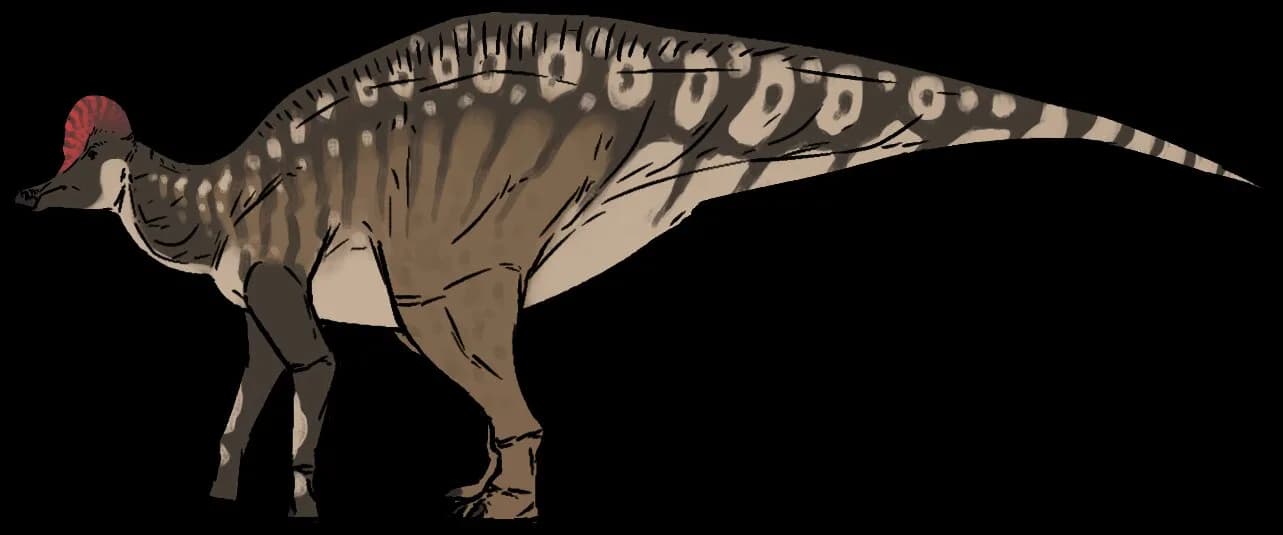
Corythosaure
Corythosaurus casuarius is a hadrosaurid 8 to 9 metres long and 3 to 4.5 tonnes, described in 1914 in Alberta and also found in Montana. It lived 77 to 75 million years ago. Its hollow crest, shaped like a Corinthian helmet, earns it the name « helmet lizard » and amplified its calls. More than twenty skulls show its shape changed with age and sex.
Corythosaurus lived during the Late Cretaceous, approximately 77 to 75.7 million years ago, during the Campanian stage of the Mesozoic era. This period was marked by a remarkable diversity of duck-billed dinosaurs (hadrosaurs) in North America, where the vast Western Interior Seaway divided the continent into two separate landmasses. The western portion, known as Laramidia, harbored an exceptionally diverse fauna with numerous coexisting dinosaur species. The climate was warm and humid, with dense forests of conifers, flowering plants, and ferns bordering the marshy coastal plains that provided ideal habitats for these large herbivores.
Corythosaurus measured approximately 9 meters long with an estimated weight of 3 to 4 tonnes. It stood about 2.5 meters tall at the hips in quadrupedal posture, but could rear up on its hind legs to reach over 4 meters tall. Its most distinctive feature was its Corinthian helmet-shaped cranial crest, from which its name meaning 'helmet lizard' derives. This rounded, laterally compressed crest measured about 30 centimeters tall and varied in shape and size depending on the individual's age and possibly sex.
Corythosaurus was a herbivore equipped with an extremely efficient chewing system. Its dental batteries, comprising hundreds of teeth stacked in tight rows, created a continuously renewed grinding surface — when one tooth wore down, it was replaced by the next. This dental system, among the most sophisticated in the animal kingdom, allowed it to chew a wide variety of plants including conifers, magnolias, ferns, and early flowering plants. Fossilized stomach contents revealed the presence of conifer needles, seeds, and twigs.
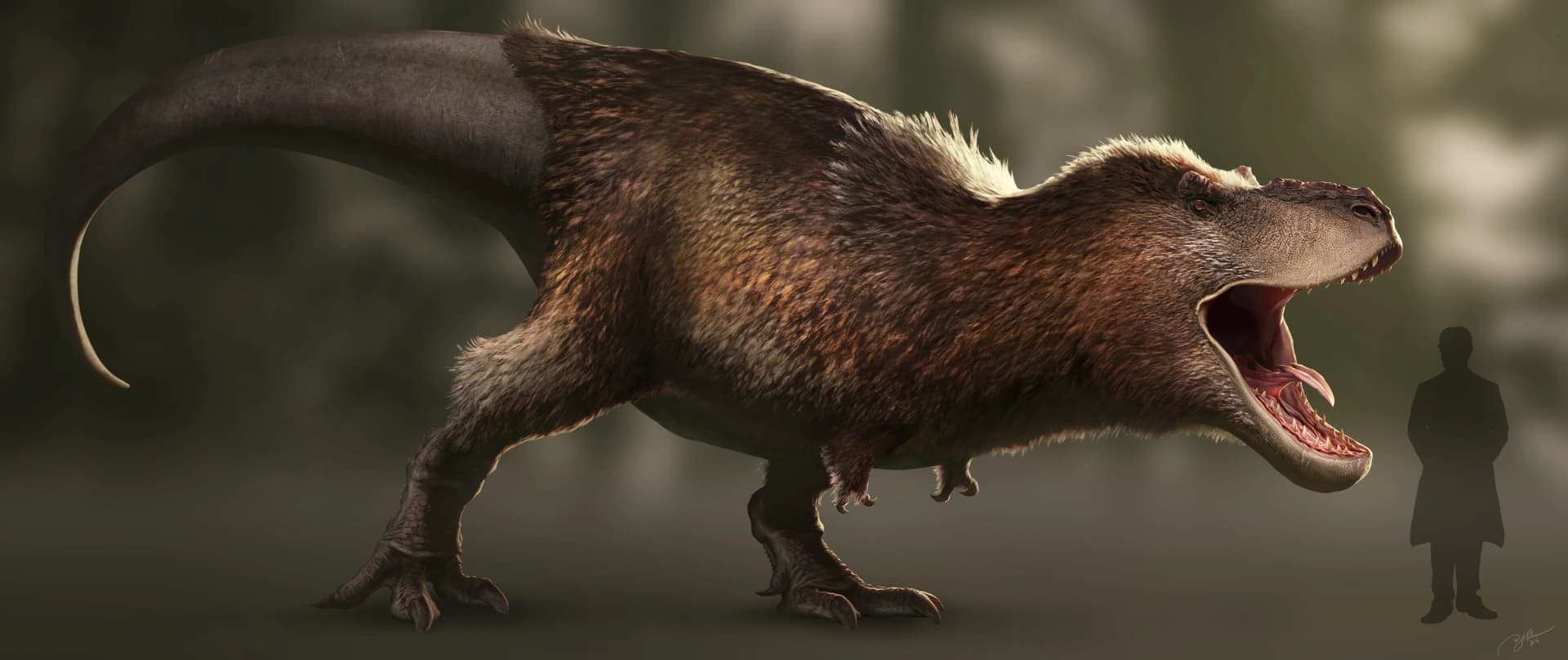
Corythosaurus inhabited the forested coastal plains and wetlands of western North America, in what is now Alberta, Canada. Its fossils come primarily from the Dinosaur Park Formation, an environment of coastal alluvial plains with meandering rivers, expansive swamps, and dense forests of conifers and flowering plants. The proximity of the Western Interior Seaway created a humid, temperate coastal climate that supported lush vegetation year-round. Corythosaurus shared its habitat with other hadrosaurs like Lambeosaurus and Parasaurolophus, as well as formidable predators like the tyrannosaur Gorgosaurus, creating a complex and dynamic Late Cretaceous ecosystem.
Corythosaurus anatomy was typical of lambeosaurines, the hollow-crested subfamily of hadrosaurs. Its distinctive cranial crest contained complex, elongated nasal passages that ran through the interior of the bony structure before joining the trachea at the base of the skull. This unique acoustic configuration probably produced resonant low-frequency sounds that could travel long distances, with each hadrosaur species having its own distinctive vocal signature thanks to the unique shape and internal geometry of its crest. Its broad, toothless beak at the front of the jaw served to efficiently cut vegetation, while the dental batteries at the back performed the essential grinding necessary for digestion.
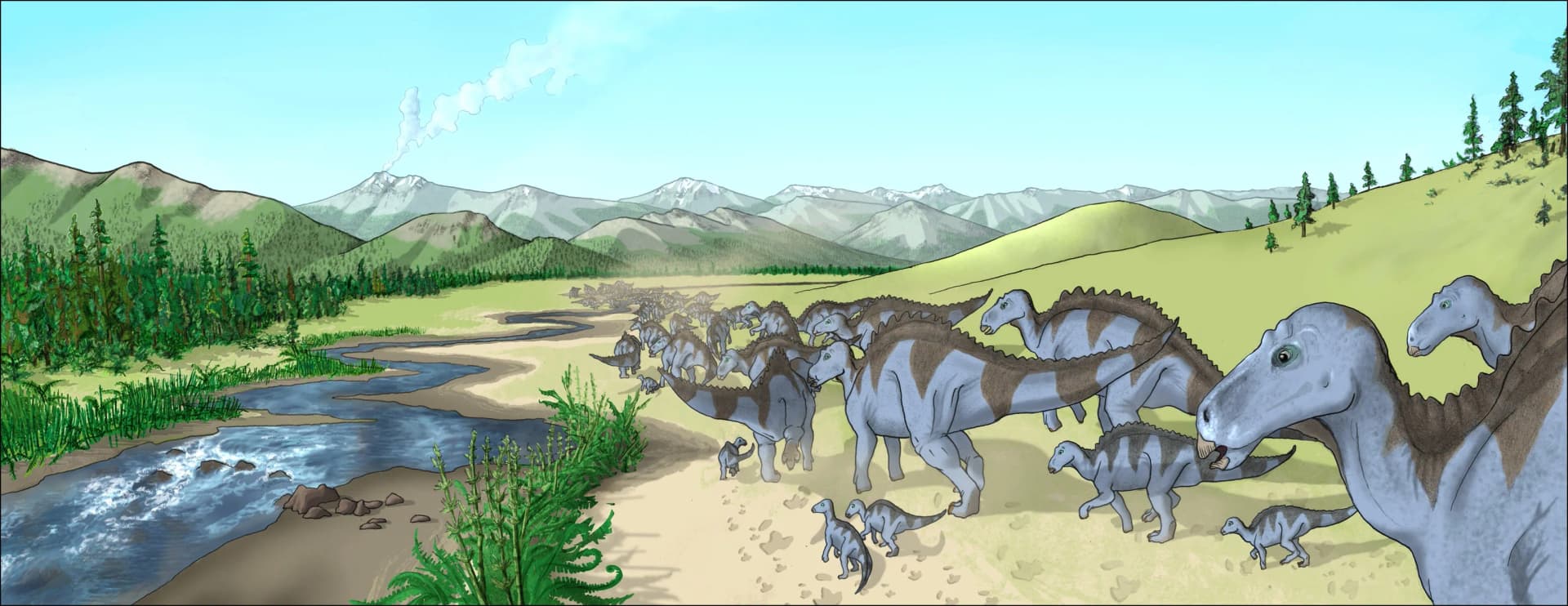
Corythosaurus was a gregarious animal that lived in large herds, as proven by fossil sites containing dozens of individuals. Its crest likely served as a vocal amplifier, allowing it to communicate over long distances through dense forests. The sounds produced by the crest varied according to the individual's age and size, enabling complex communication within the herd. It alternated between bipedal and quadrupedal locomotion, moving on all fours to graze and rearing up on two legs to run or survey the surroundings. Its running speed was estimated at 40-50 km/h.
Corythosaurus was discovered in 1912 by Barnum Brown in the Dinosaur Park Formation, along the Red Deer River in Alberta, Canada. The holotype (AMNH 5240) is one of the best-preserved dinosaur skeletons in the world, including fossilized skin impressions showing a pattern of polygonal scales of different sizes across the entire body. Brown described it the same year in 1914, naming it after its crest resembling a Corinthian helmet. Since then, numerous specimens have been found, including individuals of all ages, allowing documentation of crest development from juvenile to adult.
| Period | Crétacé supérieur / Late Cretaceous (Campanien) |
| Era | Mésozoïque / Mesozoic |
| Age | 77–75 Ma |
| Location | Amérique du Nord / North America (Alberta, Canada ; Montana, USA) |
| Length | 8–9 m |
| Height | ~3.5 m |
| Weight | 3 000–4 500 kg |
| Diet | Herbivore |
| Discovery | 1914 |
The hollow crest of Corythosaurus casuarius, shaped like a Corinthian helmet at about 30 cm tall, contained complex elongated nasal passages communicating with the trachea. This acoustic architecture likely produced resonant low-frequency sounds, each lambeosaurine species having its own vocal signature. Digital simulations of the nasal passages have suggested deep harmonics carrying far through dense Campanian forests.
Corythosaurus casuarius measured about 8 to 9 meters in length weighing 3,000 to 4,500 kg. Its broad, toothless beak at the front cut vegetation, while its dental batteries (hundreds of stacked teeth) ground conifers, ferns, and angiosperms. Fossilized stomach contents confirm the presence of conifer needles, seeds, and twigs. Its teeth wore down and were continuously replaced, one of the most efficient systems of the Mesozoic.
Over 20 Corythosaurus casuarius skulls have been discovered, showing that the crest varied considerably with age and possibly sex. Juveniles had a little-developed or absent crest. In adults, the rounded, laterally compressed crest reached up to 30 cm tall. Barnum Brown described the species in 1914 from holotype AMNH 5240, remarkable for preserved skin impressions showing a polygonal scale pattern.
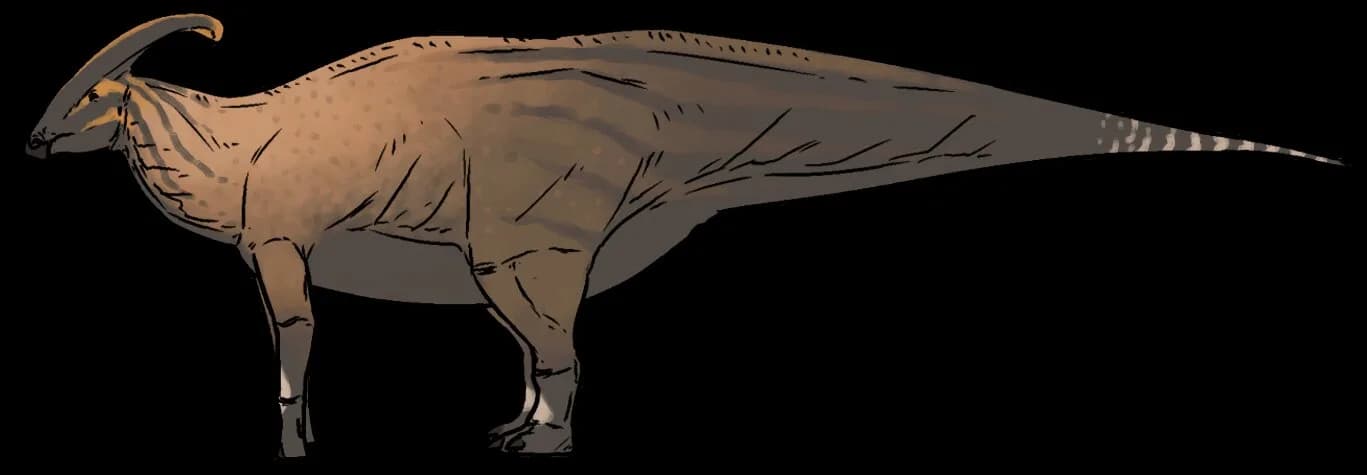
Life reconstruction of Corythosaurus casuarius
Connor Ashbridge, CC BY-SA 4.0, via Wikimedia Commons
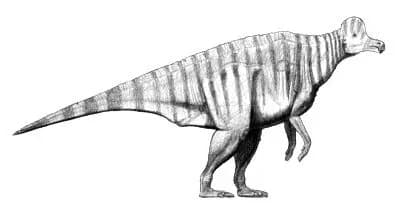
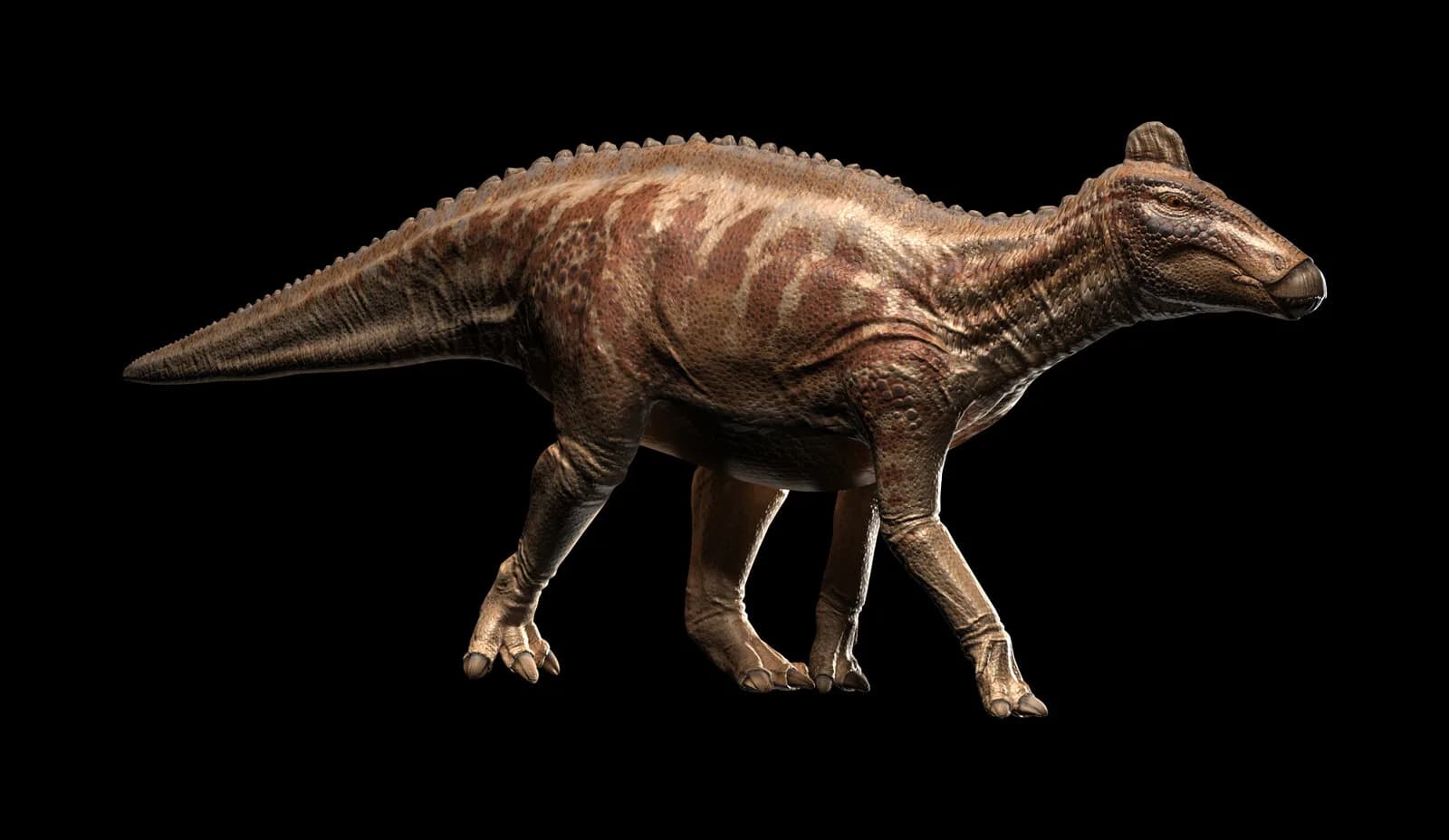
Corythosaurus casuarius life reconstruction
John Conway, CC BY-SA 3.0