Lézard effrayant
Daspletosaurus torosus is a tyrannosaurid 8 to 9 metres long and 2.5 to 3 tonnes, described in 1921 from Alberta and Montana. It lived 77 to 74 million years ago and shared its ecosystem with Gorgosaurus: two large tyrannosaurs side by side, a rare situation in the fossil record. Its name means « frightful lizard » and its skull reached a metre.
Playable in Path of Titans
See Daspletosaurus torosus's stats, abilities and role on our survival server.
Daspletosaurus lived during the Late Cretaceous, approximately 77 to 74 million years ago, in North America. This large tyrannosaur was one of the dominant predators in the ecosystem of the Oldman and Dinosaur Park formations in present-day Alberta, Canada. It preceded the famous Tyrannosaurus rex by several million years and is considered one of its potential ancestors or close relatives. Daspletosaurus coexisted with another, lighter tyrannosaur, Gorgosaurus, which poses one of the most notable questions in paleoecology: how could two such similar apex predators coexist in the same ecosystem?
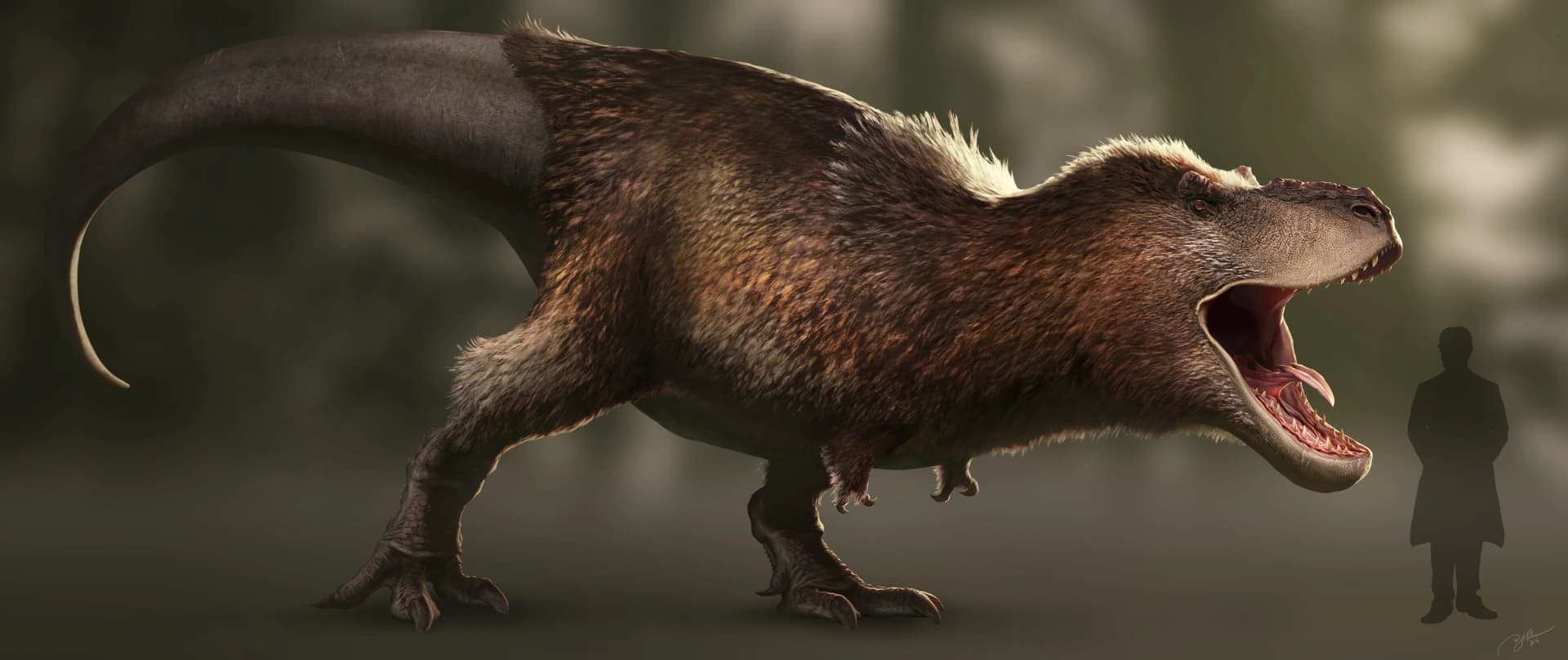
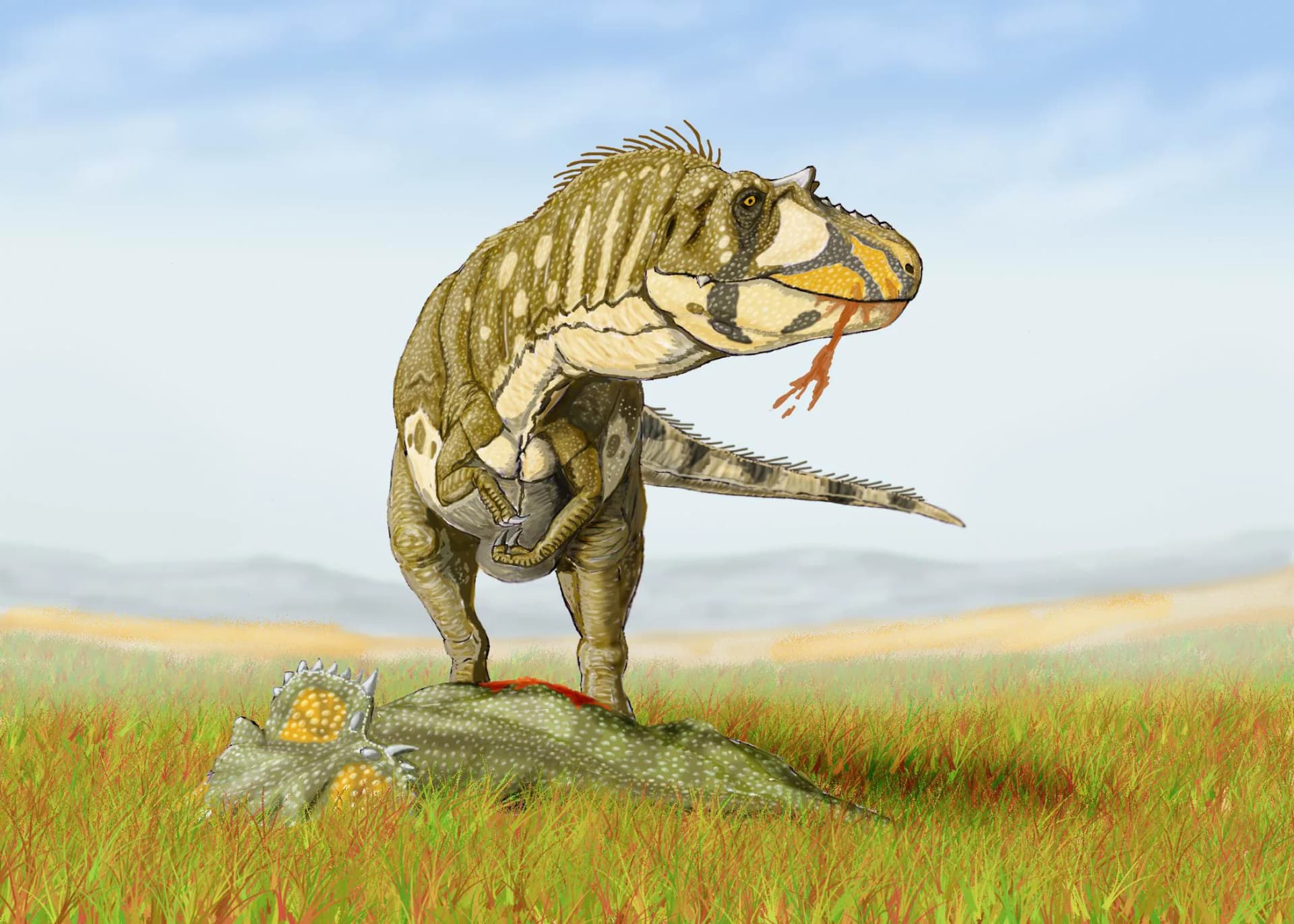
Daspletosaurus was a large tyrannosaur, measuring between 8 and 9 meters long with an estimated weight between 2.5 and 3 tonnes. While smaller than its descendant T. rex (which reached 12 meters and 8 tonnes), Daspletosaurus was nonetheless one of the largest predators of its time. Its skull measured approximately one meter long, wider and more massive proportionally than that of Gorgosaurus, with thick, conical teeth capable of crushing bone. Its morphology was more robust and stocky than Gorgosaurus, with powerful but proportionally shorter hindlimbs, indicating a less speedy but more powerful animal than its more gracile contemporary.
Daspletosaurus was a hypercarnivore specialized in hunting the large ceratopsians and hadrosaurs that populated the Cretaceous Alberta plains. Its massive jaw and thick teeth were particularly adapted for attacking heavily armored dinosaurs like Centrosaurus and Chasmosaurus, while Gorgosaurus, lighter and faster, specialized more in hunting agile hadrosaurs. Bite marks attributed to Daspletosaurus have been found on ceratopsian frills, proving it did not hesitate to confront these horn-armed herbivores. Its bite force was considerable, capable of perforating bony shields and crushing bones with formidable efficiency.
Daspletosaurus inhabited the vast coastal plains of western North America, along the western shore of the Western Interior Seaway. The Oldman and Dinosaur Park geological formations in southern Alberta represent a paleo-environment of subtropical alluvial plains traversed by meandering rivers, bordered by conifer forests, palms, and ferns. The climate was warm and humid, markedly milder than Alberta's current climate. This extremely productive ecosystem supported spectacular dinosaur biodiversity, with dozens of species of ceratopsians, hadrosaurs, ankylosaurs, and theropods coexisting in the same habitat.
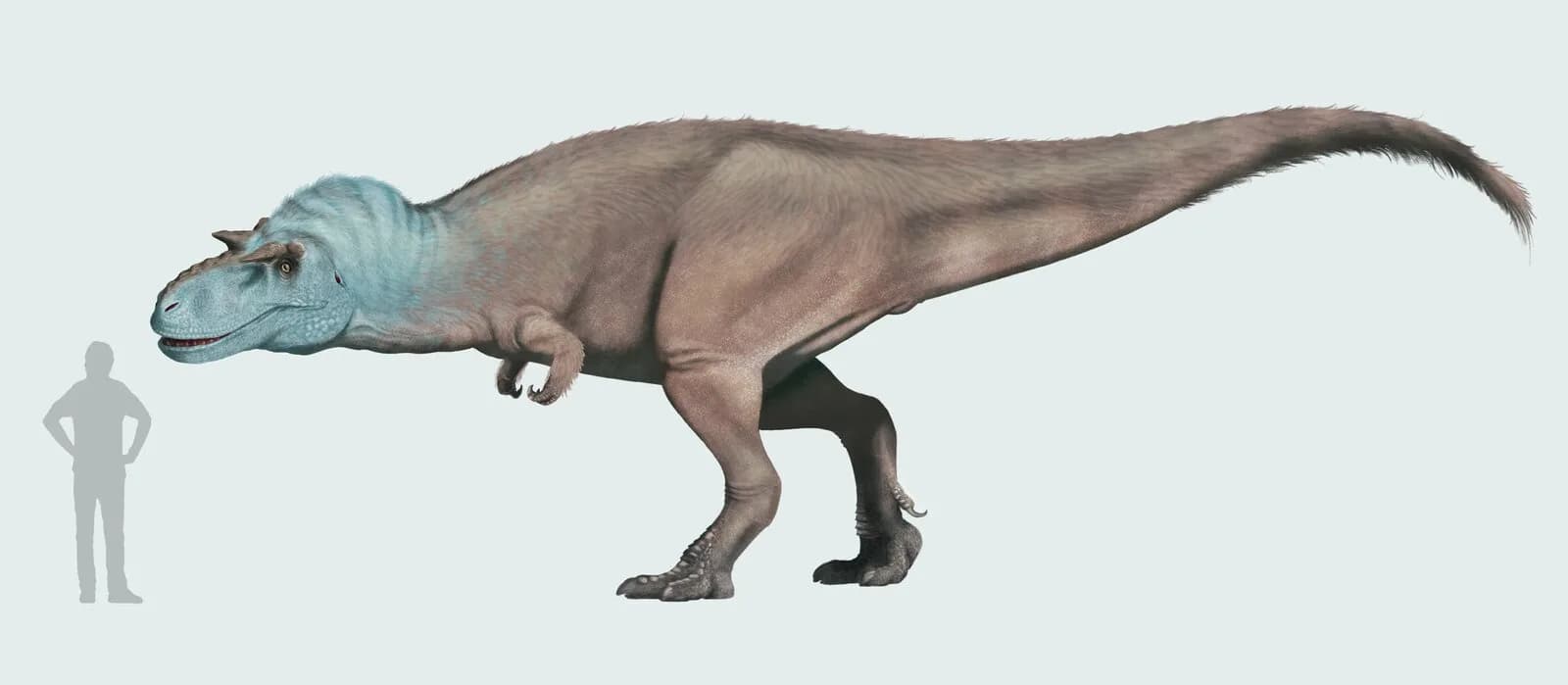
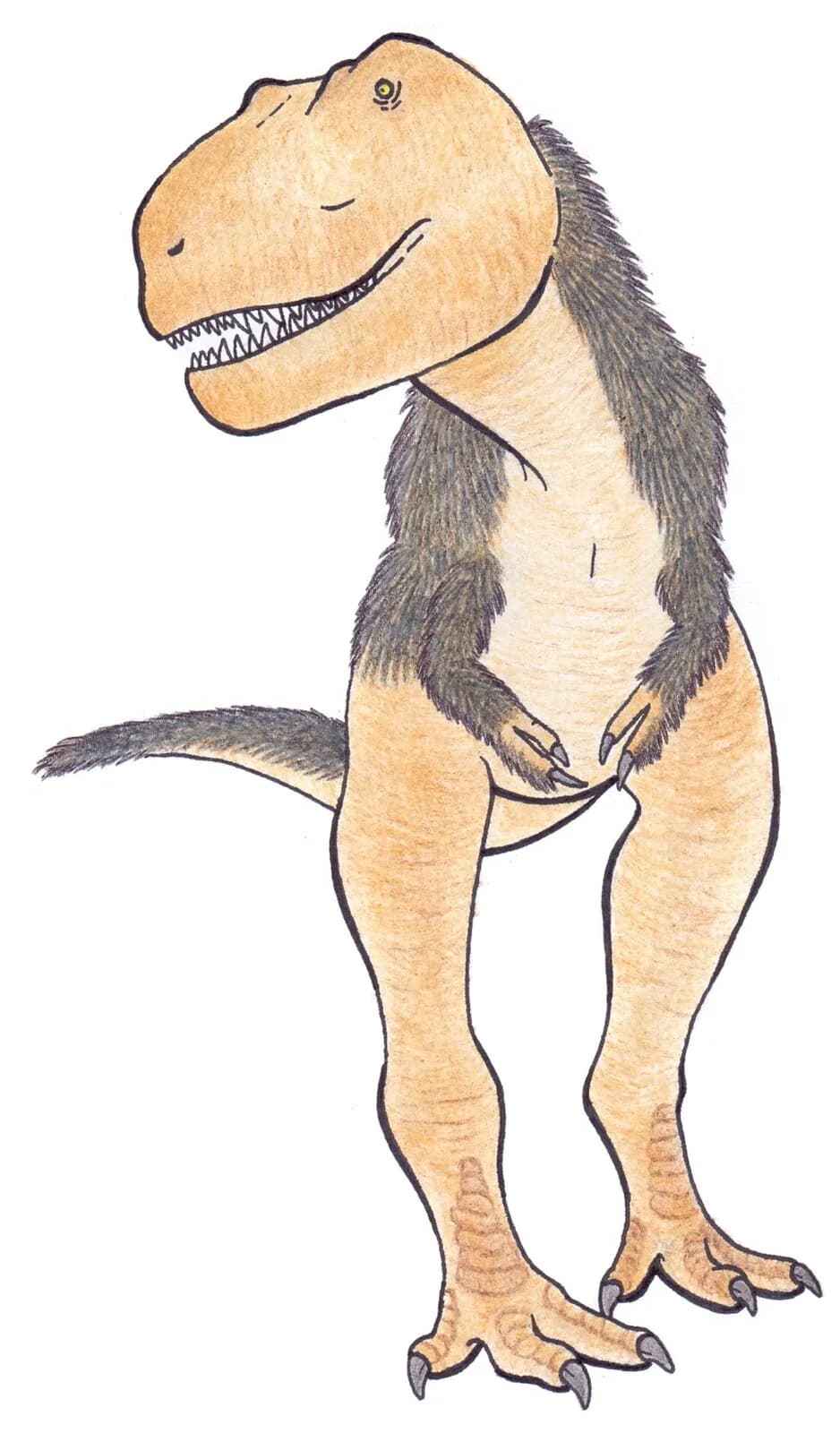
The anatomy of Daspletosaurus is typical of tyrannosaurids, with a massive skull, tiny two-fingered arms, and powerful hind legs, but with proportions that distinguish it from its cousins. Its skull, wider and more robust than Gorgosaurus, possessed pronounced crests and orbital rugosities that gave it a particularly fierce appearance. Its teeth were thicker and more conical than those of most tyrannosaurs, adapted for crushing bone rather than simply shearing flesh. Its arms, while small, bore two functional fingers equipped with robust claws. The skull structure suggests well-developed sensory capabilities, including excellent sense of smell and stereoscopic binocular vision.
The behavior of Daspletosaurus is one of the best documented among tyrannosaurs thanks to several exceptional discoveries. A site in the Two Medicine Formation of Montana contains the remains of three individuals of different sizes found together, suggesting possible family group hunting behavior. Bone pathologies on skulls show healed injuries inflicted by other Daspletosaurus, indicating regular intraspecific combat, probably for territorial dominance or mating access. The hypothesis of coexistence with Gorgosaurus rests on niche partitioning: the more powerful Daspletosaurus targeted armored prey, while the faster Gorgosaurus hunted agile hadrosaurs.
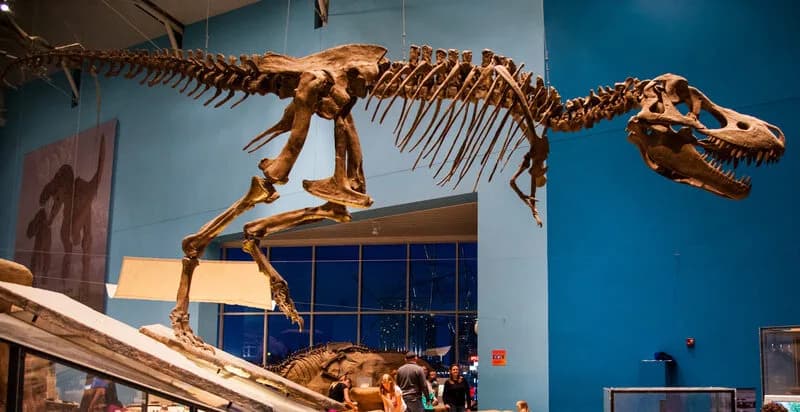
The first fossils of Daspletosaurus were discovered by Charles M. Sternberg in 1921 in the Oldman Formation of Alberta but were not formally described until 1970 by Dale Russell, who erected the new genus. The holotype specimen is a partial skeleton including a skull, vertebrae, and limb elements, housed at the Canadian Museum of Nature in Ottawa. Since then, numerous specimens have been found in Alberta and Montana, some remarkably complete. In 2017, a new species, D. horneri, was described from Montana, featuring a face covered in flat sensory scales rather than lips, a discovery that caused a sensation in the paleontological community and reignited the debate about tyrannosaur appearance.
| Period | Crétacé supérieur / Late Cretaceous (Campanien) |
| Era | Mésozoïque / Mesozoic |
| Age | 77–74 millions d'années / 77–74 million years ago |
| Location | Amérique du Nord (Alberta, Montana) / North America (Alberta, Montana) |
| Length | 8–9 m |
| Height | ~3 m |
| Weight | 2,5–3 tonnes |
| Diet | Carnivore |
| Discovery | 1921 |
Daspletosaurus torosus measured between 8 and 9 meters long and weighed an estimated 2.5 to 3 tonnes. Its skull reached approximately one meter in length — wider and more massive than its contemporary Gorgosaurus — with thick, conical teeth capable of crushing the bones of ceratopsians such as Centrosaurus.
Paleontologists propose that the two tyrannosaurs shared their territory through niche partitioning: the more robust Daspletosaurus targeted armored ceratopsians like Chasmosaurus, while the faster Gorgosaurus specialized in more agile hadrosaurs. Bite marks attributed to Daspletosaurus found on ceratopsian frills support this hypothesis.
The first Daspletosaurus fossils were unearthed by Charles M. Sternberg in 1921 in the Oldman Formation of Alberta, Canada. The genus was formally described in 1970 by Dale Russell. The holotype, housed at the Canadian Museum of Nature in Ottawa, includes a partial skull, vertebrae, and limb elements.
Artistic reconstruction of Daspletosaurus torosus
Wikimedia Commons / Dmitry Bogdanov
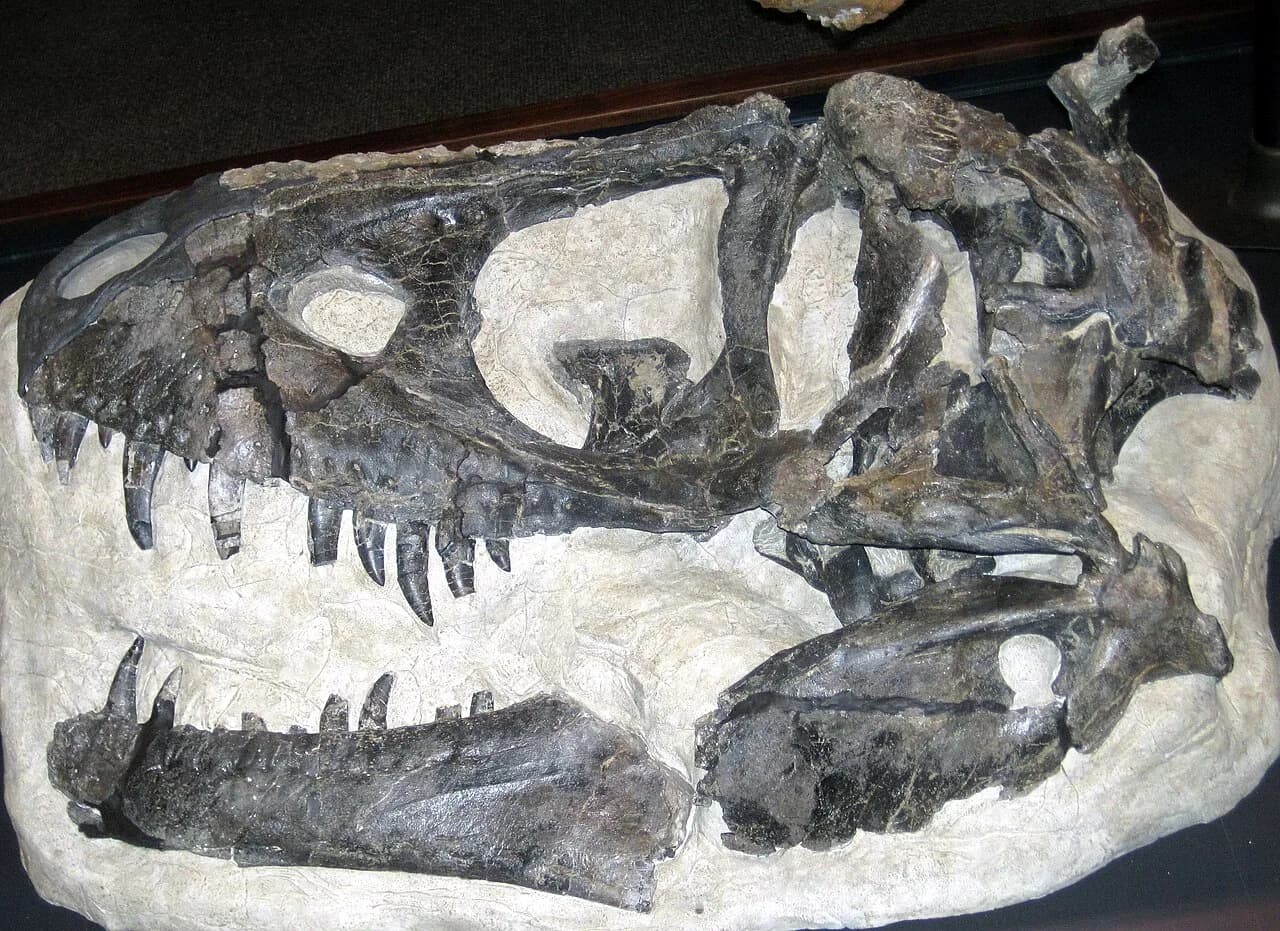
Mounted skeleton of Daspletosaurus horneri in museum
Wikimedia Commons