Lézard à crête gelée
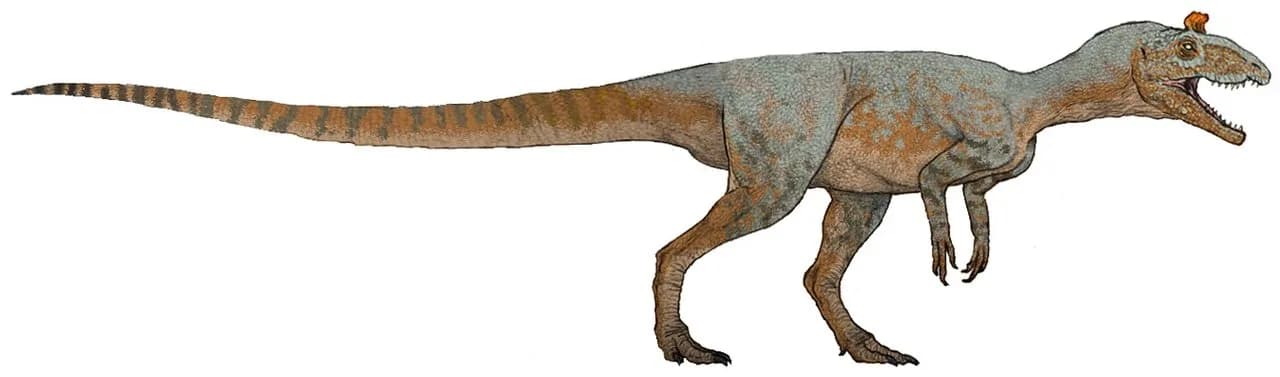
Cryolophosaurus ellioti is one of the first carnivorous dinosaurs unearthed in Antarctica: 6.5 metres and around 465 kilograms, found on Mount Kirkpatrick and described in 1991. It lived 194 million years ago, when the continent still carried a varied fauna. Its fan-shaped head crest, raised above the eyes, earned it the nickname « Elvisaurus » among palaeontologists.
Cryolophosaurus ellioti lived during the Early Jurassic period, approximately 194 million years ago, during the Sinemurian-Pliensbachian stage. This period corresponds to the early stages of theropod dinosaur diversification, long before the appearance of the great Cretaceous predators. In the Early Jurassic, the supercontinent Pangaea was only beginning to fragment, and Antarctica occupied a more northerly position than today, connected to South America, Africa, and Australia within Gondwana. The Antarctic climate of the time was temperate, far milder than today's glacial conditions, with average temperatures allowing the development of conifer and fern forests. Cryolophosaurus shared its ecosystem with prosauropods like Glacialisaurus and early sauropodomorphs, revealing an unexpected Jurassic biodiversity at high latitudes.
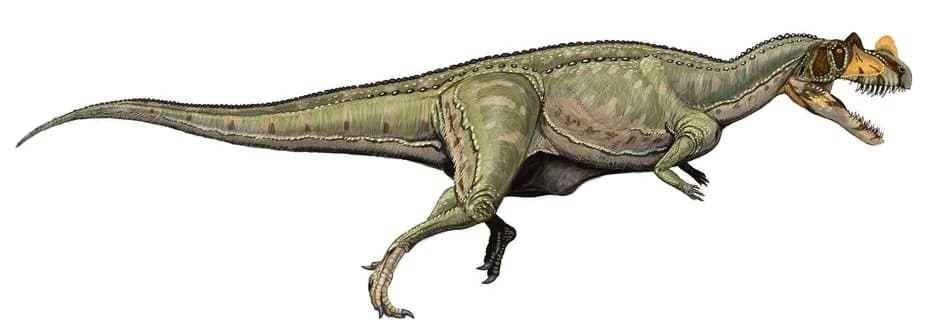
Cryolophosaurus ellioti measured approximately 6 to 6.5 meters in total length and probably reached a height of 1.5 meters at the hips, with an estimated weight between 350 and 465 kilograms. These dimensions made it one of the largest known theropods of the Early Jurassic, an era when most carnivorous dinosaurs were still relatively modest in size. Its skull measured about 65 centimeters in length and featured a robust construction adapted for active predation. The hindlimbs were powerful and well-proportioned, typical of an agile bipedal predator. The forelimbs, though proportionally longer than those of later tyrannosaurs, possessed sharp claws useful for grasping prey. The long, muscular tail served as a counterbalance during rapid locomotion.
An active carnivore and likely the apex predator of its Antarctic ecosystem, Cryolophosaurus possessed dentition characteristic of hunting theropods, with laterally compressed teeth curved backward and bearing fine serrations along their edges. These teeth were perfectly adapted for slicing flesh and maintaining a grip on struggling prey. As the largest known predator in its Early Jurassic Antarctic environment, Cryolophosaurus likely hunted prosauropods such as Glacialisaurus, as well as other medium-sized herbivores present in the temperate forests of Gondwana. Its position as the dominant predator suggests an active hunting strategy rather than scavenging, though it certainly exploited available carcasses opportunistically like most large carnivores.
Cryolophosaurus inhabited the temperate forests of Jurassic Antarctica, in the Mount Kirkpatrick region of the Transantarctic Mountains, at an elevation that would have been considerably lower than today. Some 194 million years ago, Antarctica was part of Gondwana and situated at lower latitudes, enjoying a temperate climate with marked seasons but without the extreme temperatures the continent experiences today. The environment was dominated by podocarp conifer forests and tree ferns, crossed by waterways and punctuated by clearings. The Hanson Formation, where the fossils were discovered, represents an ancient fluvial and volcanic deposit, indicating a dynamic landscape with regular volcanic activity. Despite reduced light during long polar winters, the ecosystem supported a diverse fauna.
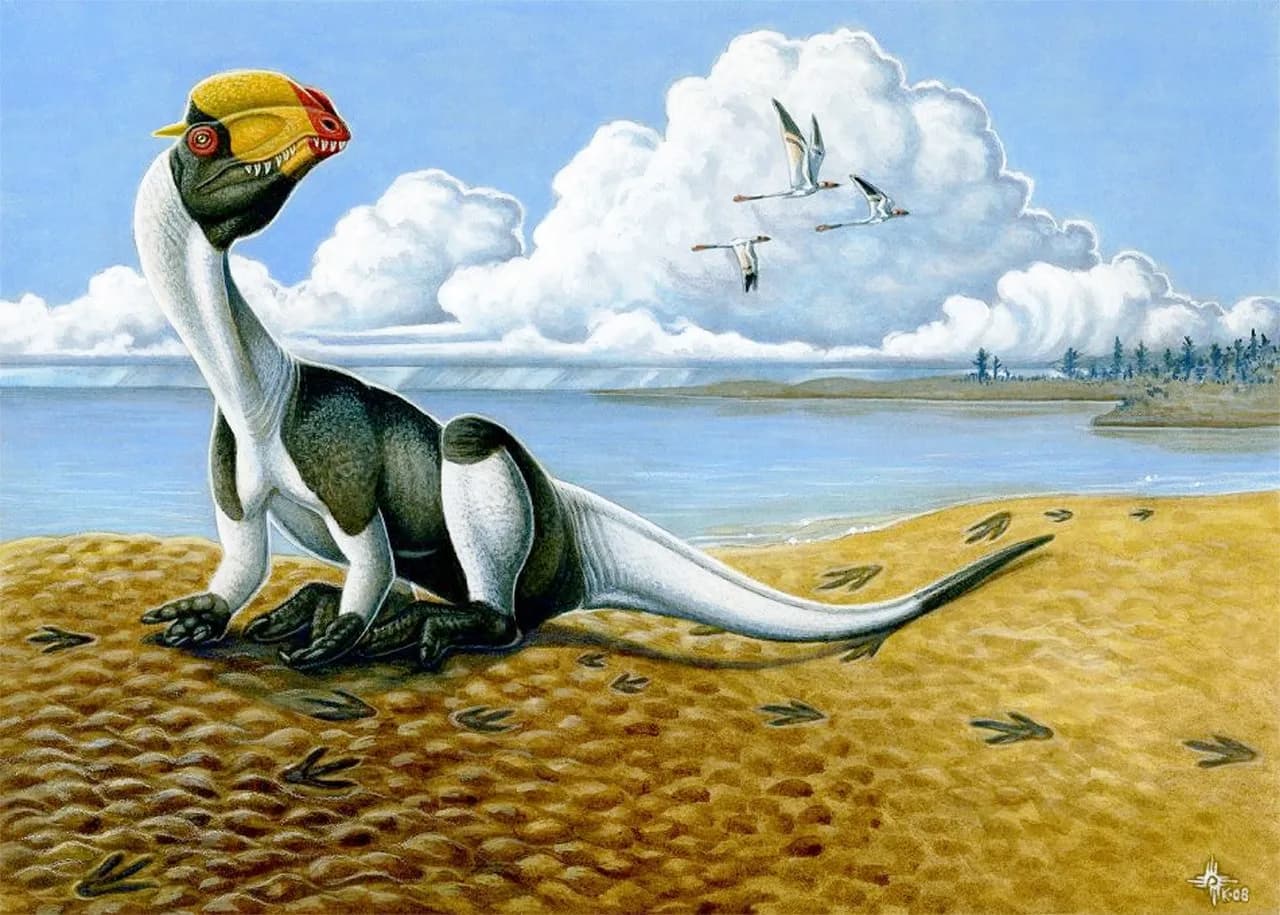
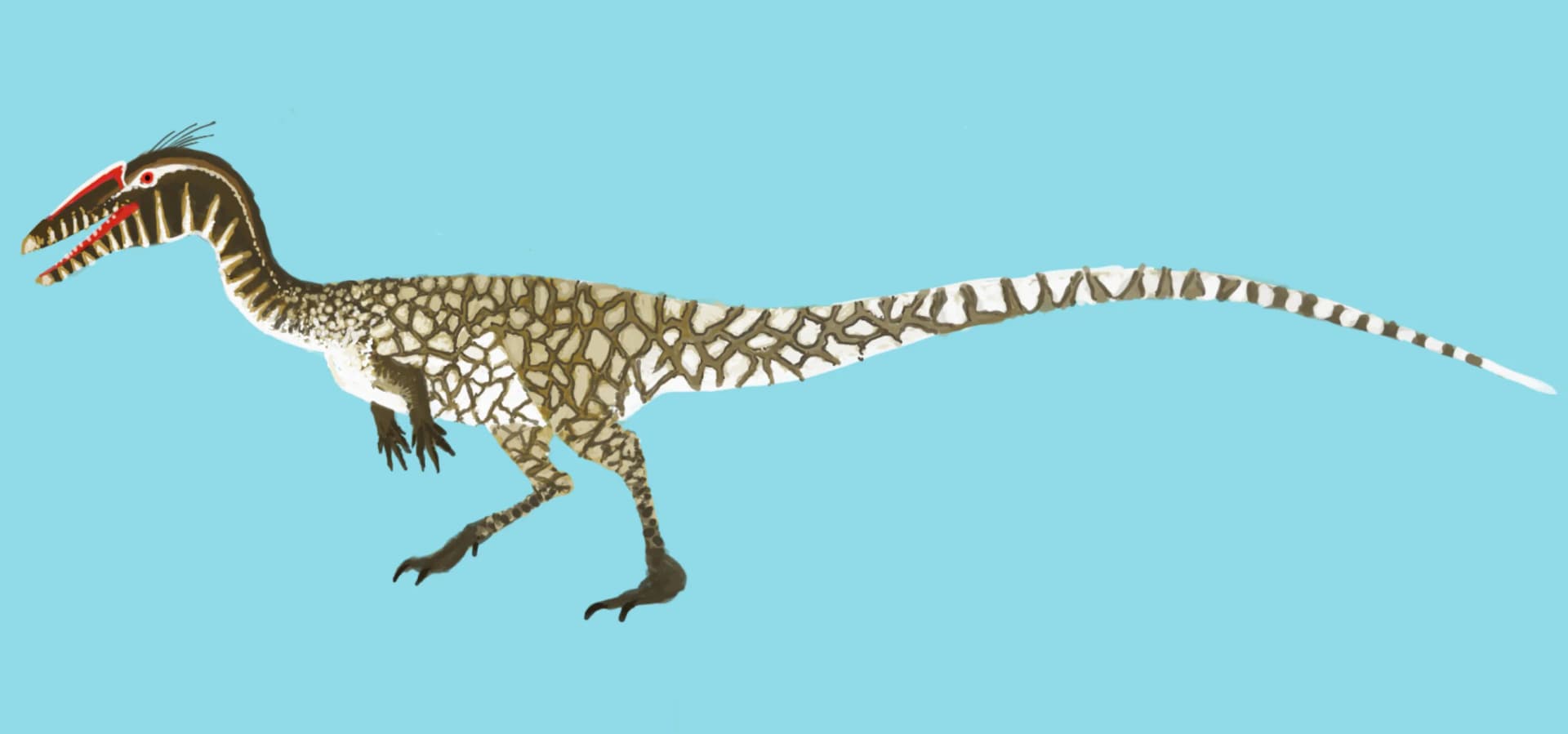
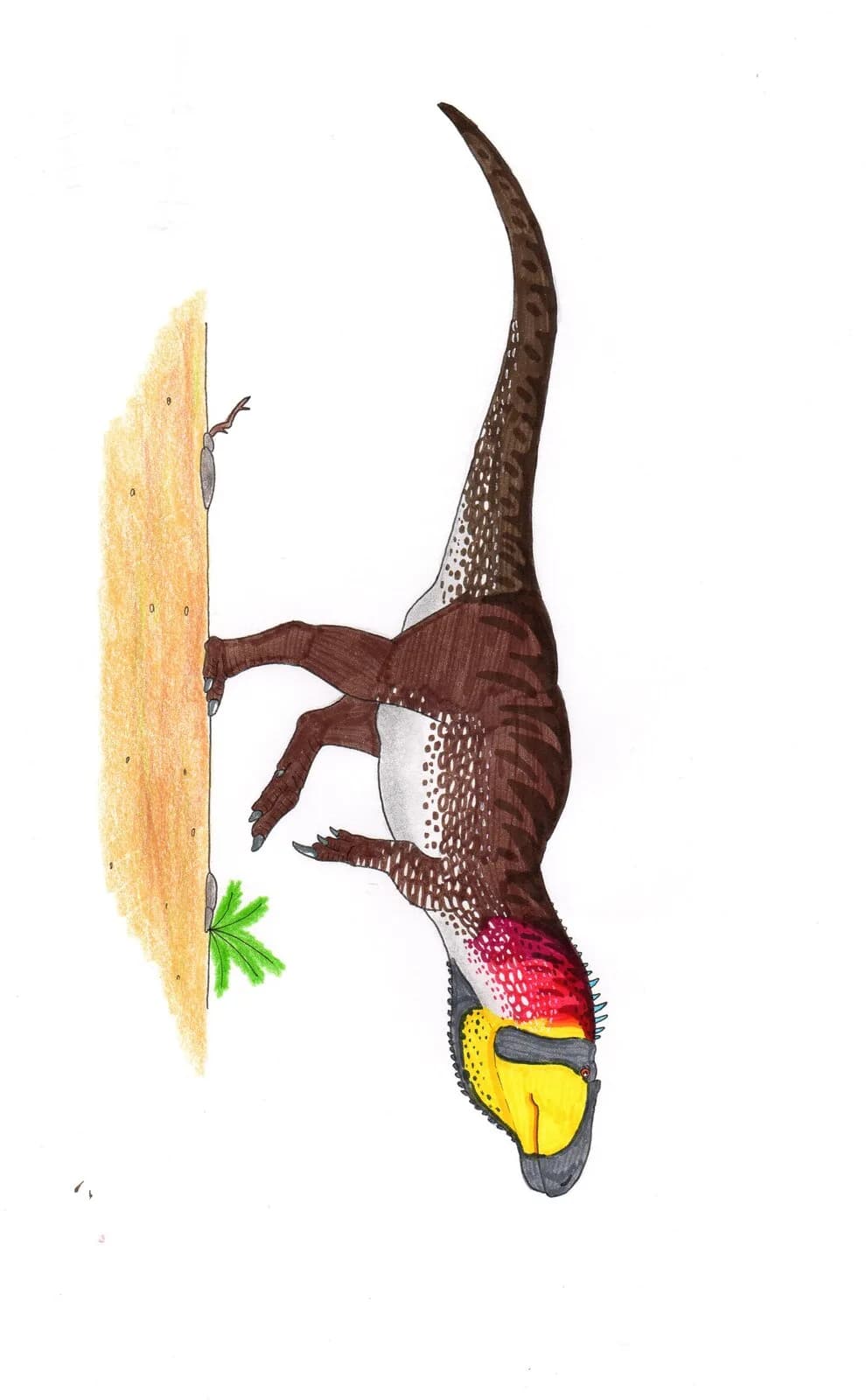
The most remarkable anatomical feature of Cryolophosaurus is its distinctive cranial crest, a fan-shaped bony structure oriented perpendicular to the skull, rising above the eyes like a crown. This unique crest, formed by the extension and fusion of the nasal and lacrimal bones, earned it the popular nickname 'Elvisaurus' in reference to singer Elvis Presley's pompadour hairstyle. Unlike the parallel crests seen in Dilophosaurus, the crest of Cryolophosaurus is transverse and ornamental, suggesting a primary role in intraspecific visual communication rather than combat. The skull itself was robust and well-built for an Early Jurassic theropod, with powerful jaws and developed mandibular musculature. The postcranial skeleton displayed intermediate features between primitive theropods and more derived forms, including a pelvis typical of tetanurans and elongated cervical vertebrae.
The behavior of Cryolophosaurus is inferred from its anatomy and unique ecological context. As the apex predator of Jurassic Antarctica, it would have maintained vast hunting territories to meet its energy needs. The elaborate cranial crest suggests complex social behaviors, likely related to sexual selection and recognition between individuals of the same species. This ornamentation, visible from a distance, would have facilitated social interactions in the dense forests of the Antarctic environment. Living at high latitudes, Cryolophosaurus had to cope with prolonged periods of winter darkness, which may have influenced its activity patterns and hunting strategies. Some paleontologists suggest that polar theropods may have been more active during the long summer days and potentially less active in winter, though no direct evidence of torpor or migration has been found.
Cryolophosaurus ellioti was discovered in 1991 by American paleontologist William Hammer and his team during an expedition to Mount Kirkpatrick in the Transantarctic Mountains, at approximately 4,000 meters elevation. This sensational discovery made Cryolophosaurus one of the very first theropod dinosaurs found in Antarctica, overturning conceptions about the geographic distribution of dinosaurs. The holotype specimen, discovered in the Hanson Formation, includes a partial skull with the characteristic crest, vertebrae, pelvic elements, and limb bones. The species was officially named and described in 1994 by Hammer and Hickerson, the genus name meaning 'frozen crested lizard' and the specific epithet honoring David Elliot, the geologist who discovered the first bone at the site. The extreme excavation conditions in Antarctica, with freezing temperatures and a working season limited to just a few weeks per year, make each discovery particularly valuable and field campaigns exceptionally challenging.
| Period | Jurassique inférieur / Early Jurassic |
| Era | Mésozoïque / Mesozoic |
| Age | 194 Ma |
| Location | Mont Kirkpatrick, Antarctique / Mount Kirkpatrick, Antarctica |
| Length | 6.5 m |
| Height | ~2.5 m |
| Weight | ~465 kg |
| Diet | Carnivore |
| Discovery | 1991 |
Cryolophosaurus ellioti is nicknamed 'Elvisaurus' because of its fan-shaped cranial crest, oriented perpendicular to the skull and rising above the eyes like a pompadour — recalling Elvis Presley's hairstyle. Unlike Dilophosaurus's parallel crests, this unique transverse crest was likely ornamental, serving visual communication between individuals of the same species.
Cryolophosaurus ellioti measured approximately 6 to 6.5 meters in length weighing 350 to 465 kg, making it one of the largest known Early Jurassic theropods (194 Ma). It lived in Antarctica, then connected to Gondwana and covered in temperate conifer forests, with a far milder climate than today. It hunted prosauropods like Glacialisaurus on the alluvial plains of Mount Kirkpatrick.
In 1991, paleontologist William Hammer and his team discovered the first Cryolophosaurus ellioti fossils during an expedition to Mount Kirkpatrick in the Transantarctic Mountains, at roughly 4,000 meters elevation. The species was described in 1994. Since its discovery, Cryolophosaurus is one of the first confirmed theropod dinosaurs from Antarctica, revealing that 194 million years ago this continent supported rich terrestrial biodiversity, unlike the glacial conditions today.
Cryolophosaurus ellioti life reconstruction
Wikimedia Commons
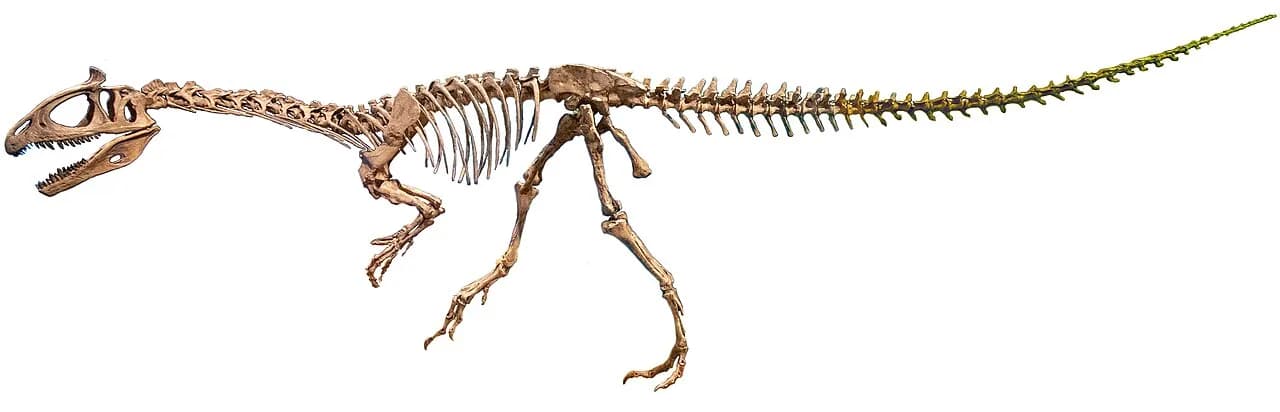
Cryolophosaurus skeleton
Wikimedia Commons