Concavénator
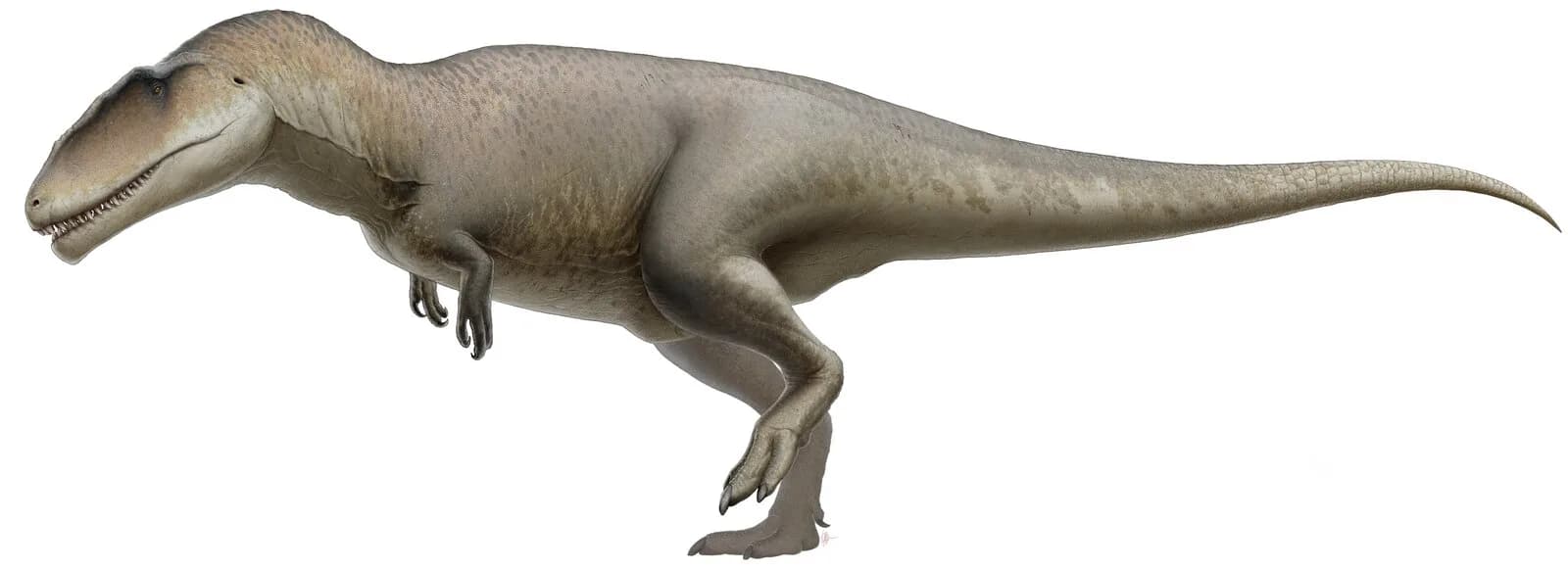
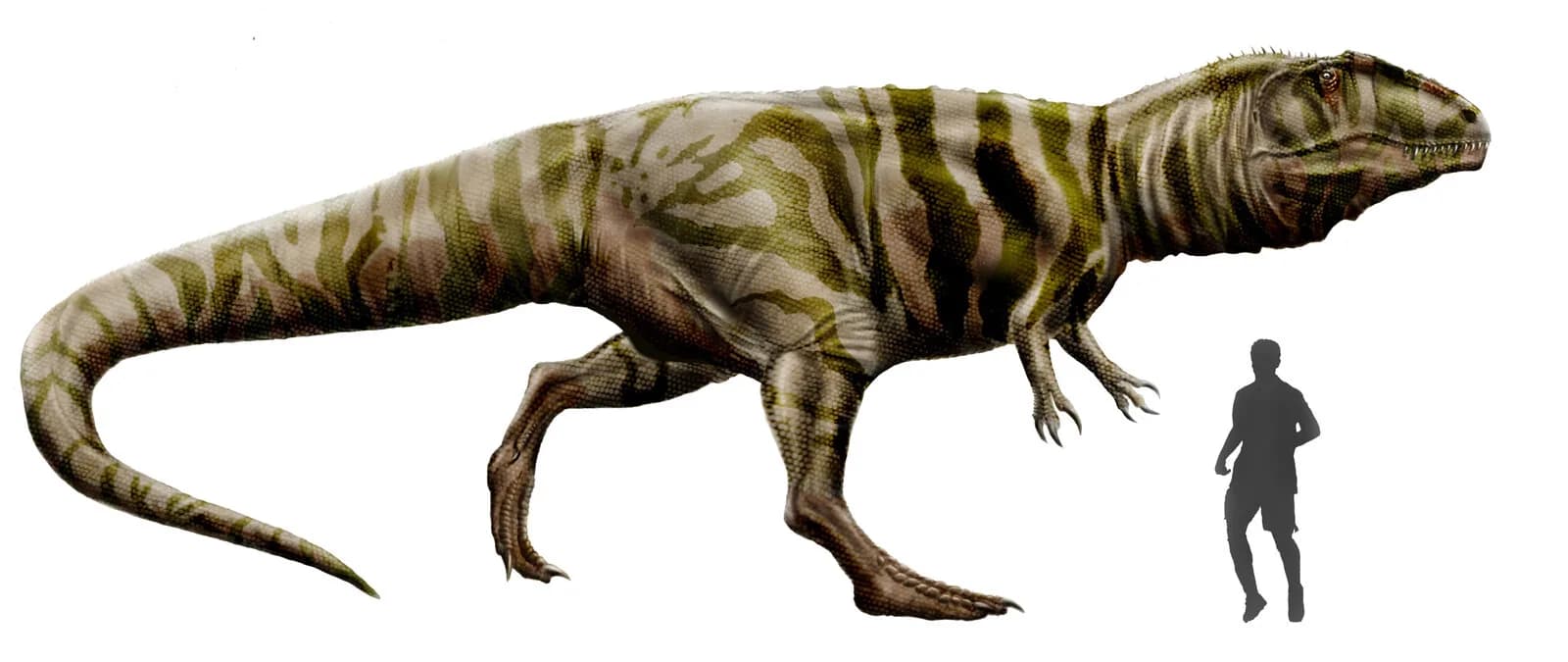
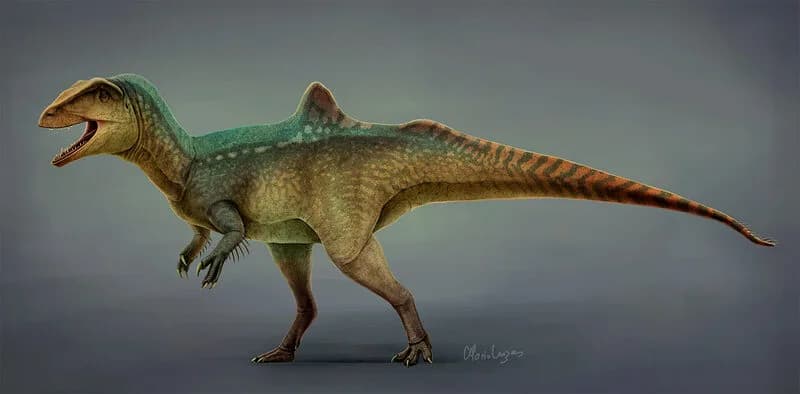
Concavenator corcovatus is a Spanish carnivore 6 metres long and 400 to 500 kilograms, described in 2010 and dated to 130 million years ago. Two abnormally elongated vertebrae raise a triangular hump on its back, with no known equivalent among other theropods. Its name means « hunchbacked hunter from Cuenca », after the Spanish province where it was uncovered.
Playable in Path of Titans
See Concavenator corcovatus's stats, abilities and role on our survival server.
Concavenator lived during the Early Cretaceous period, approximately 130 to 125 million years ago, during the Barremian stage, in what is now the Las Hoyas Formation of central Spain. This lagerstätte is renowned for its exceptional fossil preservation, capturing a detailed snapshot of an Early Cretaceous wetland ecosystem in remarkable detail. The Las Hoyas site was a shallow freshwater lake surrounded by lush vegetation, where organisms that fell into the lake were rapidly buried in fine sediments under anoxic conditions. Concavenator was one of the largest predators in this ecosystem, sharing the environment with diverse fish, amphibians, crocodilians, and other small dinosaurs.
Concavenator measured approximately 5 to 6 meters in length with an estimated weight of around 400 to 500 kilograms, making it a medium-sized carcharodontosaurid theropod. Its most striking feature was a tall, triangular hump formed by two extremely elongated neural spines on vertebrae near the hips, giving it a distinctive silhouette unlike any other known theropod. The skull was relatively long and lightly built, with serrated teeth typical of the carcharodontosaurid family. The overall body plan was that of an active predator with strong hind limbs, a long tail for balance, and relatively long forelimbs for a theropod of its group. Ulnar bumps on the forearm may represent quill knobs, suggesting the presence of feathers.
Concavenator was a carnivorous predator that likely hunted the diverse fauna of the Las Hoyas wetland ecosystem. Its serrated teeth and agile build made it an effective hunter of small to medium-sized prey including ornithopod dinosaurs, large fish, and crocodilians that inhabited the lakeside environment. As a carcharodontosaurid, Concavenator employed a slicing bite technique using its blade-like teeth to inflict deep, bleeding wounds. The wetland habitat offered diverse hunting opportunities, from ambushing dinosaurs at the water's edge to catching fish in shallow waters. Its position as the apex predator of the Las Hoyas ecosystem gave it access to a wide variety of prey animals across both terrestrial and aquatic environments.
Concavenator inhabited a subtropical wetland ecosystem preserved in the Las Hoyas Formation of what is now Cuenca Province, central Spain. During the Early Cretaceous, this region featured shallow freshwater lakes surrounded by dense forests of conifers, ferns, and early flowering plants. The warm, humid climate supported a rich biodiversity that included diverse fish, amphibians, turtles, crocodilians, pterosaurs, and various dinosaurs. The lake margins provided particularly productive hunting grounds, with animals congregating near water sources. Seasonal variations in water levels created dynamic habitats from permanent deep pools to ephemeral marshes, offering different ecological opportunities throughout the year for this versatile predator.
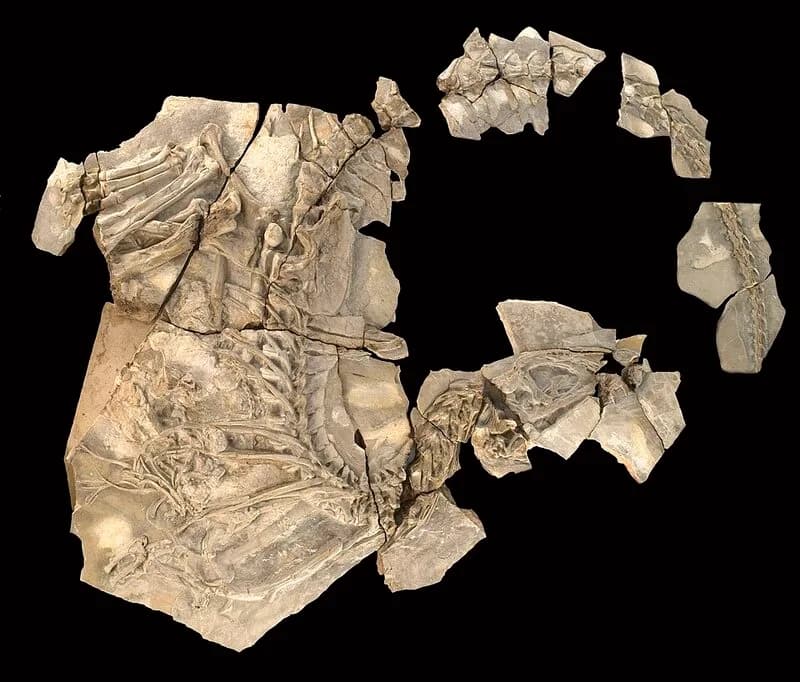
Concavenator anatomy includes several unique features that distinguish it from all other known theropods. The most prominent is the tall, triangular hump formed by dramatically elongated neural spines on the 11th and 12th dorsal vertebrae, whose function remains debated — possibly a fat storage structure, thermoregulatory device, or visual display feature. Equally significant are the small bumps on the ulna bone of the forearm, interpreted by some researchers as quill knobs that would have anchored feathers or feather-like structures, though this interpretation remains controversial. The skull was typical of carcharodontosaurids, with large fenestrae reducing weight and serrated teeth for efficient flesh processing. The exceptionally preserved holotype provides detailed anatomical information rarely available for theropod dinosaurs.
Concavenator likely hunted as a solitary predator in the wetland environments of Early Cretaceous Spain, using stealth and speed to ambush prey near the lakeshores. The distinctive dorsal hump may have played a role in visual communication between individuals, potentially serving as a species recognition signal or a display structure during mating season that could indicate the health and fitness of the individual. As the apex predator of its ecosystem, Concavenator would have had first access to carcasses and could have intimidated smaller predators away from kills. The possible presence of feathers or feather-like structures on its arms, if confirmed, adds another dimension to its display potential, suggesting these structures served communicative rather than aerodynamic functions.
Concavenator corcovatus was described by Francisco Ortega, Fernando Escaso, and José Luis Sanz in 2010 from a remarkably complete and articulated skeleton found in the Las Hoyas Formation near Cuenca, Spain. The holotype specimen is exceptionally well-preserved, retaining delicate skeletal details including the controversial ulnar bumps and the complete series of vertebrae showing the distinctive dorsal hump. The species name 'corcovatus' means 'hump-backed,' referring to its most striking feature. The Las Hoyas lagerstätte provides exceptional preservation conditions that have yielded detailed information about this dinosaur's anatomy. Concavenator remains one of the most important carcharodontosaurid discoveries, providing unique insights into the diversity and specialization of this theropod family in Early Cretaceous Europe.
| Period | Crétacé inférieur / Early Cretaceous |
| Era | Mésozoïque / Mesozoic |
| Age | 130 Ma |
| Location | Espagne / Spain |
| Length | 6 m |
| Height | 2 m |
| Weight | 400-500 kg |
| Diet | Carnivore |
| Discovery | 2010 |
Concavenator corcovatus, described in 2010 by Ortega, Escaso, and Sanz, presents two unique features: a triangular hump formed by the elongated neural spines of the 11th and 12th dorsal vertebrae, unmatched in any other theropod, and structures on the ulna interpreted as quill knobs, surprising for a carcharodontosaurid from Early Cretaceous Spain (~130 million years ago).
Concavenator measured about 6 meters long weighing 400 to 500 kg. It inhabited the Las Hoyas deposit in Cuenca Province, Spain — a Barremian (Early Cretaceous) lacustrine Lagerstätte preserving a subtropical wetland ecosystem. The exceptional preservation quality of this site allowed discovery of skin details rarely observed in dinosaurs.
The function of Concavenator corcovatus's hump remains debated. Hypotheses include: fat storage (like a bison's hump), thermoregulation via a cutaneous vascular network, or intraspecific visual signaling during courtship displays. No consensus has been reached since the holotype description in 2010. The absence of a similar structure in other carcharodontosaurids reinforces the exceptional nature of this animal.
Reconstruction of Concavenator corcovatus with its characteristic dorsal hump
Wikimedia Commons, CC BY-SA
Articulated fossil of Concavenator at the Museum of Sciences of Castilla-La Mancha
Wikimedia Commons, CC BY-SA