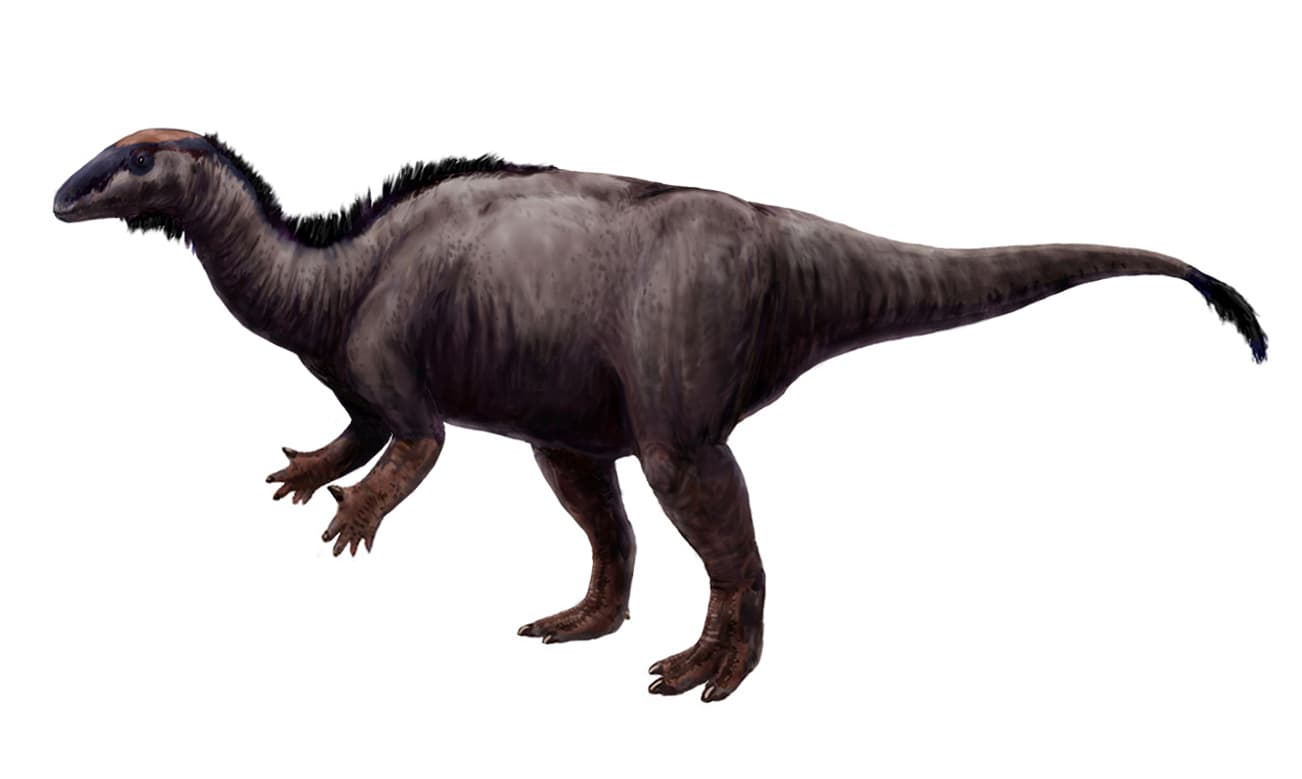
Camptosaurus
Camptosaurus dispar is an ornithopod 5 to 6 metres long and 785 to 874 kilograms, described in 1879 from the Morrison Formation. Marsh first named it Camptonotus, then renamed it in 1885: the name was already taken by an insect. It lived 155 to 150 million years ago and ranks among the presumed ancestors of the hadrosaurs, the duck-billed dinosaurs of the Cretaceous.
Playable in Path of Titans
See Camptosaurus dispar's stats, abilities and role on our survival server.
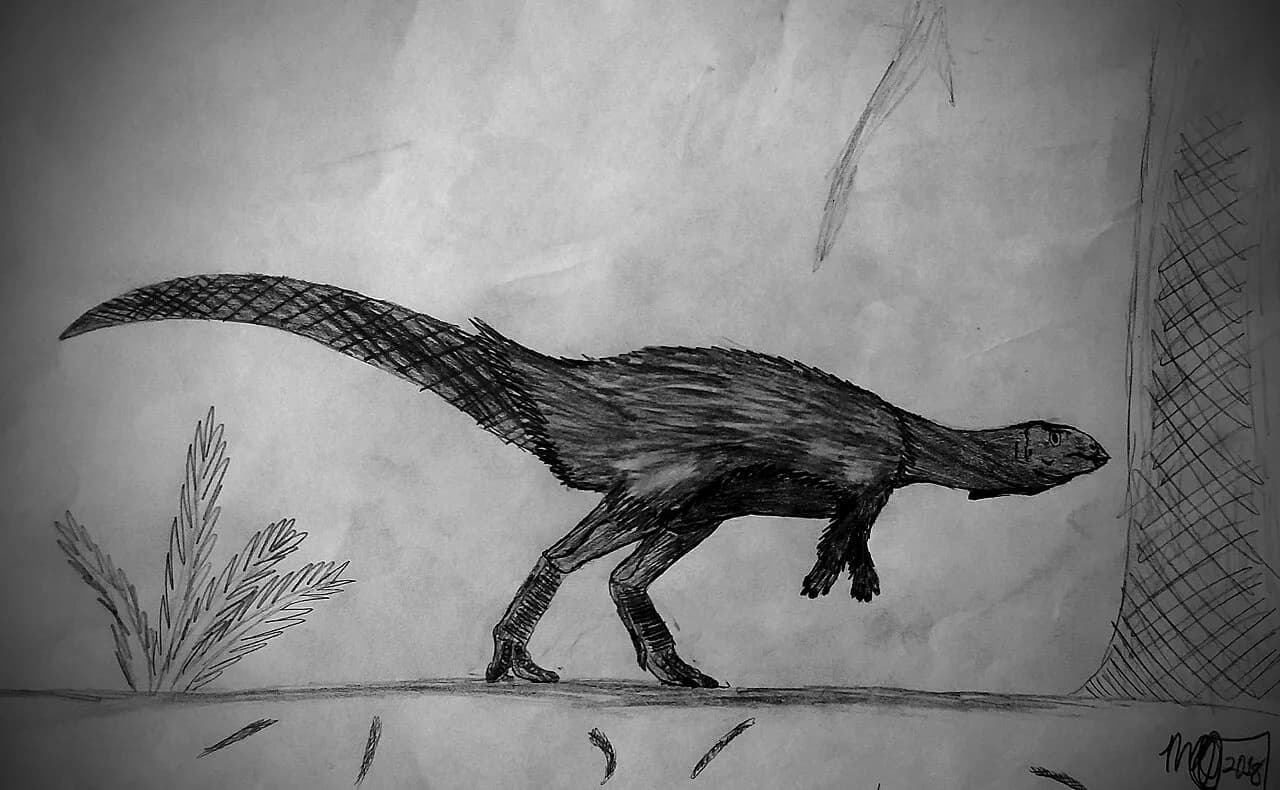
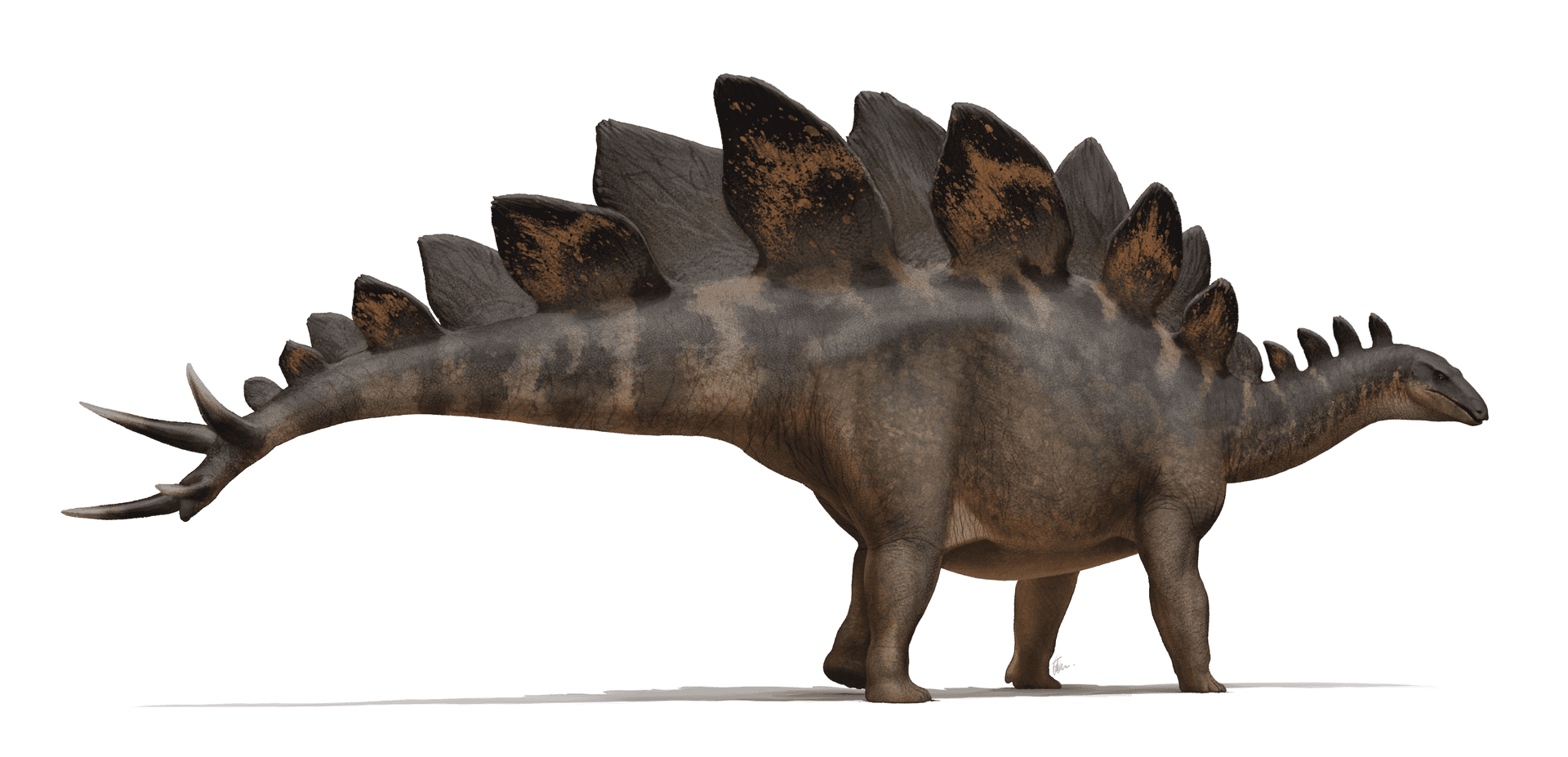
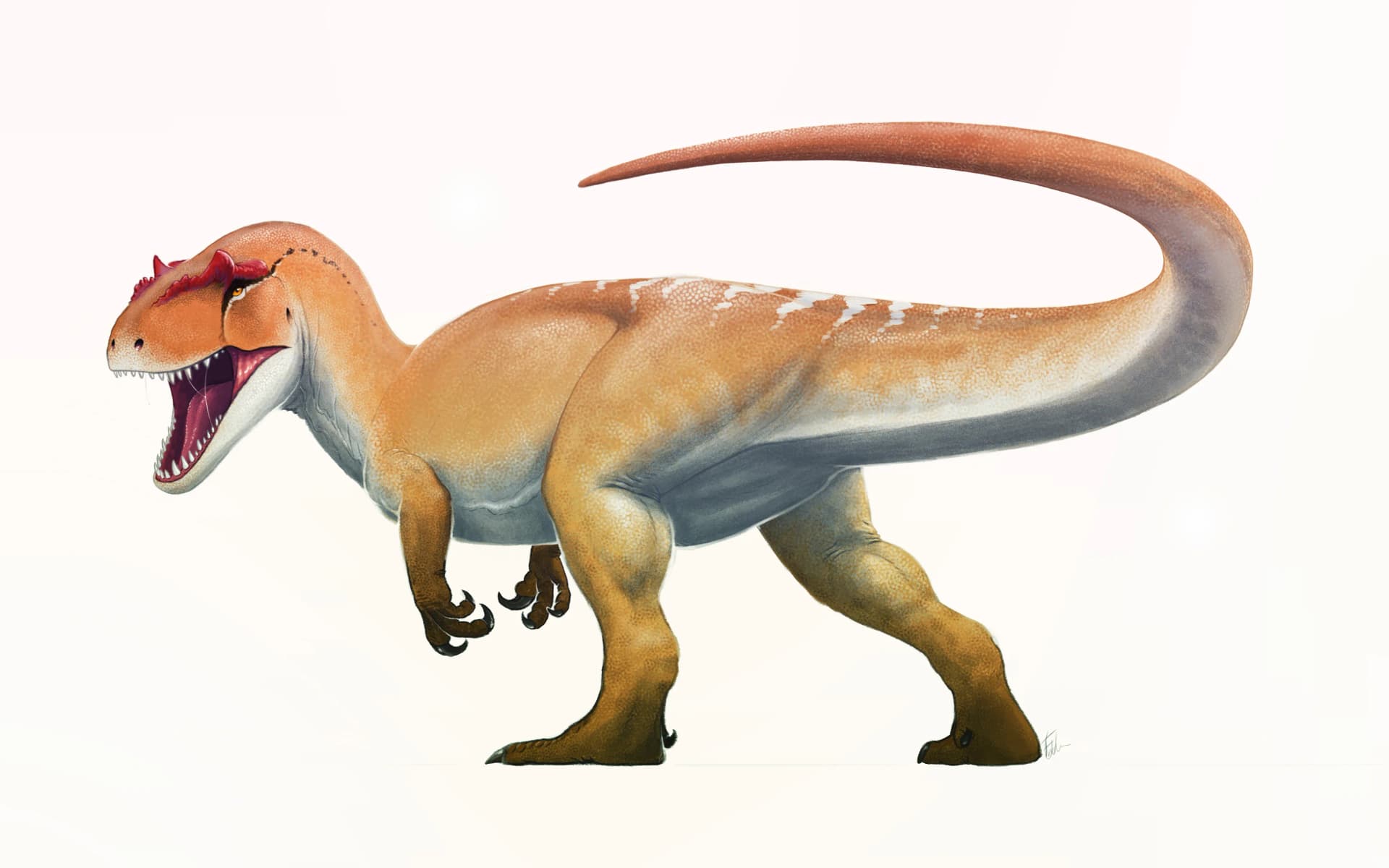
Camptosaurus lived in the Late Jurassic, between the Kimmeridgian and Tithonian stages, approximately 155 to 150 million years ago. Its environment was dominated by an extraordinarily rich fauna: the Morrison Formation of western North America simultaneously harbored giants like Diplodocus, Apatosaurus, and Brachiosaurus, the predator Allosaurus, and the stegosaurid Stegosaurus. Within this competitive ecosystem, Camptosaurus occupied the niche of a medium-sized herbivore, capable of grazing at ground level while also rearing on its hind limbs to reach higher vegetation. The climatic conditions of the Morrison were semi-arid with pronounced seasons, alluvial plains dotted with rivers and seasonal lakes, and flora dominated by conifers, tree ferns, and cycads.
Othniel Charles Marsh first described the animal in 1879 under the name Camptonotus dispar, based on remains discovered in Wyoming. Marsh quickly found that the generic name Camptonotus was already assigned to a genus of insects, and he replaced it in 1885 with Camptosaurus, from the Greek meaning 'flexible lizard' — an allusion to the presumed flexibility of its vertebral column. The species epithet dispar means 'unequal' or 'different,' likely referring to proportions considered unusual at the time. The definitive monograph on the species was written by Charles W. Gilmore in 1909; he described several nearly complete skeletons and established the animal's anatomy in broad terms, work that remains a baseline for all subsequent studies. Additional specimens continued to emerge from Utah, Colorado, Wyoming, and South Dakota throughout the twentieth century.
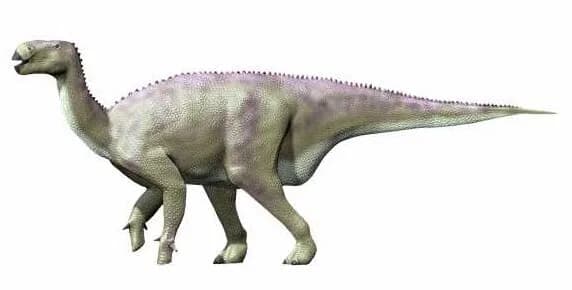
Camptosaurus dispar reached approximately 5 to 6 meters in length with an estimated mass between 785 and 874 kilograms according to recent studies, making it a substantial animal for a Jurassic ornithopod. Its height at ground level in its usual quadrupedal posture was about 1.5 meters at the hips. The forelimbs, relatively short but robust, bore four-toed hooves adapted to regular quadrupedal locomotion; the hind limbs, considerably longer and more muscular, enabled bipedal posture during rapid flight or to reach higher vegetation. Notable size variation existed between individuals, with some specimens slightly exceeding six meters, which long fueled debate about the possible presence of distinct species within the genus.
An exclusive herbivore, Camptosaurus fed primarily on ferns, cycads, horsetails, and low conifers, the characteristic plants of the Jurassic Morrison flora. Its horny beak, toothless at the front, served to cut and tear vegetation; the cheek tooth batteries then efficiently ground plant fibers using multi-ridged teeth that were continuously replaced. This continuous dental replacement system is a major evolutionary adaptation in ornithopods: at any given moment, several generations of teeth coexist, with new ones growing beneath worn ones. The low position of its head and neck morphology indicate it grazed mostly between ground level and one meter high, but its ability to rear on its hind legs gave it access to branches up to two or three meters high.
The Morrison Formation extends across a vast region of the western United States, from Montana to New Mexico. In the Late Jurassic, this territory constituted an immense alluvial plain drained by networks of wide, shallow rivers flowing toward a shallow epicontinental sea to the east. Prolonged dry seasons caused many water sources to dry up, concentrating animals around permanent watercourses and favoring the accumulation of carcasses — conditions that partly explain the exceptional richness of Morrison fossil deposits. Dense riparian vegetation bordered the rivers, providing cover and food, while more open plains were covered with low cycads and ferns. Camptosaurus shared this environment with dozens of other species, from the small Dryosaurus to the immense sauropods, forming one of the best-documented ecosystems of the Mesozoic.
The Camptosaurus skeleton presents several anatomical features that make it a key evolutionary node between basal ornithopods and the large iguanodontians of the Cretaceous. Its forelimbs bore a robust thumb (first metacarpal) slightly enlarged, a feature characteristic of the clade Ankylopollexia of which it is one of the oldest members: this thumb foreshadows the large conical spike of Iguanodon, a formidable defensive tool in that animal. The skull was elongated and low, with relatively large orbits and a broad spatula-shaped beak well suited to browsing. The vertebral column was horizontal during normal quadrupedal locomotion, reinforced by ossified tendons (ossified rods) that braced the back and tail without reducing their mobility. The broad hips and massive pelvis testify to a large intestinal volume, necessary for digesting large quantities of fibrous, low-nutrient vegetation.
Camptosaurus was probably a social animal living in loosely structured groups, a classic strategy for medium-sized herbivores exposed to predators like Allosaurus. The presence of multiple individuals of different ages in the same fossil horizons supports the hypothesis of some degree of gregariousness. Its mixed locomotion — quadrupedal at rest or while grazing, bipedal during flight — gave it good versatility in the open environments of the Morrison. Trackways attributed to Morrison ornithopods show alternately four-point and two-point traces, confirming this variable-geometry mode of locomotion. The keratin of the beak must have worn and regrown continuously, and behaviors involving rubbing or scraping against hard surfaces for beak maintenance are plausible. In the absence of cranial ornaments or osteoderm plates, defense relied primarily on group vigilance and escape speed.
Camptosaurus belongs to the order Ornithischia (bird-hipped dinosaurs), the suborder Ornithopoda, and more specifically the clade Ankylopollexia. This clade, defined by the presence of a reinforced thumb and other characters of the wrist and foot, groups Camptosaurus, iguanodontians, and hadrosaurs together. Camptosaurus is thus positioned as one of the most basal members of the lineage that would lead, in the Cretaceous, to forms like Iguanodon and ultimately to hadrosaurs like Edmontosaurus. The genus Camptosaurus has undergone numerous taxonomic revisions: several species formerly assigned to the genus (C. amplis, C. nanus, C. medius, C. browni) have been reclassified as dubious species or reassigned to other genera, leaving only C. dispar as a well-founded valid species. A closely related English form, Cumnoria prestwichii, was briefly folded into the genus before being separated again.
Among its Morrison contemporaries, Camptosaurus is distinguished from Dryosaurus by its larger size, broader beak, and marked quadrupedal capability — Dryosaurus was strictly bipedal and more gracile. Compared to Stegosaurus, Camptosaurus had neither plates nor spikes, but its mobility and dental batteries gave it access to a more varied dietary range. Relative to the giant sauropods of the same environment, it exploited a completely different vegetation stratum, reducing direct food competition. Within the Ankylopollexia group, Camptosaurus illustrates the initial stage before the elaboration of the spike thumb of Iguanodon or the duck-billed snout of hadrosaurs; its more generalist anatomy makes it valuable for understanding the evolution of these lineages. Studies from 2008 (Carpenter & Wilson) refined its phylogenetic position, confirming its place as a basal Ankylopollexia ornithopod with no direct link to certain European forms previously associated with it.
The fossil material of Camptosaurus dispar is among the most abundant and best preserved of Jurassic North American ornithopods. The holotype specimen USNM 4282, held at the National Museum of Natural History (Smithsonian Institution) in Washington D.C., comprises a nearly complete skeleton and constitutes the anatomical reference for the species. Gilmore's 1909 monograph described in detail several articulated or semi-articulated skeletons, some of which are displayed in major American museums. Additional specimens, including juvenile individuals, come from multiple localities in Utah (Dinosaur National Monument), Wyoming, Colorado, and South Dakota, offering a window into the growth and variability of the species. Cranial remains, often fragmentary in Morrison deposits, are exceptionally well preserved in Camptosaurus, enabling detailed studies of dentition, mandibular musculature, and brain anatomy via CT scanning. Thousands of its bones have been excavated over more than 140 years of fieldwork in the Morrison.
Camptosaurus lacks the popular fame of Triceratops or T. rex, but it holds a solid place in paleontological culture as one of the first large herbivorous dinosaurs to have been scientifically described from complete material. Its description by Marsh in 1879 falls within the period of the 'Bone Wars,' the fierce rivalry between Marsh and Edward Drinker Cope that transformed American paleontology. The name 'flexible lizard' has sometimes intrigued the general public, who imagined an extraordinarily supple animal; in reality, the epithet reflects more Marsh's initial interpretation of the curvature of the vertebrae than any actual adaptation for extreme flexibility. Modern reconstructions, notably those by artist FunkMonk, have contributed to making this dinosaur more visible in recent popular science works, and its anatomy is regularly cited in textbooks as the textbook example of a transitional ornithopod between basal forms and the great iguanodontian radiation.
| Period | Jurassique supérieur / Late Jurassic |
| Era | Mésozoïque / Mesozoic |
| Age | 155–150 Ma |
| Location | Amérique du Nord / North America (Formation Morrison) |
| Length | 5–6 m |
| Height | ~1.5 m |
| Weight | 785–874 kg |
| Diet | Herbivore |
| Discovery | 1879 |
Camptosaurus dispar measured 5 to 6 meters long with a weight of 785 to 874 kg according to recent studies. Its hip height in quadrupedal posture reached about 1.5 meters. Its longer, more muscular hind limbs enabled bipedal locomotion during escape, while its stocky forelimbs stabilized it during ground-level grazing in the Morrison Formation.
Camptosaurus is one of the oldest members of the clade Ankylopollexia, defined by a reinforced thumb and specific carpal characters. This group unites Camptosaurus, iguanodontians, and hadrosaurs. Its slightly enlarged first metacarpal foreshadows the defensive conical spike of Iguanodon, which appeared about 30 million years later. Carpenter and Wilson (2008) confirmed this position in the Journal of Vertebrate Paleontology.
Othniel Charles Marsh described Camptosaurus dispar in 1879 from Wyoming remains. The holotype specimen USNM 4282, a nearly complete skeleton, is housed at the Smithsonian National Museum of Natural History in Washington D.C. Charles W. Gilmore produced in 1909 the definitive monograph describing several articulated skeletons, which remains the baseline for all subsequent studies on this Late Jurassic ornithopod.
Information on this page is based on peer-reviewed scientific publications.
Life reconstruction of Camptosaurus dispar
FunkMonk, CC BY-SA 3.0, via Wikimedia Commons
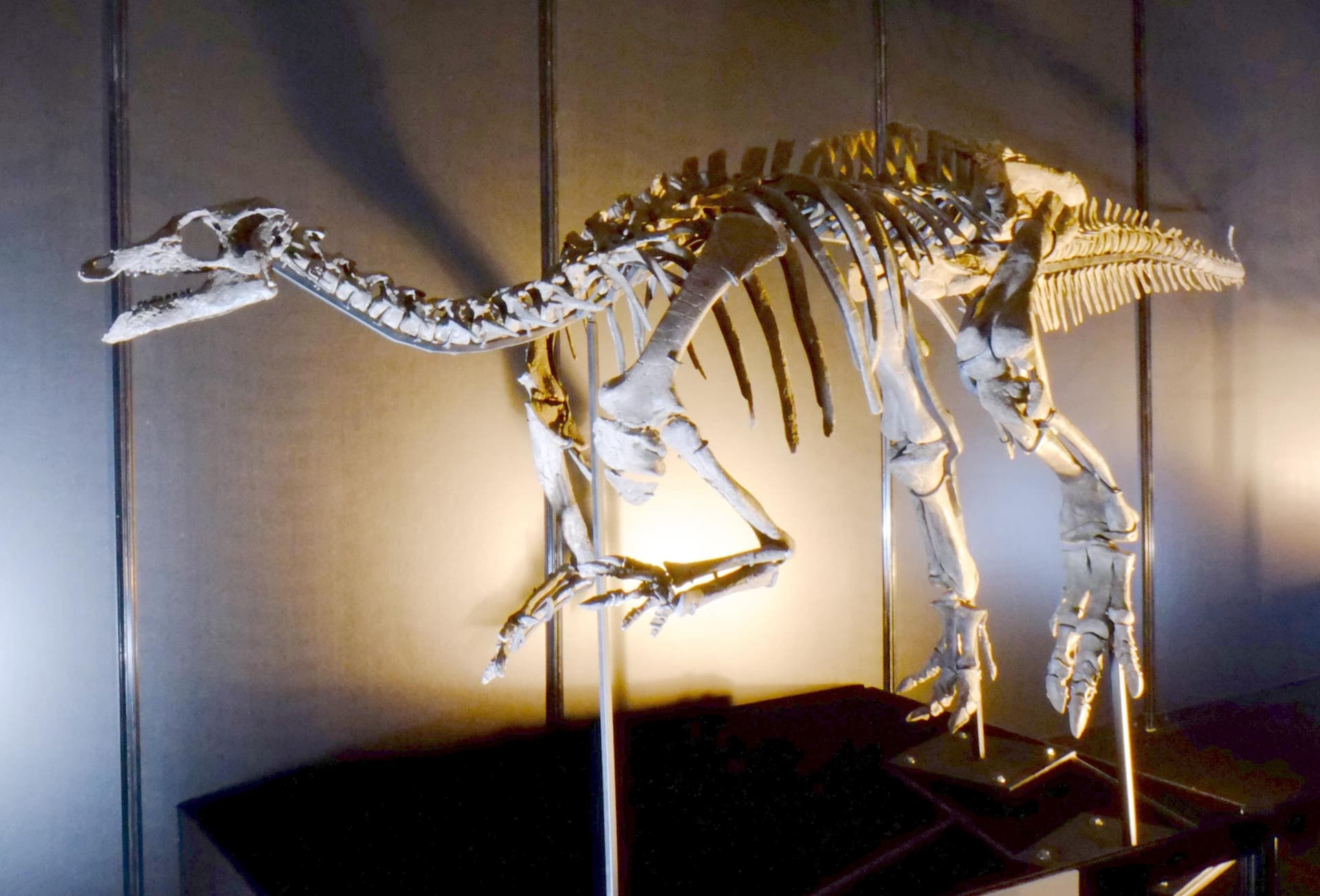
Mounted skeleton of Camptosaurus dispar
★Kumiko★, CC BY-SA 2.0, via Wikimedia Commons / Flickr