Bison des steppes
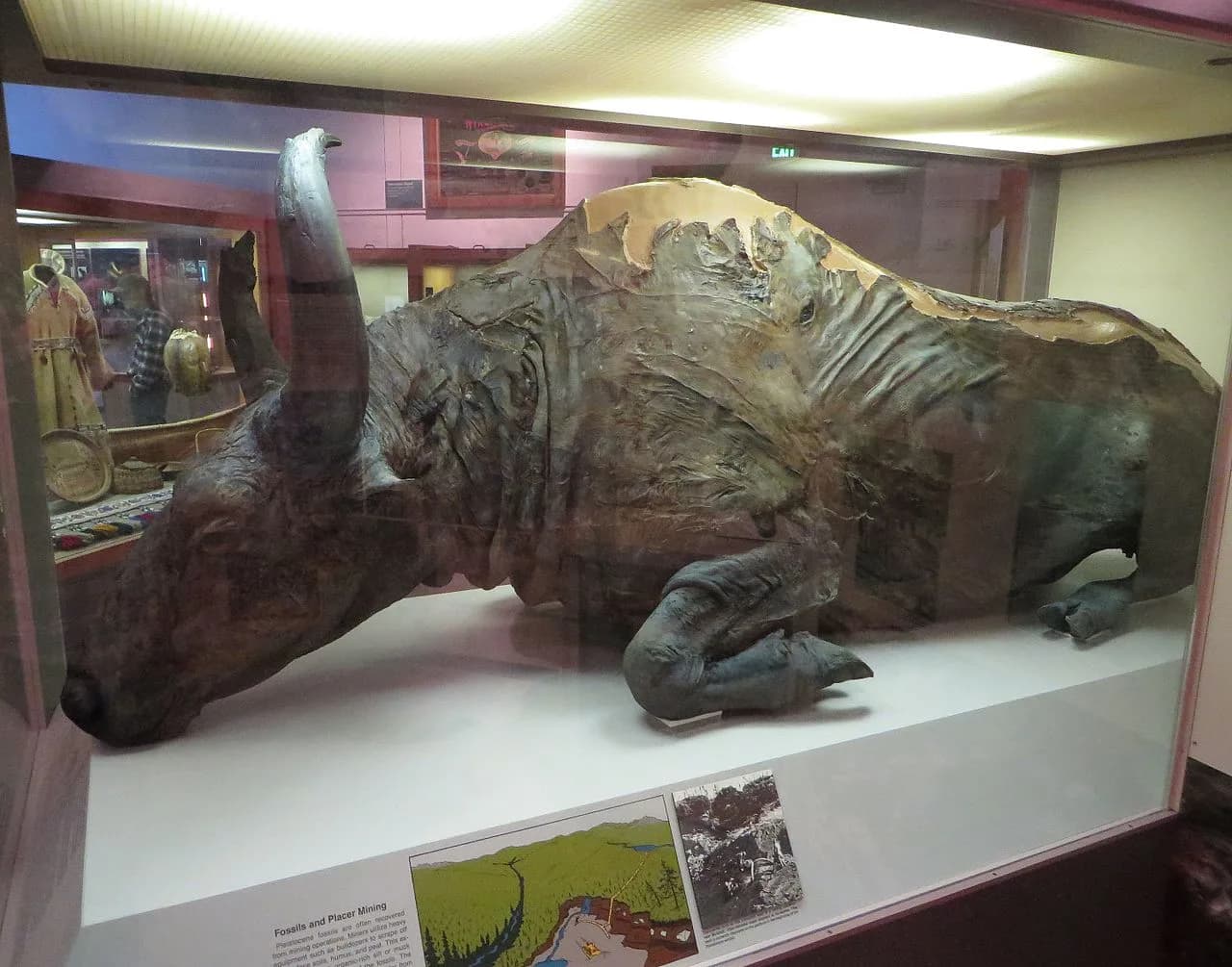
Bison priscus, the steppe bison, ranged across Eurasia and North America between 800,000 and 10,000 years ago, from Europe to Alaska. At 3 to 3.5 metres and 900 to 1,200 kilograms, it is the animal most often depicted in Palaeolithic cave art. « Blue Babe », a 36,000-year-old mummified specimen found in Alaska in 1979, was so well preserved that researchers cooked a piece of it.
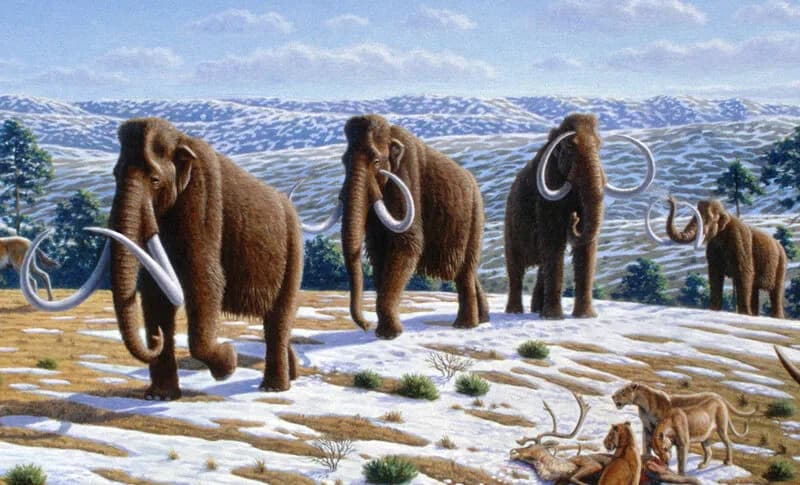
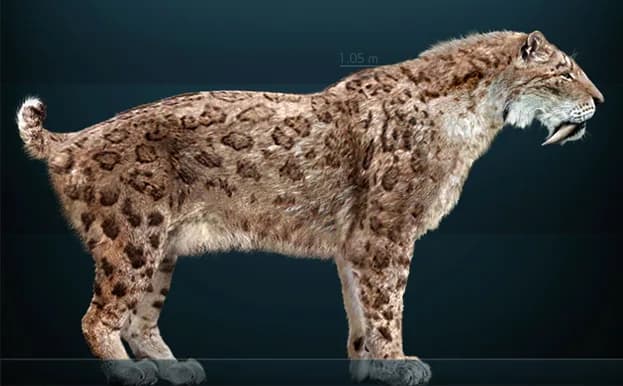
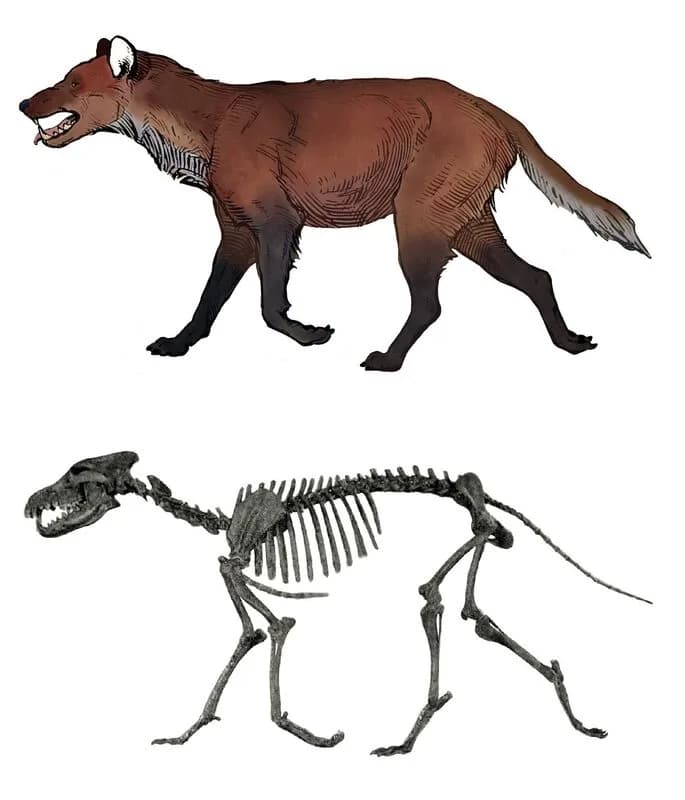
Bison priscus, the steppe bison, lived during the Middle and Late Pleistocene, approximately 800,000 to 10,000 years ago. This massive bovid appeared in Eurasia and rapidly colonized the vast grassy steppes stretching from Western Europe to eastern Siberia, crossing Beringia to reach Alaska and northwestern North America. It thrived particularly during glacial periods, when falling sea levels exposed the Beringian land bridge and immense grasslands covered the Northern Hemisphere. The steppe bison coexisted with woolly mammoths, woolly rhinoceroses, and great predators such as the cave lion and the dire wolf. Early modern humans hunted it intensively, as evidenced by the numerous depictions in Paleolithic cave art at Lascaux, Altamira, and Chauvet. Its disappearance in Eurasia coincided with post-glacial warming and the transformation of open steppes into dense forests, while its American descendants gave rise to the modern plains bison.
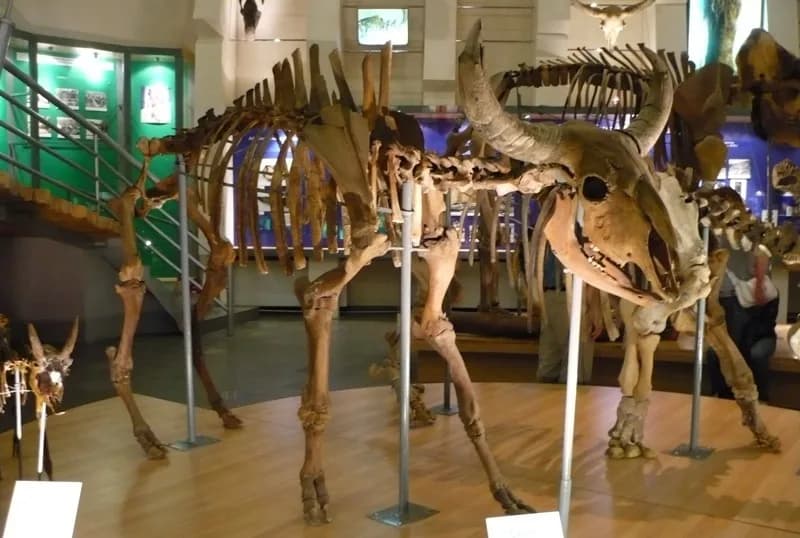
The steppe bison was considerably larger than the modern American bison, its direct descendant. Adult males reached a shoulder height of 1.7 to 2.1 meters, approximately 30 centimeters taller than the modern bison. Their weight ranged between 900 and 1,200 kg, with exceptional specimens possibly approaching 1,500 kg, making it one of the largest bovids of the Pleistocene. Females were notably smaller, measuring about 1.5 to 1.7 meters at the shoulder and weighing 600 to 800 kg. The most striking feature of Bison priscus was the spectacular span of its horns, which could reach one meter in length each and measure over one meter between the tips. The total body length from head to tail reached 3 to 3.5 meters in large males, making it an imposing presence across the Pleistocene steppe landscapes.
Bison priscus was a grazing herbivore specialized in the grasses of the vast Pleistocene prairies and steppes. Isotopic analysis of tooth enamel and bone collagen from numerous specimens reveals a diet dominated 70-85% by steppe grasses, supplemented by herbs, sedges, and occasionally leaves and shoots from low shrubs. Its hypsodont molars with extended growth, featuring complex enamel ridges, were perfectly adapted for the continuous grinding of abrasive, silica-rich vegetation. Like modern bison, it needed to consume large amounts of daily forage to sustain its impressive body mass, probably between 25 and 40 kg of dry plant matter per day. Seasonal variations in its diet, detected through dental microwear analysis, indicate dietary flexibility allowing it to supplement with woody vegetation during harsh winters when snow cover limited access to grasses.
The steppe bison primarily occupied the mammoth steppe, a now-vanished biome that constituted the most extensive grassland ecosystem in Earth's recent history. This habitat extended in a nearly continuous band from the Iberian Peninsula to Alaska, across central Europe, the Russian plains, Siberia, and Beringia. Unlike the modern tundra, which is poor and waterlogged, the mammoth steppe was a dry and productive landscape covered with nutritious grasses, sagebrush, and herbs adapted to the cold continental climate. The steppe bison particularly frequented river valleys and alluvial plains, where vegetation was more abundant and diverse. It avoided densely forested areas and steep mountain terrain, preferring open spaces that allowed it to detect predators and flee as a herd. The gradual disappearance of this biome during post-glacial warming, replaced by boreal forests and wet tundra, was a decisive factor in its extinction in Eurasia.
The anatomy of Bison priscus reflected its adaptations to life on the cold Pleistocene steppes. Its skull was proportionally longer and narrower than that of the modern American bison, with a slightly less domed forehead. The horns, borne on massive bony cores on the frontal bones, were significantly longer and more widely spread than those of any living bison, pointing laterally then curving upward and forward. Its prominent dorsal hump, formed by the elongated spinous processes of the anterior thoracic vertebrae, served as an anchor for powerful neck musculature that allowed it to sweep snow with its head to access winter vegetation. The coat consisted of two layers: a dense woolly undercoat providing thermal insulation and long outer guard hairs protecting against moisture and wind. Mummified specimens recovered from Siberian and Alaskan permafrost confirm a dark brown to reddish-brown coat, thicker on the head, shoulders, and forelimbs.
The steppe bison very likely lived in large herds, similar to historical American bison but adapted to the conditions of the Eurasian steppes. Massive bone accumulations at certain sites, such as Amvrosievka in Ukraine where thousands of bones were found at the base of cliffs, attest to gregarious behavior and seasonal migrations in large groups. Adult males bore spectacular horns used in ritualized combat during the breeding season, clashing head to head to establish dominance and mating rights with females. Paleolithic cave art, notably the famous frescoes of Lascaux and Altamira, often depicts bison in groups of several individuals, confirming their gregarious lifestyle. Early humans exploited this herd behavior during large communal hunts, driving bison toward cliffs or natural ravines. The social structure likely resembled that of modern bison, with herds of females and young separate from groups of solitary males for most of the year.
The first fossils of Bison priscus were scientifically described by Heinrich Georg Bronn in 1827 from remains discovered in Germany, with the species name 'priscus' meaning 'ancient' in Latin. Fossil remains have been found across an immense geographic range, covering all of Eurasia and northwestern North America. The most remarkable discoveries include mummified specimens from permafrost: 'Blue Babe,' a 36,000-year-old male steppe bison discovered in 1979 near Fairbanks, Alaska, preserved with its skin, muscles, and even an intact eye, stained blue by vivianite (an iron phosphate mineral). In Siberia, several partially mummified carcasses have been extracted from permafrost, yielding usable ancient DNA. In 2016, complete genomic sequencing of Bison priscus confirmed it is the direct ancestor of the American bison (Bison bison) and the European bison (Bison bonasus), the only two surviving bison species. European Paleolithic cave art also constitutes an exceptional fossil record, with hundreds of depictions in caves such as Lascaux, Altamira, Chauvet, and Niaux.
| Period | Pléistocène / Pleistocene |
| Era | Cénozoïque / Cenozoic |
| Age | 800 000 - 10 000 ans |
| Location | Eurasie et Amérique du Nord (Europe à Sibérie, Alaska) / Eurasia and North America (Europe to Siberia, Alaska) |
| Length | 3.0-3.5 m |
| Height | 1.7-2.1 m (au garrot / at shoulder) |
| Weight | 900-1 200 kg |
| Diet | Herbivore |
| Discovery | 1827 |
No, Bison priscus, the steppe bison, was a Pleistocene bovid mammal (about 800,000 to 10,000 years ago), appearing long after the extinction of non-avian dinosaurs at the end of the Cretaceous 66 million years ago. It is the direct ancestor of the American bison (Bison bison) and the European bison (Bison bonasus), the only two living bison species.
Bison priscus horns could reach one meter in length each, with over one meter between the tips — nearly double those of the modern American bison. Adult males reached 1.7 to 2.1 meters at the shoulder weighing 900 to 1,200 kg, roughly 30 cm taller and 200-400 kg heavier than the modern bison. These horns were used in ritualized combat during the breeding season.
'Blue Babe' is a 36,000-year-old male Bison priscus discovered in 1979 near Fairbanks, Alaska, mummified in permafrost with its skin, muscles, and even an intact eye. Its blue coloration comes from vivianite, an iron phosphate mineral. This exceptional specimen provided usable ancient DNA that confirmed in 2016 that Bison priscus is the direct ancestor of both living bison species.
Bison priscus, the Eurasian steppe bison
Wikimedia Commons
Bison priscus, a massive herbivore of the Ice Age
Wikimedia Commons