Avacératops
Avaceratops lammersi was a small ceratopsian from Montana, described in 1986 and dated to 78 to 74 million years ago. At 2 to 2.5 metres and 200 to 300 kilograms, it is among the smallest ceratopsians of the Late Cretaceous. Its name honours Ava Cole, wife of the rancher whose land held the fossils; the only known specimen is probably a juvenile.
Avaceratops lived during the Late Cretaceous, approximately 78 to 74 million years ago, during the Campanian stage. This period corresponds to an era of great ceratopsian diversity in North America, where numerous species coexisted in the coastal ecosystems of the western continent. Avaceratops belongs to the subfamily Centrosaurinae, a group of ceratopsians characterized by elaborate nasal ornamentation. First described in 1986 by Peter Dodson, this small ceratopsian was named in honor of Ava Cole, the wife of the rancher on whose land the fossils were discovered in Montana.
Avaceratops was a small ceratopsian measuring only about 2 to 2.5 meters long with a height of approximately 1 meter at the hips. Its weight is estimated between 200 and 300 kilograms, making it one of the smallest known ceratopsians from the Late Cretaceous of North America. Its small size may be due to the fact that the only known specimen is a juvenile or subadult, making adult size estimation difficult. Its proportionally wide skull relative to its body measured about 45 centimeters long. Despite its small stature, it possessed the typical robust morphology characteristic of ceratopsians.
A strict herbivore, Avaceratops fed on low-growing vegetation such as ferns, cycads, and primitive angiosperms that proliferated during the Late Cretaceous period. Its powerful horny beak at the front of the jaw allowed it to cut the toughest stems and leaves with remarkable efficiency. Its tooth batteries at the back of the jaws ensured efficient grinding of fibrous plant material. Its small size limited it to vegetation less than one meter above ground, an ecological niche different from that of large ceratopsians like Triceratops that could access taller plants. This feeding strategy effectively reduced interspecific competition for food resources.
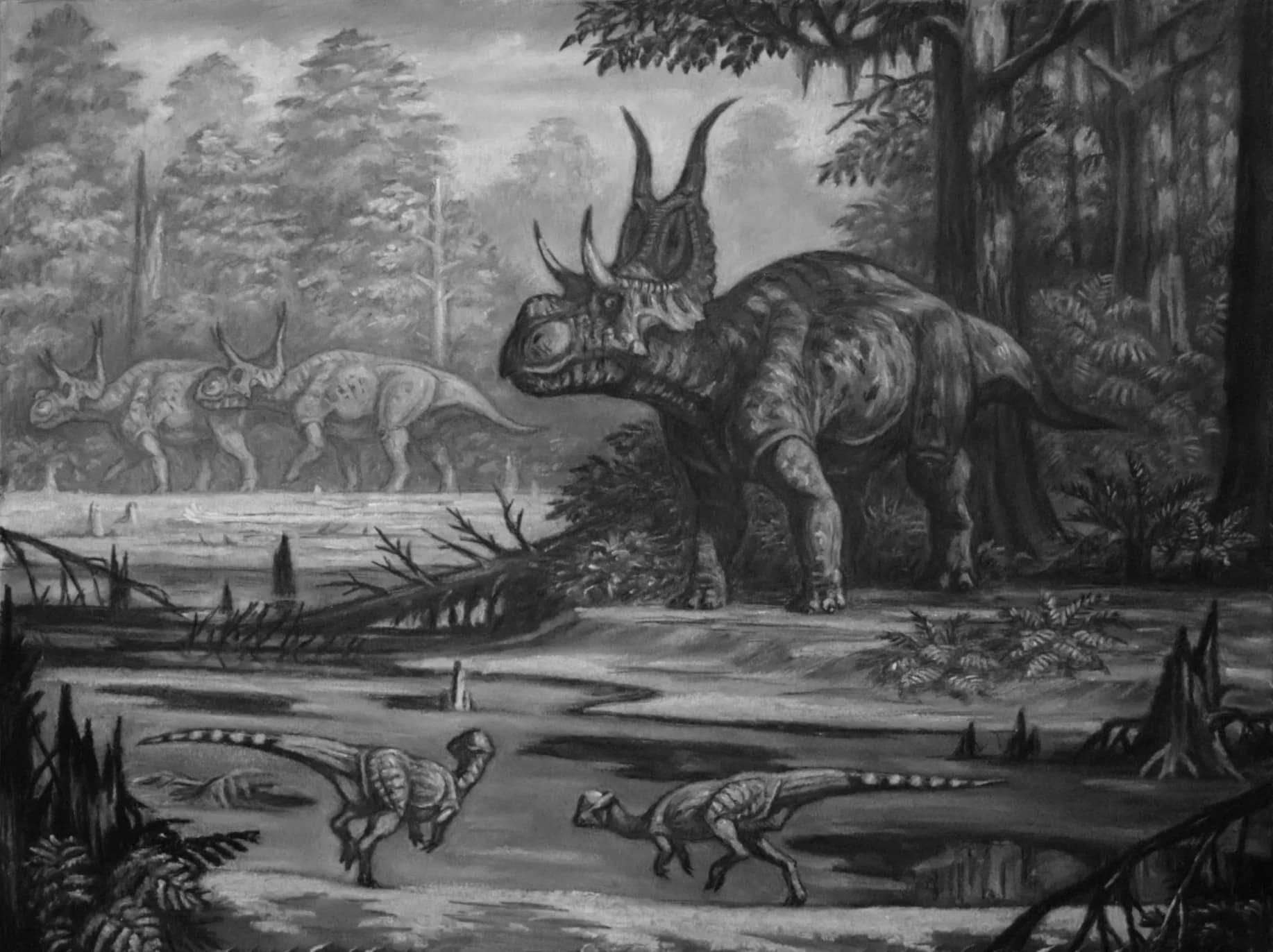
Avaceratops inhabited the alluvial plains and coastal forests of Montana, in western North America. At this time, the Western Interior Seaway divided the continent into two distinct landmasses, creating rich and diverse coastal environments. The Judith River Formation, where the fossils were discovered, represents an ecosystem of meandering rivers, fertile floodplains, and lush subtropical forests. The climate was warm and humid, supporting dense vegetation capable of sustaining an abundant and varied dinosaurian fauna. Avaceratops shared its habitat with hadrosaurs, tyrannosaurs, and other ceratopsians in a complex ecological community.
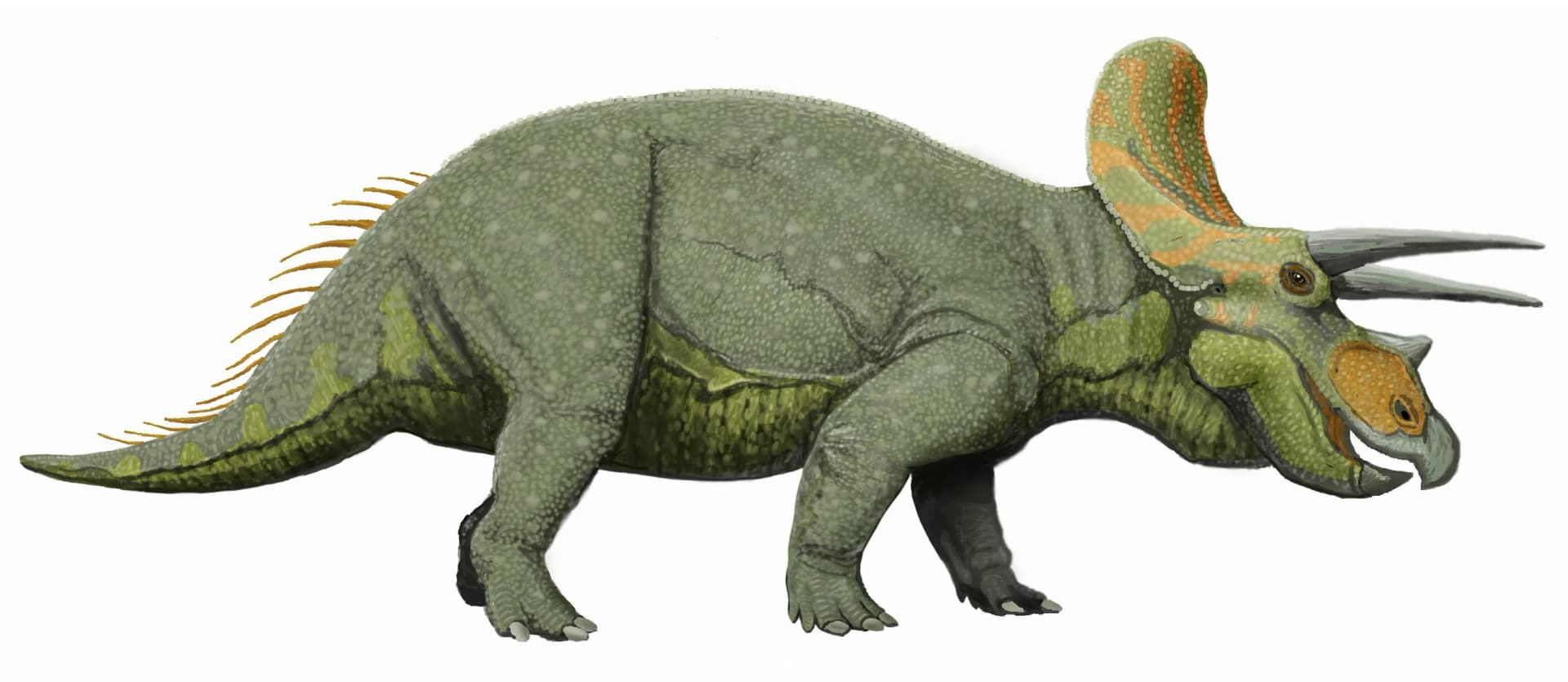
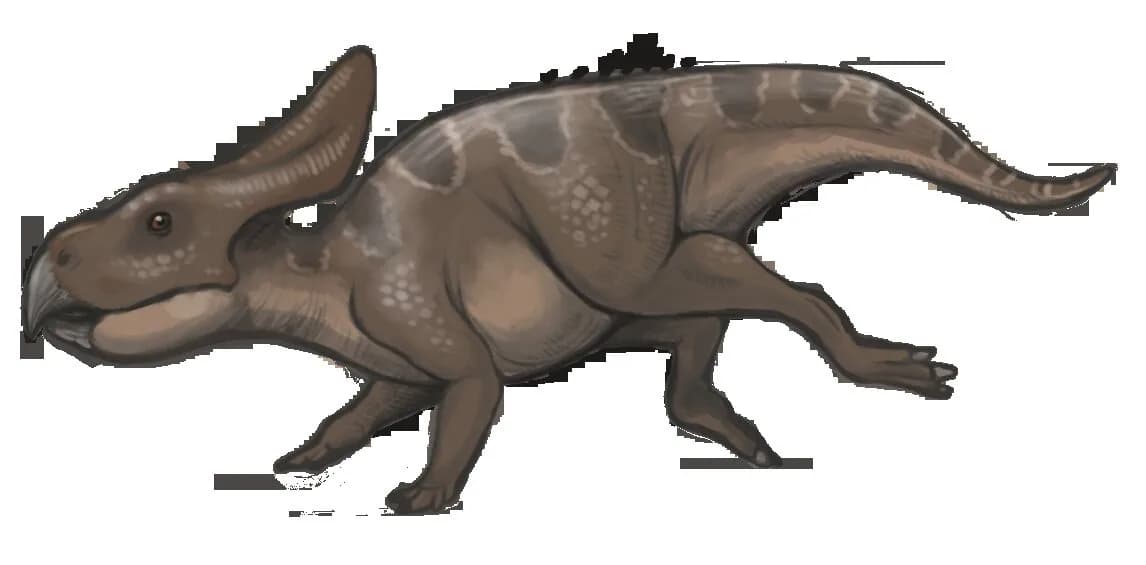
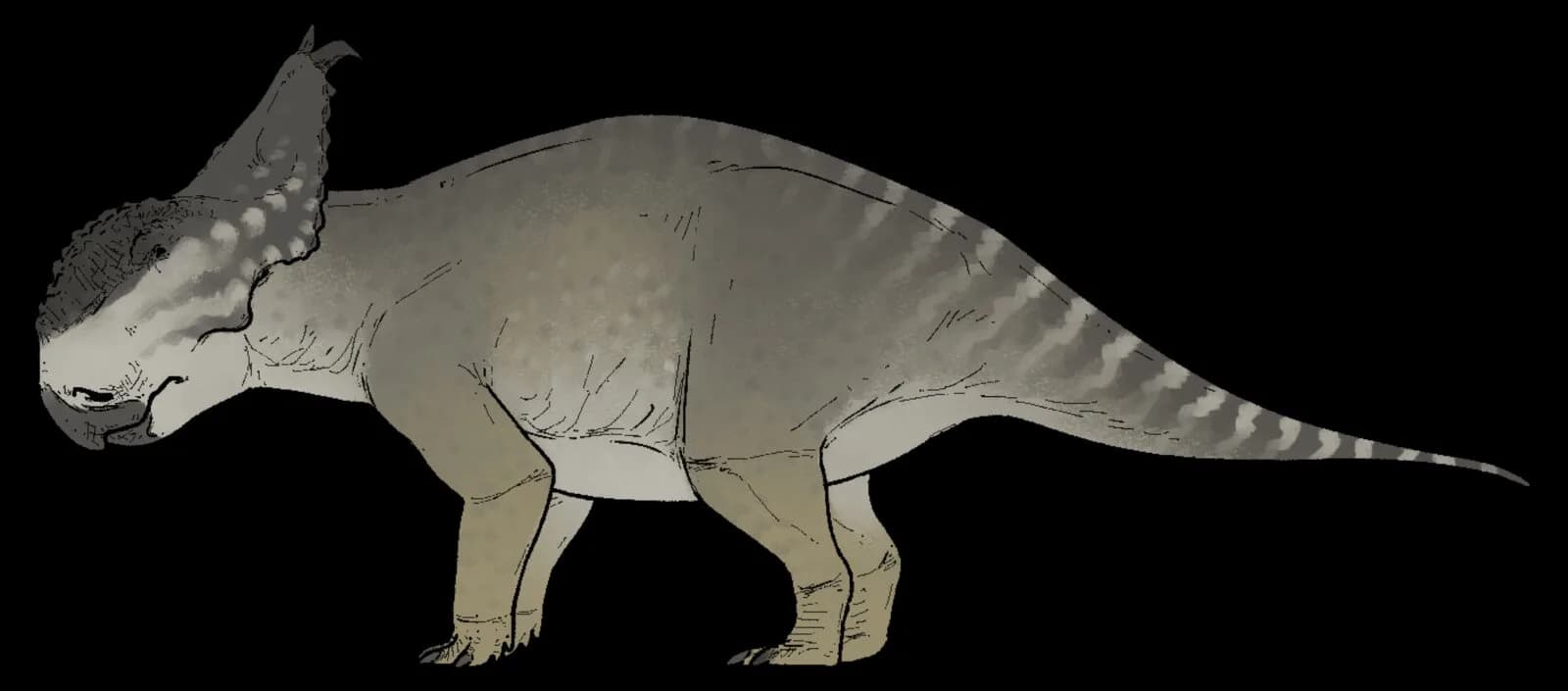
Avaceratops anatomy displays the typical characteristics of centrosaurines, though at a reduced scale. Its skull possessed a short, solid bony frill that was relatively simple, lacking the parietal fenestrae present in many other ceratopsians. Its facial horns were modest: a small nasal horn and two short orbital horns above the eyes. The edge of its frill was adorned with small spines or bony undulations characteristic of its taxonomic group. Its stocky body rested on four robust legs, with the hind limbs being slightly longer than the forelimbs. Its relatively short tail served as a counterbalance during its typical quadrupedal locomotion.
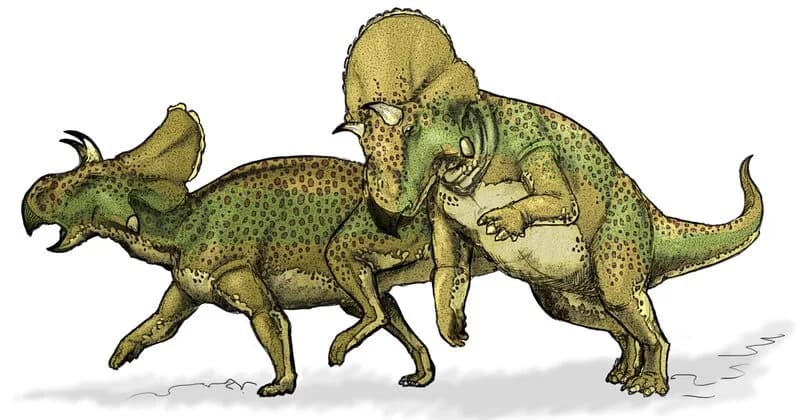
Avaceratops was probably a gregarious animal, like the majority of known ceratopsians. Centrosaurine bonebeds nearby suggest these dinosaurs moved in herds, offering better protection against predators such as tyrannosaurs and dromaeosaurids. Its small size made it particularly vulnerable to attacks from medium-sized theropods, which reinforced the advantage of group living. The frill and horns, though modest, likely served during ritualized combat between males to establish dominance and access to reproductive partners. Juveniles were certainly protected at the center of the herd by the more imposing adults.
Avaceratops was described in 1986 by paleontologist Peter Dodson, from remains discovered in the Judith River Formation of Montana, United States. The holotype (ANSP 15800) consists of a partial skeleton including cranial and postcranial elements, found on the Lammers family ranch. The species name 'lammersi' honors this family who permitted excavations on their land. The only known specimen is probably a juvenile or subadult, which complicates taxonomic interpretation and adult size estimates. Recent phylogenetic studies place Avaceratops among basal centrosaurines, although its exact position in the evolutionary tree remains debated. Despite the limited fossil material, it contributes to our understanding of small ceratopsian diversity in the Campanian.
| Period | Crétacé supérieur / Late Cretaceous (Campanien) |
| Era | Mésozoïque / Mesozoic |
| Age | 78–74 Ma |
| Location | Amérique du Nord / North America (Montana, USA) |
| Length | 2–2.5 m |
| Height | ~1 m |
| Weight | 200–300 kg |
| Diet | Herbivore |
| Discovery | 1986 |
Avaceratops lammersi measured approximately 2 to 2.5 meters long with an estimated weight of 200 to 300 kilograms. The holotype (ANSP 15800) is probably a juvenile or subadult, making it difficult to estimate the true adult size — adults may have been considerably larger. Described by Peter Dodson in 1986 from the Judith River Formation (Montana), it is one of the smallest known Campanian ceratopsians.
Avaceratops lammersi belongs to the Centrosaurinae, a group of ceratopsians characterized by elaborate nasal ornamentation. Its skull of approximately 45 centimeters had a short, solid, relatively simple frill lacking the parietal fenestrae of many ceratopsians, and modest horns (one nasal and two orbital). Recent phylogenetic studies place it among basal centrosaurines, though its exact position remains debated.
The name Avaceratops lammersi was given in 1986 by paleontologist Peter Dodson. The generic name honors Ava Cole, the wife of the rancher on whose Montana land the fossils were discovered. The species name lammersi commemorates the Lammers family who permitted excavations on their property. The holotype specimen (ANSP 15800) is housed at the Academy of Natural Sciences in Philadelphia.
Life reconstruction of Avaceratops lammersi
Wikimedia Commons, CC BY-SA 4.0
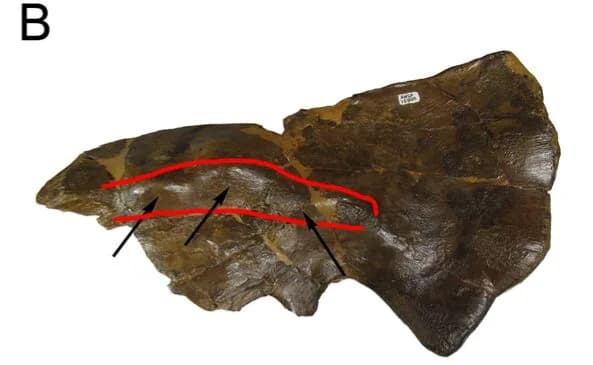
Squamosal of Avaceratops lammersi, cranial bone
Wikimedia Commons, CC BY 4.0