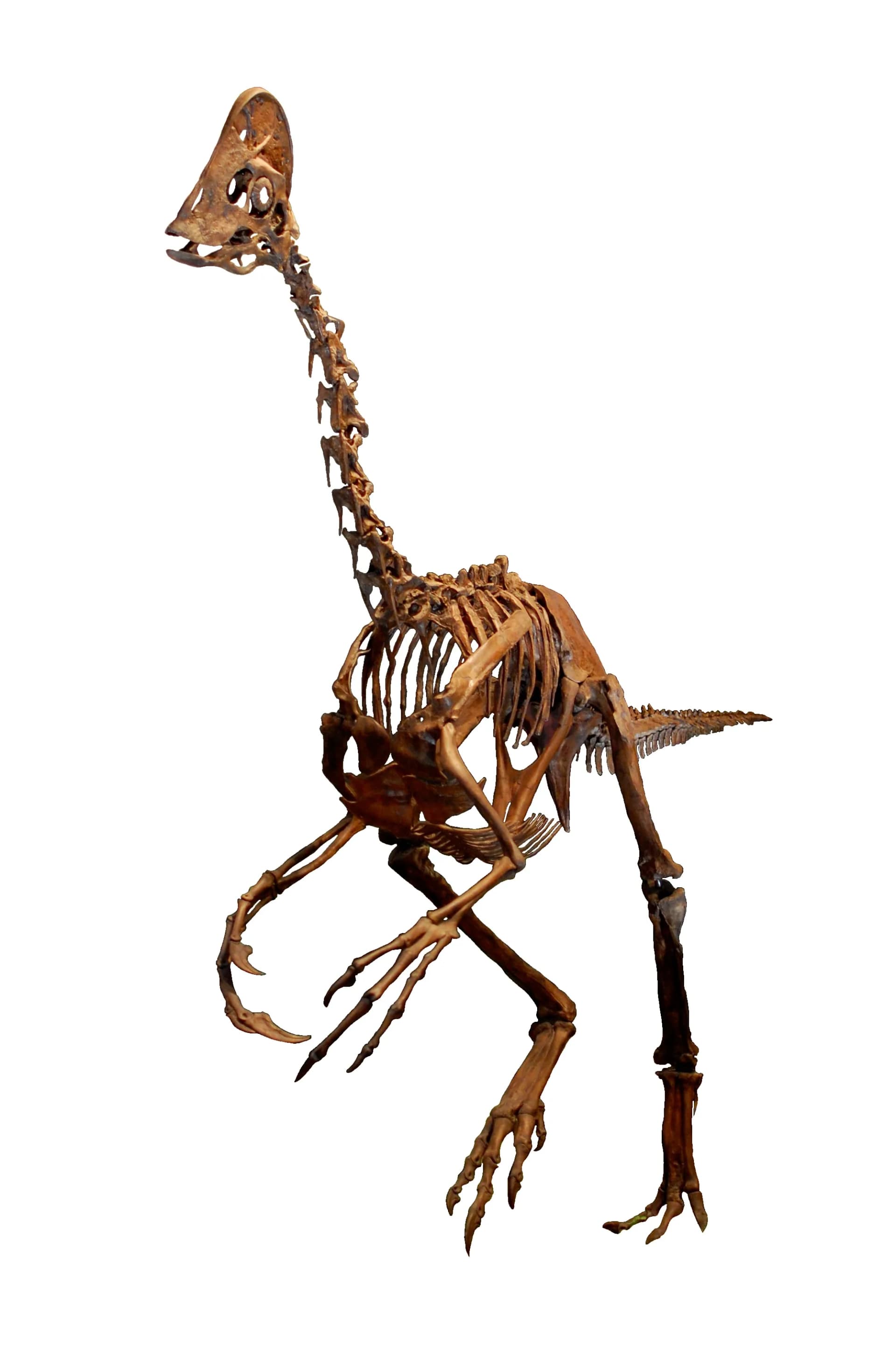
Poulet de l'enfer
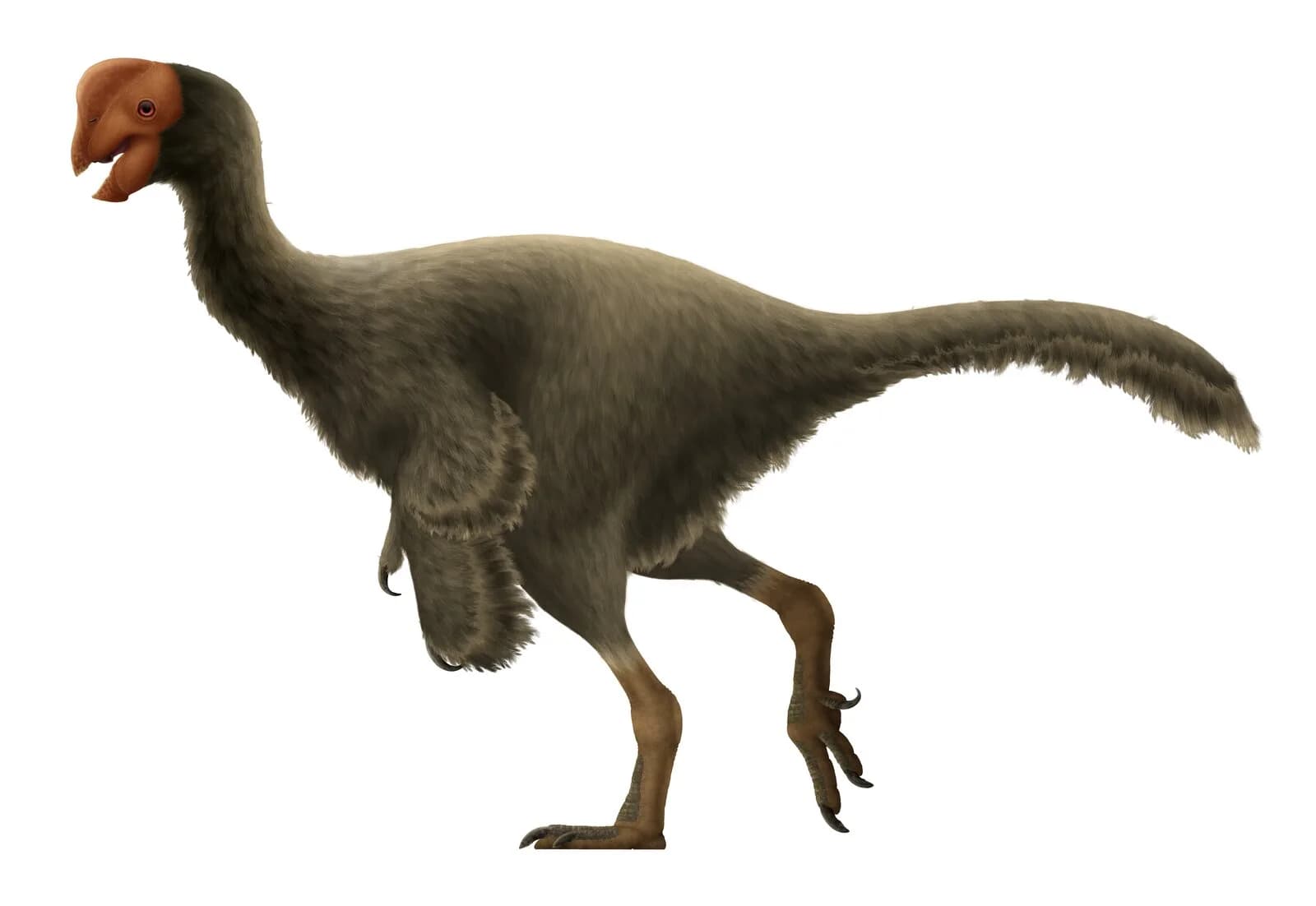
Anzu wyliei was an oviraptorosaur from the Dakotas, described in 2014 and dated to 66 million years ago — right before the dinosaur extinction. At 3 to 3.5 metres and 200 to 300 kilograms, it is nicknamed the chicken from hell for its crested, giant-bird look. Its name comes from Anzû, a winged storm demon of Sumerian mythology.
Anzu lived at the very end of the Late Cretaceous, approximately 66 million years ago, during the Maastrichtian stage, just before the Cretaceous-Paleogene mass extinction. It was among the last non-avian dinosaurs to walk the Earth. Anzu shared its ecosystem with giants like Tyrannosaurus rex and Triceratops in the plains of western North America. The climate was warm and humid, with subtropical forests and marshy wetlands. Average annual temperatures exceeded 20°C, supporting lush vegetation of magnolias, palms, and flowering plants across the landscape.
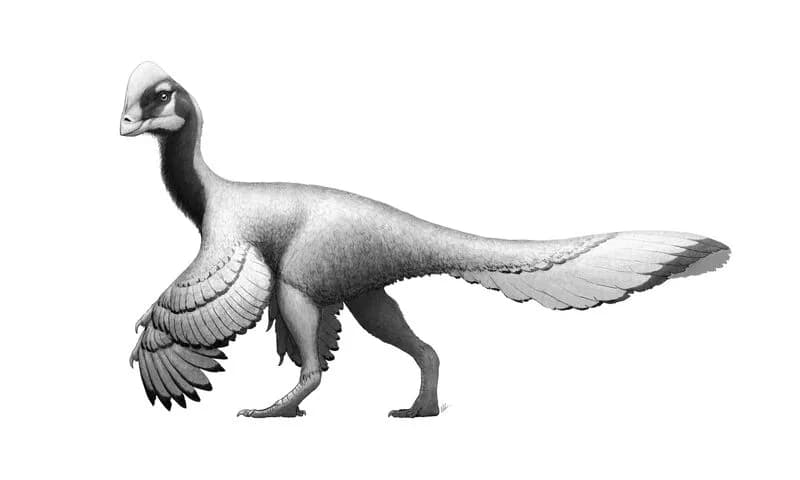
Anzu measured approximately 3 to 3.5 meters in length, 1.5 meters in height, and weighed between 200 and 300 kilograms, making it one of the largest oviraptorosaurs in North America. Its body was covered in feathers, likely including pennaceous feathers on the arms and tail similar to those observed in its Asian relatives like Citipati. Its head bore a tall, rounded bony crest, a powerful toothless beak, and large lateral eyes. Its elongated tibiae indicate remarkable locomotor ability for an animal of this build.
An opportunistic omnivore, Anzu possessed a powerful, toothless beak capable of crushing a variety of foods. Its diet likely included plants, fruits, seeds, small vertebrates, eggs, and invertebrates. The morphology of its beak, combined with the absence of teeth, recalls that of modern cassowaries and ostriches, suggesting a diversified diet. Some researchers believe oviraptorosaurs were primarily herbivorous, while others support a more varied diet. Gastroliths found in closely related species support the hypothesis of assisted digestion for tough plant material.
Anzu inhabited the floodplains and wetlands of the Hell Creek Formation, in present-day North and South Dakota. This Maastrichtian environment was a vast network of rivers, swamps, and subtropical forests, harboring one of the most diverse dinosaur faunas ever documented. Anzu coexisted with T. rex, Triceratops, Edmontosaurus, Pachycephalosaurus, and numerous other species in a thriving ecosystem. The Hell Creek Formation is today one of the most studied fossil sites in the world, continually yielding new discoveries about the end of the Mesozoic.
The anatomy of Anzu combines primitive and derived traits within oviraptorosaurs. Its skull bore a prominent nasal crest whose exact function remains debated: sexual display, intraspecific recognition, or thermoregulation. The toothless beak was covered in keratinized rhamphotheca. The forelimbs were elongated with long curved claws, while the robust hind limbs indicate a fast and agile animal. The tail likely ended in a fan of feathers. Its fused caudal vertebrae formed a rudimentary pygostyle, a structure also found in modern birds.
Anzu was likely a fast, agile terrestrial animal, capable of running at significant speeds thanks to its long hind legs. The crest and elaborate plumage suggest complex display behaviors to attract mates. Like its oviraptorosaur relatives, Anzu possibly brooded its eggs in ground nests, protecting its clutch with outstretched feathered arms. Pathologies observed on the fossils, including healed fractures, suggest an active and sometimes dangerous lifestyle. One specimen shows evidence of a broken and healed rib, as well as a fused toe bone likely resulting from tendon damage.
Anzu wyliei was described in 2014 by Matthew Lamanna, Hans-Dieter Sues, Emma Schachner, and Tyler Lyson from three partial specimens discovered in the Hell Creek Formation in North and South Dakota. The generic name references Anzû, a winged demon from Sumerian mythology, while the specific epithet honors Wylie J. Tuttle, grandson of a Carnegie Museum benefactor. The three combined specimens allow reconstruction of approximately 80% of the skeleton, providing a detailed view of this remarkable animal. The holotype specimen is housed at the Carnegie Museum of Natural History in Pittsburgh, Pennsylvania.
| Period | Crétacé supérieur / Late Cretaceous |
| Era | Mésozoïque / Mesozoic |
| Age | 66 Ma |
| Location | Amérique du Nord (Dakota) / North America (Dakotas) |
| Length | 3-3.5 m |
| Height | 1.5 m |
| Weight | 200-300 kg |
| Diet | Omnivore |
| Discovery | 2014 |
Anzu wyliei measured 3 to 3.5 meters long and 1.5 meters tall, weighing an estimated 200 to 300 kilograms — making it the largest known oviraptorosaur in North America. Its elongated tibiae suggest good running ability despite its bulk, and its feathered arms bore long curved claws inherited from its theropod ancestors.
Anzu wyliei earned the nickname 'Chicken from Hell' from paleontologists because of its striking appearance: a large feathered body, a tall rounded bony crest on the skull, a powerful toothless beak, and long claws. Living just before the 66-million-year-ago mass extinction in the Hell Creek Formation alongside T. rex and Triceratops, this feathered giant made a strong impression when formally described in 2014.
The 2014 description of Anzu wyliei by Lamanna, Sues, Schachner, and Lyson was based on three partial specimens from the Hell Creek Formation in North and South Dakota. Combined, these three individuals allow reconstruction of approximately 80% of the skeleton — an exceptional figure for a North American oviraptorosaur. The holotype is housed at the Carnegie Museum of Natural History in Pittsburgh.
Anzu wyliei restoration
Wikimedia Commons, CC BY-SA
Anzu wyliei mounted skeleton (Carnegie Museum)
Wikimedia Commons, CC BY-SA