Alioramus
Alioramus remotus was a tyrannosaur from Mongolia described in 1976 and dated to around 70 million years ago. The known specimen is a subadult of roughly 370 kilograms, with an adult size estimated at 5 to 6 metres. It belongs to the Alioramini, nicknamed the Pinocchio-snouted tyrannosaurs, and its jaw held 76 to 78 teeth — far more than the heavy-skulled tyrannosaurs.
Playable in Path of Titans
See Alioramus remotus's stats, abilities and role on our survival server.
Alioramus lived at the very end of the Late Cretaceous, during the Maastrichtian, roughly 70 million years ago. Its remains come from the Nemegt Formation in the Mongolian Gobi, laid down by a humid floodplain crossed by rivers and channels. Far from today's arid desert, this green setting supported an abundant fauna of hadrosaurs, sauropods and varied theropods. It was in this landscape of waterways, shared with larger predators, that this slender tyrannosaurid lived, at a time when central Asia hosted some of the last great dinosaur communities before the end-Cretaceous extinction.
The type species, Alioramus remotus, was described in 1976 by Soviet palaeontologist Sergei Kurzanov from a partial skull and three metatarsals found in Mongolia. The genus name means "different branch" (from Latin alius, other, and ramus, branch), and the epithet remotus evokes remoteness. For decades this limited material left doubt about its exact nature. That changed in 2009, when Stephen Brusatte and colleagues described a second species, A. altai, based on a far more complete skeleton: a nearly complete skull, vertebrae, a pelvic girdle and hindlimbs. This find confirmed Alioramus as a valid, distinct tyrannosaurid rather than a fragmentary curiosity.
Estimating Alioramus's size is tricky, because the known specimens belong to subadult or juvenile individuals that had not finished growing. The A. altai skeleton matches an animal about 5 to 6 metres long and some 370 kilograms, but a fully grown adult could have been noticeably larger. Either way, Alioramus stayed clearly smaller and lighter than the giant Tarbosaurus that shared its range. Its build was gracile: an elongated body, slender long hindlimbs, and a low, narrow skull. This modest size, for a tyrannosaur, went hand in hand with a lifestyle geared toward speed rather than brute power. With no confirmed adult, the species' maximum size remains an open question: some researchers argue a fully grown Alioramus could have approached the dimensions of a small Tarbosaurus, while others keep it in the medium-sized tyrannosaur category. This uncertainty, tied directly to the age of the fossils, shows how much a single adult skeleton would change our view of the animal.
Alioramus was a carnivore, but of an unusual kind among tyrannosaurids. Its long, low, narrow snout held a high number of slender teeth — far more than its massive-skulled cousins such as Tarbosaurus. This elongated jaw was not built to crush bone with the colossal force of a Tyrannosaurus, but rather to seize and slice more modest prey. One pictures an agile predator able to chase small or young herbivores and avoid direct competition with adult Tarbosaurus. Its dentition and build point to a fast, precise hunter exploiting an ecological niche distinct from that of its ecosystem's apex predators.
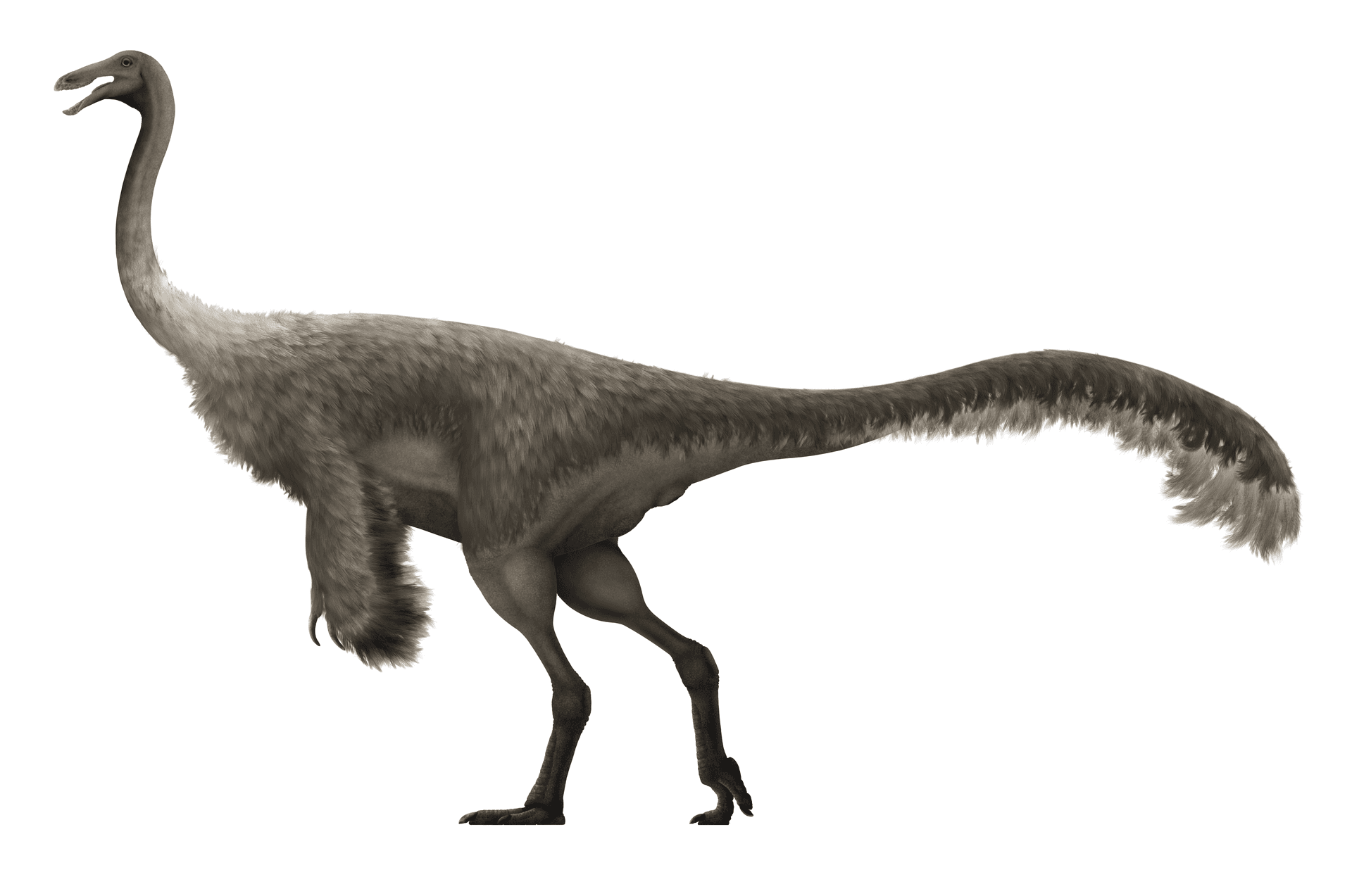
The Nemegt Formation is one of the best-documented Late Cretaceous ecosystems of Asia: a humid floodplain crossed by winding rivers and lakes, with dense vegetation. Alioramus lived alongside a remarkable fauna: the giant tyrannosaurid Tarbosaurus, the crested hadrosaur Saurolophus, the sauropod Nemegtosaurus, the bizarre long-armed Deinocheirus, the sickle-clawed therizinosaur Therizinosaurus and the ornithomimosaur Gallimimus. In this abundance, two tyrannosaurids of different sizes and shapes could coexist through resource partitioning: massive Tarbosaurus dominated large prey, while slender Alioramus fell back on smaller, faster targets.
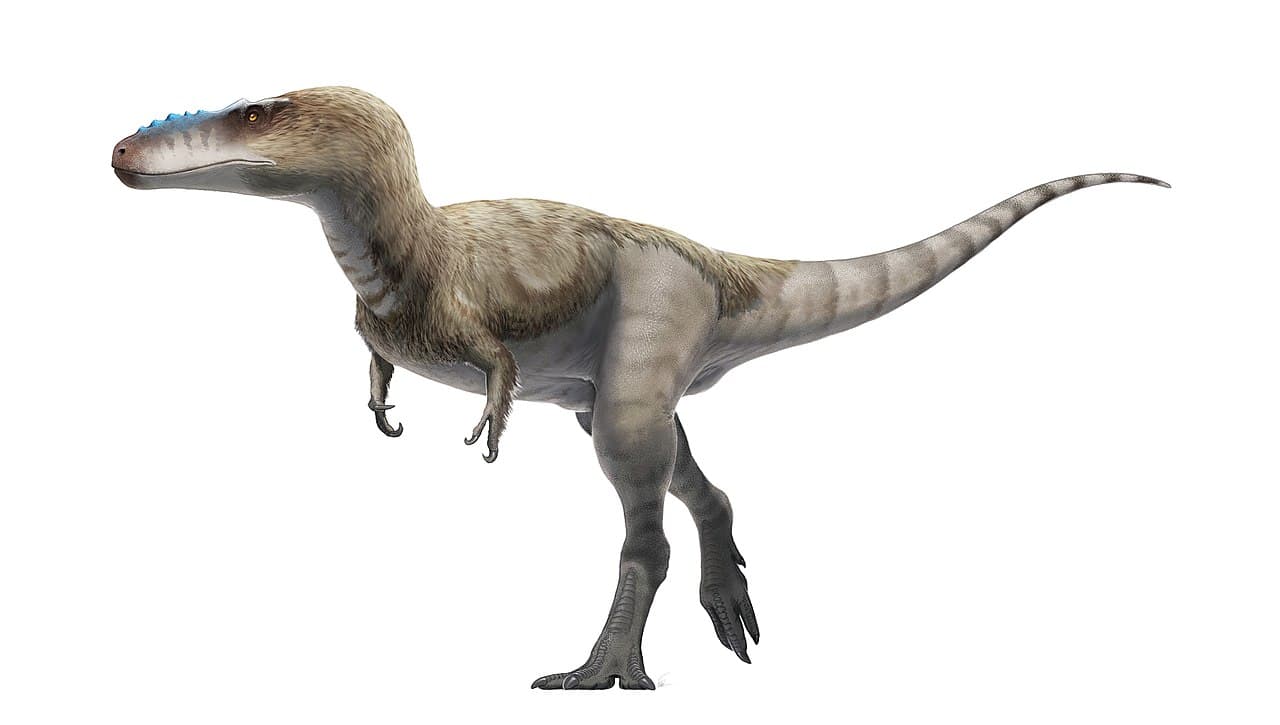
Alioramus's most striking feature is its skull: long, low and bearing a row of bony bumps or small horns running along the nasal bones — an ornament absent in most other tyrannosaurids. Its jaw held an unusually high number of teeth, around seventy-six to seventy-eight, against about sixty in the robust-skulled forms. Like all tyrannosaurs, its arms were short and reduced to two functional fingers, while its long, slender hindlimbs betray a runner. The question of feathers remains debated in large tyrannosaurids: some relatives bore them, but the skin of the giants may have been largely scaly. Modern reconstructions thus swing between partial down and barer integument. The nasal bumps, too fragile to serve as weapons, probably played a display role: individual recognition or courtship. Like other tyrannosaurs, Alioramus had a skull lightened by air cavities and eyes placed well enough to give relatively forward-facing vision, an asset for judging distance during a chase.
Alioramus's anatomy paints the picture of a fast, mobile predator that bet more on agility than on strength. Its long legs probably made it one of the swiftest tyrannosaurids in its setting, able to dash at prey or harass it before pulling back. As with many theropods, the idea of organised pack hunting remains a hypothesis for lack of direct evidence. It is just as plausible that it hunted alone, alternating active pursuit with opportunistic scavenging. Its light skull suggests it avoided head-on clashes with large, tough prey, favouring speed and precision. This "lightweight" tyrannosaur profile nicely illustrates the diversity of strategies within a single family. The fact that the known specimens are still-growing individuals raises an interesting point: a fast young Alioramus may have filled a mesopredator role, taking prey out of reach of the heavier adults and perhaps competing with juvenile Tarbosaurus. In tyrannosaurs, build and diet often shifted over a lifetime, and Alioramus may capture one stage of that journey, halfway between the agile pursuer and the established predator.
Alioramus belongs to the family Tyrannosauridae, but occupies a special branch: the Alioramini, a group of long, low-snouted tyrannosaurs that also includes Qianzhousaurus, nicknamed "Pinocchio rex" for its elongated skull. Its exact position long sparked debate. Some researchers first thought Alioramus specimens might be young Tarbosaurus, whose skull shape changes with age. But the distinctive traits of A. altai — the high tooth count and nasal ornamentation — supported its status as a valid genus. Today Alioramus is seen as a key representative of the long-snouted Asian tyrannosaurs, a lineage apart among the great predators of the Cretaceous.
Compared with classic tyrannosaurids, Alioramus turns the image of the stocky, bone-crushing apex predator on its head. Where Tyrannosaurus and Tarbosaurus relied on massive skulls and a devastating bite, Alioramus evolved an elongated snout, a fuller set of teeth and a gracile, running-oriented body. This difference illustrates niche partitioning: within one ecosystem, two related predators avoid competition by targeting different prey and hunting techniques. Within the Alioramini, its close relative Qianzhousaurus takes the skull elongation even further. Together, these "Pinocchio-snouted" tyrannosaurs show that the family did not produce a single model of hunter, but a whole range of specialists suited to varied ecological roles.
The fossil record of Alioramus remains uneven. The type species, A. remotus, is known only from a partial skull and three foot bones, leaving wide swaths of its anatomy in the dark. It is A. altai that provides most of our knowledge, with a far more complete skeleton — but from an individual that had not reached adult size. This quirk complicates estimates of final proportions and blurs some comparisons. As is often the case with thin-boned theropods, preservation is fickle. New specimens, especially a well-preserved adult, would be valuable: they would help pin down growth, true size and the exact place of Alioramus among the last great predators of Asia.
Little known to the general public, Alioramus has gained visibility through online palaeo and video games. It features among the playable creatures of Path of Titans, where it was funded by a backer during the game's crowdfunding. There it is presented as a fast, mobile tyrannosaur with bright colours and a slightly increased size — a deliberate choice, precisely because the only known fossils are not-yet-adult individuals. Here again, science and game should be told apart: the genuinely recognised species are A. remotus and A. altai, the rest being creative licence. This digital popularity has the merit of spotlighting an atypical tyrannosaur and reminding us that, beside the colossi, the family also held slim, swift hunters.
| Period | Crétacé supérieur / Late Cretaceous (Maastrichtien) |
| Era | Mésozoïque / Mesozoic |
| Age | ~70 Ma |
| Location | Mongolie / Mongolia (Formation de Nemegt) |
| Length | 5–6 m (estimée) |
| Height | ~1.5 m (hanche / hip) |
| Weight | ~370 kg (subadulte connu) |
| Diet | Carnivore |
| Discovery | 1976 (A. remotus) |
Alioramus altai has a long, low, narrow skull ornamented with a row of bony bumps on the nasals — absent in Tarbosaurus and Tyrannosaurus. Its jaw held about 76-78 teeth, notably more than the ~60 of massive-skulled tyrannosaurs. This elongated snout, typical of Alioramini (like Qianzhousaurus), indicates hunting of smaller prey in Mongolia's Nemegt Formation (~70 Ma).
The fossil record of Alioramus is limited to subadult or juvenile individuals: A. remotus (described in 1976 by Kurzanov, partial skull) and A. altai (described in 2009 by Brusatte, ~370 kg, ~5-6 m). No complete adult has been found, making maximum size uncertain. This gap, linked to the low density of hollow theropod bones in the fossil record, leaves questions open about the growth of this Mongolian tyrannosaurid.
Alioramus and Tarbosaurus shared the Nemegt Formation (Mongolia, ~70 Ma) through niche partitioning: massive Tarbosaurus dominated large prey (adult hadrosaurs, sauropods), while Alioramus, with its long legs and light skull, targeted smaller prey like juvenile ornithomimosaurs or small herbivores. This cohabitation illustrates the diversity of strategies within a single family.
Information on this page is based on peer-reviewed scientific publications.
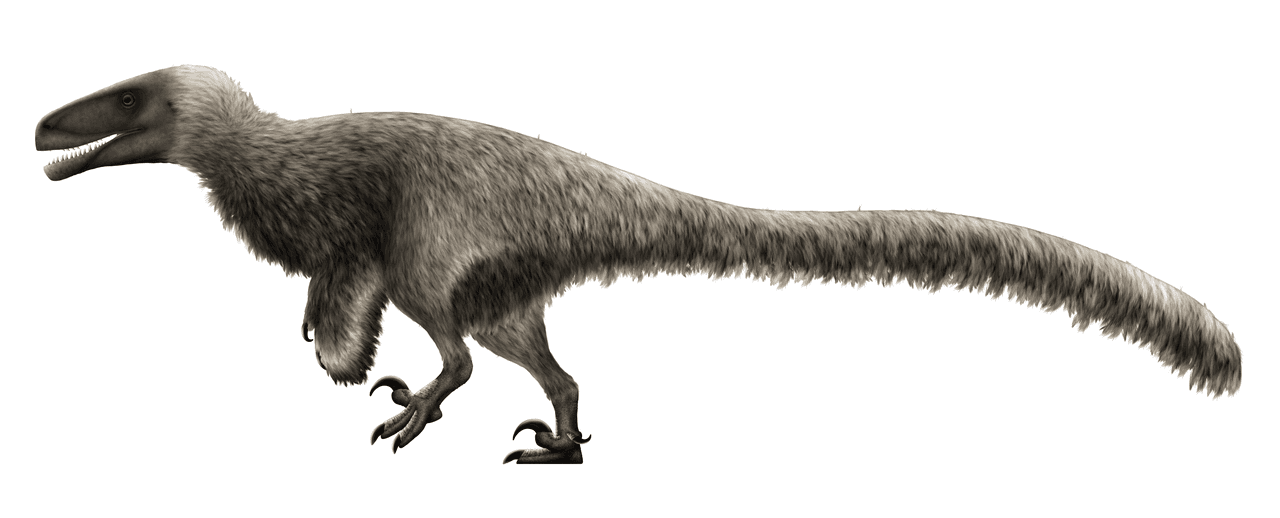
Life reconstruction of Alioramus, a gracile long-snouted tyrannosaurid from the Late Cretaceous of Mongolia.
Fred Wierum, CC BY 3.0, via Wikimedia Commons
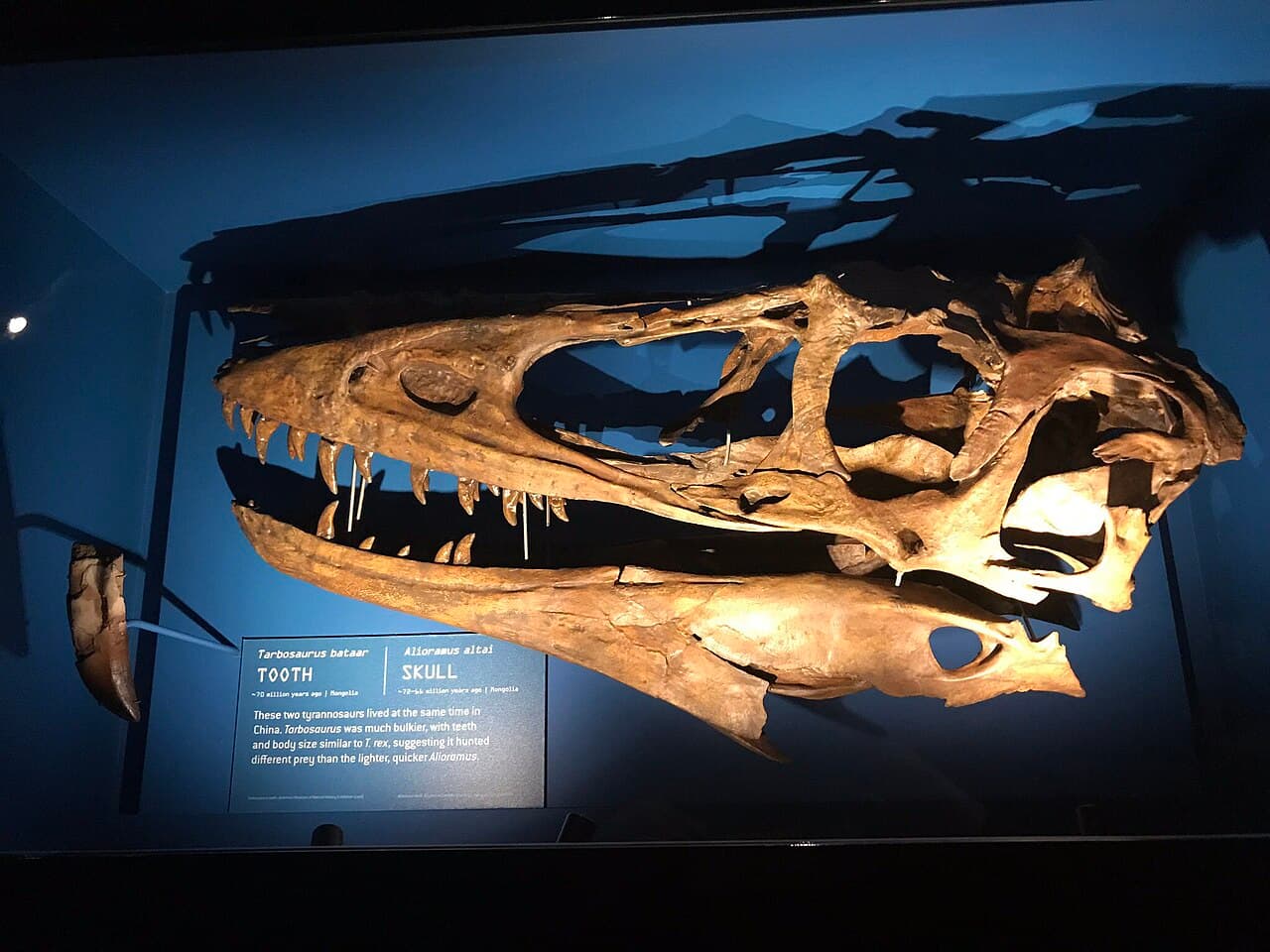
Skull of Alioramus altai on display at the American Museum of Natural History, showing the elongated snout and nasal bumps.
Ben Miller, CC BY-SA 4.0, via Wikimedia Commons