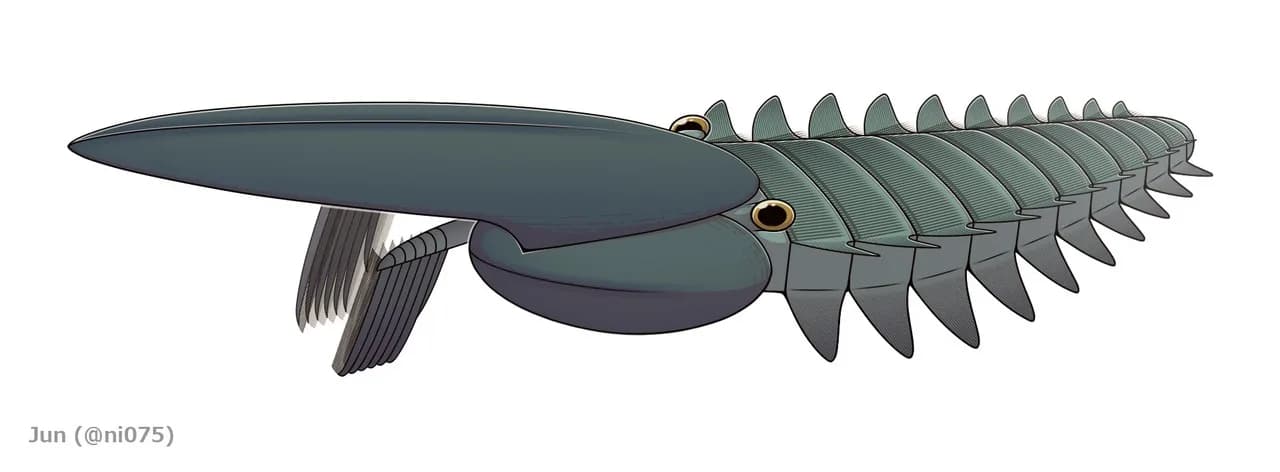
Aegirocassis
Aegirocassis benmoulai was a filter-feeding arthropod from Morocco, described in 2015 and dated to 480 to 460 million years ago. At 2 metres and around 50 kilograms, it strained plankton the way baleen whales do today — 450 million years earlier. It belongs to the same family as the fearsome Anomalocaris, but took up filtering instead.
Aegirocassis lived during the Late Ordovician, approximately 480 to 460 million years ago, in the seas that covered what is now Morocco. This extraordinary animal belongs to the anomalocaridids, the same group as the famous Cambrian Anomalocaris, but it lived tens of millions of years later, proving that this lineage survived much longer than previously thought. Its discovery in 2015 in Morocco's Fezouata Formation revolutionized our understanding of Ordovician marine evolution. At two meters in length, Aegirocassis was one of the largest animals of its time, a true giant in oceans populated mostly by small invertebrates.
Aegirocassis reached approximately 2 meters in length, making it one of the largest animals of the Ordovician and one of the largest arthropods ever to have existed. Its weight is estimated at around 50 kilograms, although this estimate remains approximate due to the difficulty of calculating the mass of such an ancient animal with no direct modern equivalent. Its body was elongated and segmented, with lateral swimming flaps that gave it a hydrodynamic silhouette reminiscent of a manta ray or a miniature whale shark. Its modified frontal appendages used for filtering could extend over a considerable span, further enhancing the impression of grandeur of this majestic Ordovician sea creature.
Unlike its cousin Anomalocaris which was a formidable predator, Aegirocassis was a filter-feeder — it fed by filtering plankton and small suspended organisms from the water, exactly as modern baleen whales and whale sharks do today. Its frontal appendages, typically used for grasping prey in other anomalocaridids, had been spectacularly modified into filtration structures equipped with long, thin, closely-spaced spines forming a biological sieve. Aegirocassis swam slowly with its mouth open through clouds of Ordovician plankton, capturing millions of microorganisms with each pass. This feeding strategy represents one of the oldest known examples of suspension feeding in a large marine animal.
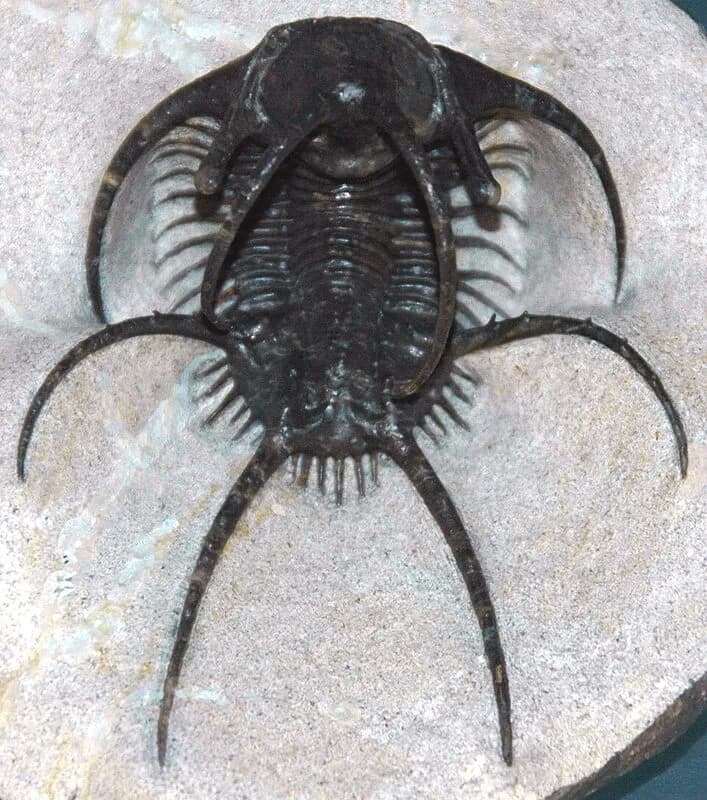
Aegirocassis lived in relatively shallow marine waters along the continental margin of Gondwana, in what is now southeastern Morocco. The Fezouata Formation, from which all known fossils originate, represents a continental shelf marine environment with temperate to cold waters, situated at high latitudes near the Ordovician South Pole. The oceans of this time were experiencing the 'Great Ordovician Biodiversification Event,' an explosion of diversity nearly as significant as the Cambrian one. Aegirocassis swam in plankton-rich waters, sharing its habitat with trilobites, brachiopods, graptolites, nautiloids, and a multitude of marine invertebrates characteristic of the Ordovician.
Aegirocassis's anatomy reveals a remarkable adaptation to filter-feeding from a body plan originally designed for predation. Like all anomalocaridids, it possessed a segmented body with lateral swimming flaps, but a crucial 2015 discovery showed that it actually had two rows of flaps — dorsal flaps and ventral flaps — an arrangement previously unknown in anomalocaridids. This double row of fins foreshadows the biramous organization of appendages in modern arthropods. Its frontal appendages, transformed into filters, bore rows of thin, elongated spines forming a sophisticated filtration comb. Its circular mouth, typical of anomalocaridids, was probably less heavily armed than that of its predatory cousins.
Aegirocassis behaved like a 'whale of the Ordovician,' swimming slowly and majestically through the plankton-rich waters of the Ordovician ocean. Its double swimming flaps allowed stable, regular swimming ideal for continuous filtration rather than the sudden accelerations of hunting. It deployed its modified frontal appendages like fans in front of its mouth, creating a vast biological net that trapped plankton and small organic particles suspended in the water. This lifestyle directly recalls that of modern baleen whales and whale sharks, a spectacular example of convergent evolution across more than 450 million years. Aegirocassis was probably a pelagic swimmer, traveling great distances in search of the densest plankton concentrations.
Aegirocassis benmoulai was described in 2015 by Peter Van Roy and Derek Briggs in a groundbreaking article published in the journal Nature. The fossils come from the Fezouata Formation in southeastern Morocco, an exceptional deposit discovered in the early 2000s that has transformed our understanding of Ordovician marine life. The species name 'benmoulai' honors Mohamed Ben Moula, the Moroccan fossil collector who discovered the original specimens. The genus name 'Aegirocassis' refers to Ægir, the sea giant in Norse mythology. The fossils are remarkably preserved in three dimensions, which allowed the biramous structure of anomalocaridid swimming flaps to be revealed for the first time — a discovery that reconfigured our understanding of arthropod evolution.
| Period | Ordovicien supérieur / Late Ordovician |
| Era | Paléozoïque / Paleozoic |
| Age | 480-460 Ma |
| Location | Maroc / Morocco |
| Length | 2 m |
| Weight | ~50 kg |
| Diet | Filtreur |
| Discovery | 2015 |
Aegirocassis benmoulai, described in 2015 by Van Roy and Briggs in Nature, was a 2-meter giant filter-feeder weighing about 50 kg. Unlike other predatory anomalocaridids, its frontal appendages evolved into a biological sieve with fine spines. It swam slowly mouth-open through Ordovician plankton-rich waters, exactly as baleen whales do today — 450 million years earlier.
Fossils of Aegirocassis benmoulai, preserved three-dimensionally in Morocco's Fezouata Formation, revealed for the first time that anomalocaridids had two rows of swimming flaps: dorsal and ventral. This previously unknown double row foreshadows the biramous appendage organization of modern arthropods, reshaping our understanding of arthropod evolution.
Aegirocassis benmoulai was discovered in the Fezouata Formation in southeastern Morocco, an exceptional Ordovician (460-480 Ma) deposit uncovered in the early 2000s. The species was named in honor of Mohamed Ben Moula, the Moroccan fossil collector who found the specimens. The scientific description, published in Nature in 2015, was carried out by Peter Van Roy and Derek Briggs.
Artistic reconstruction of Aegirocassis benmoulai filtering Ordovician plankton
Marianne Collins / Nature, 2015
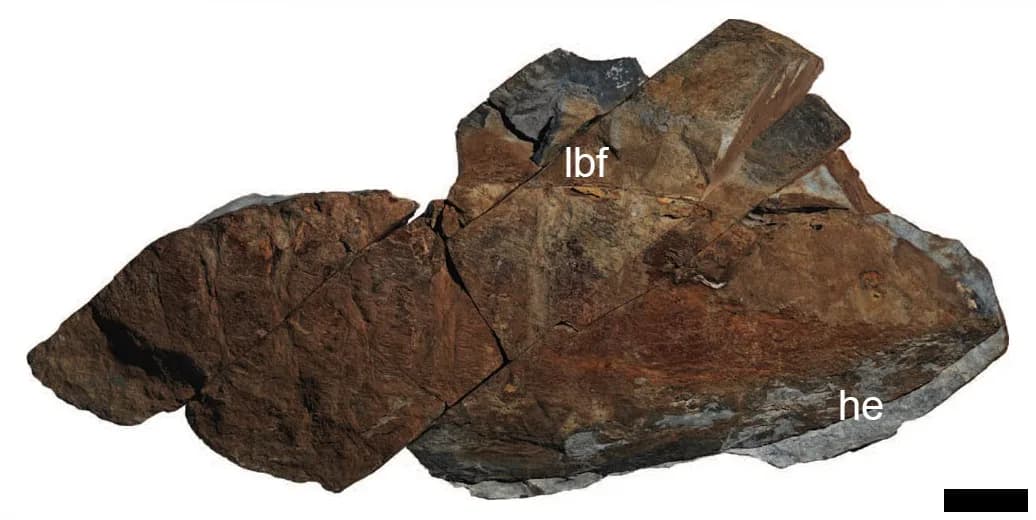
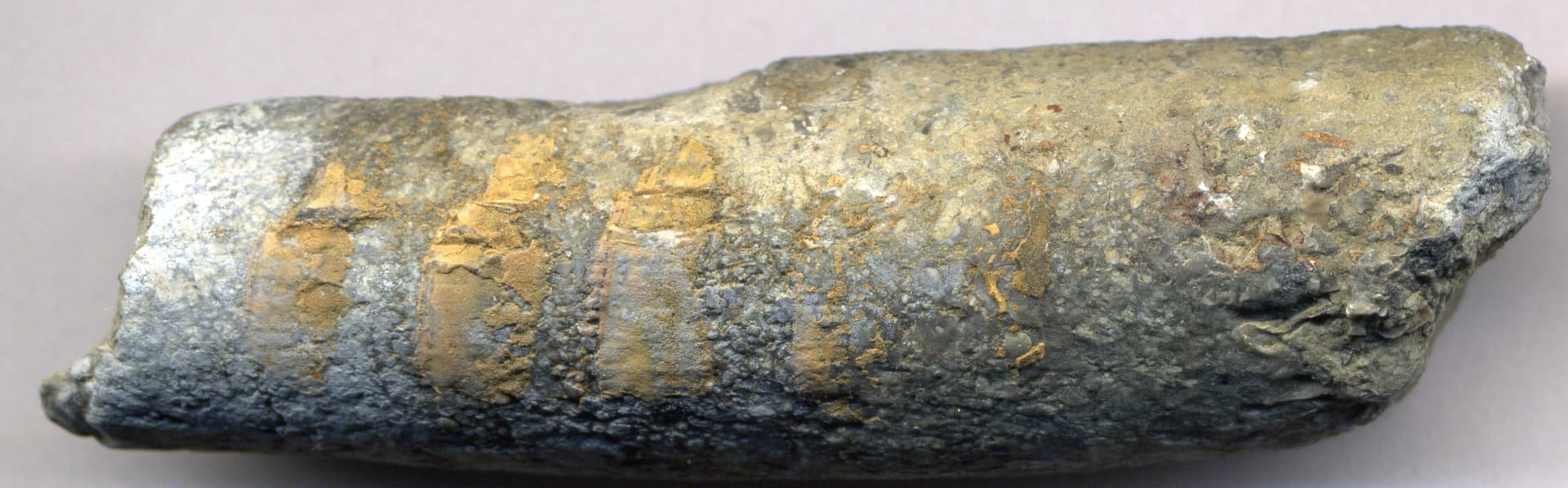
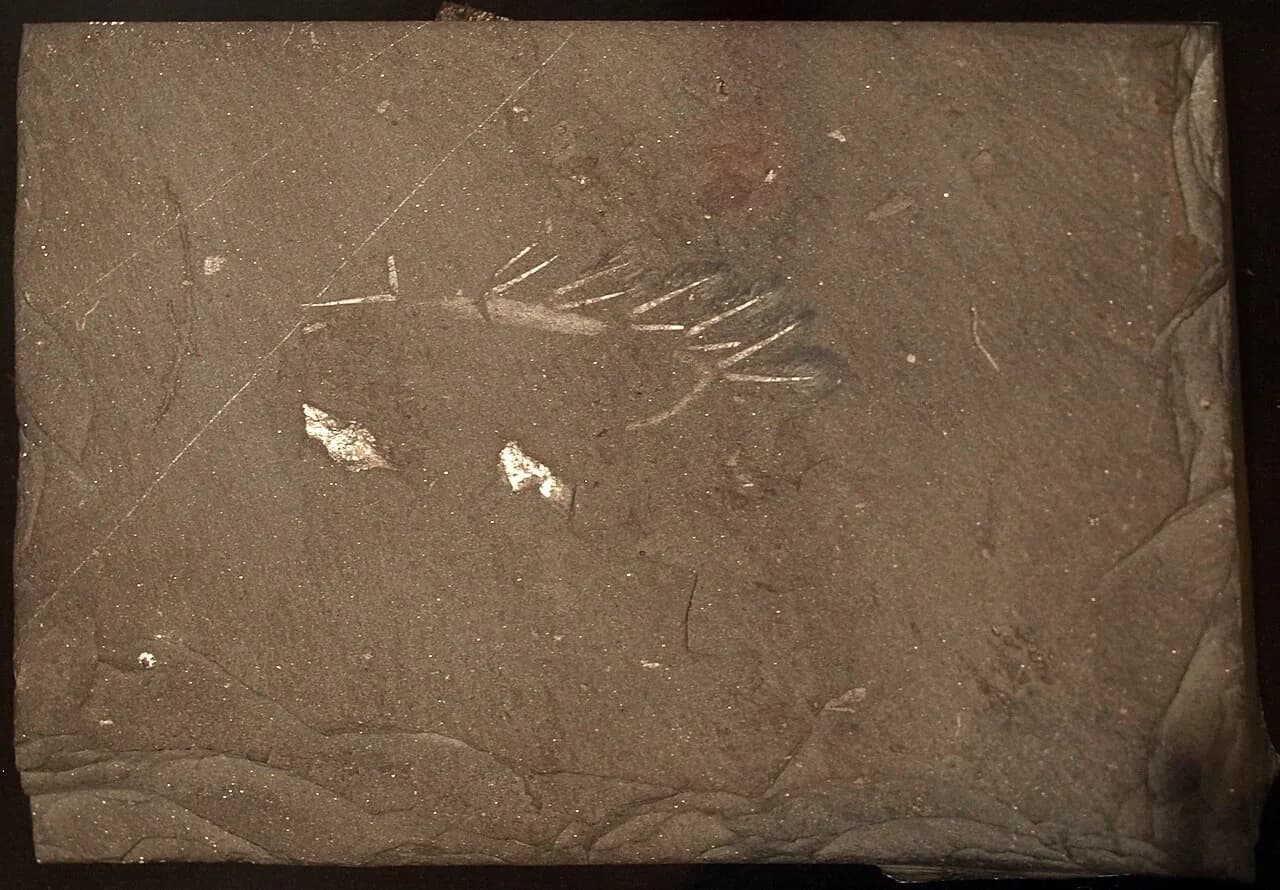
Fossil of Aegirocassis benmoulai from the Fezouata Formation, Morocco
Peter Van Roy / Yale University