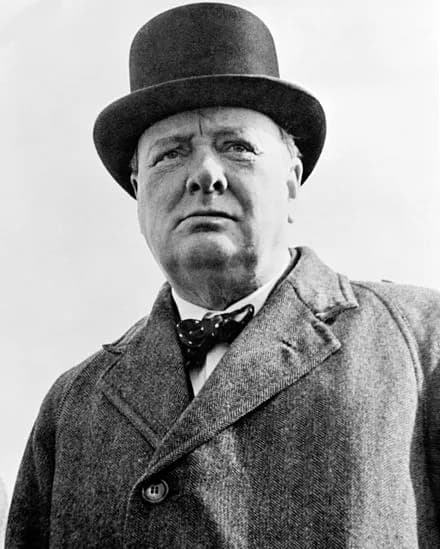
Prime Minister of the United Kingdom from 1940 to 1945, Winston Churchill embodied British resistance to Nazi Germany. His rousing speeches and unwavering leadership were instrumental in sustaining British morale through the darkest hours of the war. He refused any negotiated peace after the fall of France.
Born on November 30, 1874, at Blenheim Palace in Oxfordshire, Winston Leonard Spencer Churchill was the son of Lord Randolph Churchill, a Conservative politician, and Jennie Jerome, a wealthy American. Raised in the British aristocracy, he attended Harrow School and then the Royal Military Academy at Sandhurst. A mediocre student academically, he nevertheless excelled in English and history. He entered the army in 1895 and took part in campaigns in India, Sudan, and South Africa during the Boer War (1899-1902). It was in South Africa that he became known to the wider public: captured by the Boers, he made a spectacular escape and returned to England as a hero. This adventure launched his political career. Elected as a Conservative Member of Parliament in 1900, he switched to the Liberal Party in 1904 before returning to the Conservatives in the 1920s. This political versatility earned him a reputation as an opportunist, but also reflected his characteristic independence of mind.
Before World War II, Churchill held numerous major ministerial positions. As First Lord of the Admiralty during World War I, he was held responsible for the disaster at Gallipoli (1915) and resigned. He then served briefly on the Western Front before returning to politics. During the interwar period, he held the posts of Minister of Munitions, Secretary of State for War, Secretary of State for the Colonies, and Chancellor of the Exchequer (1924-1929). Throughout the 1930s, he endured a political "wilderness years" period, excluded from power. It was during this decade that he distinguished himself as one of the few British politicians to publicly warn about the danger posed by Hitler and German rearmament. His repeated warnings about the Nazi threat, long ignored by Neville Chamberlain's government and its policy of appeasement, proved tragically prophetic. After the failure of the Munich Agreement and the invasion of Poland, Churchill was recalled to government as First Lord of the Admiralty in September 1939.
On May 10, 1940, Churchill became Prime Minister at the most critical moment of the war. France was collapsing, the British army was being evacuated from Dunkirk, and the invasion of England seemed imminent. Churchill categorically refused any negotiation with Hitler, declaring to Parliament: "We shall fight on the beaches, we shall fight in the fields and in the streets, we shall never surrender." His radio broadcasts became a weapon of war in their own right, galvanizing national morale. During the Battle of Britain (summer 1940), he gave unwavering support to the RAF and immortalized its pilots with his famous phrase: "Never in the field of human conflict was so much owed by so many to so few." Churchill forged a crucial alliance with Franklin Roosevelt, resulting in the Atlantic Charter (August 1941) and the Lend-Lease program that supplied vital materiel to the United Kingdom. After the entry of the United States and the USSR into the war, he played a key role in the inter-Allied conferences — Casablanca, Tehran, Yalta — shaping the overall Allied strategy. He insisted on landings in North Africa and then Italy before the final assault in Normandy.
Churchill made several crucial decisions that influenced the course of the war. His refusal to negotiate with Hitler in May-June 1940, against the advice of certain cabinet members including Lord Halifax, was arguably the most consequential decision of the entire conflict. He ordered the attack on the French fleet at Mers-el-Kebir in July 1940 to prevent it from falling into German hands — a painful decision that killed 1,297 French sailors but demonstrated British resolve. He authorized the massive strategic bombing of Germany, including the controversial bombing of Dresden in February 1945. Churchill actively supported commando operations and the secret services (SOE), encouraging resistance across occupied Europe. His relationship with Stalin was complex: pragmatic, he forged a necessary alliance with the USSR while worrying about Soviet expansion in Eastern Europe. It was Churchill who, as early as 1944, negotiated with Stalin the famous "percentages agreement" dividing spheres of influence in Europe. Despite victory in Europe, Churchill lost the July 1945 elections to the Labour candidate Clement Attlee.
Winston Churchill is widely regarded as the greatest wartime leader of the twentieth century and one of the most influential Britons in history. His role during World War II earned him worldwide recognition: he was the first person to receive honorary American citizenship in 1963. His "Iron Curtain" speech at Fulton, Missouri, in 1946 prophetically heralded the Cold War. Re-elected Prime Minister from 1951 to 1955, he received the Nobel Prize in Literature in 1953 for his six-volume war memoirs, a monumental work that remains a major historical source. Churchill died on January 24, 1965, at the age of 90. His state funeral, the grandest in England since that of the Duke of Wellington, drew millions of spectators. His legacy transcends politics: he embodies the values of courage, determination, and resistance against tyranny. His quotations remain among the most widely cited in the world. In 2002, he was voted the "Greatest Briton of all time" by the BBC's audience. His life demonstrates that leadership, eloquence, and the refusal to capitulate can change the course of history.
This article draws on historical works, military archives and recognized academic publications.
Winston Churchill became Prime Minister on May 10, 1940, the very day Germany launched its Western offensive. Faced with France's imminent fall, he categorically refused any negotiation with Hitler, against the advice of Lord Halifax and other cabinet members. This refusal to surrender, expressed in his Parliament speeches — 'we shall never surrender' — is considered the most consequential decision of the entire conflict.
Churchill ordered the attack on the French fleet at Mers-el-Kébir on July 3, 1940, to prevent ships from falling into German hands after the Franco-German armistice. Operation Catapult killed 1,297 French sailors — a painful decision that severely damaged Franco-British relations — but demonstrated to the world, and especially to Roosevelt, British determination to continue fighting.
Winston Churchill received the Nobel Prize in Literature in 1953 for his six-volume war memoirs. In 1963, he was the first to receive honorary American citizenship. His 'Iron Curtain' speech at Fulton, Missouri, in 1946 had prophetically announced the Cold War. In 2002, he was voted the 'Greatest Briton of all time' by the BBC's audience. He died on January 24, 1965, at the age of 90.
Information cross-checked against Wikipedia and reference historical works.
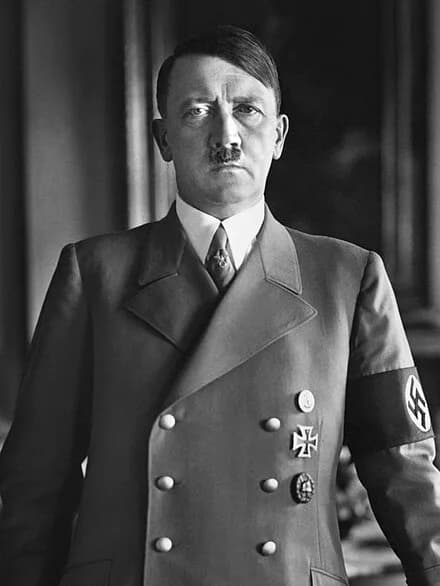
Adolf Hitler
Dictator of Nazi Germany from 1933 to 1945, Adolf Hitler was the primary instigator of World War II and the Holocaust. His racist and expansionist ideology caused the deaths of tens of millions of people worldwide. Appointed chancellor on 30 January 1933, he had dismantled the Weimar Republic within eighteen months and taken absolute power.
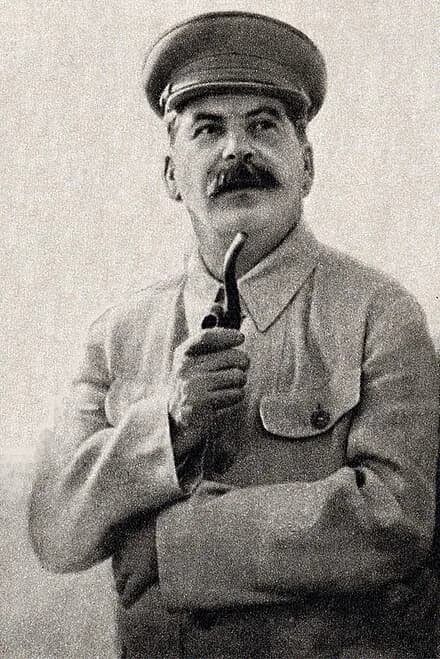
Joseph Stalin
Leader of the Soviet Union from 1924 to 1953, Joseph Stalin transformed the USSR into an industrial and military superpower. His leadership during the Great Patriotic War was decisive in defeating Nazi Germany, but his totalitarian regime caused millions of deaths among his own people.
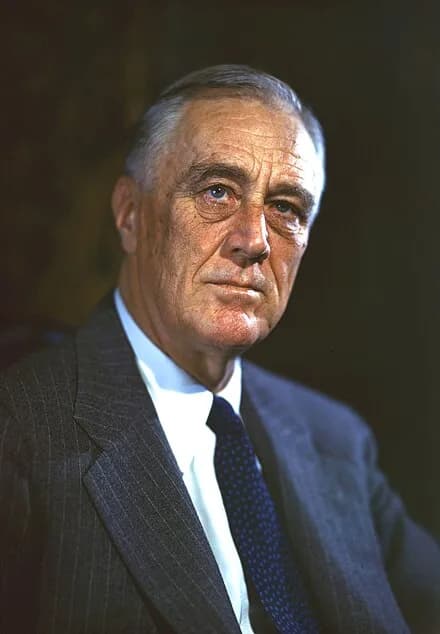
Franklin D. Roosevelt
32nd President of the United States, Franklin D. Roosevelt led the country through the Great Depression and most of World War II. His Lend-Lease program and diplomacy with Churchill and Stalin were decisive in the Allied victory, though he died just weeks before Germany's surrender.
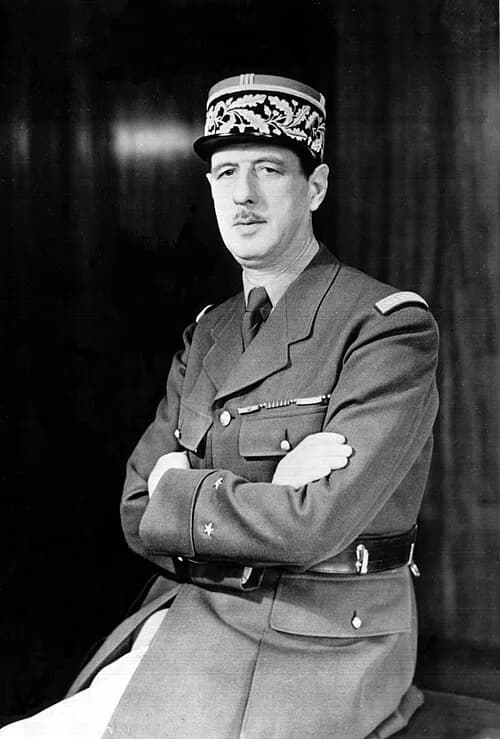
Charles de Gaulle
Leader of Free France from London starting June 1940, Charles de Gaulle refused capitulation and embodied French resistance. Through his determination and political skill, he succeeded in having France recognized as a victorious power at the war's end, preserving its place among the great nations.
