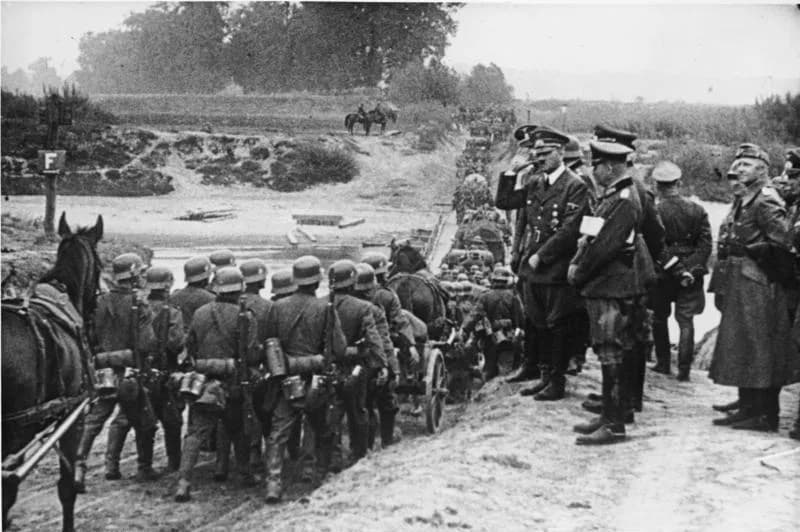
The invasion of Poland by Nazi Germany on 1 September 1939 triggered World War II. In barely five weeks, German and then Soviet forces crushed the Polish army, applying the Blitzkrieg doctrine on a large scale for the first time. Britain and France declared war on 3 September.
Since Hitler's rise to power in 1933, Nazi Germany had pursued an aggressive policy of territorial expansion. The Anschluss with Austria in March 1938 and the annexation of the Sudetenland followed by the whole of Czechoslovakia in 1938-1939 proceeded without military opposition from Western democracies, reinforcing Hitler's conviction that France and Britain would not dare to intervene. The Molotov-Ribbentrop Pact signed on August 23, 1939 guaranteed Soviet neutrality and included a secret protocol dividing Poland and the Baltic states between the two totalitarian powers. This pact stunned the world and diplomatically isolated Poland. Despite British and French guarantees given to Poland in March 1939, the Polish general staff found itself in a desperate strategic position: encircled to the north by East Prussia, to the west by Germany, and to the south by pro-Nazi Slovakia, with a now-hostile Soviet Union to the east. Hitler fabricated a border incident known as Operation Himmler to justify the invasion, staging a false Polish attack on the Gleiwitz radio station on August 31, 1939.
On September 1, 1939 at 4:45 AM, without a formal declaration of war, the Wehrmacht launched the invasion of Poland with 1.5 million soldiers, 2,500 tanks, and 2,000 aircraft. The battleship SMS Schleswig-Holstein opened fire on the Polish garrison at Westerplatte in Danzig, firing the first shots of the war. The Luftwaffe immediately attacked Polish airfields, destroying much of the air force on the ground. Panzer divisions pierced Polish lines along multiple axes, rapidly encircling enemy units in vast pockets. The Polish army, courageous but outmatched in equipment and doctrine, attempted to defend borders that were far too long. The legend of Polish cavalry charging German tanks is largely exaggerated, but the Poles fought with fierce determination. France and Britain declared war on Germany on September 3 but launched no significant offensive, beginning the period known as the Phoney War. On September 17, the USSR invaded Poland from the east in accordance with the secret pact. Warsaw resisted heroically until September 27 before capitulating after intense bombardment.
Poland was entirely conquered in five weeks. The country was partitioned between Germany and the USSR: the western regions were annexed to the Reich or transformed into the General Government under Nazi administration, while the USSR seized the eastern regions encompassing present-day western Belarus and western Ukraine. Both occupiers immediately began a policy of systematic terror. The Germans targeted the Polish intelligentsia, Jews, and clergy in Operation Tannenberg, executing tens of thousands of civilians. The Soviets deported over one million Poles to Siberia and secretly executed 22,000 Polish officers in the Katyn massacre during the spring of 1940. The Polish government went into exile in London and reconstituted armed forces that would fight alongside the Allies on every front throughout the war. The Polish Home Army, known as the Armia Krajowa, became one of the largest and best-organized resistance movements in Europe. The Polish campaign demonstrated the terrifying effectiveness of Blitzkrieg and served as a warning to other European nations, a warning that France would fail to heed.
The invasion of Poland marks a fundamental turning point in military and world history. Militarily, it validated the doctrine of mechanized warfare: the combination of fast-moving tanks, tactical aviation, and motorized infantry coordinated by radio proved devastating against a conventional army. The Polish army, although numerically significant with one million men, suffered from a critical lack of modern armor and aircraft. Its strategy of defending the borders dispersed its forces and exposed them to German encirclement. The total failure of France and Britain to launch an offensive in the west, despite overwhelming numerical superiority against the 23 German divisions left on the Westwall, remains one of the greatest strategic blunders of the war. A French offensive in September 1939 could have radically altered the course of the conflict. Politically, the invasion revealed the complete bankruptcy of the policy of appeasement. The League of Nations, already moribund, was definitively discredited, and the international order established by the Treaty of Versailles collapsed entirely.
Polish, German, and Soviet archives provide abundant documentation on the September 1939 campaign. The Wehrmacht's war diaries, declassified after 1945, detail operations day by day. Soviet archives, partially opened after 1991, confirm the secret coordination between Berlin and Moscow and document the Katyn massacre, long falsely attributed to the Germans by Soviet propaganda. Among the key reference works, September Storm by Gordon Rottman and Poland 1939 by Roger Moorhouse offer detailed military analyses of the campaign. General Guderian's memoirs, Achtung Panzer, describe the campaign from the perspective of a Panzer commander on the ground. The Warsaw Uprising Museum and the Polish Institute of National Remembrance preserve essential collections of testimonies and documents. The work of historian Timothy Snyder, particularly Bloodlands, places the invasion within the broader context of mass violence in Eastern Europe during this devastating period.
On September 1, 1939, at 4:45 AM, without a formal declaration of war, the Wehrmacht launched the invasion of Poland with 1.5 million soldiers, 2,500 tanks, and 2,000 aircraft. The battleship SMS Schleswig-Holstein opened fire on Westerplatte in Danzig, firing the first shots of World War II. France and the United Kingdom declared war on Germany on September 3, 1939.
On September 17, 1939, the USSR invaded Poland from the east, in accordance with the secret protocol of the Molotov-Ribbentrop Pact signed on August 23, 1939. This pact had secretly divided Poland and the Baltic states between the two powers. The Soviets deported over one million Poles to Siberia and secretly executed 22,000 Polish officers in the Katyn massacre in spring 1940.
Poland was entirely conquered in five weeks. Warsaw resisted heroically until September 27, 1939, before capitulating after intense bombardment. The Polish government went into exile in London and reconstituted armed forces that fought alongside the Allies on every front. The interior resistance, the Armia Krajowa, became one of the largest and best-organized resistance movements in Europe.
Information cross-checked against Wikipedia and reference historical works.
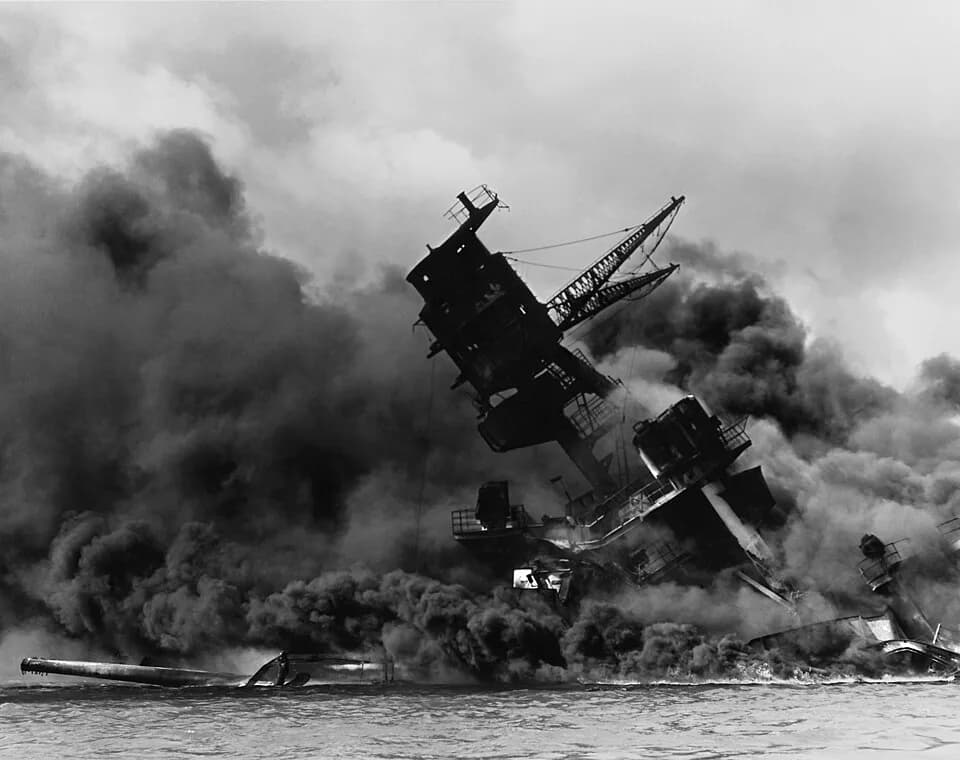
Attack on Pearl Harbor
The surprise Japanese attack on the American naval base at Pearl Harbor on December 7, 1941 triggered the United States' entry into the war. This event transformed an essentially European conflict into a true world war and ultimately sealed the fate of the Axis powers.
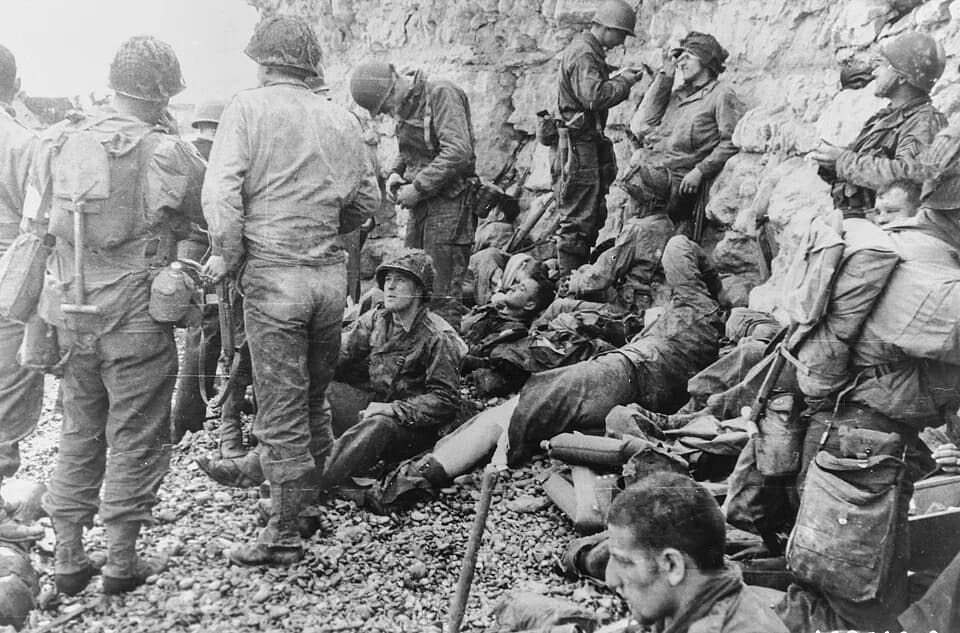
D-Day — Normandy Landings
On June 6, 1944, the largest amphibious operation in history landed 156,000 Allied soldiers on the beaches of Normandy. D-Day opened a second front in Western Europe and marked the beginning of the liberation of France and Western Europe from Nazi rule.
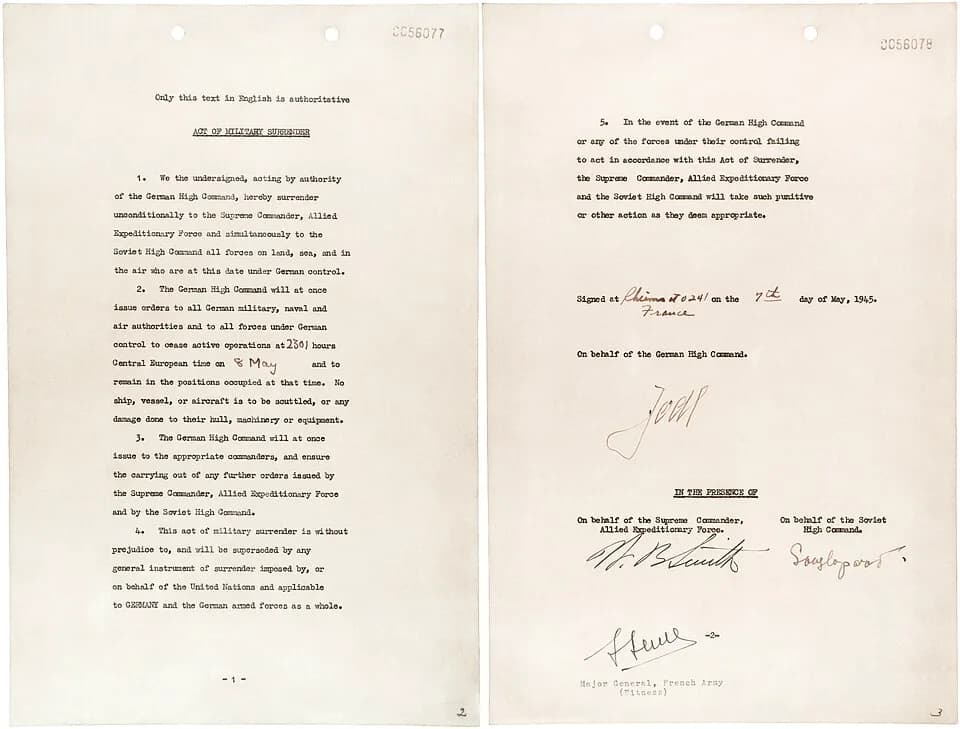
Surrender of Germany
On May 8, 1945, Nazi Germany surrendered unconditionally, ending the war in Europe after nearly six years of conflict. This event, celebrated as Victory in Europe Day (V-E Day), marked the fall of the Third Reich and the beginning of a new geopolitical era.
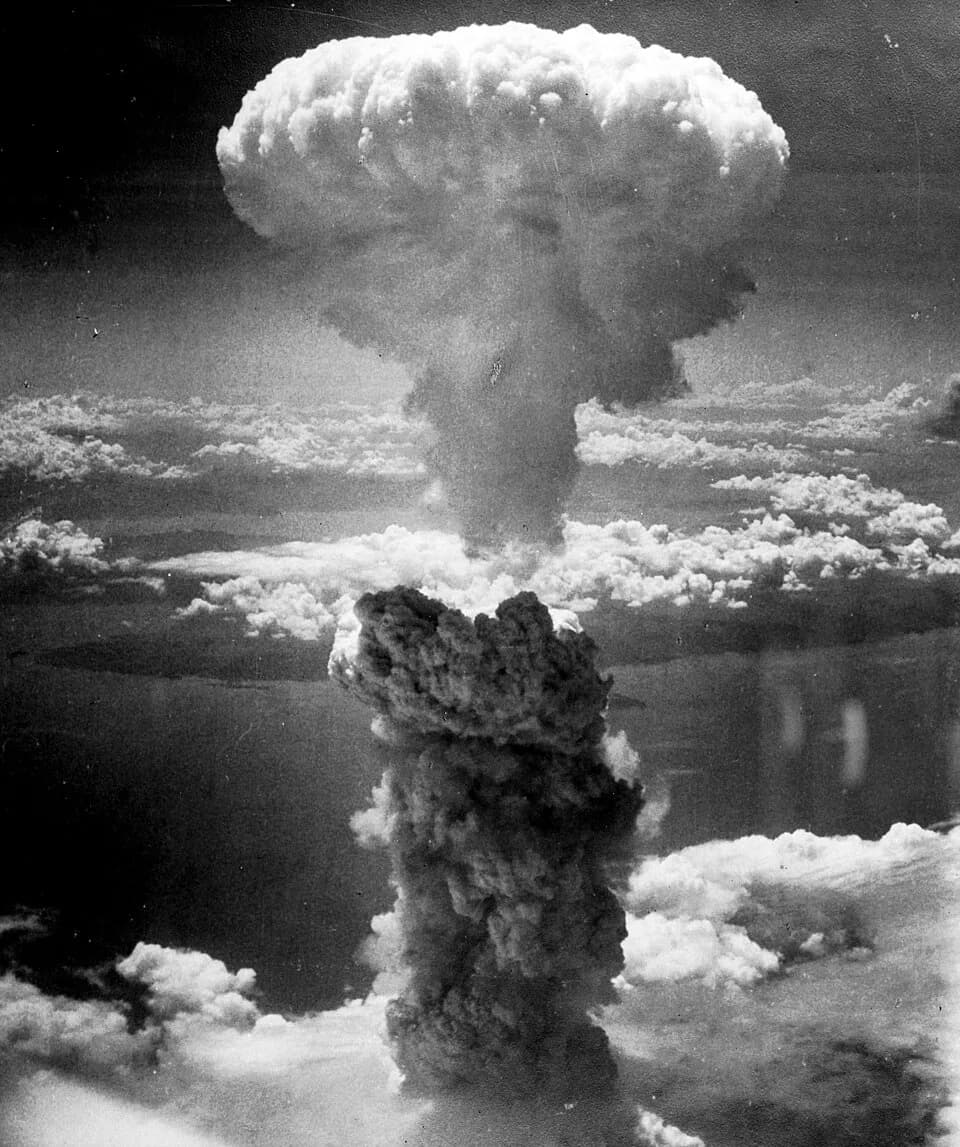
Atomic Bombings of Hiroshima and Nagasaki
The atomic bombings of Hiroshima (August 6) and Nagasaki (August 9, 1945) are the only uses of nuclear weapons in warfare. These attacks killed between 150,000 and 226,000 people and led to Japan's surrender, ending World War II while ushering in the nuclear age.
