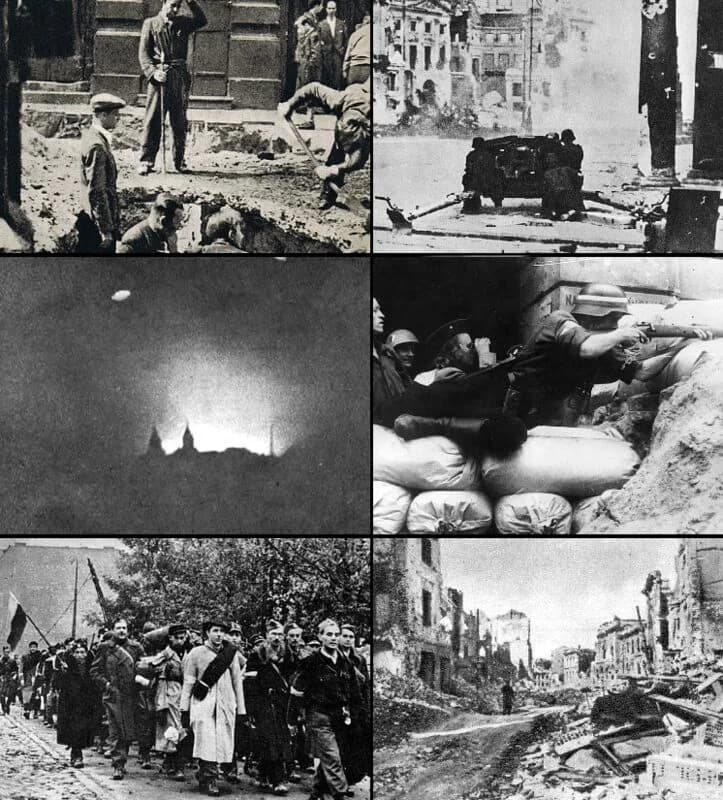
The Warsaw Uprising was the largest armed insurrection in occupied Europe during World War II. For 63 days, the Polish Home Army (Armia Krajowa) fought German forces in a heroic but doomed effort, resulting in the near-total destruction of the Polish capital and the death of 200,000 civilians.
In summer 1944, the Red Army was advancing rapidly westward after Operation Bagration destroyed the German Army Group Center in Belarus. Marshal Rokossovsky's 1st Belorussian Front reached the Vistula by late July, and fighting raged in Warsaw's eastern suburb of Praga. The Polish Home Army (Armia Krajowa, AK), numbering approximately 50,000 fighters in the Warsaw region but poorly armed (only 10% of fighters possessed a firearm), had been planning an uprising for months under Operation Tempest. The AK commander, General Tadeusz Bór-Komorowski, faced a desperate political calculation: if the Poles liberated Warsaw before the Soviets arrived, the Polish government-in-exile in London could claim legitimacy over the capital, thwarting Stalin's plans to install a puppet communist government. The alternative — waiting for the Soviets — meant accepting Soviet domination. On July 29, Moscow radio called on Varsovians to rise up, and Soviet fighting was audible from the city center. Bór-Komorowski gave the order to launch the uprising on August 1 at 5:00 PM, W-Hour.
On August 1, 1944, at 5:00 PM, approximately 40,000 AK fighters simultaneously attacked German positions throughout the city. The first days saw significant successes: the insurgents seized several districts, government buildings, and weapons depots. However, key objectives — the bridges over the Vistula, Okęcie airport, and the main barracks — remained in German hands. Hitler ordered the total destruction of Warsaw. SS-Obergruppenführer Erich von dem Bach-Zelewski coordinated the suppression, using units from the Kaminski Brigade and Dirlewanger Brigade, composed of criminals and collaborators, who committed unspeakable atrocities against the civilian population. In the Wola district, between 40,000 and 50,000 civilians were massacred within days in what constitutes one of the worst war crimes of World War II. Fighting continued for 63 days through a network of barricades, underground tunnels, and sewers. The insurgents desperately lacked weapons, ammunition, food, and medicine. Allied airdrops were insufficient and inaccurate. The Red Army, stationed on the east bank of the Vistula, did not intervene — Stalin refused permission for Allied planes to use Soviet airfields to resupply the insurgents.
On October 2, 1944, General Bór-Komorowski signed the capitulation. The Germans granted AK fighters prisoner-of-war status — a rare concession motivated by the desire to avoid prolonged guerrilla warfare. Approximately 15,000 AK fighters were killed, 6,000 severely wounded, and 15,000 taken prisoner. Civilian losses were catastrophic: between 150,000 and 200,000 civilians were killed, primarily through systematic massacres and bombardment. Approximately 700,000 surviving civilians were expelled from the city. On Hitler's orders, special destruction units (Verbrennungs- und Vernichtungskommandos) methodically burned and dynamited the city district by district. By the end, 85% of Warsaw was reduced to rubble — the most complete destruction of a major European city during the war. The Red Army did not cross the Vistula until January 17, 1945, liberating the ruins of Warsaw without significant German resistance. Soviet inaction remains one of the most debated subjects of World War II: did Stalin deliberately let the Germans crush the AK to facilitate imposing communism on Poland? Historians largely agree with this interpretation.
The Warsaw Uprising is one of the most tragic and controversial events of World War II. Militarily, the uprising was a desperate enterprise from the start: the insurgents, armed mainly with pistols, homemade grenades, and captured weapons, faced a mechanized army with artillery, tanks, and air support. Bór-Komorowski's calculation rested on the assumption that the Red Army would cross the Vistula within days of the launch — a bet that failed tragically. Politically, the uprising revealed Poland's impossible position, caught between two totalitarian powers. The government-in-exile in London had to choose between inaction (and the certainty of Soviet domination) and action (with the risk of catastrophe). Churchill tried to convince Stalin to help the insurgents but met implacable refusal. Roosevelt, in the midst of an election campaign and anxious to maintain the alliance with the USSR, remained silent. The uprising demonstrates the brutal reality of great power politics: Poland's fate was decided at Tehran and Yalta, not Warsaw. The uprising's legacy is sacred to Poles: it symbolizes national courage in the face of oppression and remains a politically sensitive subject in Polish-Russian relations.
Sources on the Warsaw Uprising are abundant and moving. The AK Bureau of Information and Propaganda produced newspapers, leaflets, and photographs throughout the uprising. Photographer Eugeniusz Lokajski, killed on September 25, 1944, left more than 1,000 negatives documenting insurgent life and combat. German archives, notably von dem Bach-Zelewski's reports and war diaries of the units involved, provide the occupier's perspective. The Warsaw Uprising Museum, inaugurated in 2004, assembles thousands of testimonies, objects, and documents. Among reference works, Norman Davies's 'Rising '44' offers a masterful analysis combining military and political history. Bogumiła Grott's 'The Warsaw Uprising of 1944' and Lynne Olson and Stanley Cloud's 'A Question of Honor' examine the diplomatic dimensions. General Bór-Komorowski's memoirs ('The Secret Army') and those of numerous participants have been published. Soviet archives, partially opened after 1991, illuminate the decisions of Stalin and Rokossovsky, although some documents remain classified.
The Warsaw Uprising began on August 1, 1944, at 5:00 PM, called W-Hour, when approximately 40,000 fighters of the Armia Krajowa (Polish Home Army) simultaneously attacked German positions throughout the city. The uprising lasted 63 days. General Tadeusz Bór-Komorowski signed the capitulation on October 2, 1944, after fierce combat through a network of barricades, tunnels, and sewers.
Civilian losses in the Warsaw Uprising were catastrophic: between 150,000 and 200,000 civilians killed, notably during the Wola massacres where 40,000 to 50,000 people were killed within days. Approximately 700,000 surviving civilians were expelled. On Hitler's orders, special units methodically burned and dynamited the city: 85% of Warsaw was reduced to rubble, the most complete destruction of a major European city during the war.
During the Warsaw Uprising, Marshal Rokossovsky's Red Army was stationed on the east bank of the Vistula, within range of the city. Stalin refused Allied planes permission to use Soviet airfields to resupply the insurgents. Historians largely agree that Stalin deliberately allowed the Germans to crush the Armia Krajowa — linked to the London exile government — to more easily impose communism in Poland.
Information cross-checked against Wikipedia and reference historical works.
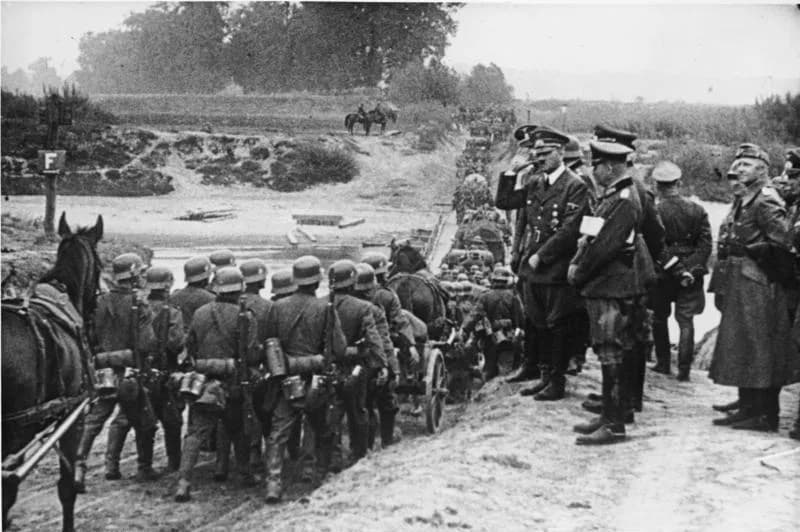
Invasion of Poland
The invasion of Poland by Nazi Germany on 1 September 1939 triggered World War II. In barely five weeks, German and then Soviet forces crushed the Polish army, applying the Blitzkrieg doctrine on a large scale for the first time. Britain and France declared war on 3 September.
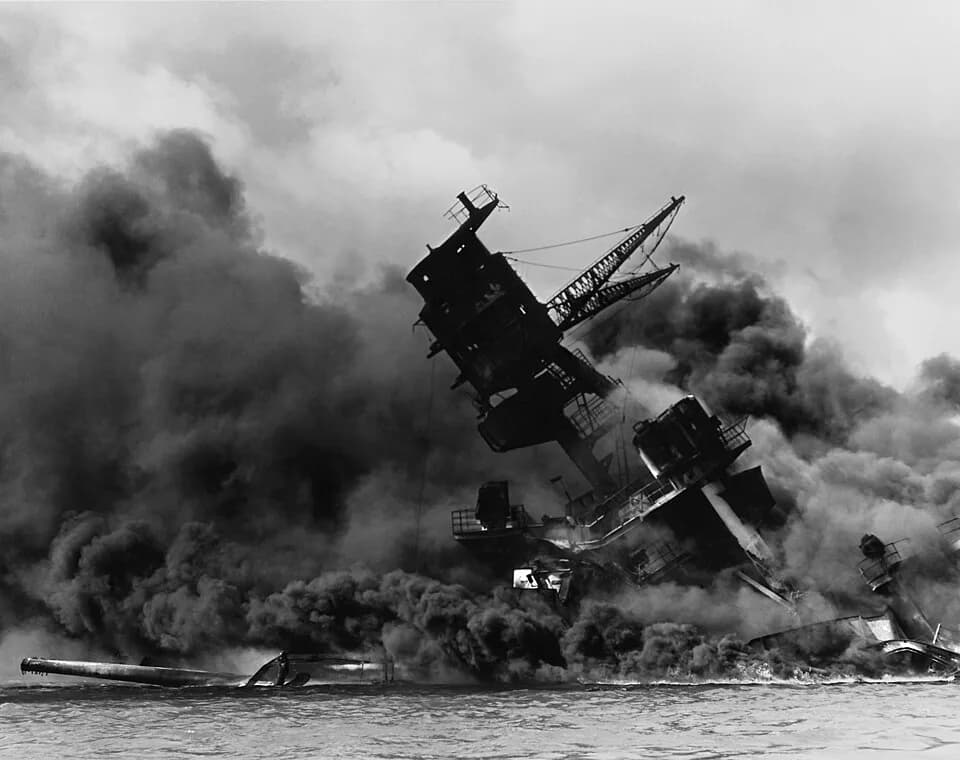
Attack on Pearl Harbor
The surprise Japanese attack on the American naval base at Pearl Harbor on December 7, 1941 triggered the United States' entry into the war. This event transformed an essentially European conflict into a true world war and ultimately sealed the fate of the Axis powers.
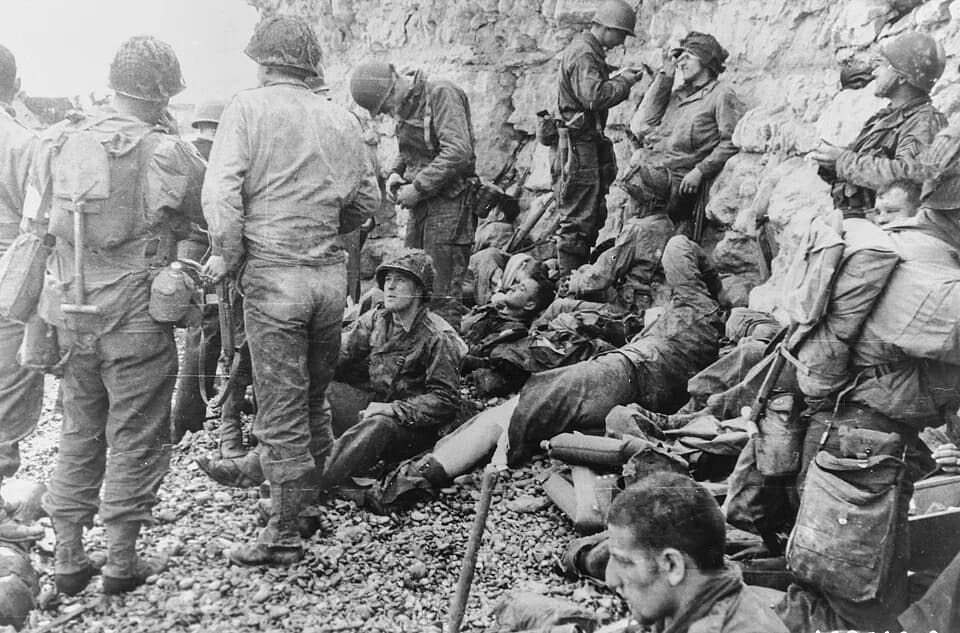
D-Day — Normandy Landings
On June 6, 1944, the largest amphibious operation in history landed 156,000 Allied soldiers on the beaches of Normandy. D-Day opened a second front in Western Europe and marked the beginning of the liberation of France and Western Europe from Nazi rule.
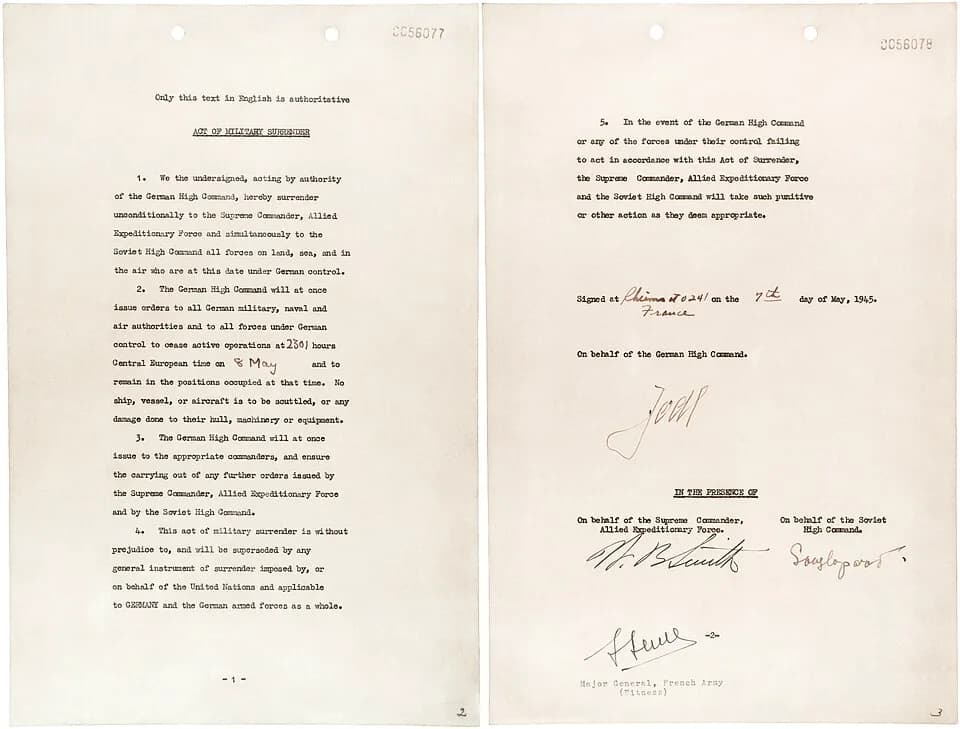
Surrender of Germany
On May 8, 1945, Nazi Germany surrendered unconditionally, ending the war in Europe after nearly six years of conflict. This event, celebrated as Victory in Europe Day (V-E Day), marked the fall of the Third Reich and the beginning of a new geopolitical era.
