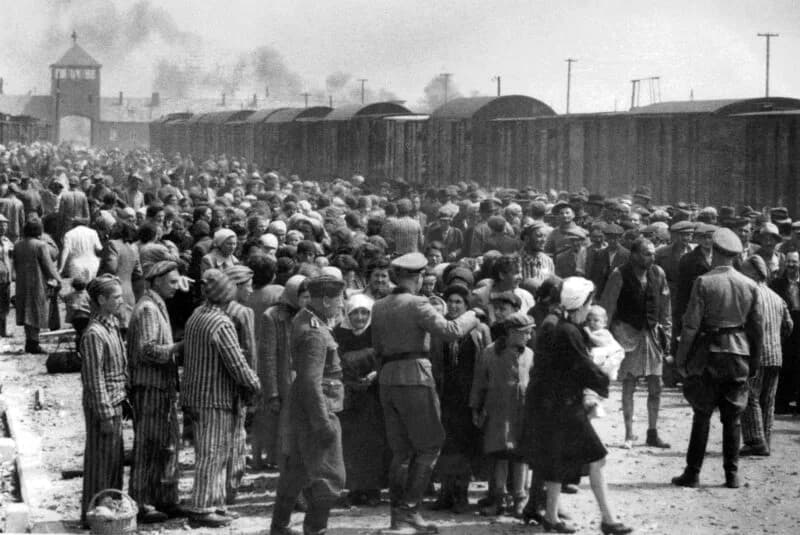
The Holocaust was the systematic genocide of six million European Jews by the Nazi regime and its collaborators during World War II. From the first persecutions to the extermination camps, it constitutes the greatest crime against humanity of the twentieth century. Its industrial organisation set it apart from every earlier massacre.
Antisemitism in Europe had deep roots stretching back centuries, but the particular virulence of Nazi ideology transformed age-old prejudice into state-sponsored genocide. Adolf Hitler's antisemitic worldview, articulated in Mein Kampf in 1925, blamed Jews for Germany's defeat in World War I, for Bolshevism, and for what he perceived as the corruption of the Aryan race. When the Nazi Party seized power on January 30, 1933, it immediately began implementing discriminatory measures against Jewish citizens. The Nuremberg Laws of September 1935 stripped German Jews of their citizenship, prohibited marriages and sexual relations between Jews and non-Jews, and defined Jewishness by ancestry rather than religious practice. These laws created a legal framework for exclusion and persecution that would progressively intensify. On November 9-10, 1938, the Kristallnacht pogrom unleashed coordinated violence across Germany and Austria: over 1,400 synagogues were burned, 7,500 Jewish-owned businesses were destroyed, approximately 30,000 Jewish men were arrested and sent to concentration camps, and at least 91 Jews were murdered. This night of terror marked the transition from legal discrimination to open, state-sanctioned violence and signaled to the world the regime's willingness to use brutal force against its own citizens.
The Holocaust unfolded in several escalating phases. Following the invasion of Poland in September 1939, the Nazis established ghettos in major cities — Warsaw, Lodz, Krakow, Lublin — confining hundreds of thousands of Jews in overcrowded, unsanitary conditions where starvation and disease claimed tens of thousands of lives. The Warsaw Ghetto alone held over 400,000 people in an area of just 3.4 square kilometers. With the invasion of the Soviet Union in June 1941, mobile killing units called Einsatzgruppen followed the Wehrmacht eastward, systematically massacring Jewish communities by mass shootings. At Babi Yar near Kiev, 33,771 Jews were shot over two days on September 29-30, 1941. By the end of 1941, the Einsatzgruppen had murdered approximately 500,000 Jews. On January 20, 1942, senior Nazi officials convened at the Wannsee Conference near Berlin, where Reinhard Heydrich presented the plan for the Final Solution — the systematic annihilation of all European Jews. This conference coordinated the logistics of genocide across occupied Europe. Six extermination camps were constructed in occupied Poland: Auschwitz-Birkenau, Treblinka, Sobibor, Belzec, Chelmno, and Majdanek. These camps used industrial methods of murder, primarily gas chambers disguised as showers, followed by cremation. Auschwitz-Birkenau, the largest complex, could gas up to 6,000 people per day at its peak. Approximately 1.1 million people were murdered at Auschwitz alone, the vast majority of them Jews. Treblinka killed an estimated 800,000 to 900,000 people, and Sobibor approximately 200,000. Jews from across occupied Europe — France, the Netherlands, Belgium, Greece, Hungary, Italy, and beyond — were deported in cattle cars to these camps, enduring journeys lasting days without food, water, or sanitation.
As Allied forces advanced into occupied Europe in 1944 and 1945, the Nazis attempted to destroy evidence of their crimes. Camps were dismantled, records were burned, and prisoners were forced on death marches westward in the brutal winter of 1944-1945. Tens of thousands of emaciated prisoners died from exhaustion, exposure, and summary executions during these marches. Soviet forces liberated Majdanek in July 1944 and Auschwitz on January 27, 1945 — a date now commemorated as International Holocaust Remembrance Day. British forces liberated Bergen-Belsen in April 1945, where they found 60,000 starving prisoners and 13,000 unburied corpses. American forces liberated Buchenwald and Dachau in April 1945. The images captured by Allied cameramen shocked the world and provided irrefutable evidence of Nazi atrocities. The total death toll of the Holocaust reached approximately six million Jews — roughly two-thirds of the pre-war European Jewish population. In addition, the Nazis murdered between 200,000 and 500,000 Roma and Sinti, approximately 250,000 people with disabilities through the T4 euthanasia program, millions of Soviet prisoners of war, Polish civilians, political opponents, homosexuals, and Jehovah's Witnesses. The Nuremberg Trials of 1945-1946 established the legal precedent that individuals could be held accountable for crimes against humanity, leading to the development of international humanitarian law and the eventual creation of the International Criminal Court.
The Holocaust remains the subject of extensive scholarly analysis and moral reflection. Historians have debated the question of intentionalism versus functionalism — whether the genocide was planned from the outset of Nazi rule or evolved through a cumulative process of radicalization. The consensus today recognizes elements of both: Hitler's deep-seated antisemitism provided ideological direction, while the chaotic structure of the Nazi state and the dynamics of wartime radicalization accelerated the move toward systematic extermination. The complicity of ordinary people — bureaucrats, railway workers, police officers, neighbors who denounced their Jewish fellow citizens — raises profound questions about human nature and moral responsibility. Hannah Arendt's concept of the banality of evil, developed during the Eichmann trial in Jerusalem in 1961, highlighted how ordinary individuals could participate in extraordinary crimes through bureaucratic obedience and moral disengagement. The role of collaboration across occupied Europe varied widely: while some countries like Denmark organized the rescue of nearly their entire Jewish population, others like Vichy France actively assisted in deportations. The question of what the Allies knew and when they knew it continues to provoke debate, particularly regarding the failure to bomb the railway lines leading to Auschwitz. The Holocaust fundamentally transformed international law, leading to the United Nations Genocide Convention of 1948 and the Universal Declaration of Human Rights. It also provided a powerful moral impetus for the creation of the State of Israel in 1948.
The primary documentation of the Holocaust is vast and meticulously preserved. The archives of the Nuremberg Trials, comprising thousands of captured Nazi documents, form the foundation of Holocaust historiography. Raul Hilberg's The Destruction of the European Jews, first published in 1961 and expanded in 1985, remains the most comprehensive scholarly work on the administrative and bureaucratic mechanisms of the genocide. Primo Levi's If This Is a Man, published in 1947, and Elie Wiesel's Night, published in 1956, are among the most powerful survivor testimonies ever written. The Yad Vashem memorial in Jerusalem and the United States Holocaust Memorial Museum in Washington, D.C. preserve millions of documents, photographs, and filmed testimonies, including the Shoah Foundation's Visual History Archive containing over 55,000 survivor interviews collected by Steven Spielberg's initiative. The Auschwitz-Birkenau State Museum preserves the physical remains of the camp, including the gas chambers, crematoria, and personal belongings of victims. Christopher Browning's Ordinary Men, published in 1992, analyzes how Reserve Police Battalion 101 participated in mass shootings in Poland, illuminating the psychology of perpetrators. Saul Friedlander's two-volume Nazi Germany and the Jews, completed in 2007, integrates the perspectives of perpetrators, bystanders, and victims into a comprehensive narrative that earned the Pulitzer Prize.
In Hearts of Iron IV, the Holocaust is reflected through manpower and territory occupation mechanics. Nazi Germany wastes human resources through extermination events in occupied territories. With the 'No Step Back' DLC, choosing the 'Maximum Repression' occupation policy gives +10% compliance short-term but generates +5% monthly resistance, reducing available manpower. In advanced mode, forced labor deportations penalize stability by −10% if Germany loses key provinces. These mechanics illustrate how Nazi barbarism ultimately weakened its own war capacity.
The Holocaust killed approximately six million European Jews — two-thirds of the prewar Jewish population. The six extermination camps in occupied Poland were the main murder centers: Auschwitz-Birkenau (approximately 1.1 million dead), Treblinka (800,000 to 900,000), Sobibor (approximately 200,000), Belzec, Chelmno, and Majdanek. The Einsatzgruppen also massacred approximately 500,000 people on the Eastern Front by late 1941.
On January 20, 1942, senior Nazi officials met at the Wannsee villa near Berlin. Reinhard Heydrich presented the plan for the Final Solution — the systematic annihilation of all European Jews. This conference coordinated the logistics of genocide across occupied Europe among the various agencies of the Third Reich, transforming a policy of persecution into an industrial extermination program.
Soviet forces liberated Majdanek in July 1944 and Auschwitz on January 27, 1945 — a date now commemorated as International Holocaust Remembrance Day. British forces discovered Bergen-Belsen in April 1945 with 60,000 starving prisoners and 13,000 unburied corpses. American forces liberated Buchenwald and Dachau that same month. Images captured by Allied filmmakers shocked the world.
Information cross-checked against Wikipedia and reference historical works.
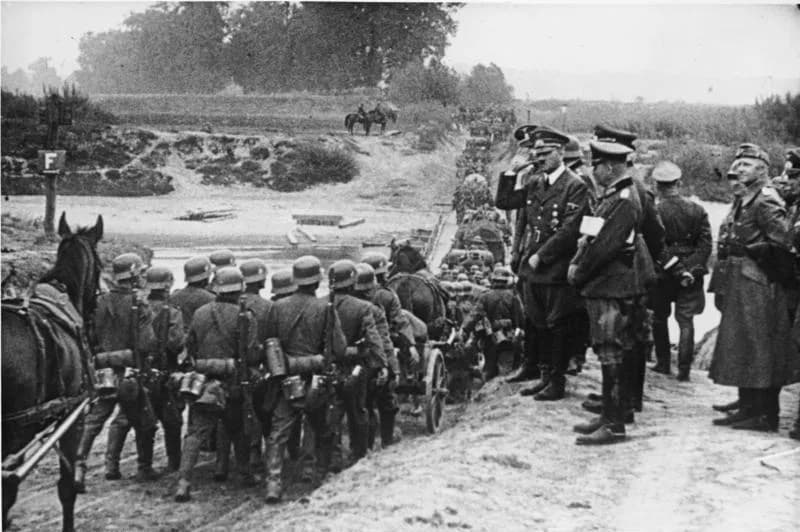
Invasion of Poland
The invasion of Poland by Nazi Germany on 1 September 1939 triggered World War II. In barely five weeks, German and then Soviet forces crushed the Polish army, applying the Blitzkrieg doctrine on a large scale for the first time. Britain and France declared war on 3 September.
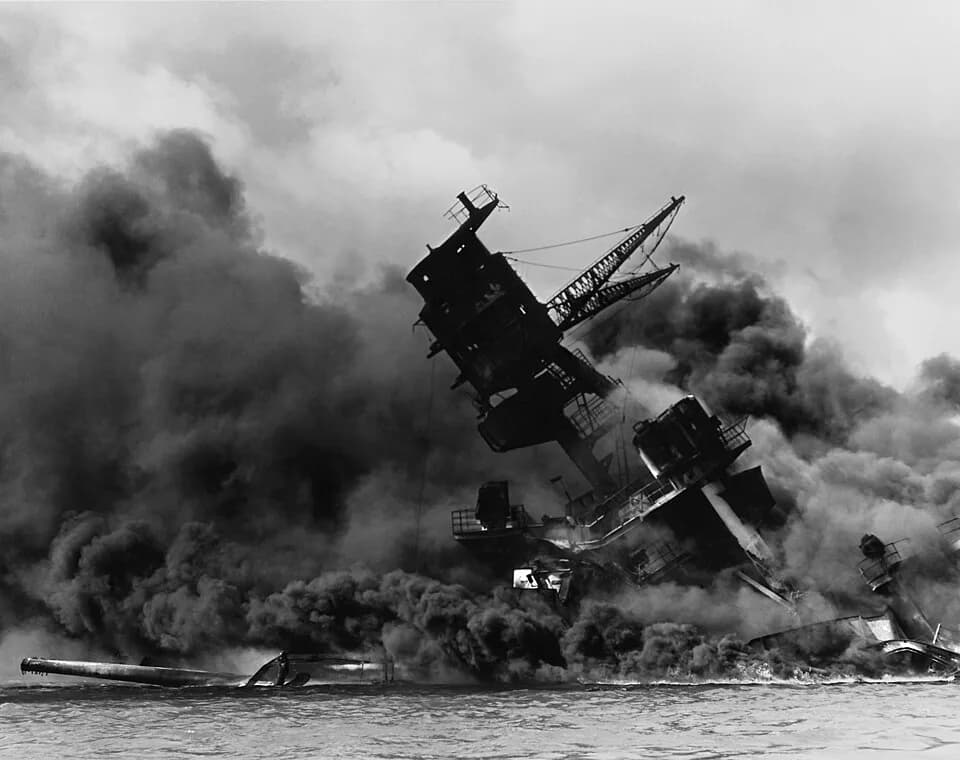
Attack on Pearl Harbor
The surprise Japanese attack on the American naval base at Pearl Harbor on December 7, 1941 triggered the United States' entry into the war. This event transformed an essentially European conflict into a true world war and ultimately sealed the fate of the Axis powers.
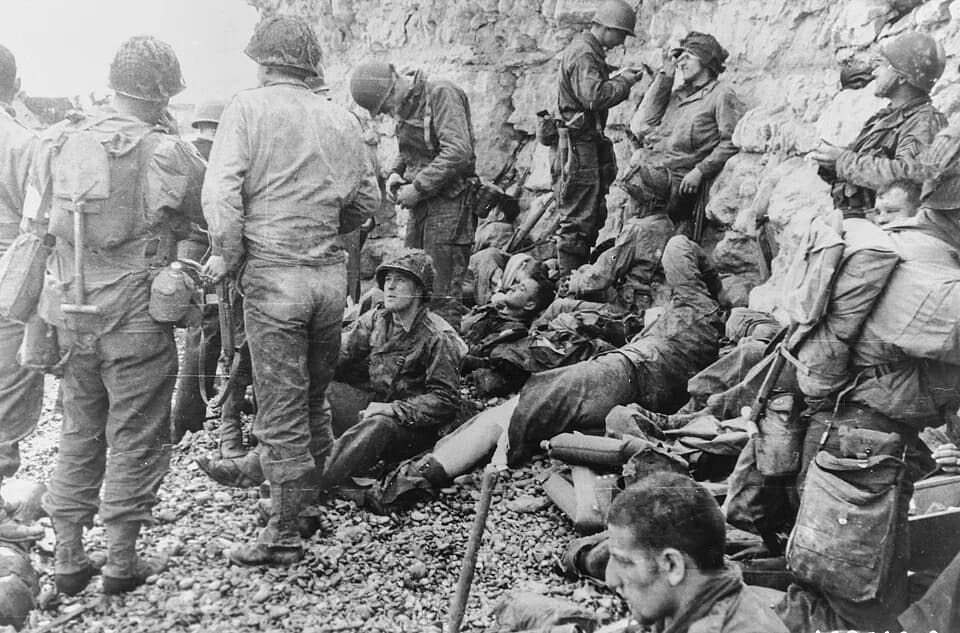
D-Day — Normandy Landings
On June 6, 1944, the largest amphibious operation in history landed 156,000 Allied soldiers on the beaches of Normandy. D-Day opened a second front in Western Europe and marked the beginning of the liberation of France and Western Europe from Nazi rule.
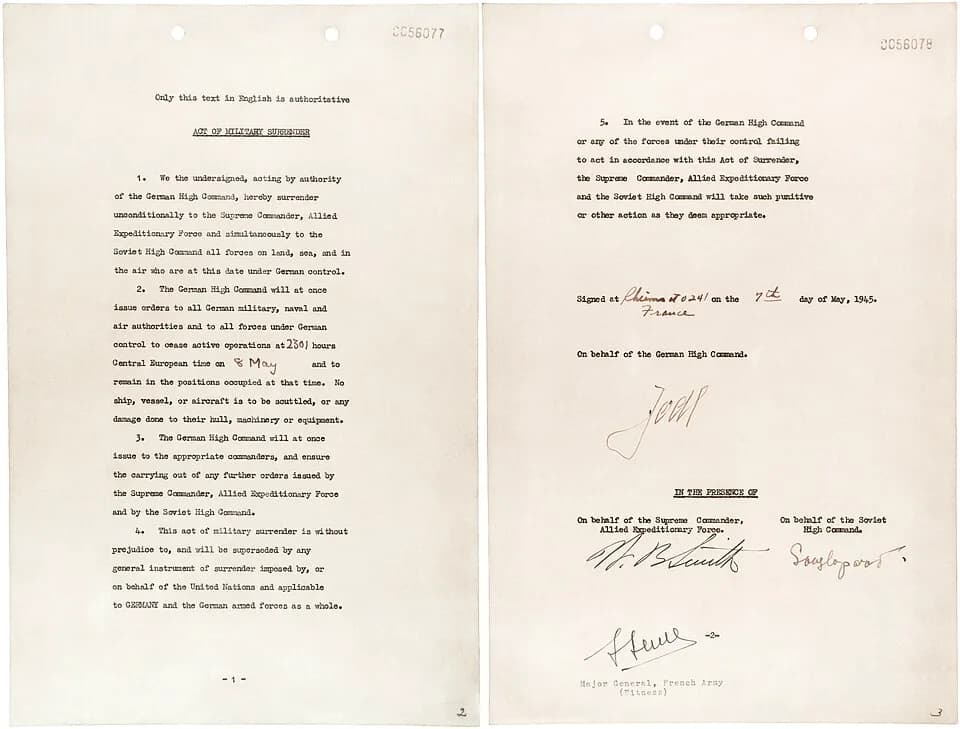
Surrender of Germany
On May 8, 1945, Nazi Germany surrendered unconditionally, ending the war in Europe after nearly six years of conflict. This event, celebrated as Victory in Europe Day (V-E Day), marked the fall of the Third Reich and the beginning of a new geopolitical era.
