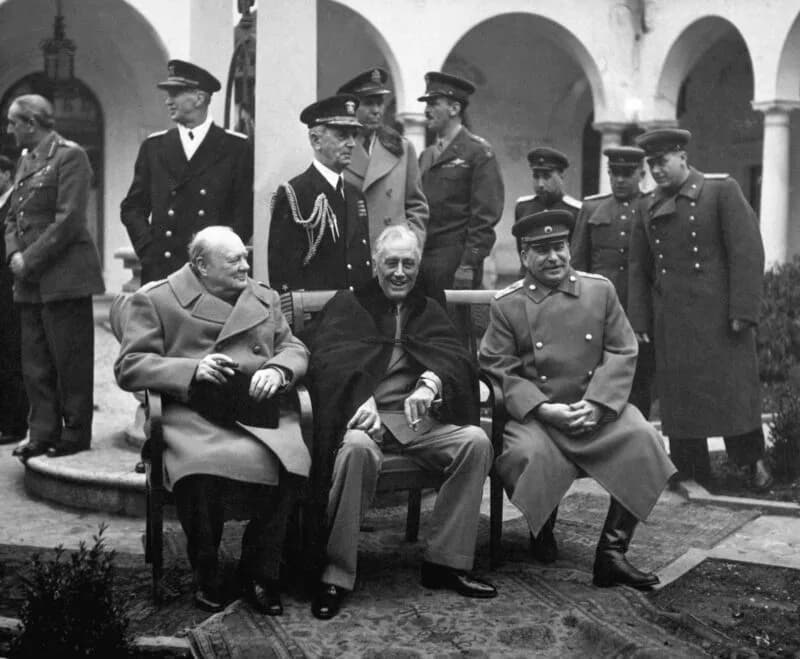
The Yalta (February 1945) and Potsdam (July-August 1945) conferences brought together the Big Three — Churchill/Attlee, Roosevelt/Truman, and Stalin — to reshape the postwar world map. These decisive meetings led to the creation of the United Nations, the division of Germany, and planted the seeds of the Cold War.
At the beginning of 1945, Allied victory in Europe was certain but not yet achieved. The Red Army was advancing irresistibly from the east, having liberated Poland, Romania, and Hungary, while Anglo-American forces were crossing the Rhine in the west. The question was no longer whether Germany would be defeated, but how the postwar world would be organized. The Big Three — Franklin Roosevelt, Winston Churchill, and Joseph Stalin — had already met at Tehran in November 1943, but the stakes were now infinitely more concrete. Roosevelt was weakened by illness and would die two months after Yalta. Churchill, clear-eyed about the Soviet threat, lacked leverage against the military realities on the ground: the Red Army physically occupied Eastern Europe. Stalin, in a position of strength, fully intended to secure a buffer zone of satellite countries between the USSR and the West, having learned the lessons of two devastating invasions suffered by Russia in thirty years.
The Yalta Conference was held from February 4 to 11, 1945, at the Livadia Palace in Crimea. The Big Three agreed on several major points: Germany would be divided into occupation zones, an international tribunal would judge Nazi war criminals, the USSR committed to entering the war against Japan within three months of Germany's surrender, and a founding conference of the United Nations would be held in San Francisco in April 1945. The 'Declaration on Liberated Europe' promised free elections in liberated countries — a promise Stalin would never honor. The Polish question was the thorniest: borders were redrawn westward at Germany's expense, and a government of national unity was promised. At Potsdam, from July 17 to August 2, 1945, circumstances had changed: Roosevelt had died, replaced by Truman who proved firmer with Stalin. Churchill was replaced mid-conference by Clement Attlee after the Labour victory in the British elections. The Potsdam Agreements confirmed the division of Germany into four zones, set war reparations, and established the principle of denazification.
The consequences of the Yalta and Potsdam conferences shaped the world order for the following forty-five years. The division of Germany into occupation zones led to the creation of two German states in 1949: the Federal Republic of Germany (West Germany) in the west and the German Democratic Republic (East Germany) in the east. Berlin, enclave within the Soviet zone, was itself divided, foreshadowing the Wall of 1961. The United Nations, founded in San Francisco in June 1945 with the veto power of the five permanent members of the Security Council negotiated at Yalta, became the pillar of international diplomacy. In Eastern Europe, Stalin progressively installed communist regimes in Poland, Czechoslovakia, Hungary, Romania, and Bulgaria, violating the spirit if not the letter of the Yalta agreements. The population transfers decided at Potsdam resulted in the expulsion of 12 to 14 million Germans from Eastern Europe, one of the largest forced displacements in history. The Nuremberg Trials, planned at Yalta, established the revolutionary principle of individual criminal responsibility for crimes against humanity.
The historical analysis of the Yalta and Potsdam conferences remains one of the most debated subjects in World War II historiography. Critics accuse Roosevelt of having 'sold' Eastern Europe to Stalin through naivety or physical weakness. His defenders counter that the Red Army already occupied these territories and that no diplomatic concession would have changed Soviet intentions without a military confrontation nobody wanted. Churchill, often portrayed as the most clear-sighted of the Three, had himself negotiated the 'percentages agreement' with Stalin in October 1944, cynically dividing Southeastern Europe into spheres of influence. At Potsdam, Truman had an asset Roosevelt lacked: the atomic bomb, successfully tested the day before the conference opened. This new weapon subtly altered the balance of power but did not resolve the fundamental question: how to coexist with an expansionist Soviet superpower. The true legacy of both conferences is the bipolarization of the world that resulted, an order that was both dangerous and paradoxically stable, one that would not collapse until the fall of the Berlin Wall in 1989.
The archives of the Yalta and Potsdam conferences are abundantly documented by all three participating powers. The Foreign Relations of the United States (FRUS) publishes detailed minutes of plenary sessions and bilateral meetings from the American side. British Cabinet Office and Foreign Office archives, progressively declassified, offer Churchill's and the British delegation's perspective. Soviet archives, partially opened after 1991, reveal Stalin's and Molotov's negotiating strategy. Among reference works, Henry Kissinger's Diplomacy analyzes the conferences within the broader context of the balance of power. S. M. Plokhy's Yalta: The Price of Peace (2010) offers a detailed and balanced analysis of the Crimea conference. Churchill's memoirs (Triumph and Tragedy) and Truman's present the personal perspectives of Western leaders. The works of Russian historian Vladimir Pechatnov, utilizing Soviet archives, illuminate Stalin's calculations. The Potsdam Conference museum at the Cecilienhof preserves the historic site and a permanent exhibition on the negotiations.
The Yalta Conference was held February 4-11, 1945, at the Livadia Palace in Crimea, with Roosevelt, Churchill, and Stalin. The Potsdam Conference took place July 17 – August 2, 1945, at the Cecilienhof near Berlin. Churchill was replaced mid-conference by Clement Attlee after the Labour victory, and Roosevelt had died in April: his successor Harry Truman represented the United States.
At Yalta, the Big Three decided to divide Germany into occupation zones, create an international tribunal to judge Nazi war criminals (the future Nuremberg Trials), and found the UN in San Francisco in April 1945. Stalin committed to declaring war on Japan within three months of Germany's surrender. The 'Declaration on Liberated Europe' promised free elections — a promise Stalin did not keep.
Roosevelt, weakened by illness at Yalta (he would die on April 12, 1945), made concessions on Poland and Eastern Europe. Polish borders were redrawn without consulting the Polish government-in-exile. Roosevelt's defenders argue that the Red Army already occupied these territories and that no diplomatic concession could have changed Soviet intentions without triggering a new conflict that nobody wanted.
Information cross-checked against Wikipedia and reference historical works.
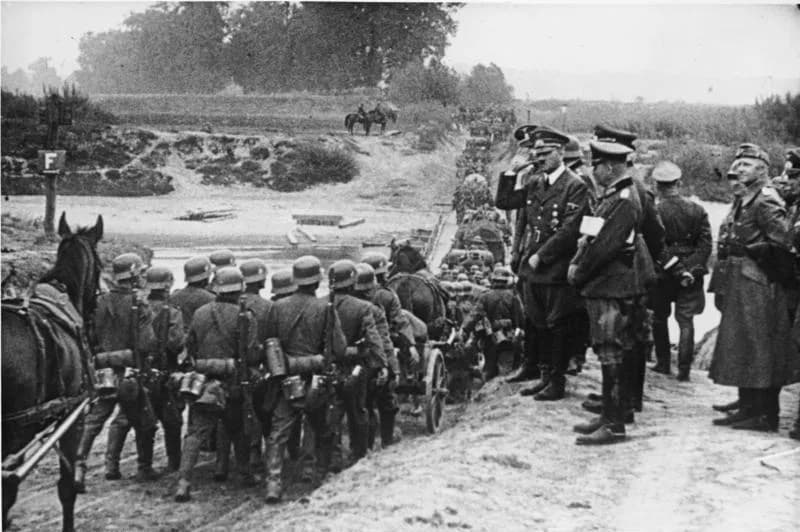
Invasion of Poland
The invasion of Poland by Nazi Germany on 1 September 1939 triggered World War II. In barely five weeks, German and then Soviet forces crushed the Polish army, applying the Blitzkrieg doctrine on a large scale for the first time. Britain and France declared war on 3 September.
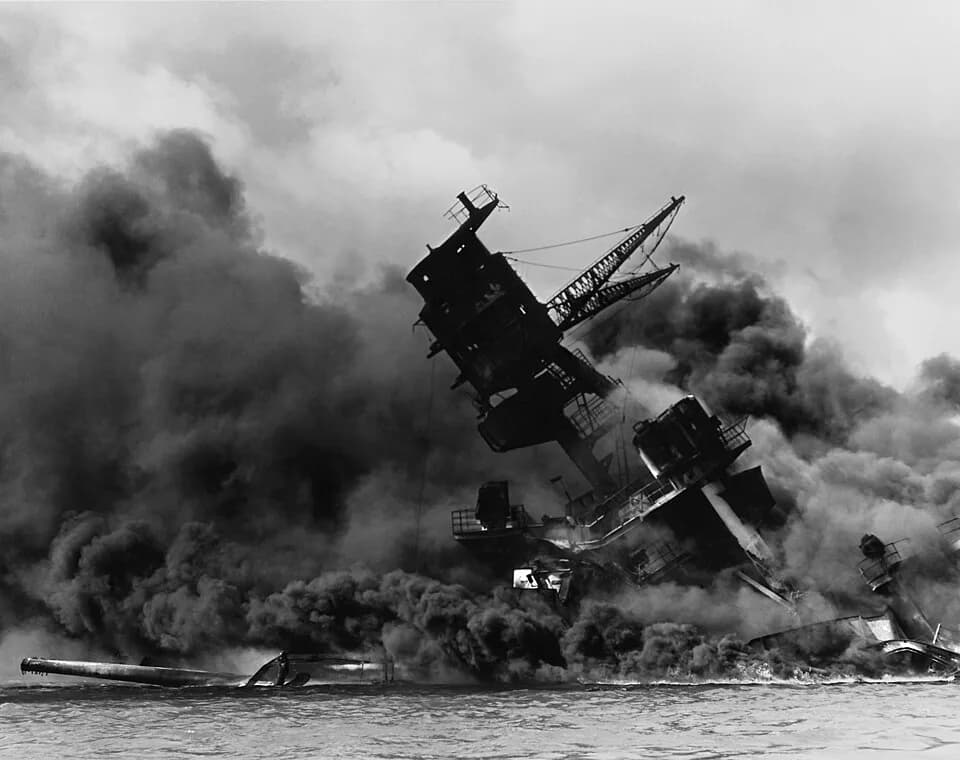
Attack on Pearl Harbor
The surprise Japanese attack on the American naval base at Pearl Harbor on December 7, 1941 triggered the United States' entry into the war. This event transformed an essentially European conflict into a true world war and ultimately sealed the fate of the Axis powers.
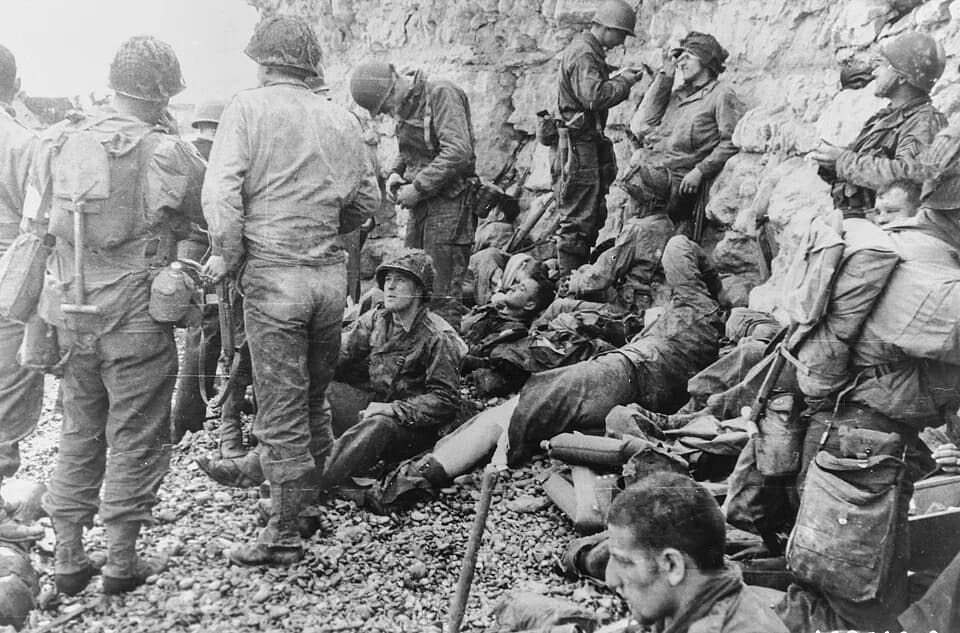
D-Day — Normandy Landings
On June 6, 1944, the largest amphibious operation in history landed 156,000 Allied soldiers on the beaches of Normandy. D-Day opened a second front in Western Europe and marked the beginning of the liberation of France and Western Europe from Nazi rule.
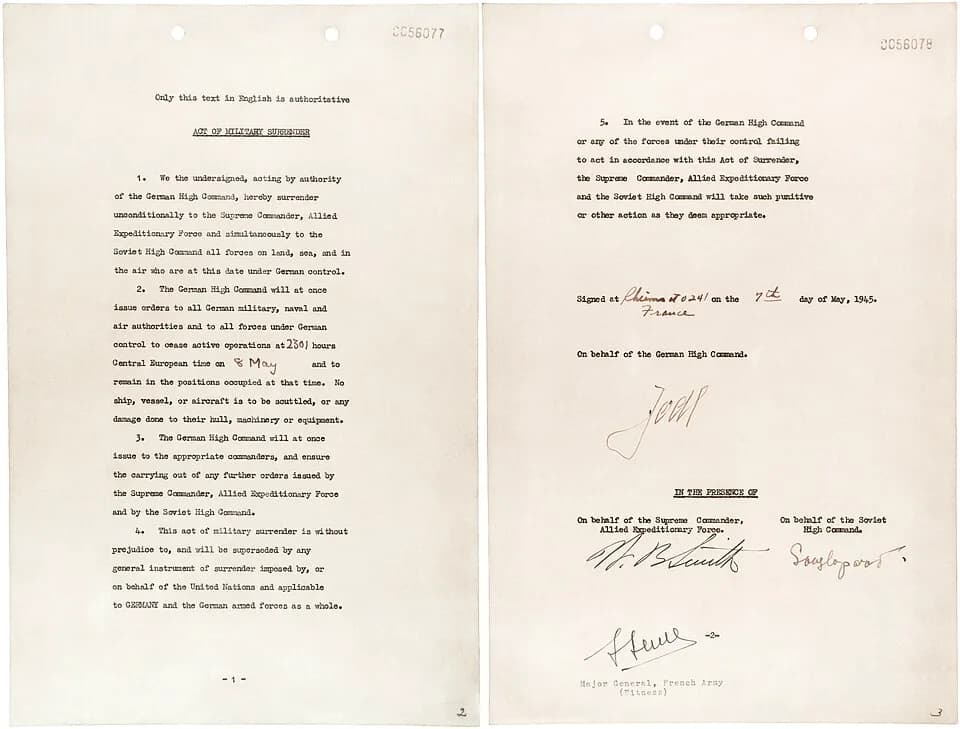
Surrender of Germany
On May 8, 1945, Nazi Germany surrendered unconditionally, ending the war in Europe after nearly six years of conflict. This event, celebrated as Victory in Europe Day (V-E Day), marked the fall of the Third Reich and the beginning of a new geopolitical era.
