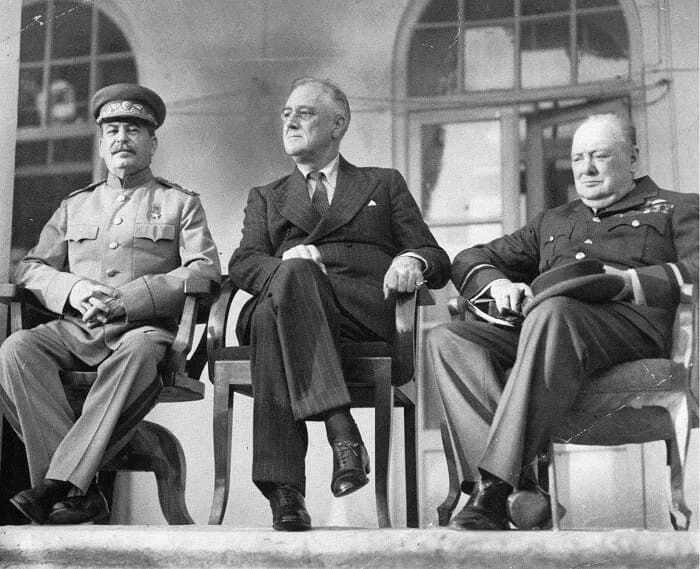
The Tehran Conference was the first meeting of the three great Allied leaders — Roosevelt, Churchill, and Stalin — during World War II. It was at this conference that the crucial decision to launch Operation Overlord (D-Day) was confirmed, scheduling the Normandy landings for May 1944.
By late 1943, the war had reached a decisive turning point. The Soviets had won the Battle of Stalingrad (February 1943) and the Battle of Kursk (July 1943), definitively seizing the initiative on the Eastern Front. In the Mediterranean, the Allies had landed in Sicily (July 1943) and Italy (September 1943), forcing Mussolini's fall. In the Pacific, the Americans were slowly advancing island by island. However, Stalin had been demanding since 1942 the opening of a 'second front' in Western Europe to relieve the immense pressure on the Red Army. Churchill, scarred by the Gallipoli disaster of 1915, preferred a peripheral strategy — attacking the Axis through the Balkans and Mediterranean rather than a frontal assault across the Channel. Roosevelt, more pragmatic, understood that cooperation with Stalin was essential for the postwar period. Tensions among the three Allies were considerable: Stalin suspected the Anglo-Saxons of deliberately delaying the second front to let the Soviets exhaust themselves against the Germans. Tehran, after months of negotiations on the venue, was chosen as the westernmost point Stalin agreed to travel to, citing the need to remain in contact with the Stavka.
The conference took place from November 28 to December 1, 1943, at the Soviet Embassy in Tehran, with Roosevelt having accepted Stalin's offer to reside there for security reasons — a decision that also allowed the Soviets to eavesdrop on the American president's conversations. Discussions focused on three major topics. First, Operation Overlord: Stalin insisted on a firm date, Churchill prevaricated by proposing operations in the eastern Mediterranean, but Roosevelt decided in Stalin's favor. Overlord was confirmed for May 1944, with a simultaneous landing in southern France (Operation Dragoon). In return, Stalin promised a massive Soviet offensive coordinated with Overlord to prevent the Germans from transferring divisions westward. Second, the fate of postwar Germany: Roosevelt proposed dismembering Germany into five autonomous states, while Stalin and Churchill discussed occupation zones. The Morgenthau Plan for German deindustrialization was raised. Third, Stalin committed to declaring war on Japan after Germany's defeat, a crucial promise for the Americans. The Polish question was addressed: Stalin imposed the westward shift of the Polish border, compensating the eastern territories annexed by the USSR with German territories.
The Tehran Conference produced major military and political results. Militarily, the confirmation of Overlord for May 1944 ended months of strategic uncertainty. General Eisenhower was named Supreme Commander of Allied Forces in Europe to lead the operation. The Soviet commitment to launch a coordinated offensive materialized as Operation Bagration (June 1944), which destroyed the German Army Group Center and constituted the greatest military defeat in German history. The Soviet promise to declare war on Japan was fulfilled on August 8, 1945, contributing to Japanese surrender. Politically, Tehran sketched the outlines of the postwar world order. Roosevelt's proposal for an international peacekeeping organization — which would become the UN — received Stalin's support. However, the Tehran agreements also contained the seeds of the Cold War: the sacrifice of Poland (border shifts without consulting the Polish government-in-exile), the division of Europe into spheres of influence, and the personal dynamics between the three leaders revealed tensions that would erupt after victory. Roosevelt, convinced he could 'handle' Stalin through personal diplomacy, underestimated Soviet determination to dominate Eastern Europe.
The Tehran Conference was the first of three great Allied conferences (Tehran, Yalta, Potsdam) that shaped the postwar world. It revealed the complex dynamics between the 'Big Three.' Roosevelt played a dangerous game: he deliberately distanced himself from Churchill to win Stalin's trust, going so far as to publicly mock the British Prime Minister during dinners. Churchill, aware that Britain was losing influence to the two emerging superpowers, tried to preserve British imperial interests in the Mediterranean and Balkans. Stalin, the most experienced of the three in Realpolitik, obtained almost everything he wanted: a second front in France rather than the Balkans (leaving him a free hand in Eastern Europe), implicit recognition of a Soviet sphere of influence in the east, and the shift of Polish borders. Churchill's famous remark — 'I found myself seated between a great Russian bear with his paws outstretched on one side and a great American buffalo on the other' — aptly summarizes his uncomfortable position. Tehran marks the moment when the Anglo-American alliance gave way to a bipolar world dominated by the United States and the USSR. Decisions made in the heat of war shaped global geopolitics for the next fifty years.
Sources on the Tehran Conference include official minutes of plenary sessions and bilateral meetings, published in the US State Department's 'Foreign Relations of the United States' (FRUS) series. British Cabinet Office and Foreign Office archives, progressively declassified, offer Churchill and Eden's perspective. Soviet archives, partially opened after 1991, reveal Stalin's objectives and tactics. Participants' memoirs are essential: Churchill devoted an entire volume to the conference in 'Closing the Ring' (1951), Roosevelt left no memoirs but his personal papers are preserved at the Hyde Park presidential library, and the notes of Charles Bohlen, Roosevelt's interpreter, are a valuable direct source. Among reference works, David Reynolds's 'Summits' and Susan Butler's 'Roosevelt and Stalin' analyze the personal dynamics between the leaders. Keith Eubank's work ('Summit at Tehran') offers a detailed day-by-day reconstruction. The official photographs of the conference, notably the famous portrait of the three leaders seated side by side on the steps of the Soviet Embassy, are among the most iconic images of World War II.
The Tehran Conference (November 28 – December 1, 1943) confirmed the launch of Operation Overlord for May 1944, accompanied by a simultaneous landing in southern France (Operation Dragoon). Stalin secured this decision by demanding a firm date for the western second front. In return, the USSR committed to launching a coordinated offensive to prevent Germany from transferring divisions westward.
The Big Three were Franklin D. Roosevelt (United States), Winston Churchill (United Kingdom), and Joseph Stalin (USSR). Tehran was chosen as the westernmost point Stalin agreed to travel to, citing the need to remain in contact with the Stavka (Soviet high command). Roosevelt accepted to reside at the Soviet Embassy, which allowed the Soviets to eavesdrop on his conversations.
Yes. At Tehran, Stalin secured a second front in France rather than the Balkans, leaving him free to dominate Eastern Europe. The Polish question was settled by border shifts without consulting the Polish government-in-exile. Roosevelt drew closer to Stalin while distancing himself from Churchill, underestimating Soviet determination to dominate Eastern Europe. These decisions foreshadowed the continent's division for the following fifty years.
Information cross-checked against Wikipedia and reference historical works.
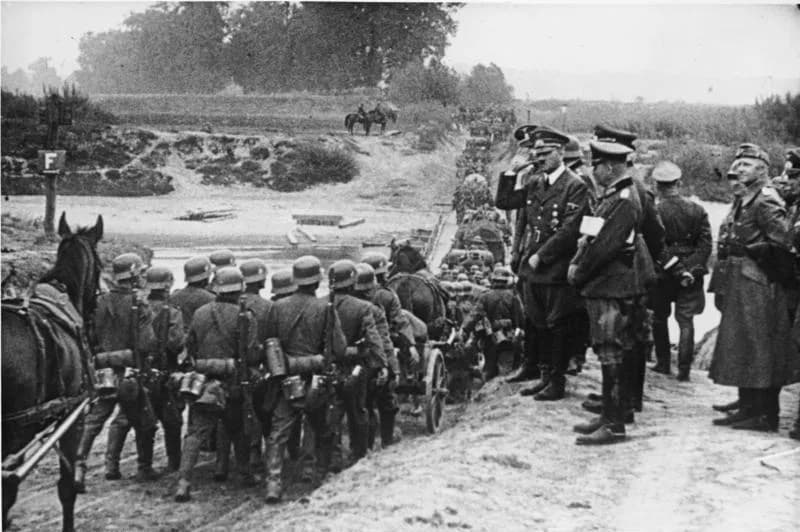
Invasion of Poland
The invasion of Poland by Nazi Germany on 1 September 1939 triggered World War II. In barely five weeks, German and then Soviet forces crushed the Polish army, applying the Blitzkrieg doctrine on a large scale for the first time. Britain and France declared war on 3 September.
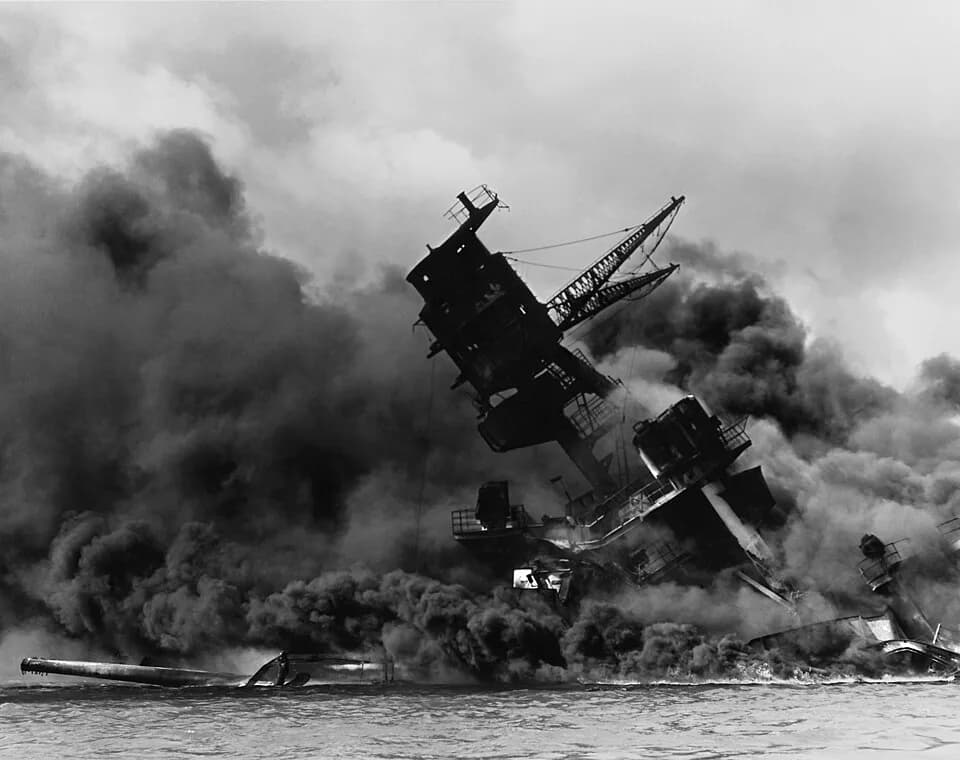
Attack on Pearl Harbor
The surprise Japanese attack on the American naval base at Pearl Harbor on December 7, 1941 triggered the United States' entry into the war. This event transformed an essentially European conflict into a true world war and ultimately sealed the fate of the Axis powers.
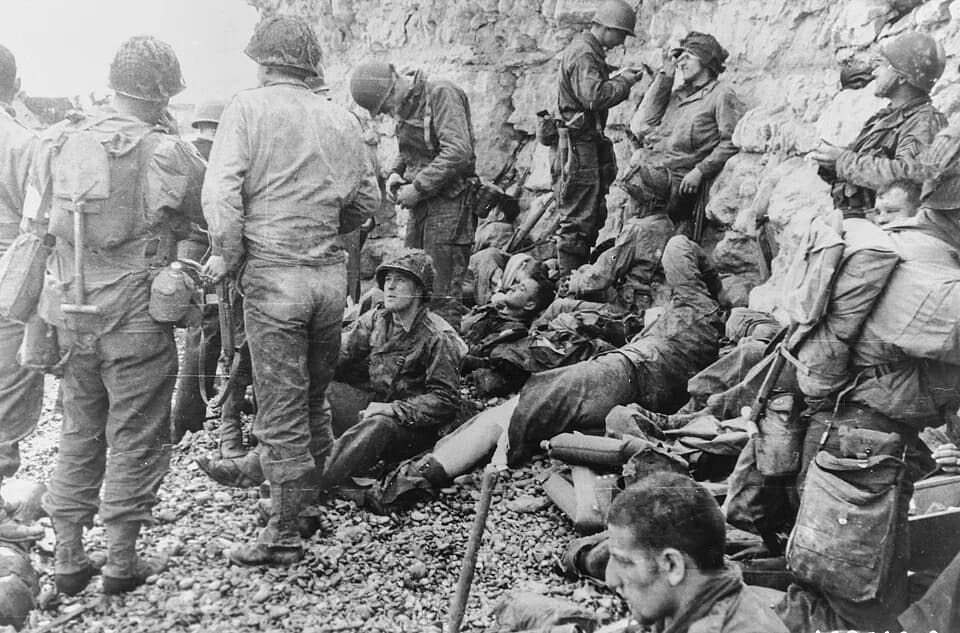
D-Day — Normandy Landings
On June 6, 1944, the largest amphibious operation in history landed 156,000 Allied soldiers on the beaches of Normandy. D-Day opened a second front in Western Europe and marked the beginning of the liberation of France and Western Europe from Nazi rule.
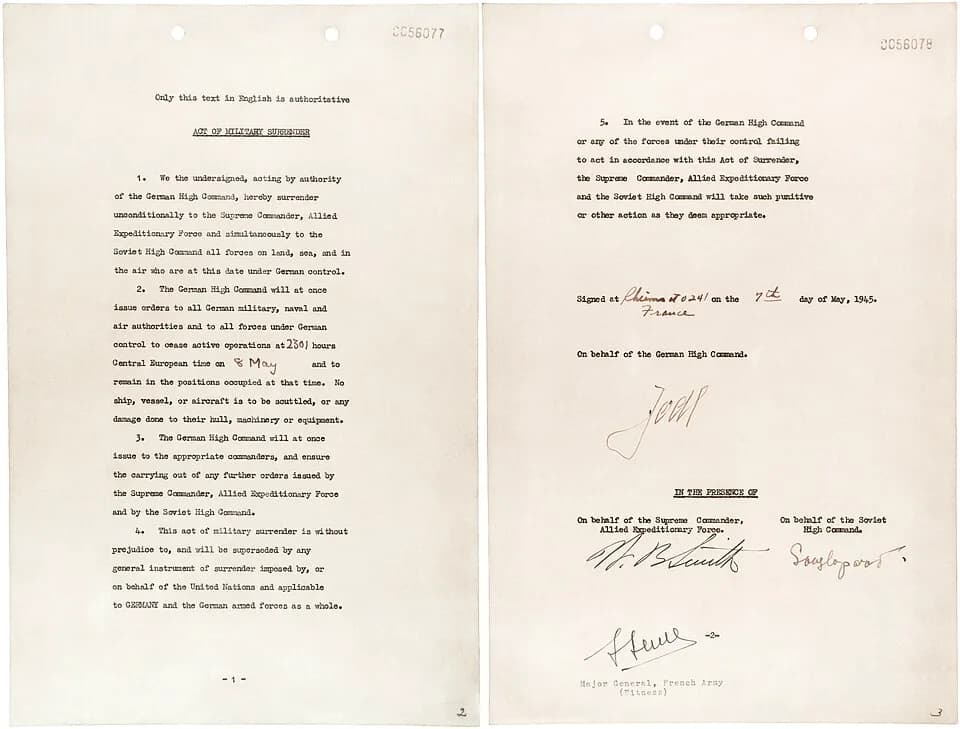
Surrender of Germany
On May 8, 1945, Nazi Germany surrendered unconditionally, ending the war in Europe after nearly six years of conflict. This event, celebrated as Victory in Europe Day (V-E Day), marked the fall of the Third Reich and the beginning of a new geopolitical era.
